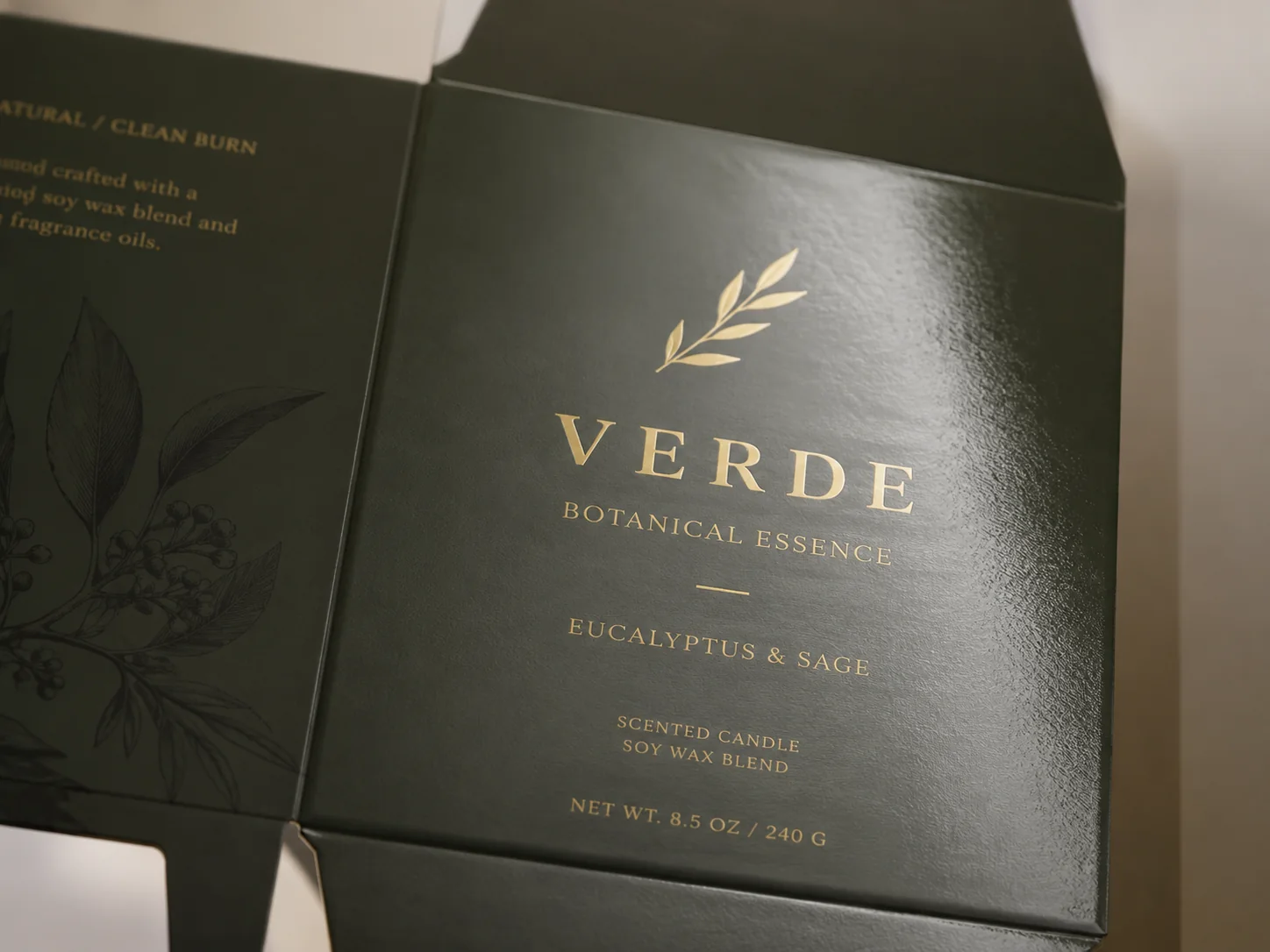
Straight Tuck End (Tuck End)
Both tuck flaps fold to the rear, so the front panel stays unbroken by flap edges and holds print flat across the face. Preferred where the carton sits face front on shelf and the graphic runs edge to edge.

Eastface Packaging is a folding carton manufacturer in Ahmedabad, India, serving brands across the United States and other global markets. From structural design and six-color offset printing to converting, premium finishing, testing, and packing, every stage is handled under one roof.

Why the carton matters
A premium product in an ordinary box is a story that does not finish. You spend years on the formula and the brand, and then hand the final impression to whoever printed the carton.
At Eastface, we make sure the packaging lives up to everything you put inside it.
Our heritage since 1962Reliability and fast communication
A packaging planner replies within one business day, and the same person stays on your account from first specification through every reorder.
Six-color offset, two spot units
Four units run process color and two stay free for Pantone, so a brand color prints as the ink it is rather than being built out of CMYK.
Advanced in-house testing
Grammage, burst, compression, stiffness, scuff and color are checked on every production run, with the report shipped alongside the order.
Cost-effective efficiency
Structural design, printing, finishing, testing and packing run in one plant, at 20 to 30 percent below comparable US supplier pricing.
Twelve folding carton structures and a thirteenth route, refined around your dimensions, board, closure, finish, and shelf presence before tooling is cut.
Both tuck flaps fold to the rear, so the front panel stays unbroken by flap edges and holds print flat across the face. Preferred where the carton sits face front on shelf and the graphic runs edge to edge.
Top flap folds to the rear and the bottom to the front, which lets the blank nest more tightly on the press sheet and improves board yield. The most economical of the tuck family and the standard supplement carton.
A compact tuck construction for card decks and small retail goods, where the fit around the contents matters more than the volume of the pack. Tight tolerance keeps the contents from shifting inside the carton.
The base is pre-glued flat and locks into shape in a single motion as the carton is squared, so it erects without assembly and carries heavier fills without bowing.
Full overlap seal end, glued top and bottom, giving the highest stacking strength in the folding range. A fully closed carton for machine filling and sealing inline.
A single blank folds and glues at all four corners to form a tray, so the pack has the rigidity of a set-up box without the freight of one. Because it is one piece, there is no lid to align and no second tooling.
A deeper tray with a more complex glue pattern, used where the tray must hold shape under weight or where the wall height exceeds what four corners will support cleanly.
A formed tray with a fitted outer sleeve, drawn out like a drawer. It is the closest a folding carton comes to a rigid box, at a fraction of the freight.
An open-ended band that slides over a tray or inner carton, adding a print surface and a reveal moment while using minimal board.
A shelf-ready unit that ships flat, erects at the store and presents multiple units at the counter, built for the load it carries.
A clear patch is applied inline over a die-cut aperture so the product is visible without opening. Window position is set relative to the crease lines so the patch never crosses a fold.
A euro slot or delta tab in a reinforced top panel lets the carton hang on peg display while remaining stackable on shelf.
When none of the twelve standard forms fit, the structure is developed from your primary pack rather than adapted from a template. You receive a physical prototype to test on your own line before any tooling is committed.

Both tuck flaps fold to the rear, so the front panel stays unbroken by flap edges and holds print flat across the face. Preferred where the carton sits face front on shelf and the graphic runs edge to edge.
Top flap folds to the rear and the bottom to the front, which lets the blank nest more tightly on the press sheet and improves board yield. The most economical of the tuck family and the standard supplement carton.
A compact tuck construction for card decks and small retail goods, where the fit around the contents matters more than the volume of the pack. Tight tolerance keeps the contents from shifting inside the carton.
Three machines, bought for repeatability over headline speed, and what each one does to your carton.
Automatic platen die cutter
Automated folder gluer
Three machines make the carton. These systems keep the fifth run matching the first.
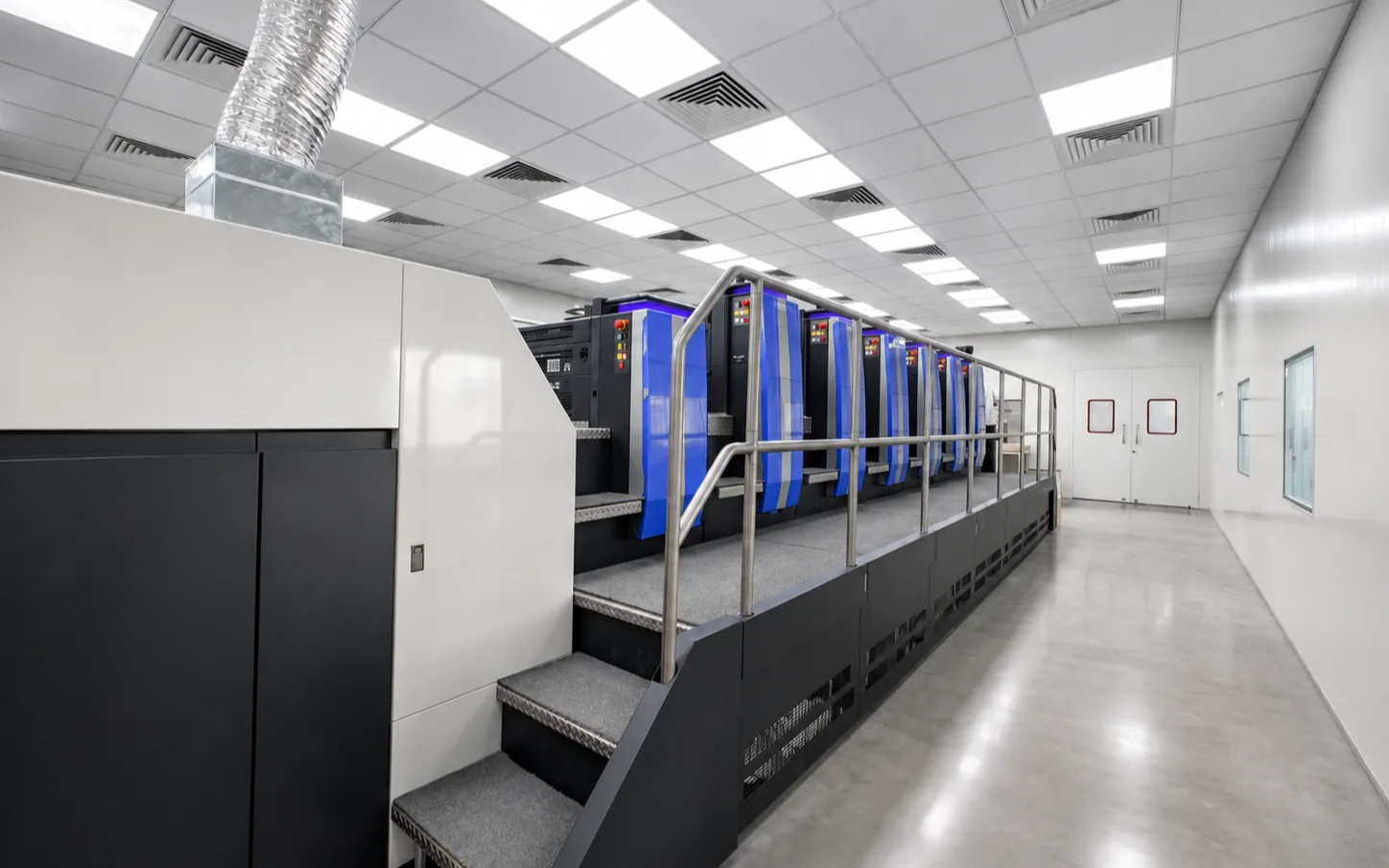
Photograph
Your color standard is measured and corrected during the run, so a reorder matches the first run.
Six color offset press with UV and IR curing
Every carton starts here. Six units running up to 15,000 sheets per hour, which turns a 250,000 carton program into days on press rather than weeks.
Six units, not four
Four carry process color and two stay free for Pantone spot inks, so a brand color prints as the ink itself, not a CMYK build. A five or six color job runs in one pass.
Color corrected during the run
PDC-SG reads the color bar and adjusts ink balance mid-run, so drift is caught in sheets rather than in thousands.
Every sheet inspected in line
PQA-S V5 checks sheets as they print, so a defect is caught by the machine rather than found in a carton on your filling line.
UV and IR curing
Sheets leave the press dry, so they move to die cutting the same shift and the ink film sits harder under lamination, foil and spot UV.
Twenty minutes on the plant floor with our production lead, live, on your schedule.
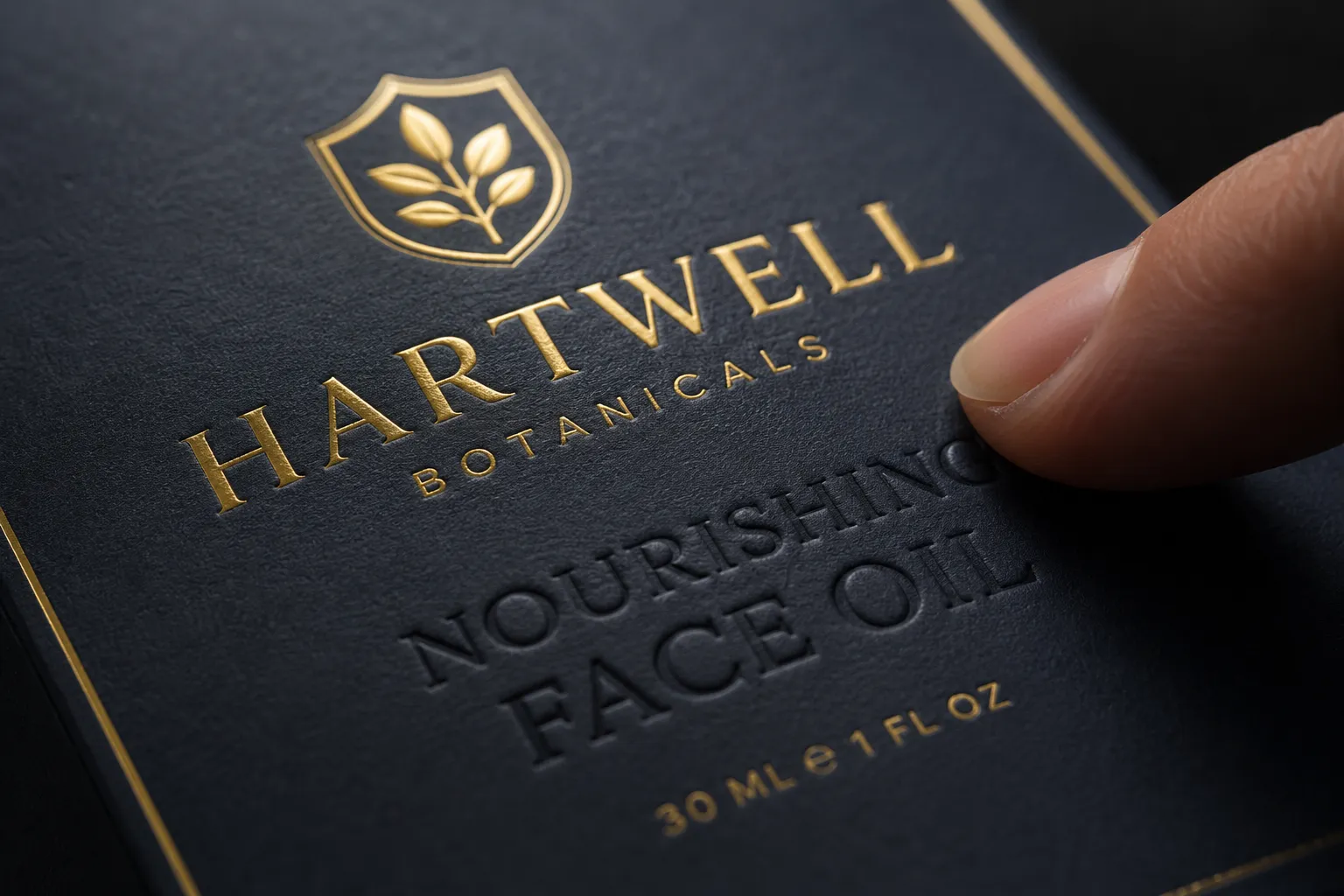
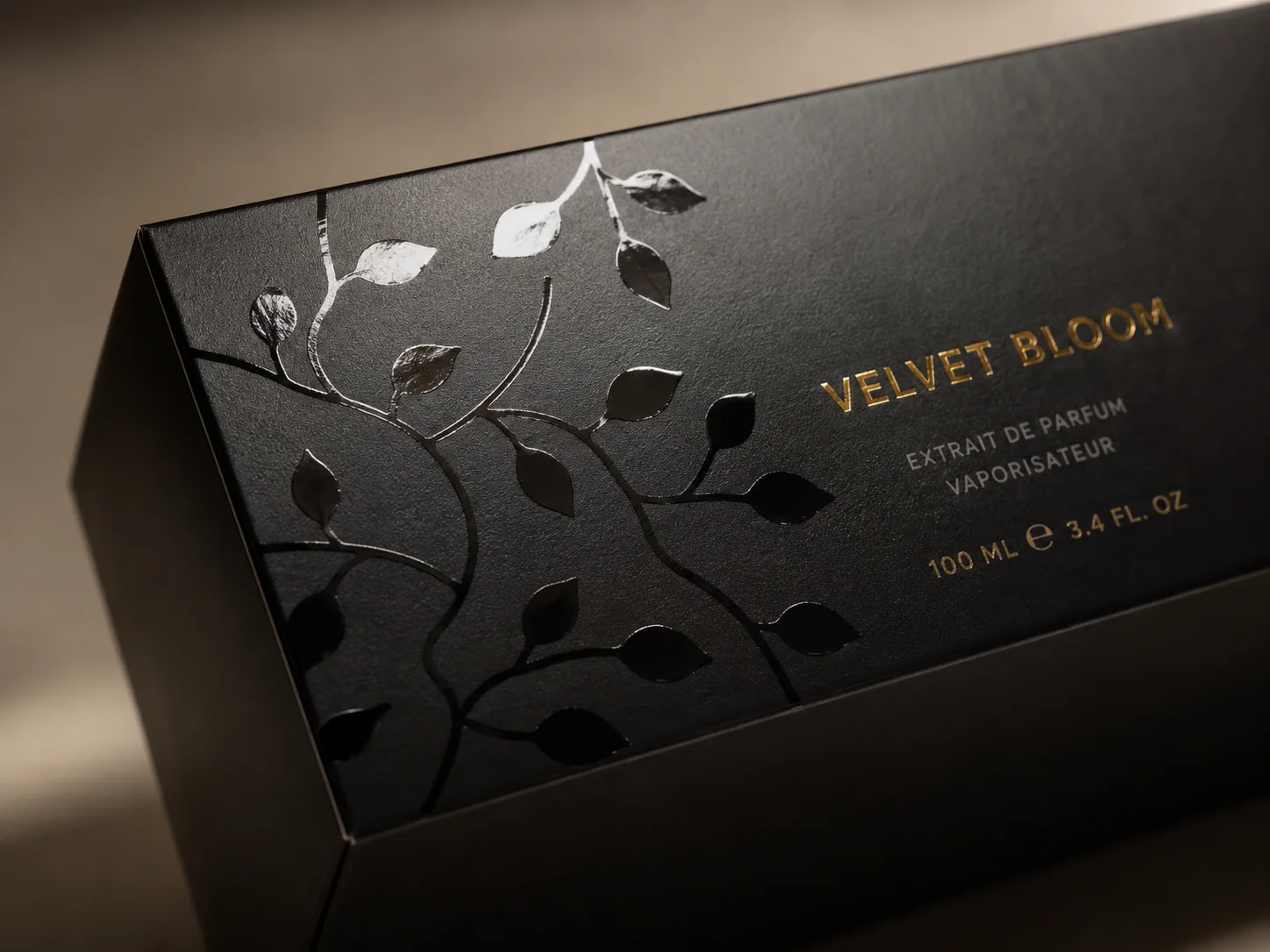
A heated die transfers metallic foil onto the board under pressure, so the finish sits physically on the surface rather than being printed to imitate metal. It holds detail down to hairline rules and reads as metal under store lighting.
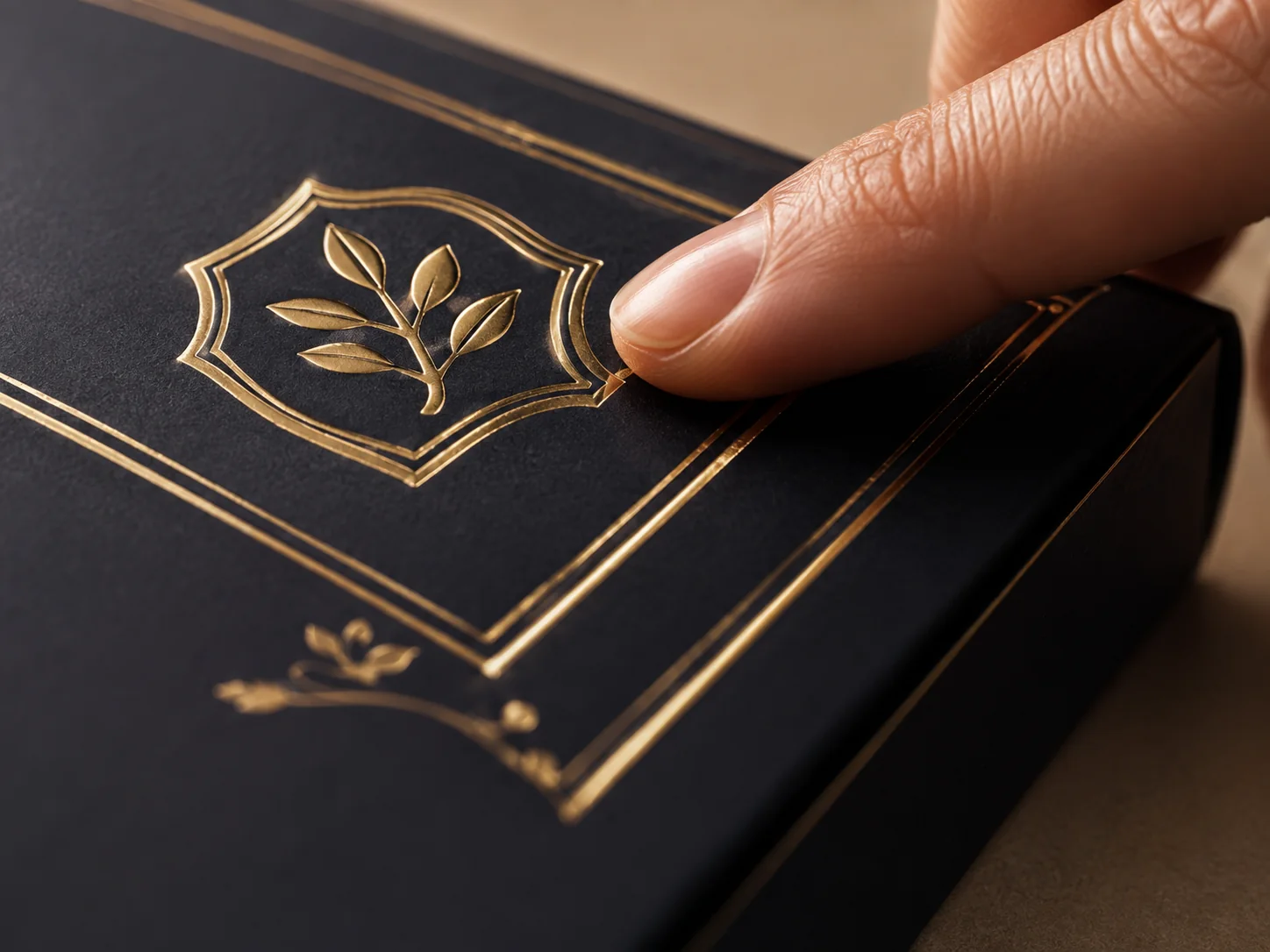
A raised metal edge you find with a fingertip before you see it. The boundary between foil and board is a physical step, not a printed one.
Holds detail down to hairline rules and reads as metal under store lighting.
Crests, monograms and hairline rules, the small marks that have to carry at shelf distance.
A heated die transfers metallic foil onto the board under pressure. Run as a combination die with an emboss, the foil lands exactly on the raised area in a single hit.
Separate foil die · Nothing can print over foil · Also called foil blocking
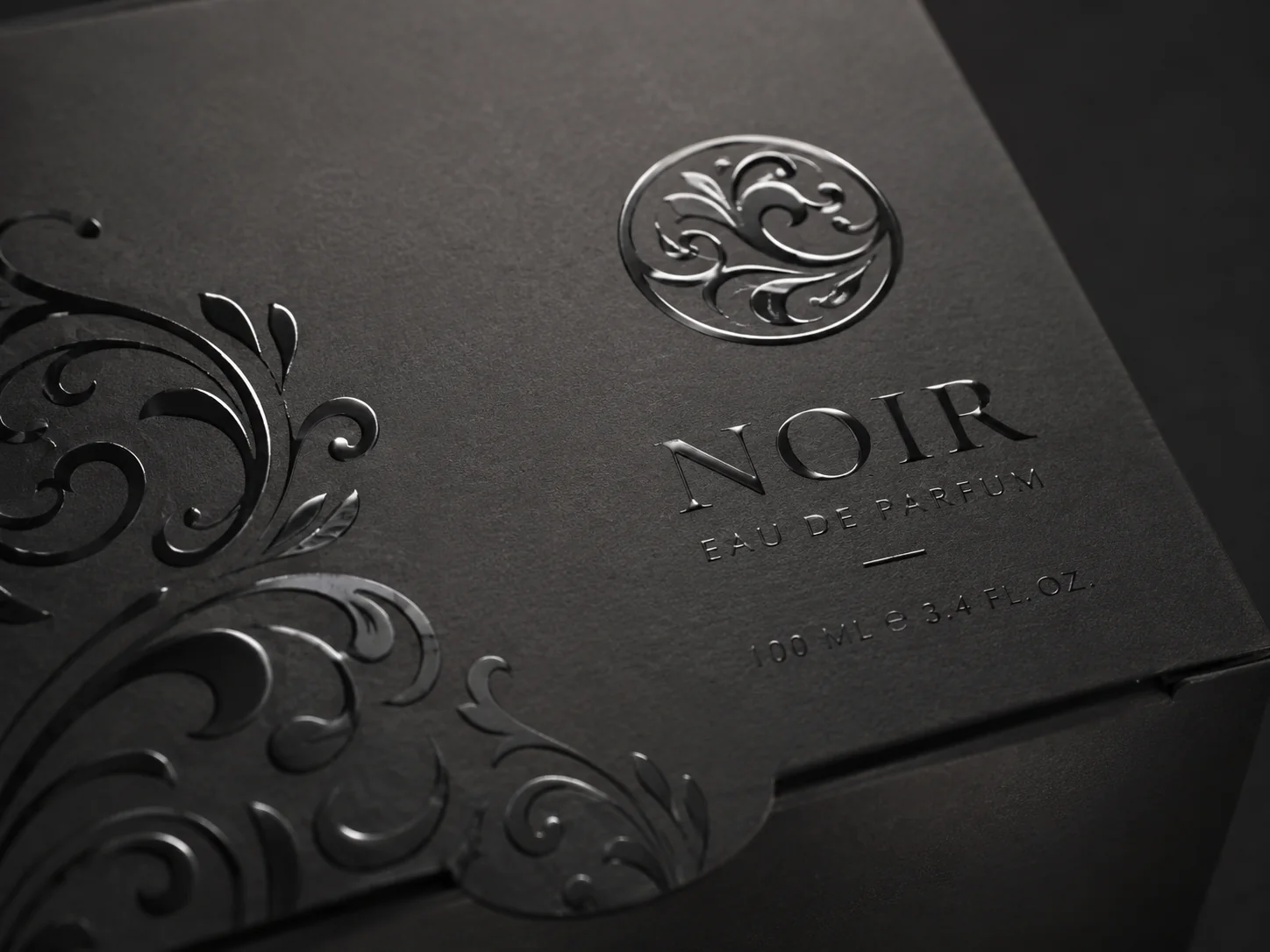
A matched male and female die pair raises or recesses the board. Multi-level dies allow more than one depth in a single hit, so a crest or monogram has dimension, not just an outline.
Relief. The mark stands out of the board or sinks into it, with no ink involved.
Gives a crest or monogram dimension. Multi-level dies carry more than one depth in a single hit.
Blind marks on uncoated board, and anywhere a logo should be felt before it is read.
A matched male and female die pair presses the sheet between them, raising one face and recessing the other.
Matched die pair · Shows in reverse on the inner face · Also called blind emboss
A matte film with a fine tactile surface applied across the full sheet. It changes the perceived weight of the carton in the hand and lowers glare across the whole panel.
Suede. A fine matte nap that slows the fingertip slightly and makes the carton feel heavier than it weighs.
Lowers glare across the whole panel and changes the perceived weight of the carton in the hand.
Full-panel grounds on dark cartons, and any pack where spot UV has to read against a matte field.
A matte film with a fine tactile surface, laminated across the full sheet after printing.
Full sheet film only · Cannot be applied to a spot area · Also called velvet lamination
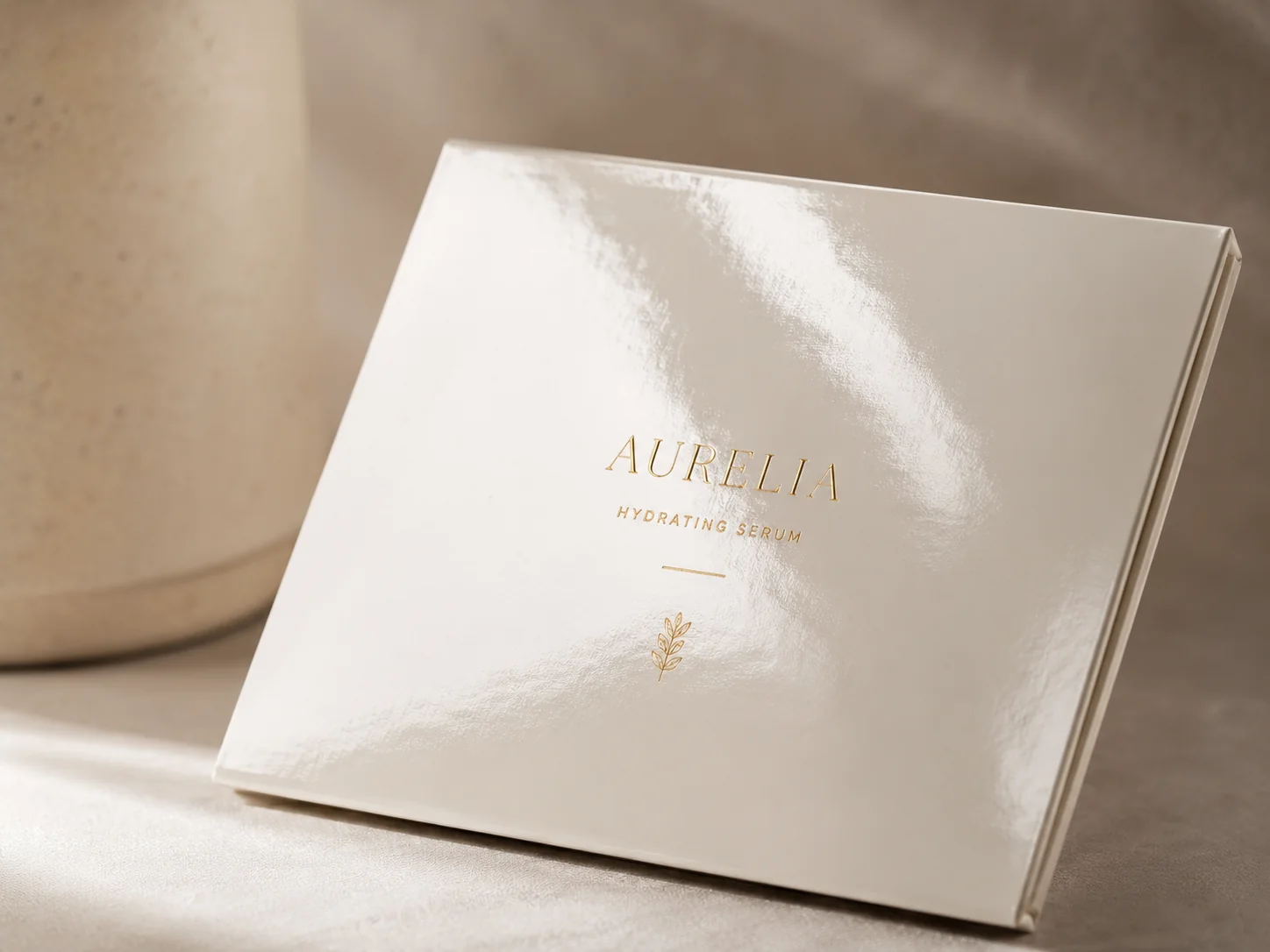
A BOPP film laminated across the full sheet, specified as gloss or as matte. Gloss lifts color saturation, matte lowers glare and deepens dark grounds, and both add scuff and moisture resistance through transit and shelf life.
Sealed film over the paper. Gloss is slick and cool with no drag under the fingertip. Matte is the same film without the shine, and on a dark ground it takes a fingerprint.
Gloss lifts color saturation. Matte lowers glare and deepens dark grounds, and it is the base most often specified under spot UV.
Saturated photographic grounds in gloss, and dark restrained packs in matte, where the only gloss should come from a spot.
A BOPP film laminated across the full sheet, specified as gloss or as matte.
Full sheet film · Spot UV over gloss largely disappears · Also called BOPP lam
A gloss varnish applied only where specified and cured under UV light, giving a high gloss against the surrounding ground. It is specified as artwork, not as a coating.
A raised, glassy area sitting on an otherwise flat panel, with an edge sharp enough to trace.
Puts high gloss exactly where it is specified, against a flatter surrounding ground.
Patterns, logotypes and highlights over soft touch or matte lamination.
A gloss varnish applied only where specified and cured under UV light. Specified as artwork, not as a coating.
Plate made from supplied artwork · Disappears over gloss lamination · Also called spot gloss
A clear coating applied across the full sheet and cured inline under UV. It adds a hard protective layer without the film thickness of lamination.
A hard, even sheen with none of the thickness of film. At the creases and edges the board still feels like board.
Adds a protective layer inline, without the film thickness or the second pass that lamination needs.
Runs that want protection and sheen and will still carry foil or embossing on top.
A clear coating applied across the full sheet on press and cured inline under UV light.
Applied inline on press · Less scuff protection than laminated film · Also called flood UV
Matte and gloss coatings applied in sequence so they repel one another, producing texture contrast across an entire sheet without separate tooling. The pattern is set in prepress.
Two surfaces on one panel. Matte and gloss meet without a step, so the difference is in the light rather than in the height.
Produces texture contrast across an entire sheet without separate tooling for the pattern.
Large graphic patterns, where a spot UV plate over the same area would be uneconomic.
Matte and gloss coatings applied in sequence so they repel one another. The pattern is set in prepress.
Pattern set in prepress · Varies by board, not for fine detail · Also called differential coating
A metallized polyester film laminated to board before printing. The floor calls it foil board. Ink printed over it reads as tinted metal, and every color shifts against the metallic ground instead of sitting on white.
Cool and hard, with the shine in the board. Nothing has been added to the surface, so there is no film edge to find at a crease.
Turns every printed color into tinted metal. Ink sits over a mirrored ground instead of over white.
Cartons where the metal is the whole face rather than a stamped mark, and ranges that need a metallic ground under full color print.
A metallized polyester film laminated to the board before printing. The floor calls it foil board. The decision is made at substrate stage.
Substrate decision before print · Cannot be added after printing · Also called foil board
Six physical tests, run in our own laboratory on every production run.
ISO 536 / TAPPI T410
ASTM D3786 / ISO 1060 Part-1
ASTM D642 / ASTM D4169 / TAPPI T804
TAPPI T489 OM-08
ASTM F2497-05 / BS 3110:1959
ISO 3664 / Pantone Matching System
Every order ships with its completed test report and a Certificate of Conformance for the lot.
The report travels with the shipment and lists the results for your batch against each of the six test methods.
ISO 9001
Quality management
ISO 14001
Environmental management
ISO 45001
Occupational health and safety
BRCGS
Packaging materials
SEDEX
Ethical trade audit
FSC
Chain of custody practice
Compliant
Certificates are available on request.




How it works
Send your dimensions and specifications, or attach the artwork from an existing carton.
What to sendA packaging planner reviews your request and replies within one business day with an answer or the details needed to prepare one.
Board, printing, finishing, tooling, import duty, shipping and delivery are combined into one landed price, with no unexpected additions later.
How programs are quotedYour order ships with its completed test report, a Certificate of Conformance and packing documentation, packed in master cases to the count you specified.
Delivery
Freight, export documentation and final delivery are handled here, end to end, and the order arrives at your door, not at a port. Import duty and shipping are inside the price you were quoted.
We book the freight, prepare the export documentation and track the shipment through to delivery. There is no forwarder for you to brief and no handoff between the plant and the carrier for you to chase.
Cartons are packed in master cases to the count you specified and delivered to the address you gave us, anywhere in the world. Board, printing, finishing, tooling, import duty, shipping and delivery are already in the one landed price you were quoted.
After the order lands we confirm it arrived as it left: counts against the packing detail, and condition against the test report that traveled with it.
Lead time
Shipping time is additional and depends on destination.

Stalwart of the Printing Industry
All India Federation of Master Printers. Presented by Narendra Modi, now Prime Minister of India.
Sahitya Mudranalaya has printed in Ahmedabad since 1962, for the city’s banks, universities and government bodies, and has been an authorized security printer for the Indian Banks’ Association since 2004. Eastface Packaging is its folding carton division, on new equipment, run by the fourth generation of the same family.
Our heritage since 1962
Recent NewsPrintWeek India ·
Noel D’Cunha’s column on Ahmedabad printers profiles Eastface: from barren land to production in thirteen months, and a plant built for shorter, higher quality runs rather than volume.
The plant is built around bulk and repeat programs, with capacity to 5 million cartons per SKU on a six-color offset line. Multi-SKU programs run from one structural family so a full product line stays consistent. Send your dimensions and target quantity and a planner will confirm the fit.
New orders run 15 to 20 days in production, from approved artwork and a signed off proof. Repeat orders run 8 days, because the settings are stored against the part number and a reorder skips setup. Shipping time is additional and depends on destination, and freight, export documentation and final delivery to your door are handled by us. Expedited orders run on request, with timing confirmed on the quote.
Yes. Send a physical sample, or the artwork and dieline from your current carton. The structure is measured, board and caliper matched, and color matched to your existing standard under D65 and TL84 viewing conditions. Most switching programs are matched from a sample rather than rebuilt from a specification.
SBS, FBB, kraft and recycled board. Caliper is specified in points to match your existing carton, or recommended against your product weight and fill method if you are starting from scratch. Board is verified by grammage test on every production run against what was ordered.
Yes, and it is included rather than quoted separately. The carton is developed around your primary pack, and a physical prototype is produced for you to test on your own line before any tooling is cut. Changes at that stage cost nothing.
Landed pricing typically runs 20 to 30 percent below comparable US supplier quotes for the same specification. The difference comes from manufacturing cost, not from board grade or finishing. Board, printing, finishing, tooling and delivery are combined into one number, so nothing is added later.
Every run is tested before it ships and released against its acceptance criteria, so most issues are caught in the plant. If something reaches you outside specification, the batch is traceable by part number to its production record and test report, and you choose the remedy: we remake the order at no cost to you, or issue a credit if you would rather not wait for a remake.
Every order ships with its completed test report showing results for your batch and a Certificate of Conformance for the lot, alongside the invoice, packing list and packing detail by master case. For food and pharmaceutical buyers, these are the batch documents in place of a certificate of analysis, which is a chemistry document. Certification documents for ISO, BRCGS and SEDEX are available on request.
Dimensions, quantity and finish are enough to start. Board, printing, finishing, tooling and delivery come back as one landed price.
Get a quoteA packaging planner replies within one business day.