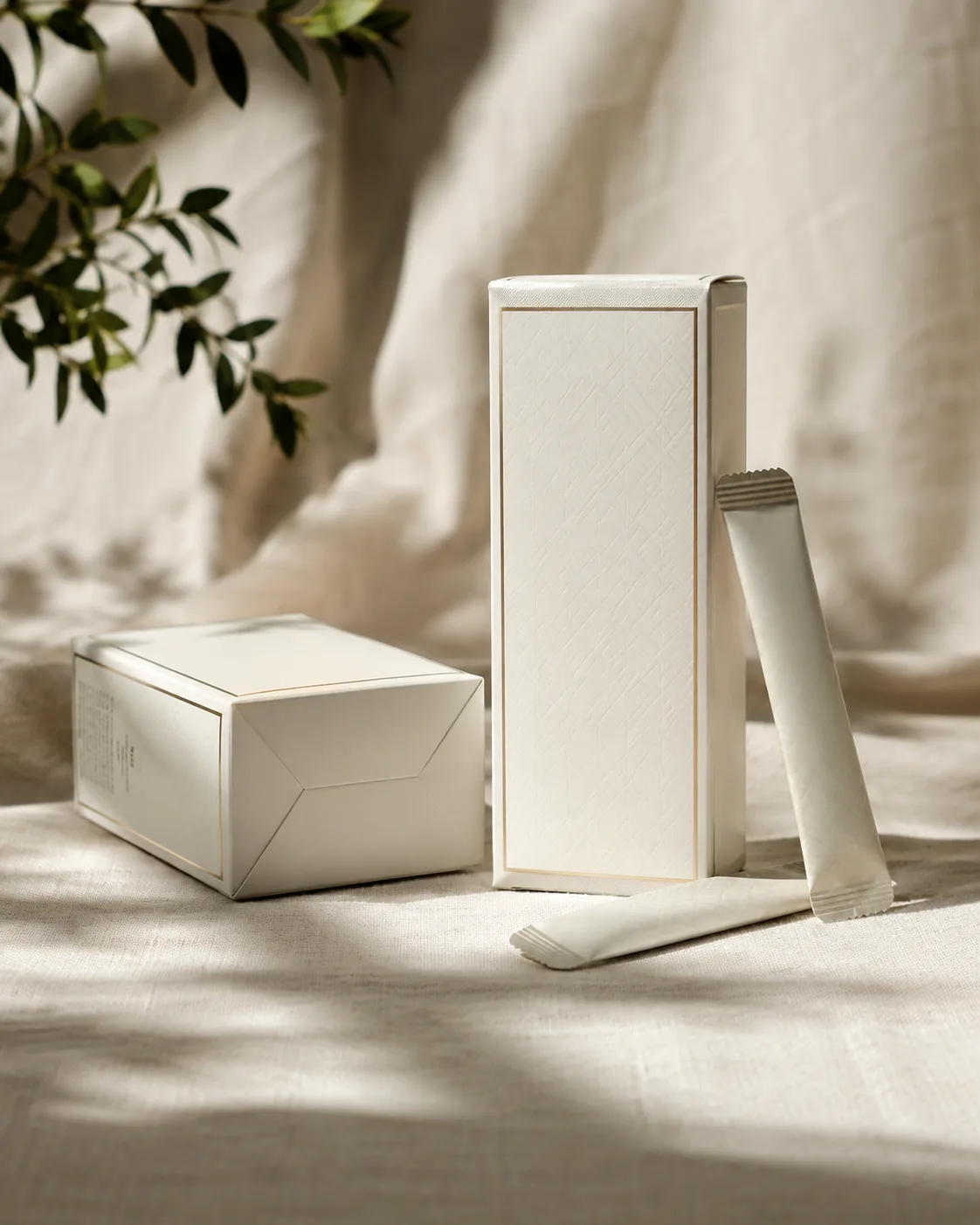
Auto lock bottom
A locked base under a tuck top, for weight at one end of the carton rather than a seal at both.
See the structure: Auto lock bottomFOLDING CARTONS
A seal end carton is a folding carton whose top and bottom are closed with glue on the filling line rather than tucked, most often as a full overlap seal end, or FOSE, where the outer flaps overlap the whole end.
It has the highest stacking strength in the folding carton family, and it has to be torn to be opened.

No tuck panel and no dust flap. Every panel carries a flap, and on a full overlap the two outer flaps are deep enough to cover the end completely.
How a seal end carton is made, in five steps.
Drawn to illustrate the structure. Your dieline is developed to your product, free, before you commit. A seal end also takes a window aperture, and the aperture is cut into the blank with everything else: see window boxes.
Ask for a structural designOne blank, one glue seam, and four flaps at each end instead of a tuck and two dust flaps. The sequence beside this cuts, scores and then folds the blank in the order the plant makes it: wrap the body, glue the seam, and stop. The ends are left open for your filling line to close.
This is the seal end carton as Eastface makes it. Board is stated in gsm and in points of caliper, and the flap geometry for your own carton is settled at structural design, against the load it has to take.
A pallet is a column of cartons and the bottom one carries all of them. What holds it up is how much board sits under the load.
Seal end
Glued across the end, walls loaded as a column
Tuck end
One flap behind another, the tuck lifts first
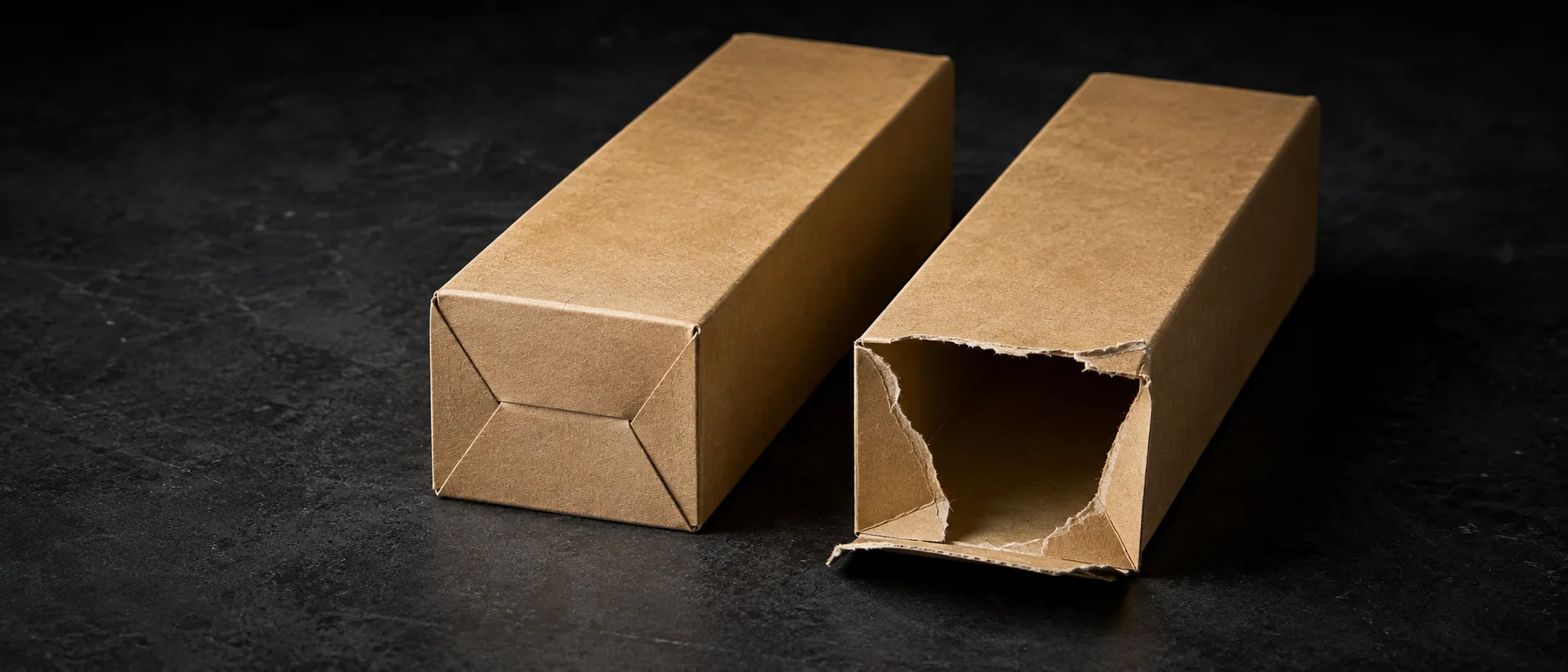
A glued end has to be torn to be opened, and a torn end does not go back.
Three situations, each with its own reason for the same structure.
The pack is palletized deep and the bottom carton carries the column. A glued end puts board under the load across the whole end rather than a flap held by friction.
Glued ends keep the contents in and the dust out through transit. Where the product is aromatic, they also keep the smell in the carton.
The carton is opened, filled and glued by the line in one sequence and never touched by hand. The blank arrives flat and side seamed, so the line receives a flat stack.
No other structure in the family has this choice. It is made on the dieline, against the pallet the carton will sit in.
| Full overlap (FOSE) | Economy flaps | |
|---|---|---|
| The outer flap | Deep enough to cover the whole end | Meets its opposite number in the middle rather than lapping over it |
| Board at the closure | Four thicknesses across the full area of the end | Fewer thicknesses across the middle, where the two outer flaps meet instead of overlapping |
| Board used | More, because the outer flaps are deeper | Less, which adds up over a long run |
| Stacking load | The higher of the two | Gives up part of the stacking strength in exchange for the board |
| Specify it when | Stacking load is the governing requirement | The pallet condition allows it and the board is worth saving |
Which one your carton takes is decided against the pallet it will sit in. Box compression is run on every production run here, against your own stacking and transit conditions.
A seal end is made for a filling line. The blank is delivered flat and side seamed, the filling line opens it, fills it and glues both ends in sequence, and the carton is never touched by hand between the two.
It also gives tamper evidence at no extra cost. A glued end has to be torn to be opened and cannot be closed again, so the buyer can see the pack is unopened. Nothing is added to the carton for it.
A glued end is also a closed end. Where a product is dry, powdered or aromatic, glued ends keep the contents in and the dust out through transit.
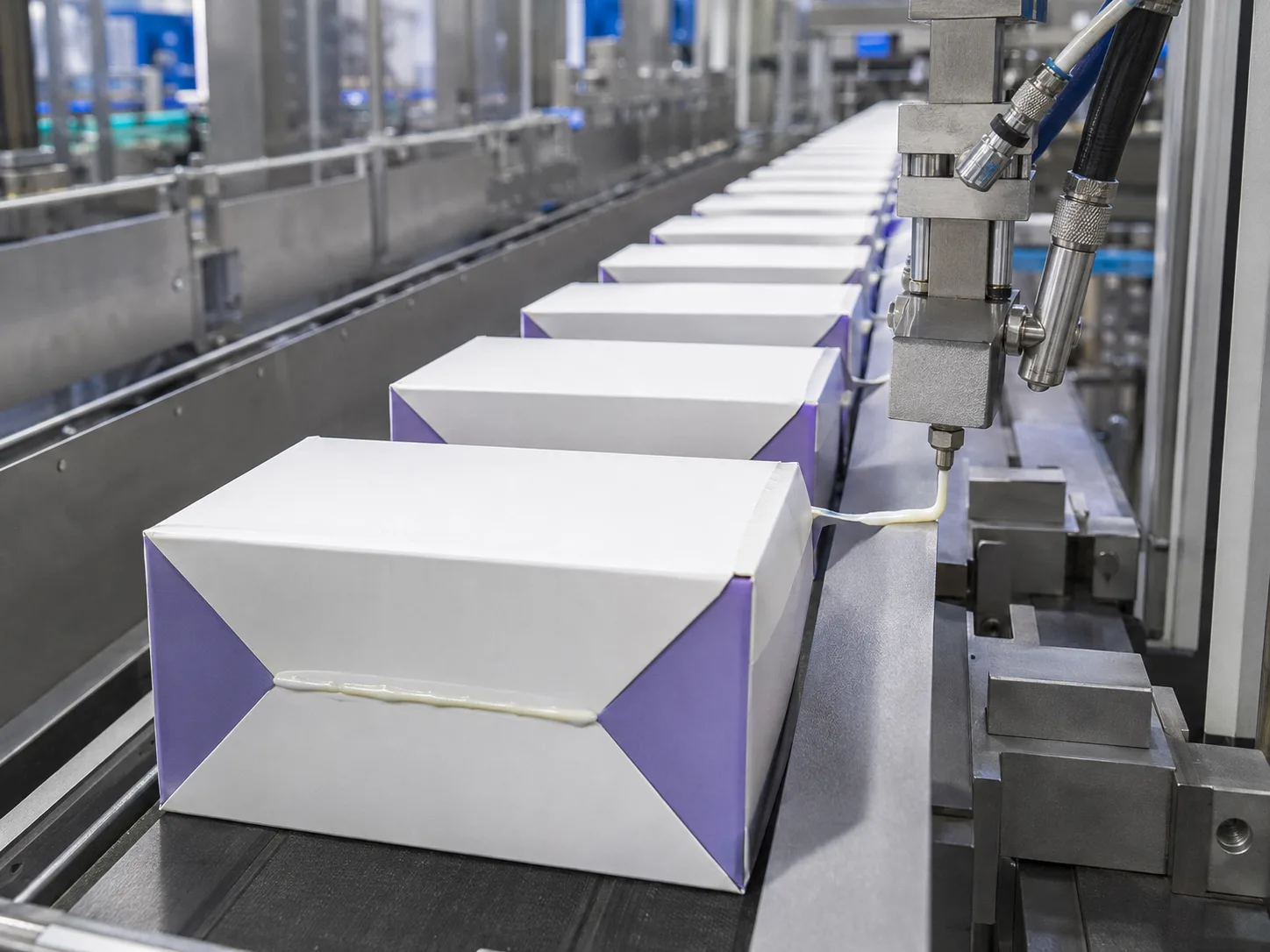
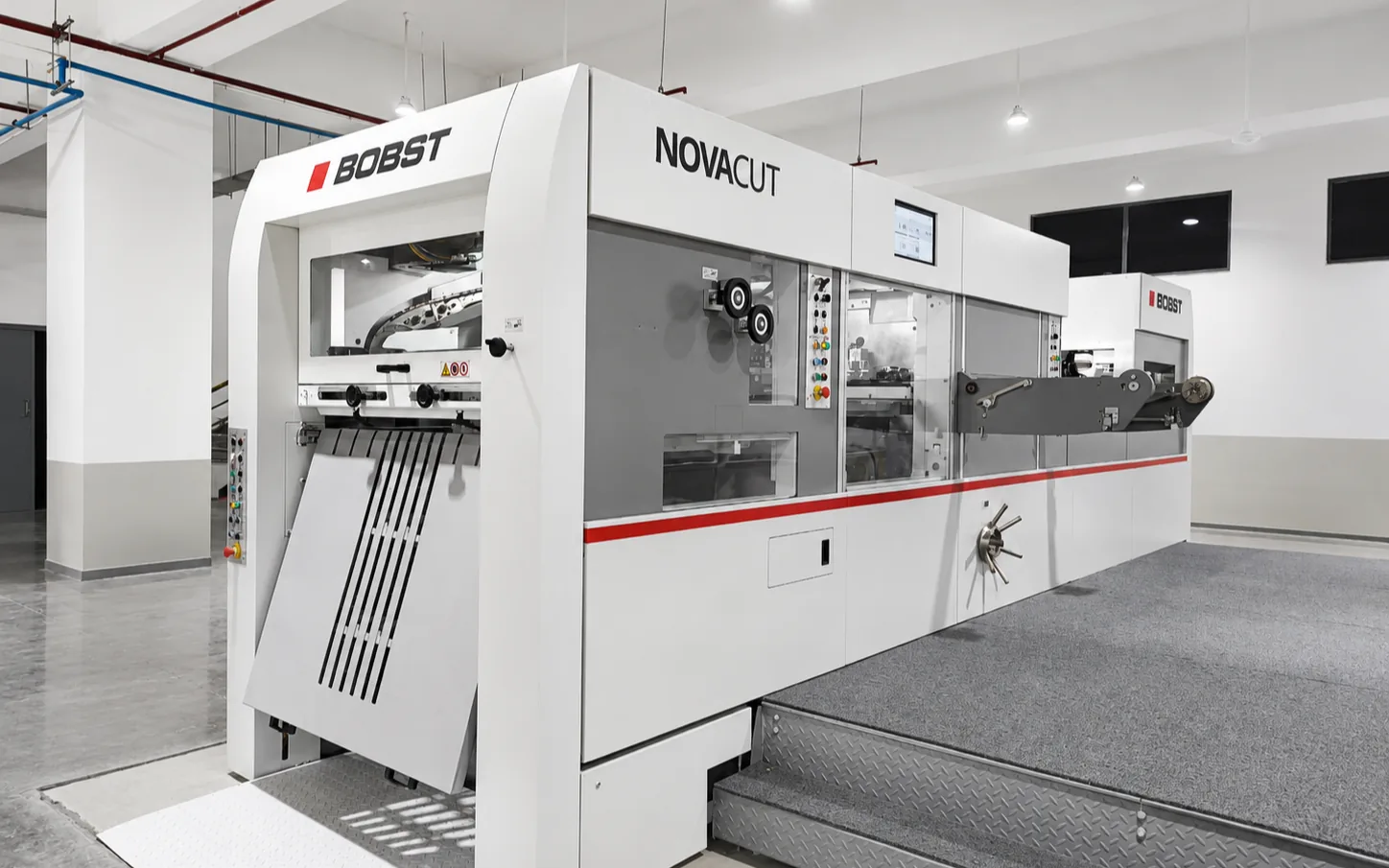
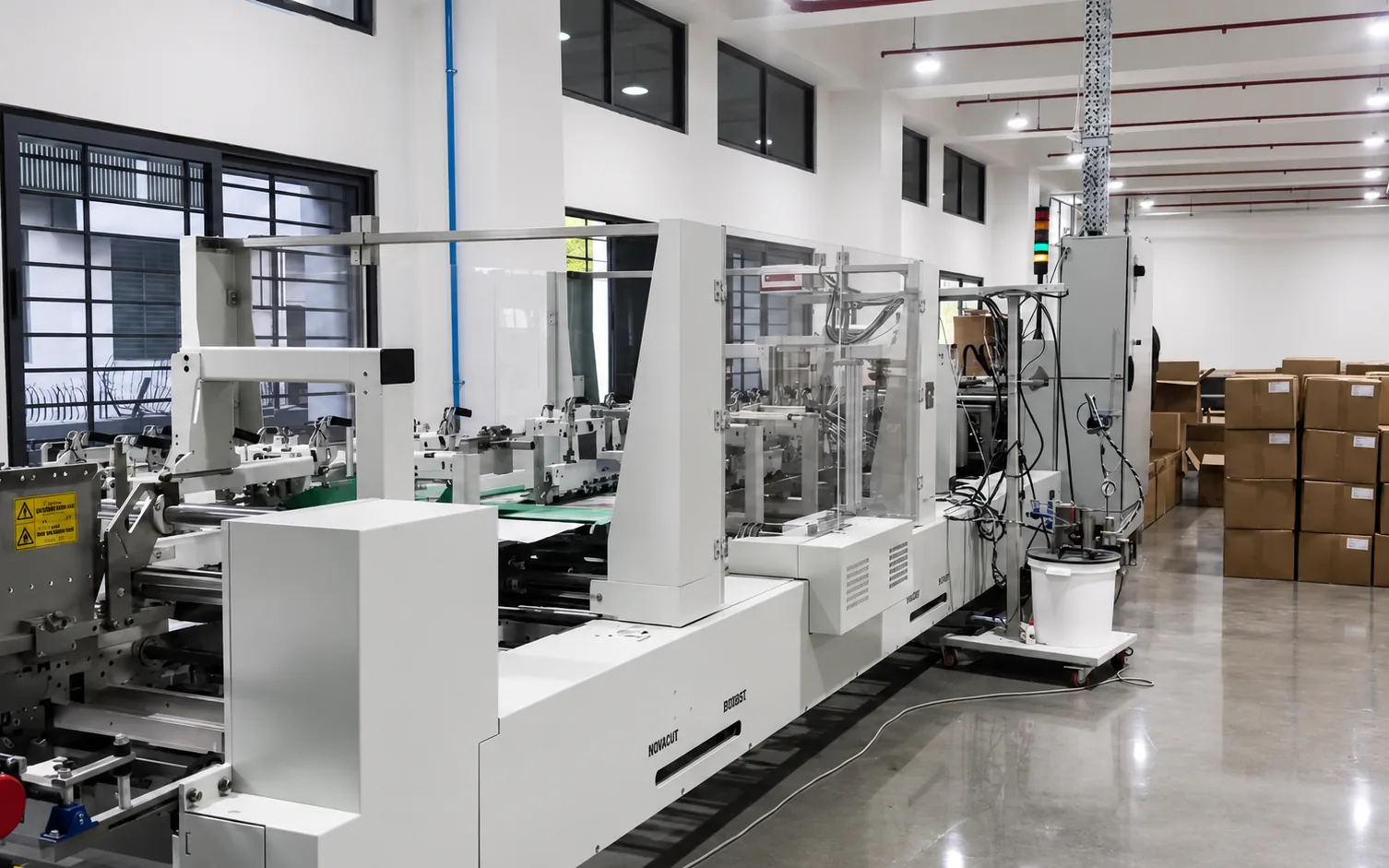
A seal end leaves this plant printed, cut, creased and glued down the side seam, with both ends open for your line to close. The creasing and flap geometry are set here so the carton squares cleanly on your cartoner.
Cartons here are made on bulk production runs, and the cost per carton falls as the run grows, because plates, tooling and make-ready are fixed per run rather than per carton. A quote is priced against the volume you are planning. Landed pricing typically runs 20 to 30 percent below comparable US supplier quotes for the same specification. The quote is one landed price: the cartons, tooling, structural design, proofing, the documents that travel with the order, import duty, shipping and delivery to your address, in the US or anywhere else. Nothing is quoted on top of it later.
Same board, same press, same lead time. What changes is how the ends close.
A locked base under a tuck top, for weight at one end of the carton rather than a seal at both.
See the structure: Auto lock bottomThe construction a seal end is usually being compared against: friction-fit ends the buyer opens and closes by hand.
See the structure: Tuck boxesAn aperture and a film patch, cut into the blank. A seal end carries one the same way a tuck end does.
See the structure: Window boxesFlap geometry and board are specified against a figure from a box compression tester. Six physical tests are run on every production run here, in machine and cross direction, and the results travel with the lot.
The quality lab and per-lot testingA seal end carton is a folding carton whose top and bottom are closed with glue on the filling line rather than tucked. It is delivered flat and side seamed, opened and filled on the line, and glued shut at both ends in sequence, which is why it is specified for products that are packed by machine and never repacked by hand.
FOSE stands for full overlap seal end. It describes the flap geometry: the outer flap at each end is deep enough to overlap the whole end rather than meeting its opposite number in the middle, so the closure is four thicknesses of board across its full area. It is the seal end variant specified where stacking load is the governing requirement.
Choose a seal end when the carton is filled by machine, never reopened, and stacked. Choose a tuck end when the pack is opened and closed by the buyer, or filled by hand. The seal end carries far more stacking load, because the load stands on glued board rather than on a flap held by friction, and it gives tamper evidence by destruction. It cannot be opened without being damaged.
Both answer weight, at different ends of the carton and for different lines. An auto lock bottom is glued at the base only and still opens by hand at the top, so it suits a heavy retail pack. A seal end is glued at both ends, so it stacks higher and seals the contents in, and it suits an inline filling operation. Where the product is heavy and sealed, the answer is both: a seal end top over an auto bottom.
Specify a full overlap where stacking load is the governing requirement, because the outer flap covers the whole end and the closure is four thicknesses of board across its full area. Economy flaps meet in the middle instead, which uses less board and gives up part of the stacking strength. The decision is made against the pallet the carton will sit in, and box compression is run on every production run here.
Yes. Send a flat blank rather than a formed carton, because the flap geometry and the overlap depth are what have to be reproduced. The structure is measured, board and caliper matched, and color matched to your existing standard under D65 and TL84 viewing conditions. Most switching programs are matched from a sample rather than rebuilt from a specification.
Last reviewed
A seal end is specified against the equipment that closes it and the pallet it stands in. Send the filling line details and the stacking condition, and the flap geometry and board come back matched to both. A packaging planner replies within one business day.