Straight tuck end
Both flaps to the rear, so the front panel is unbroken. The retail facing carton.
See the structure: Straight tuck endPRODUCTS
A folding carton is a printed paperboard box that ships flat and erects at the packing line.
Cut, creased, folded and glued in one plant. What each construction is for, what it is made of, and how to choose one for your product.

Folding carton packaging is the printed paperboard box a shopper picks up. It is cut and creased from a single flat blank, glued along one seam, and delivered as a flat stack that squares up on your line, which is why a container of cartons holds several times what a container of assembled boxes would.
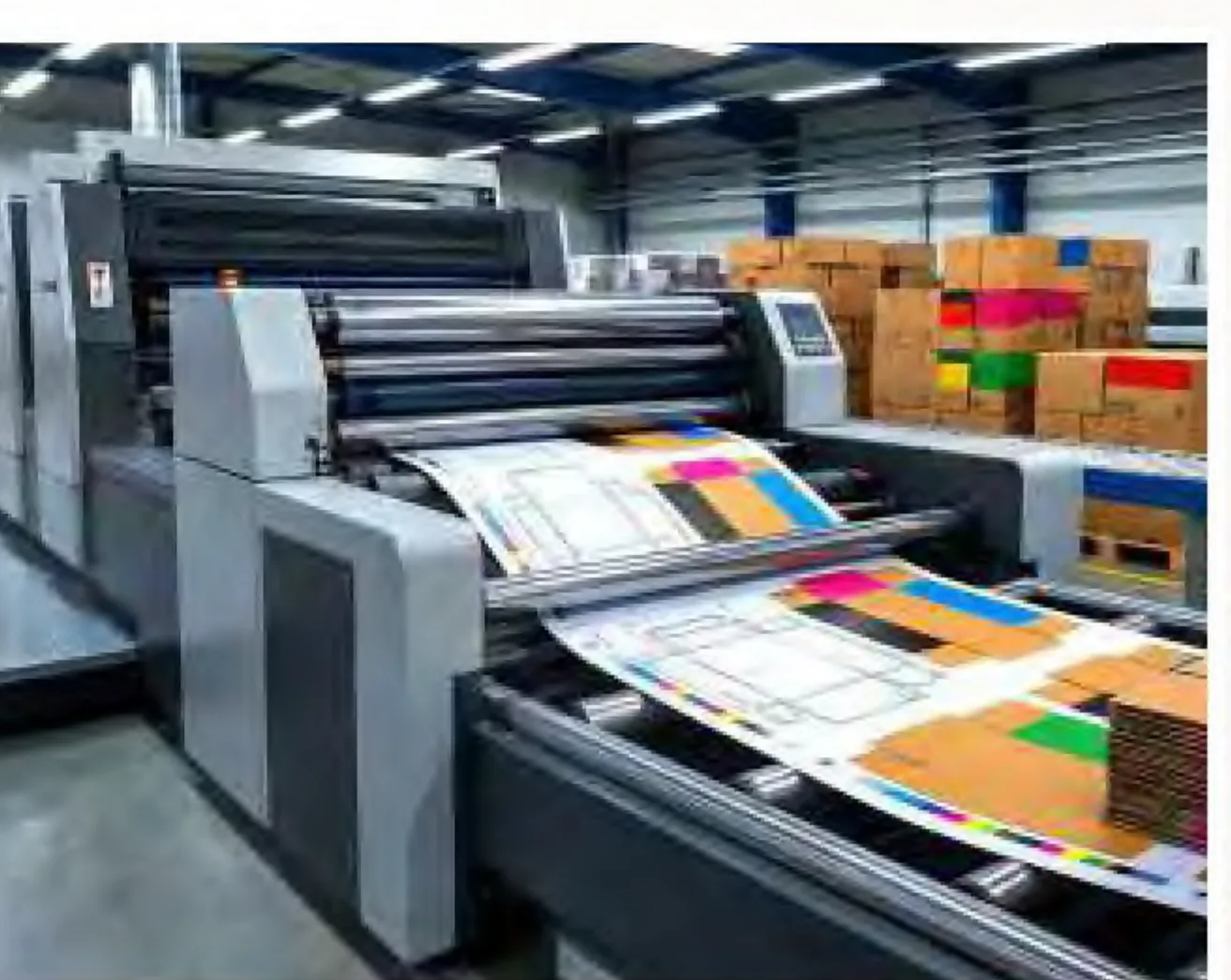
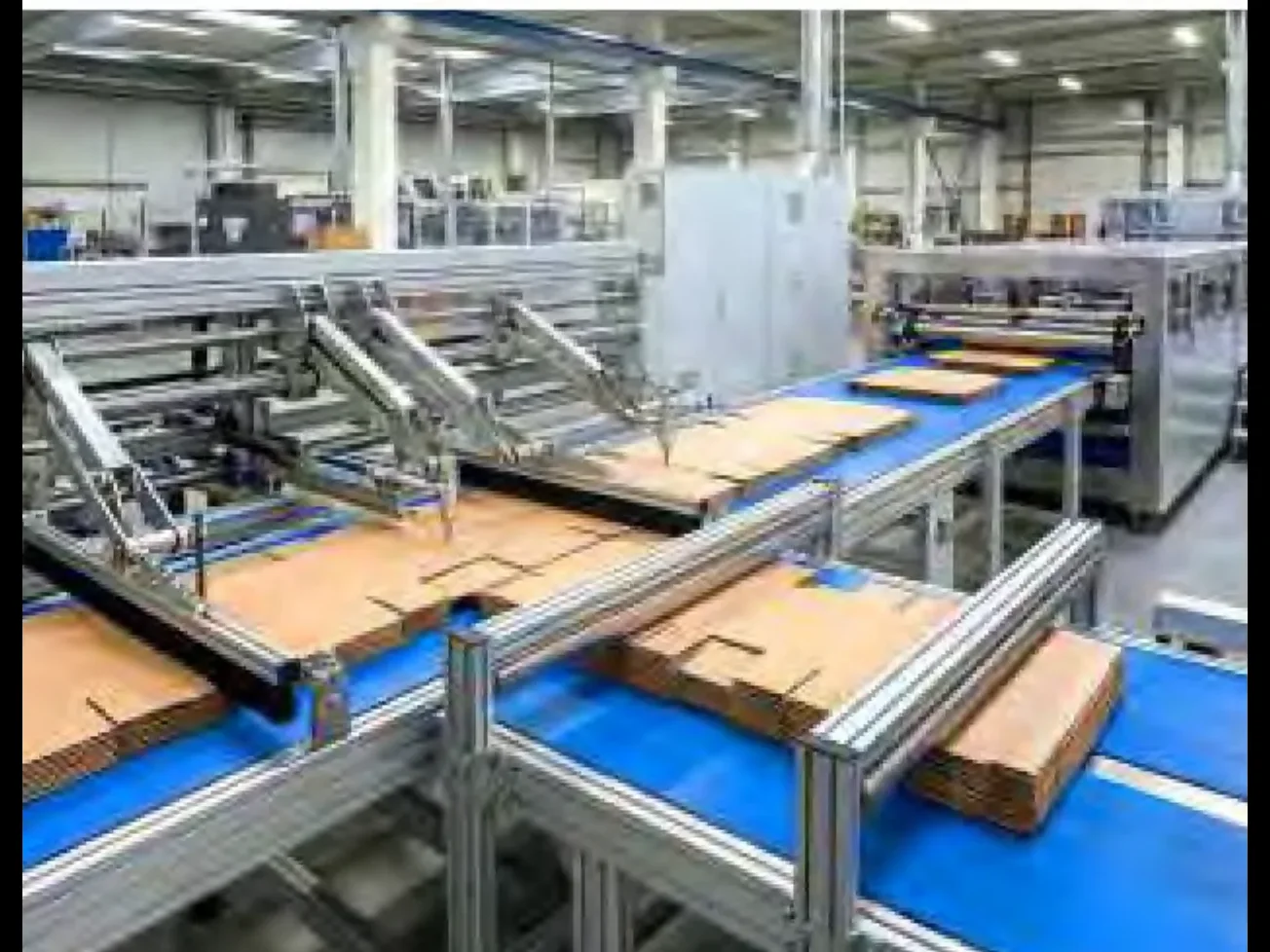
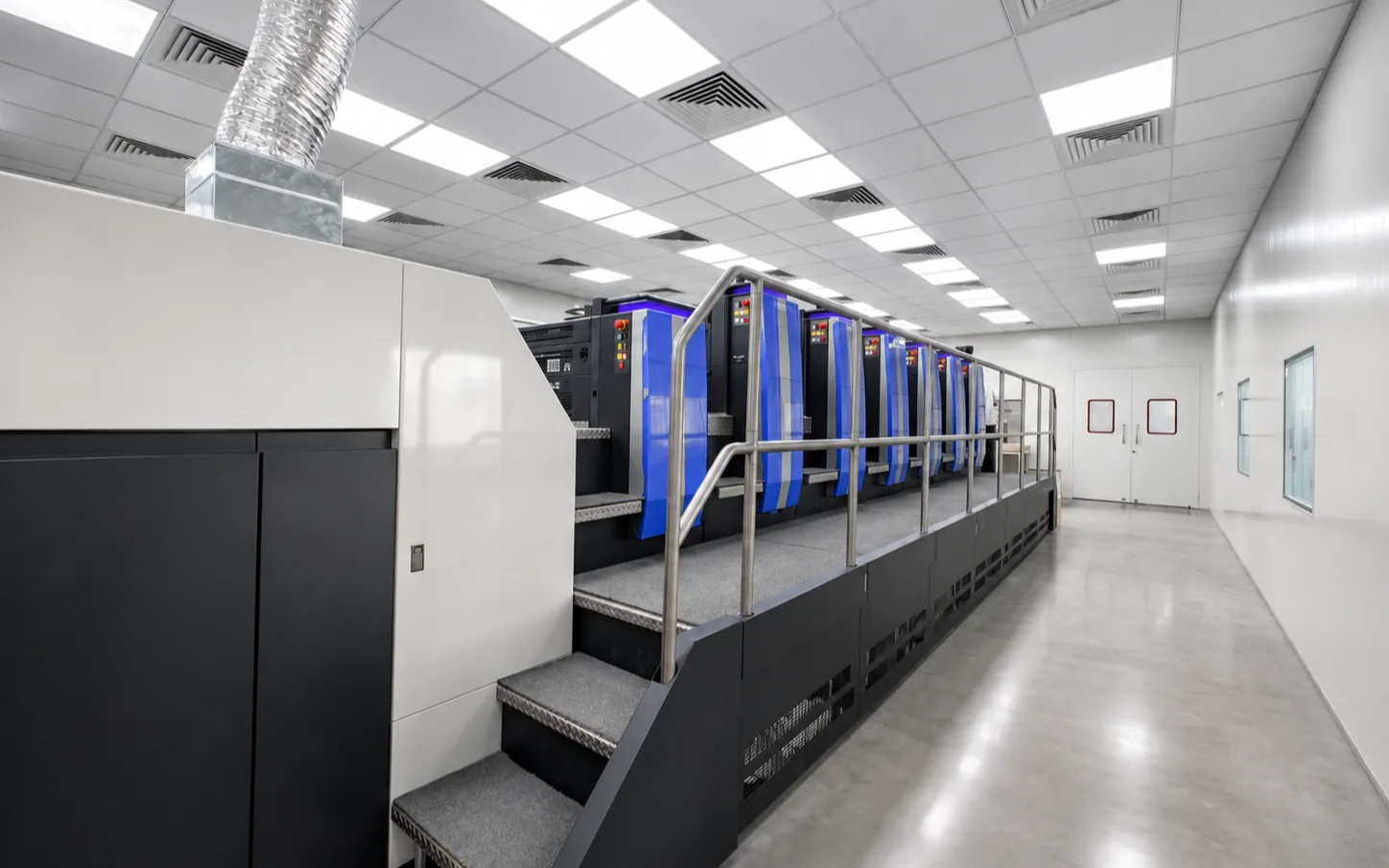
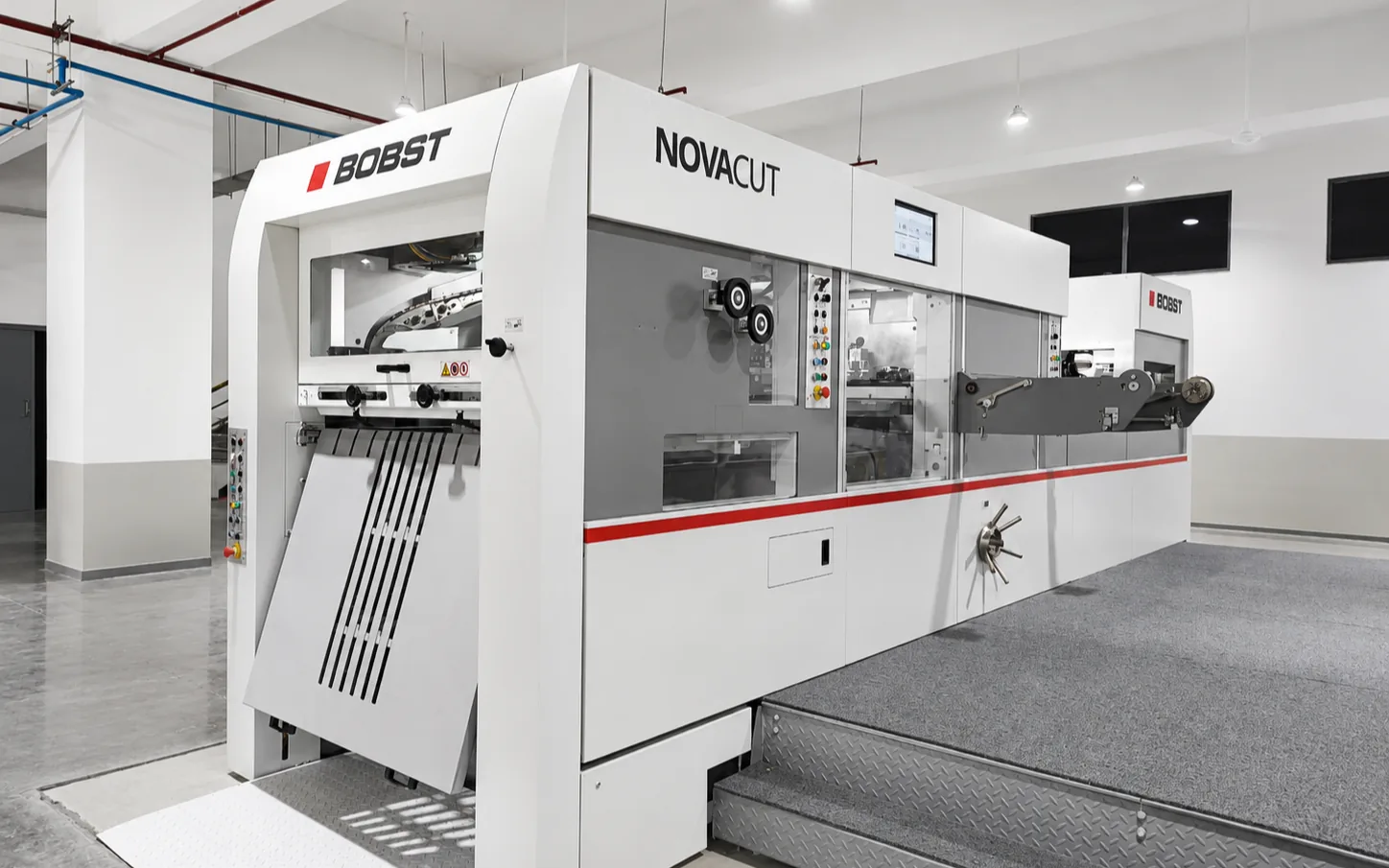
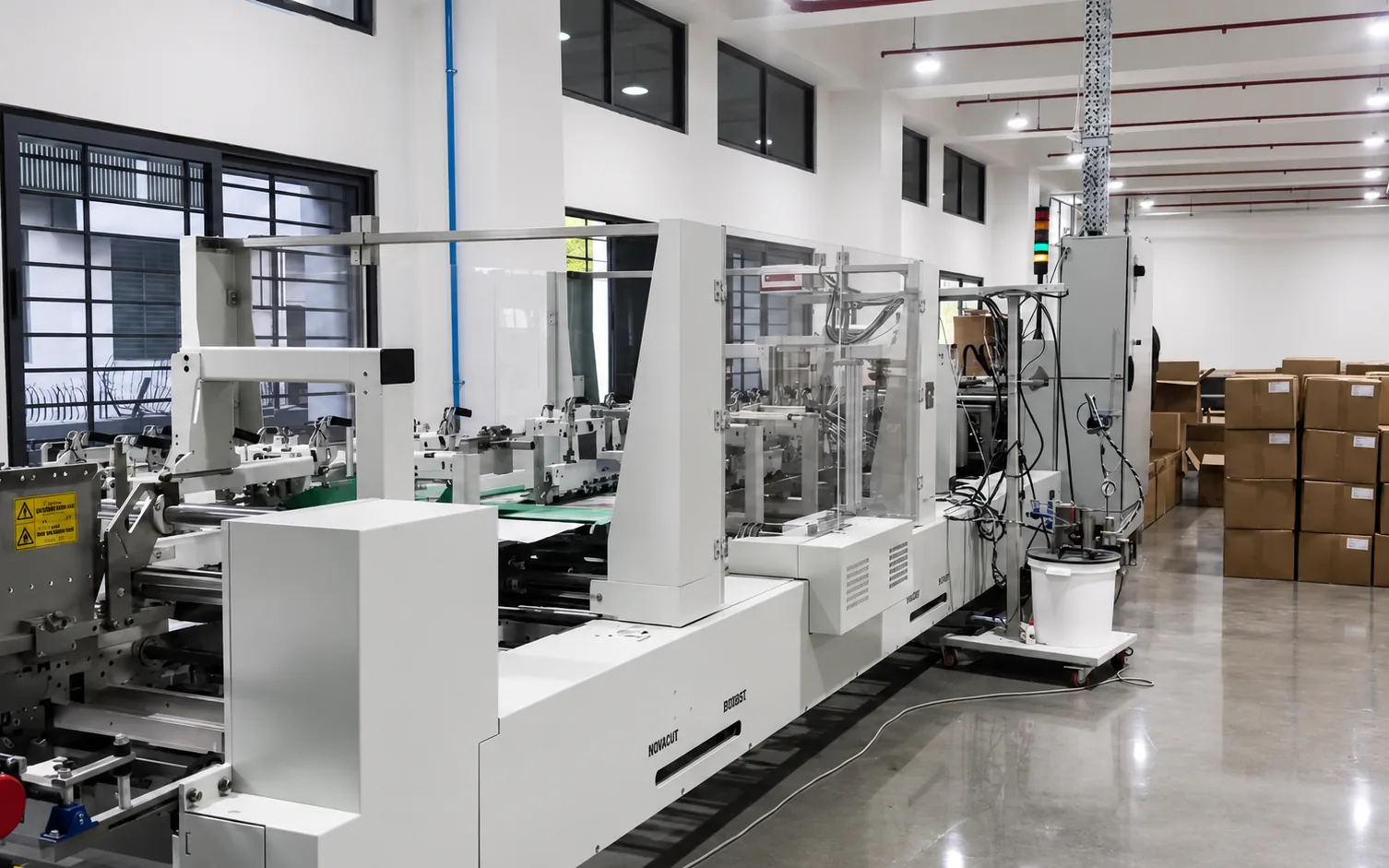
Every one of the twelve structures is made in one building in Ahmedabad, printing since 1962: prepress and plates, a six-color Komori, Bobst die cutting, Bobst folding and gluing. None of it is a partner line. Custom folding cartons start from the product itself rather than a drawing of it. Where a drawing or a sample carton already exists, that route is customized cartons.

Twelve constructions in regular production, and a thirteenth route for everything they do not cover. Under each name is the case it suits. Tap a picture for an example of the flat blank it is cut from; every job is drawn to its own dimensions.
Three questions decide the structure. Each one narrows the next.
A tucked flap bows under a heavy fill. A locked or glued base does not.
A tuck flap is one thickness of board folded in and held by friction, and under a heavy fill it bows before anything else on the carton does. A locked or glued base is board folded back on itself and fixed there, so the load runs into the panel walls instead of onto the flap. This is the first question because a wrong base fails on the pallet, before the carton reaches a shelf.
A shelf carton wants an unbroken front panel. A carton that arrives in a shipper can be chosen for yield.
A carton that sits face front under store lighting wants an unbroken front panel and every crease and flap edge behind it. A carton that arrives in a shipper has no shelf to face, so the panel that matters is the one the buyer sees when the outer is opened, and the construction can be chosen for yield instead.
Hand packing takes any of these. An automatic cartoner does not.
A carton squared by hand can be any of these. A carton fed to a cartoner has to erect in one motion and stay square while it is filled, which rules out the constructions that need a flap folded and held. If you are running an automatic line, that is the fact to send first, because it settles the base and the ends together.

A wrong base fails on the pallet, before the carton reaches a shelf.
Each of these is decided by how the pack is displayed rather than by what is in it.
If
The shopper wants to see the product
A die-cut aperture with a film patch, positioned clear of the creases so the patch never crosses a fold.
If
Hung on a peg in store
A euro slot in a top panel folded back on itself, so the slot runs through two thicknesses of board.
If
The pack has to feel like a rigid box
A formed tray drawn out of a fitted outer, at folding carton freight rather than rigid box freight.
If
Nothing in the twelve standard structures describes it
Developed around your primary pack, and you get a physical prototype before any tooling is cut.
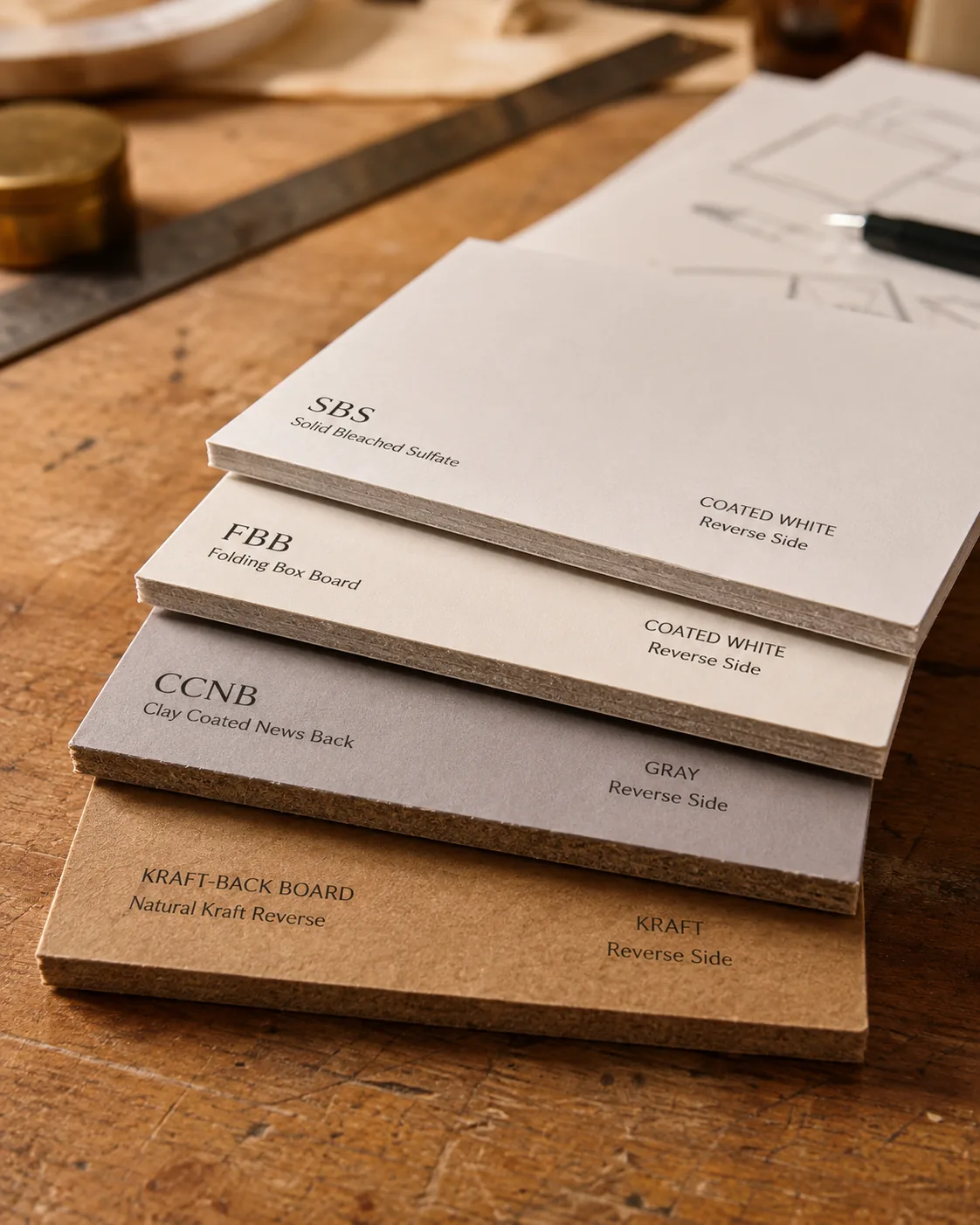
Board is specified in gsm and in points of caliper, and every one of the five grades is stocked rather than indented. Coating is aqueous or UV to the job. The working range across the family is 190 to 700 gsm, SBS or FBB.
A recyclable board is only as recyclable as what goes on it, so the coating and the lamination are decided with the grade rather than after it. Finishes are decided alongside the board for the same reason. A heavy overall coating can close up fine type, and a foil line will crack along a crease that has not been pre-broken.
Print and converting under one roof in Ahmedabad, so one specification and one point of accountability cover a job from plate to pallet.
Certificates are available on request.
Inside the plantA folding carton is a printed paperboard box that ships flat and erects at the packing line. It is cut and creased from a single blank, glued along one seam, and delivered as a flat stack that squares up into a box, which is why a container of cartons holds several times what a container of assembled boxes would.
A dieline is the flat drawing a carton is cut and creased from: every panel, every fold, every glue lap, laid out in one plane before anything is printed. It is the engineering drawing behind the box rather than the artwork on it, and the artwork is placed onto it afterwards. There is no standard dieline for a structure, because a dieline is drawn to the dimensions of the product it goes around and to the caliper of the board it will run on. Structural design is included here rather than quoted separately, and a physical prototype is cut from your dieline before any tooling.
A folding carton is single ply or multi-ply paperboard and a corrugated box is fluted paper between two liners. The carton is the printed unit pack a shopper picks up; the corrugated case is what a hundred of those cartons travel in. Eastface makes the carton and does not make the shipper.
A rigid box is grayboard wrapped in printed paper and it does not fold, so it ships assembled and pays freight on air. A folding carton ships flat. Where the brief is rigid box presence at folding carton freight, the answer is a tray and sleeve: a formed tray drawn out of a fitted outer, which gives the reveal a rigid box gives without the shipping.
Folding cartons here run on 190 to 700 gsm, SBS or FBB, with kraft-back and recycled board also stocked. SBS is bleached virgin fiber and white through the board; FBB is multi-ply with a bulky middle, so it reaches a given stiffness at a lower weight. Which one to specify is decided by fill weight, by whether the inside of the carton is seen, and by the finish going on the face.
Flat, in counted master cases on palletized skids with moisture safeguards. The quote is one landed price: the cartons, tooling, structural design, proofing, the documents that travel with the order, import duty, shipping and delivery to your address, in the US or anywhere else. Nothing is quoted on top of it later.
An auto lock bottom, in most cases. The base is pre-glued and locks square as the carton is erected, so the fill weight is carried into the panel walls instead of onto a tucked flap, which is the part that bows first. Where the carton is also filled and sealed on an automatic line, a seal end is the other answer, because it is glued at both ends rather than tucked at either.
Yes, and structural design is included rather than quoted separately. Send the primary pack or its dimensions and a structure is developed around it, then a physical prototype is produced for you to test on your own line before any tooling is cut. Changes at that stage cost nothing.
Hot foil stamping, embossing and debossing, soft touch lamination, gloss and matte lamination, spot UV, UV coating and varnish, drip off coating and MetPET foil board. Finishes are decided alongside the board rather than after it, because a heavy overall coating can close up fine type and a foil line will crack along a crease that has not been pre-broken.
The fastest route to a price is a sample carton, or the primary pack the carton goes around. Structure, board and finish come back specified. A packaging planner replies within one business day. Landed cost runs 20 to 30 percent below a comparable US supplier quote.