Reverse tuck end
The usual occupant. The economical carton for the multi-SKU range a display is promoting.
See the structure: Reverse tuck endFOLDING CARTONS
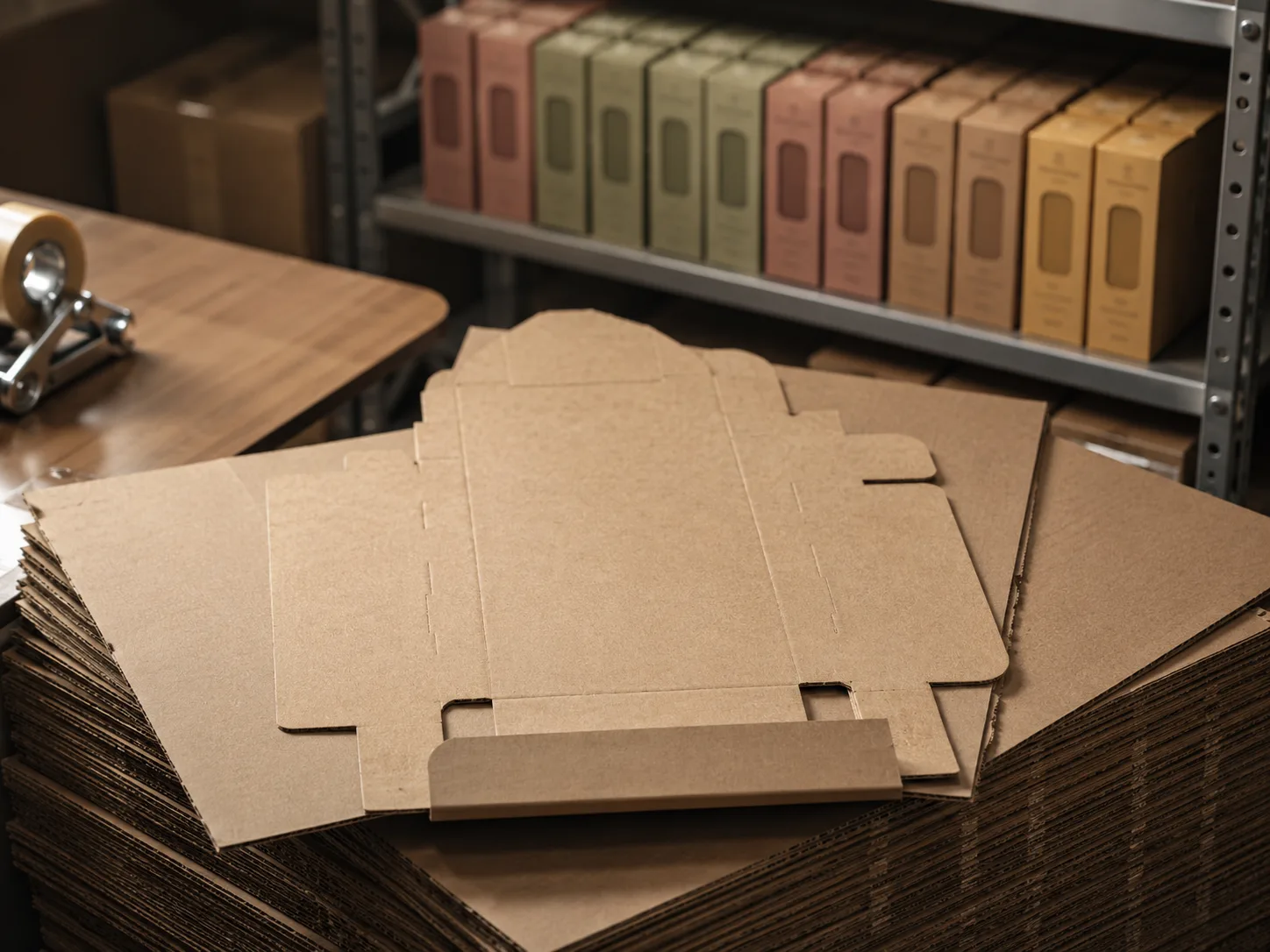
A counter display unit is a printed folding carton tray with a header panel standing behind it, shipped flat and erected in the store, holding a row of retail units at the counter or on a shelf end.
It is the only pack in this range whose first user is a member of the store staff, and it is drawn for them.

Three things make this a display. The sides are cut away toward the front, the back wall carries a header panel above it, and the whole thing is one flat blank until somebody in a shop opens it.
How a counter display unit is made, in five steps.
Drawn to illustrate the structure. Your dieline is developed to your product, free, before you commit. The sloped side walls are the reason a CDU cannot be a plain tray with a card taped to the back of it.
Ask for a structural designThe base forms first, then the header comes up behind it. The side walls are trapezoids, tall at the back and low at the front, which is what lets a shopper at counter height see the whole row rather than the front unit and five card edges behind it.
The header is a panel of its own creased off the back wall and it ships flat with everything else. It carries the campaign artwork and does most of the selling.
Every other pack in this range is opened by the person who bought what is inside. A display is opened by somebody at work, in a back room, with a trolley of other cases behind them.
That person has no instructions, no interest and about fifteen seconds. If the unit does not become a display in that time, it gets flattened and the cartons inside it go onto the shelf as ordinary stock.
So the structural work on a CDU is mostly about those fifteen seconds. It has to be obvious which way up it goes. It has to lock without tape, without tools and without a second pair of hands. Where the run allows, it comes out of the shipper already holding its units, because a display filled by hand in the back room often goes out half filled.
The header, the artwork and the sloped sides are what the shopper sees, if the first fifteen seconds go well.
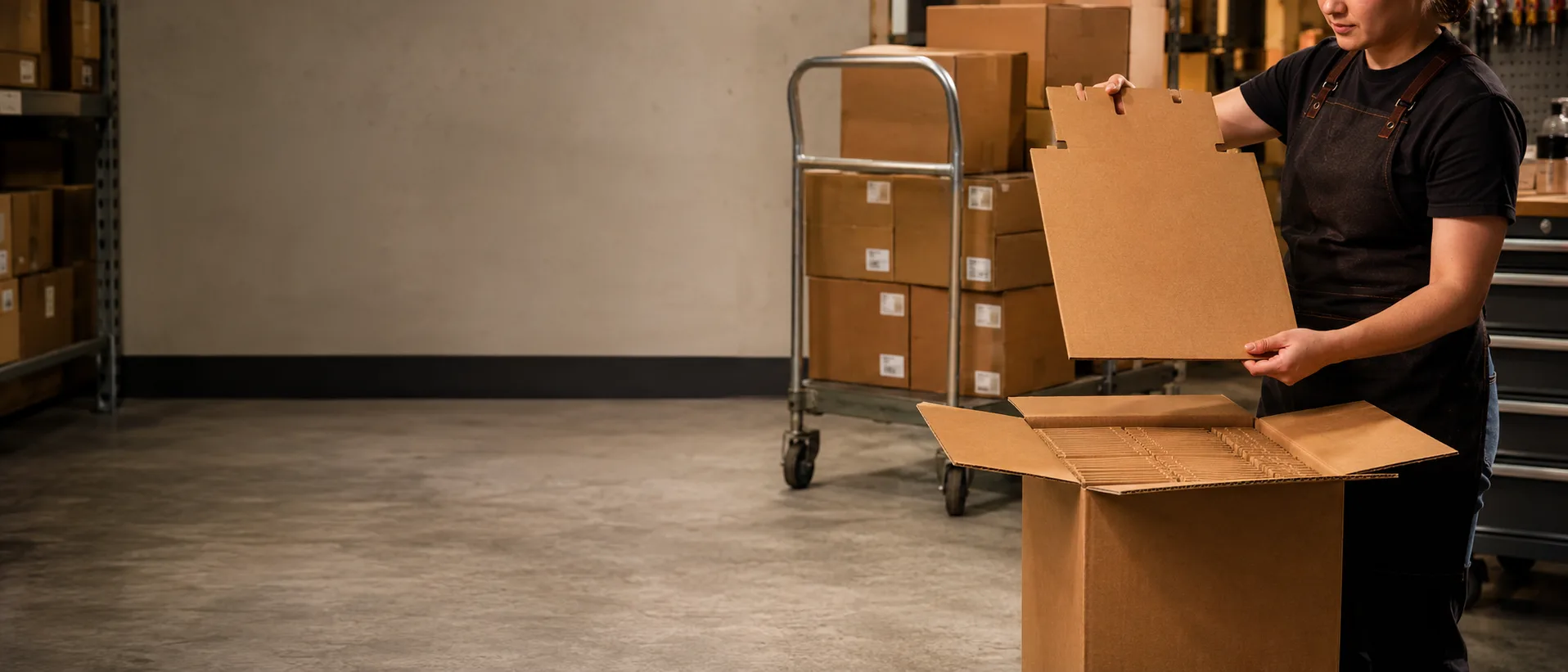
A display that takes two people and a roll of tape to erect ends up flat in the back room.
A CDU has to work in four places. It rarely fails at the counter.
Flat, under the weight of everything stacked above it, for the length of a sea crossing.
Erected in seconds by somebody with no instructions and one free hand.
Holding a full row without bowing, and still square when it is down to its last unit.
Restocked by the store from a case of loose units, without being lifted or rebuilt.
The usual choice in a trade marketing brief. Both put stock out without unpacking it, in different places in the store.
| Counter display unit | Shelf-ready shipper | |
|---|---|---|
| Where it goes | The counter, the till point, a shelf end | The shelf, in the fixture, in the planogram |
| What it is for | Impulse. A purchase that was not planned | Efficiency. Planned stock onto a shelf faster |
| The header | The main selling panel, carrying the campaign | Usually a printed panel that gets torn off along a perforation |
| Material | Printed folding board, offset, with finishes available | Usually corrugated, printed to a lower standard |
| Units held | A row. Small enough to be lifted with one hand when full | A case. Sized to the shelf rather than to the hand |
| Who decides it goes out | The store, every time. It is placed rather than planogrammed | The retailer, centrally, before the stock ships |
A CDU is placed at the discretion of the store, and nobody is obliged to put it out. That is why it has to be quick to erect.
A display holds a row of filled units, and a row of filled units is heavier than most briefs assume.
Twelve supplement cartons with bottles in them is a couple of kilos sitting on a base that has to stay flat, held up by walls that are cut away at the front by design. The board is specified against the filled weight of your row, not the size of the display. The most common reason a CDU bows is that its board was chosen by footprint.
A display is also at its weakest when it is nearly empty, because the units inside a full display help hold its walls apart. The structure is drawn to stay square down to the last unit.

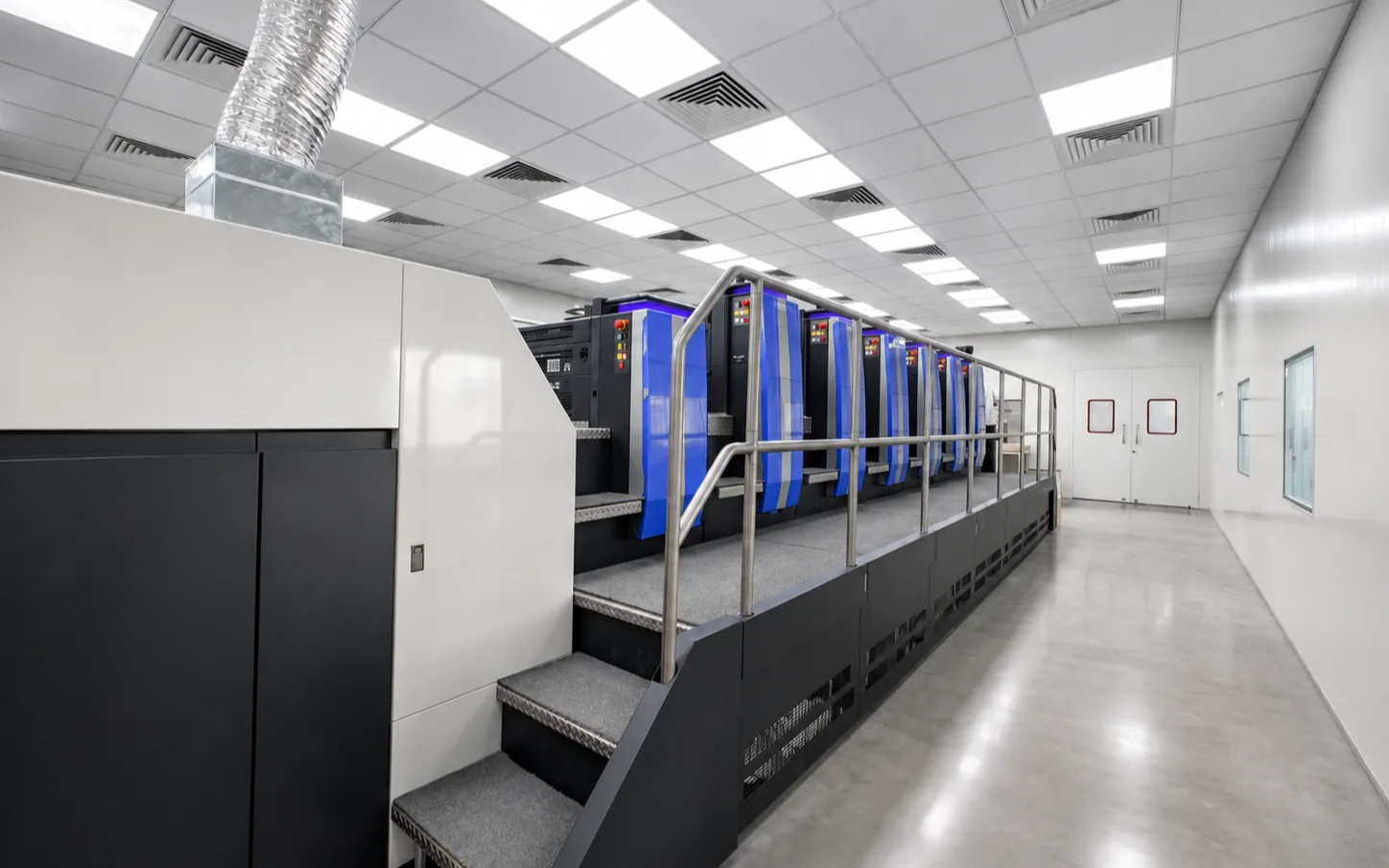
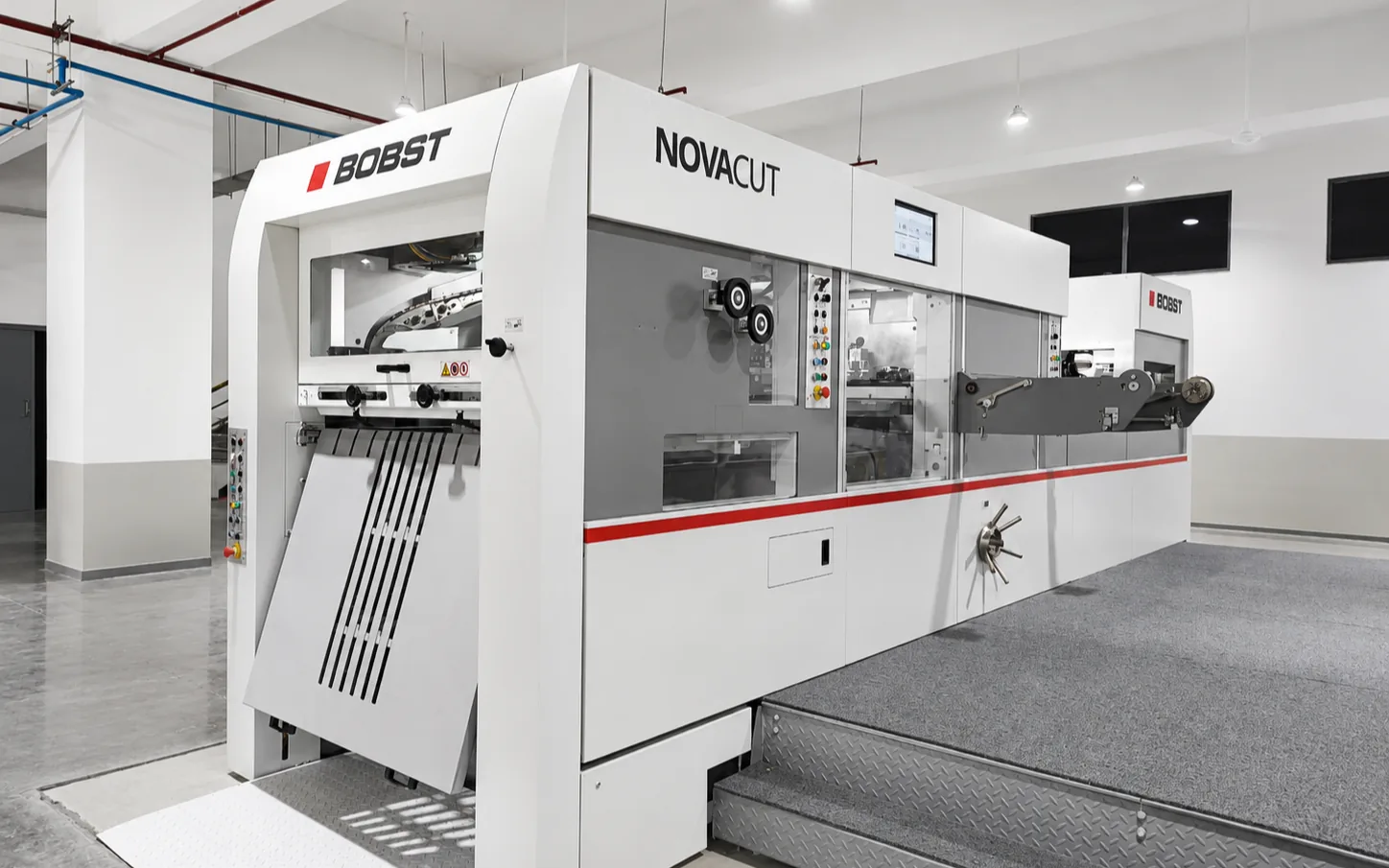
A CDU here is folding board on the same six-color offset line as the cartons it holds, not corrugated bought in and screen printed. The header carries the same artwork, foil and finish as the pack.
Cartons here are made on bulk production runs, and the cost per carton falls as the run grows, because plates, tooling and make-ready are fixed per run rather than per carton. A quote is priced against the volume you are planning. Landed pricing typically runs 20 to 30 percent below comparable US supplier quotes for the same specification. The quote is one landed price: the cartons, tooling, structural design, proofing, the documents that travel with the order, import duty, shipping and delivery to your address, in the US or anywhere else. Nothing is quoted on top of it later.
A counter unit is specified with the pack it holds, on the same board and usually on the same press form. These are the three it most often arrives with.
The usual occupant. The economical carton for the multi-SKU range a display is promoting.
See the structure: Reverse tuck endThe same units for the accounts that peg rather than place, off one program.
See the structure: Hang tab boxesWhere the display is holding loose product rather than packed units.
See the structure: Four corner trayCard games are an impulse category and the till point is the fixture that sells them. Decks, tuck boxes, rigid two piece sets and the counter units that hold a row of them are all made on the same line here.
Card game printing
A counter display unit is a printed folding carton tray with a header panel standing behind it, shipped flat and erected in the store, holding a row of retail units at the counter or on a shelf end. It is also called a PDQ or a counter unit, and retailers use those terms interchangeably. A shelf-ready shipper is a different thing: it goes into the fixture as part of the planogram, where a counter display box is placed at the till by the store.
In practice, none. PDQ stands for pretty darn quick and started as a trade name for units designed to be put out fast; CDU is the descriptive term. Different retailers and different agencies use one or the other, and a brief that says PDQ and a brief that says CDU are asking for the same object. We quote both from the same drawing.
Yes, glued and flat, usually in the same shipper as the units it holds. An assembled display is mostly air, and air is the expensive part of freight. Where the run allows it, the display ships pre-loaded with its row so the store lifts out one object rather than building one.
A display is opened by a member of store staff with no instructions and about fifteen seconds, so it has to be obvious which way up it goes and it has to lock without tape, tools or a second pair of hands. We erect samples by hand off the line and time it, because a display that fails that test gets flattened in the back room.
As much as the row you are putting in it: the board is specified against that figure. Most CDUs that bow had their board chosen by footprint. Tell us the unit, how many of them and what they weigh filled, and the board is chosen for that. Stiffness is measured in machine and cross direction on every production run.
Folding board, printed offset on the same press as the cartons it holds. The header then carries the same artwork, the same foil and the same finishes as the pack. Corrugated displays are a different trade and a coarser print standard, and for a counter-sized unit the strength is rarely the deciding factor.
Yes. Send the display flat if you have one, and tell us the unit it holds and how many, because the load sets the board. The structure is measured, board and caliper matched, and color matched to your existing standard under D65 and TL84 viewing conditions. Most switching programs are matched from a sample rather than rebuilt from a specification.
Last reviewed
A display is specified from the unit it holds, the number of them and the weight of the row filled. Send the pack and say where the display is going, and the structure comes back with the load engineered and a sample to erect against a stopwatch. A packaging planner replies within one business day.