Reverse tuck end
The other tuck construction: one flap to the back, one to the front, and the better yield across a family of versions.
See the structure: Reverse tuck endFOLDING CARTONS
A straight tuck end box is a tuck carton whose top and bottom flaps both hinge to the back panel, so both tuck the same way and the front panel is left unbroken.
In every other respect a straight tuck is the same as any other tuck box.

In a straight tuck blank, both tuck panels hang off the same panel, so nothing crosses the face.
How a straight tuck end carton is made, in five steps.
Drawn to illustrate the structure. Your dieline is developed to your product, free, before you commit. A straight tuck end also takes a window aperture and a hang tab as variants, and both change the blank rather than being applied to a finished carton: see window boxes.
Ask for a structural designOne blank, one glue seam, and both tuck panels hinged off the back. The sequence beside this cuts, scores and then folds the blank in the order the plant makes it: wrap the body, glue the seam, close the bottom, dust flaps in, tuck over. Nothing lands on the front panel.
This is the straight tuck end as Eastface makes it. Board is stated in gsm and in points of caliper, and the dimensions of your own carton are settled at structural design, before tooling is cut.
Hinging both flaps to the back is a trade, best settled before the artwork is drawn.
The gain is one continuous plane. A crease has a radius and a flap edge has a shadow, and on other constructions either can cross a foil block, an emboss or a solid color field on the front. On a straight tuck the whole front is one unbroken surface, so a finish that needs a flat plane gets one, and a photograph of the pack has one clean face.
The cost is sheet yield. Both tuck panels standing off the same end means a row of blanks leaves a lane of board between it and the next row, where a reverse tuck nests. Board is bought by the sheet, so that lane matters on a large run and barely on a small one. The full comparison is on the tuck boxes page.
Everything else is identical: the board, the press, the finishing, the folder gluer and the lead time.

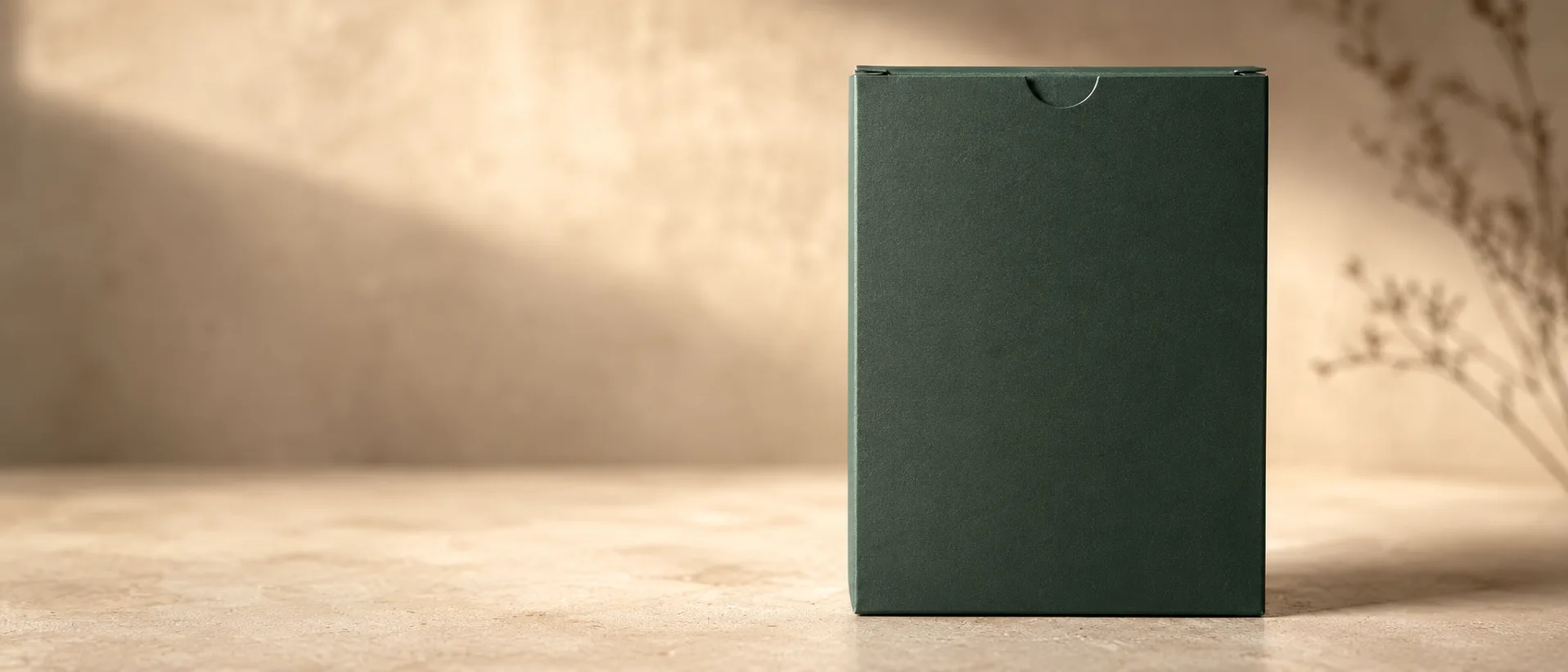
Both flaps hinge to the back, so nothing crosses the front.
Where it suits the pack, and where another construction suits it better.
The carton stands face front under store lighting and the artwork runs across the whole face. A foil block, an emboss or a solid color field all read better on a panel with no crease and no flap edge through it, and a photograph of the pack has one clean plane to work with.
You are running many versions of one carton, or the carton is filled on an automatic line, or the fill is heavy. A reverse tuck yields better across a family, and a locked base carries weight a tuck flap will bow under.
Both are closures for the same tuck panel, both are cut by the same die in the same pass, and the choice between them is made on the dieline rather than at the quote.
| Friction lock | Slit lock | |
|---|---|---|
| How it holds | The tuck panel is drawn very slightly wider than the opening, so it grips the front wall as it goes in | Shoulders on the tuck panel drop into short slits cut at the ends of the side creases and sit under the board |
| On the dieline | No extra cut. The lock is a dimension on the tuck panel | Two slits and two shoulders, drawn into the blank and cut with everything else |
| Board sensitivity | Depends on a panel that flexes past its neighbor and springs back, so a very stiff board holds it less well | Mechanical rather than frictional, so board weight moves it less |
| Opened repeatedly | Eases with handling, so the box gets looser over time | Holds, so it is specified where the pack is opened and closed often |
| Specify it when | The carton is opened once, or opened rarely, and the lip is doing the work | The carton is kept and reopened: a deck, a refill pack, anything that lives on a desk |
Neither closure changes the front panel, the board or the print, and neither is an operation on the finished carton. Ask for the slit lock while the structure is being drawn; adding it afterwards is new tooling.
A straight tuck end is usually specified because of what is going on the front, so the finishing and the structure are decided together. All of it prints and finishes on the flat sheet, before a single crease is folded.
The press is a six-color line, so a fifth and sixth spot color run in the same pass as the process set. A second pass would mean a second registration, and another chance for a foil block and the printed shape under it to disagree on the front panel.

Every straight tuck end Eastface makes is printed, cut, creased, folded and glued in one plant in Ahmedabad. The press has six units: four carry the process set and two stay free for spot colors, so the front panel is printed and registered in one pass.
Cartons here are made on bulk production runs, and the cost per carton falls as the run grows, because plates, tooling and make-ready are fixed per run rather than per carton. A quote is priced against the volume you are planning. Landed pricing typically runs 20 to 30 percent below comparable US supplier quotes for the same specification. The quote is one landed price: the cartons, tooling, structural design, proofing, the documents that travel with the order, import duty, shipping and delivery to your address, in the US or anywhere else. Nothing is quoted on top of it later.
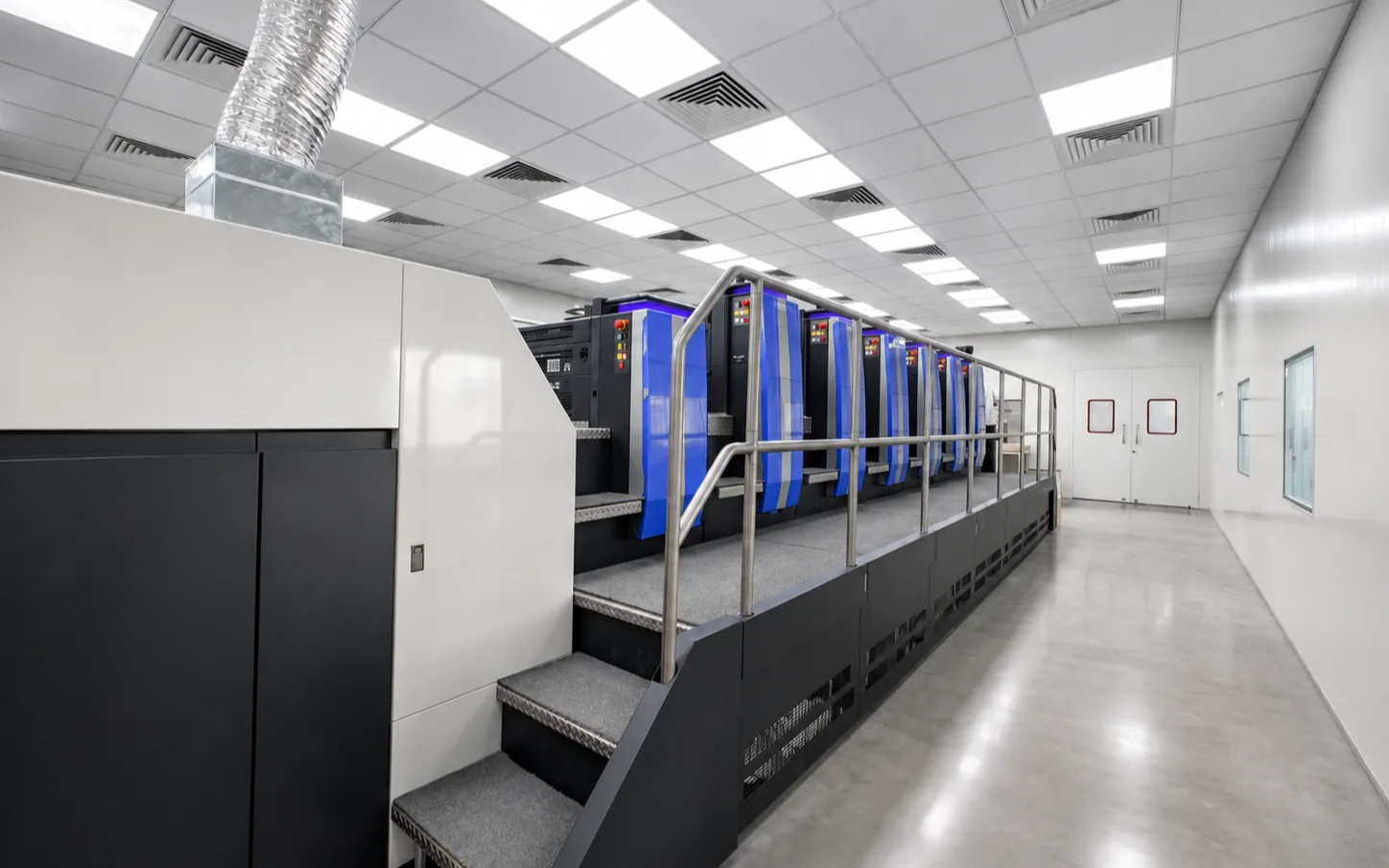
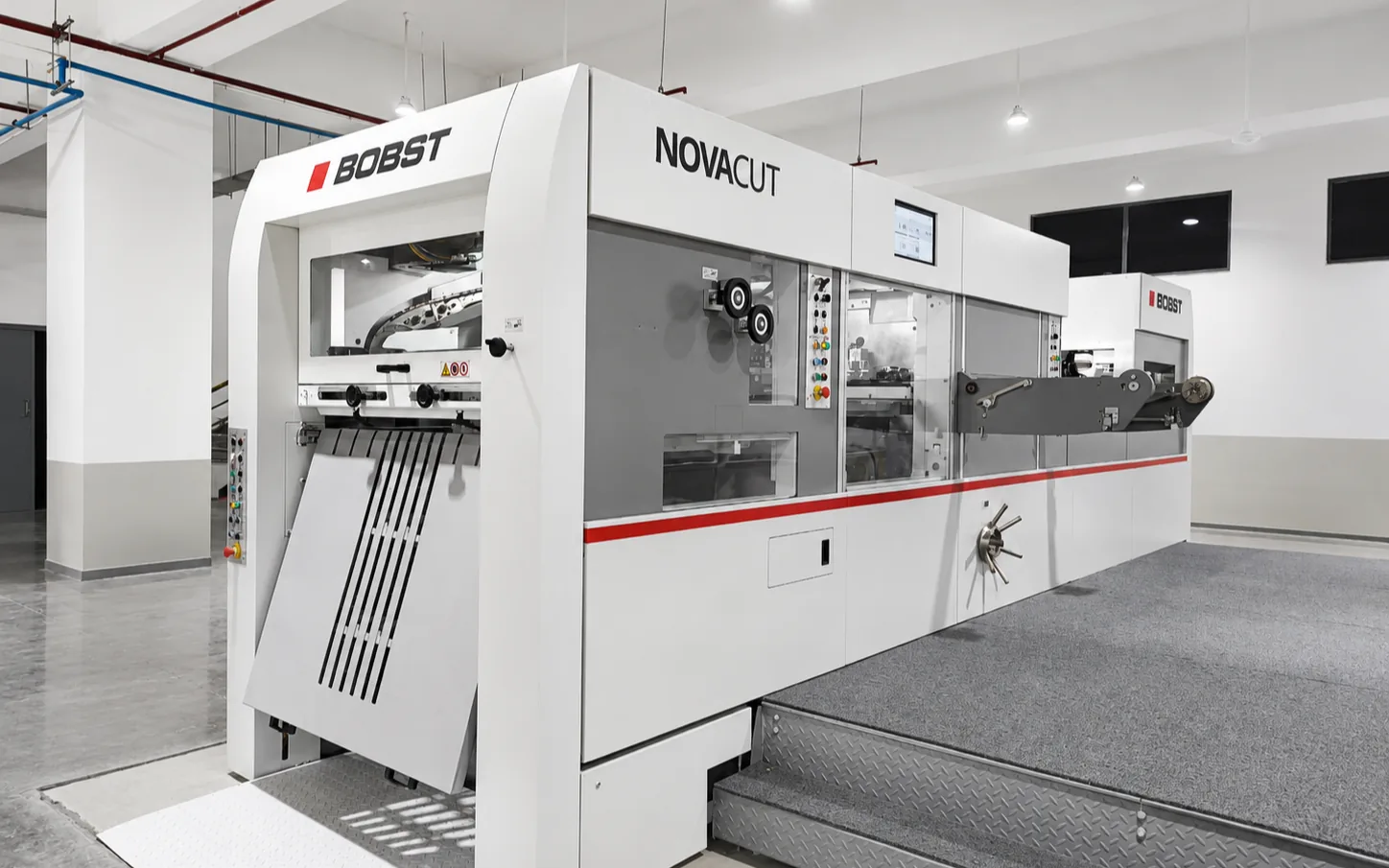
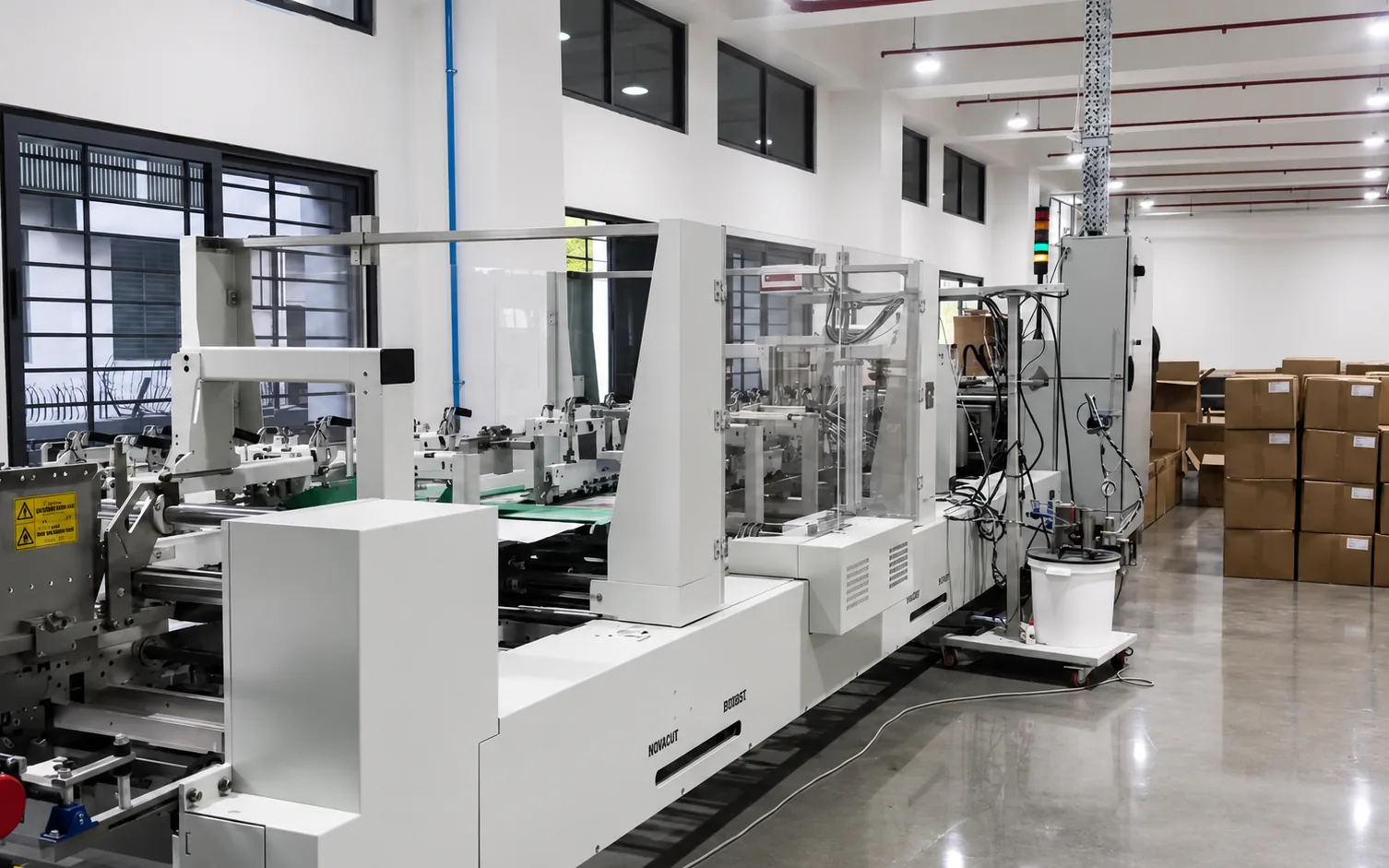
Same board, same press, same lead time. What changes is the geometry at the ends.
The other tuck construction: one flap to the back, one to the front, and the better yield across a family of versions.
See the structure: Reverse tuck endThe parent page, and where the two tuck constructions are compared property by property.
See the structure: Tuck boxesThe same carton with an aperture cut into the face and a film patch behind it.
See the structure: Window boxesAn unbroken front panel takes a guilloche, a microtext line or a serialized panel with no crease running through it. Where a pack is being copied, that panel carries the authentication.
Anti-counterfeiting and brand protectionA straight tuck end box is a tuck carton whose top and bottom flaps both hinge to the back panel, so both tuck the same way and the front panel is left unbroken. It is cut and creased from one blank, glued on a single side seam and shipped flat, and both ends open and close by hand.
A straight tuck keeps the front panel unbroken because both flaps hinge to the back; a reverse tuck hinges one flap to the front, which puts a crease across the face but lets the blanks nest on the press sheet. Specify a straight tuck for a hero SKU that faces the shopper and a reverse tuck for a family of versions. The full comparison is on the tuck boxes page.
Anything that stands face front and is judged on the face: supplement bottle cartons, skincare and serum cartons, small cosmetic packs, and premium single SKU products where the front panel carries a foil or an emboss. It is the retail facing construction, chosen for what a shopper sees rather than for cost.
A slit lock is a tuck panel with small shoulders on it that drop into short slits cut at the ends of the side creases, so the flap is held mechanically rather than by friction against the front wall. Ask for one where the buyer opens and closes the carton often, because a friction lock eases with handling and a slit lock does not. It is cut by the same die in the same pass, so it costs nothing on the run, but it has to be drawn into the structure before tooling.
Straight tuck end cartons here run on 190 to 700 gsm, SBS or FBB, with kraft-back and recycled board also stocked. The weight is chosen against what the carton holds and how it is handled, not from a default. Board is specified in both gsm and points of caliper on every quote from this plant.
Yes. The aperture is die cut in the front panel and a film patch applied over it from the inside, so the window is part of the blank rather than an operation on a finished carton. Where the aperture can sit, and when taking board out of the front panel moves the specification up a step, is on the window boxes page.
Yes. Send a carton, and the flap hinges, the front panel dimensions and the glue lap side are all read off the object rather than guessed from a drawing. The structure is measured, board and caliper matched, and color matched to your existing standard under D65 and TL84 viewing conditions. Most switching programs are matched from a sample rather than rebuilt from a specification.
Last reviewed
Fitment is settled before the dieline is drawn. Send the bottle, the tube or the current carton, and the structure comes back specified with a prototype to test on your own line. A packaging planner replies within one business day.