FINISHES
Drip off coating for boxes
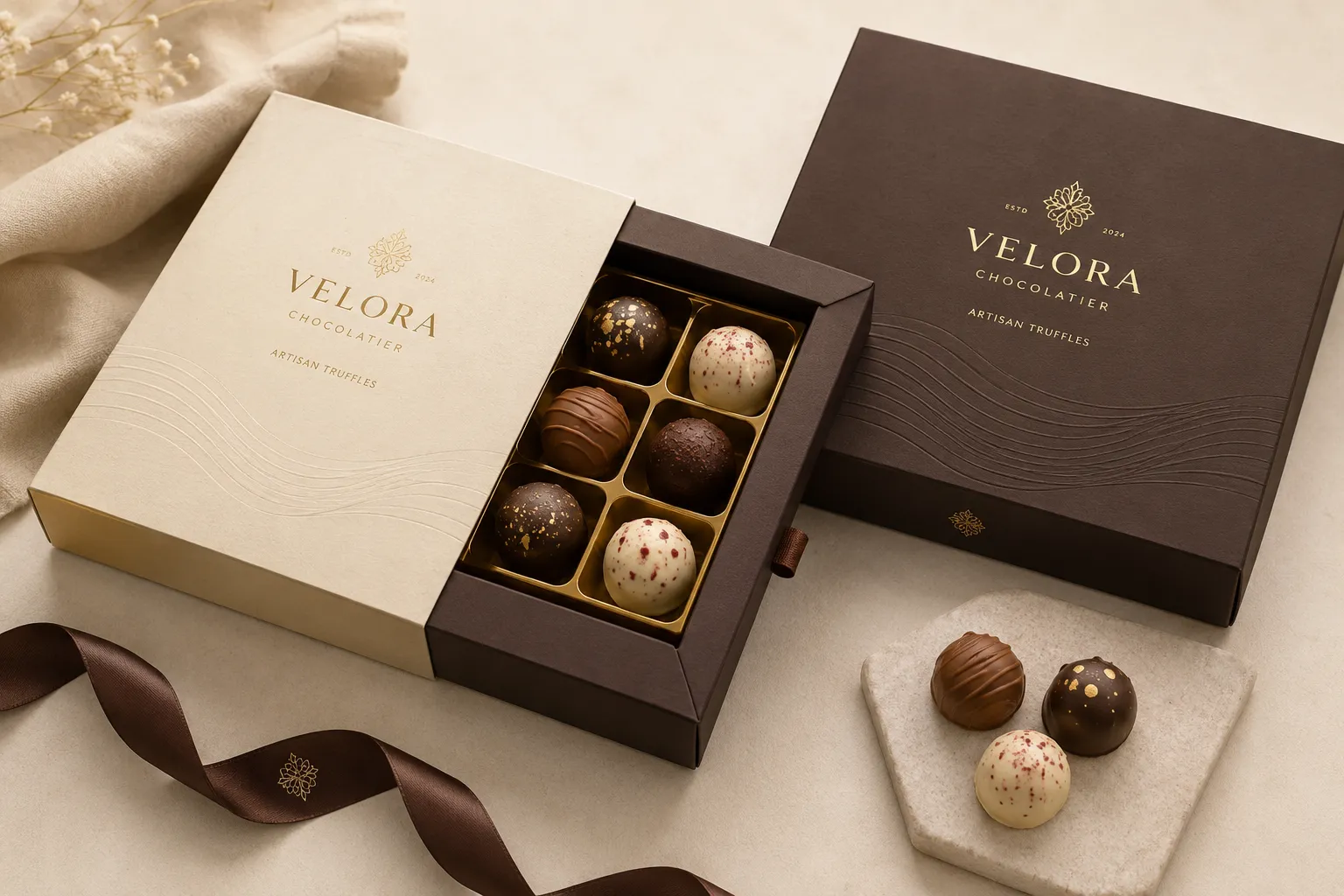
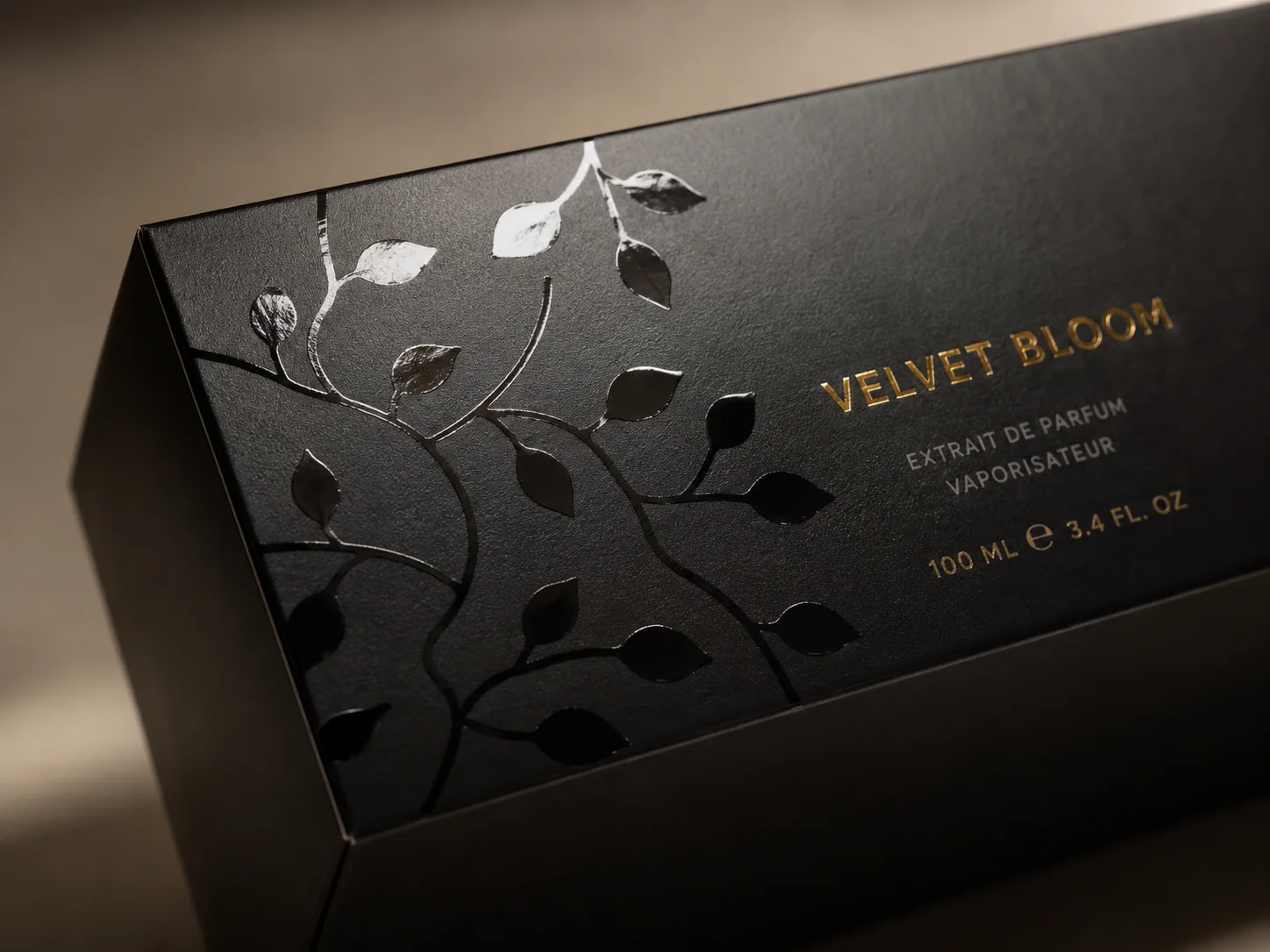
Drip off coating creates matte and gloss contrast on a folding carton in a single pass. A matte aqueous coating is printed as an image, then a gloss UV coating is flooded over the whole sheet. The UV pulls away from the matte areas, leaving high gloss everywhere else.
Effect
Matte and gloss at once
On one panel, in one pass. The contrast is chemical.
Coverage
Free
The price does not move with how much of the face the pattern takes.
Edge
Soft
The boundary is where one coating stops accepting the other.
Best at
Whole panel patterns
Fine type and hairline rules close up where the two coatings meet.
Two coatings that refuse each other
The effect is chemistry rather than registration, and the last two frames are the reason there is nothing to align: the gloss goes on across everything and then pulls back from where the matte already is.
A cross-section showing how drip off coating produces its contrast, in 4 steps.
- Printed board. A printed sheet entering the coating stations. Both coatings go on in this one pass, with infrared drying between them.
- Matte, as an image. The matte aqueous is laid where the plate puts it, exactly as a spot coating would be. At this point the sheet carries matte areas and bare printed areas.
- Gloss, flooded over. The gloss UV goes across the whole sheet, matte areas included. Nothing is being registered to anything: the flood does not know where the matte is.
- It pulls away. The UV retreats from wherever the matte already sits, leaving high gloss everywhere else. The boundary is where one coating stops accepting the other, which is why it is soft.
01Printed board
Entering the coating stations
Cross-section, magnified. Not to scaleHover a layer to name it
01/04Step through it
Drip off specification
Chemistry produces the effect, not tooling or registration, so the specification is short. Each finish page here is set out the same way.
The pass
- Process
- A matte aqueous coating laid as an image, then a gloss UV coating flooded over the whole sheet, inline on press. Both are described on the page for the two coatings involved, and the structure underneath is usually a seal end or a sleeve.
- Passes
- One. There is no second operation and no separate machine.
- Registration
- Self-registering. The two coatings repel one another, so there is no second pass to align to the first.
- Tooling
- None. The matte image is made into a plate from the layer supplied in the artwork.
What it will hold
- Not suitable for
- Fine type, hairline detail and tight edges. It is a coverage effect, not a precision one.
- Also called
- Drip-off, differential coating, matte gloss drip off, drip off UV.
Send the pattern before it is committed
Drip off holds larger elements than spot UV does. Send the design and we will say which parts of it survive the process and which ones need a different one.
Drip off vs spot UV
The same visual result, two different ways. What separates them is how much of the panel the contrast covers.
| Compared on | Drip off coating | Spot UV |
|---|---|---|
| How the contrast is produced | Two coatings that repel one another, laid in one pass | A gloss coating applied only where the plate puts it |
| Passes required | One | One for flat UV, a separate pass for screen UV |
| Edge sharpness | Soft. The boundary is where one coating stops accepting the other | Sharp. The edge is as clean as the plate |
| Minimum detail | Larger. Fine type and hairlines close up | Finer, and finest in the flat version |
| Tactile | No. Sheen only | Flat UV is not. Raised and screen UV are |
| Cost driver | Does not scale with coverage | The area covered |
| Best use | Full panel patterns, backgrounds and large graphic fields | Defined shapes, logotypes and anything with a crisp edge |
Where the design needs a crisp edge on a small element, use gloss on a defined area.
How drip off runs here
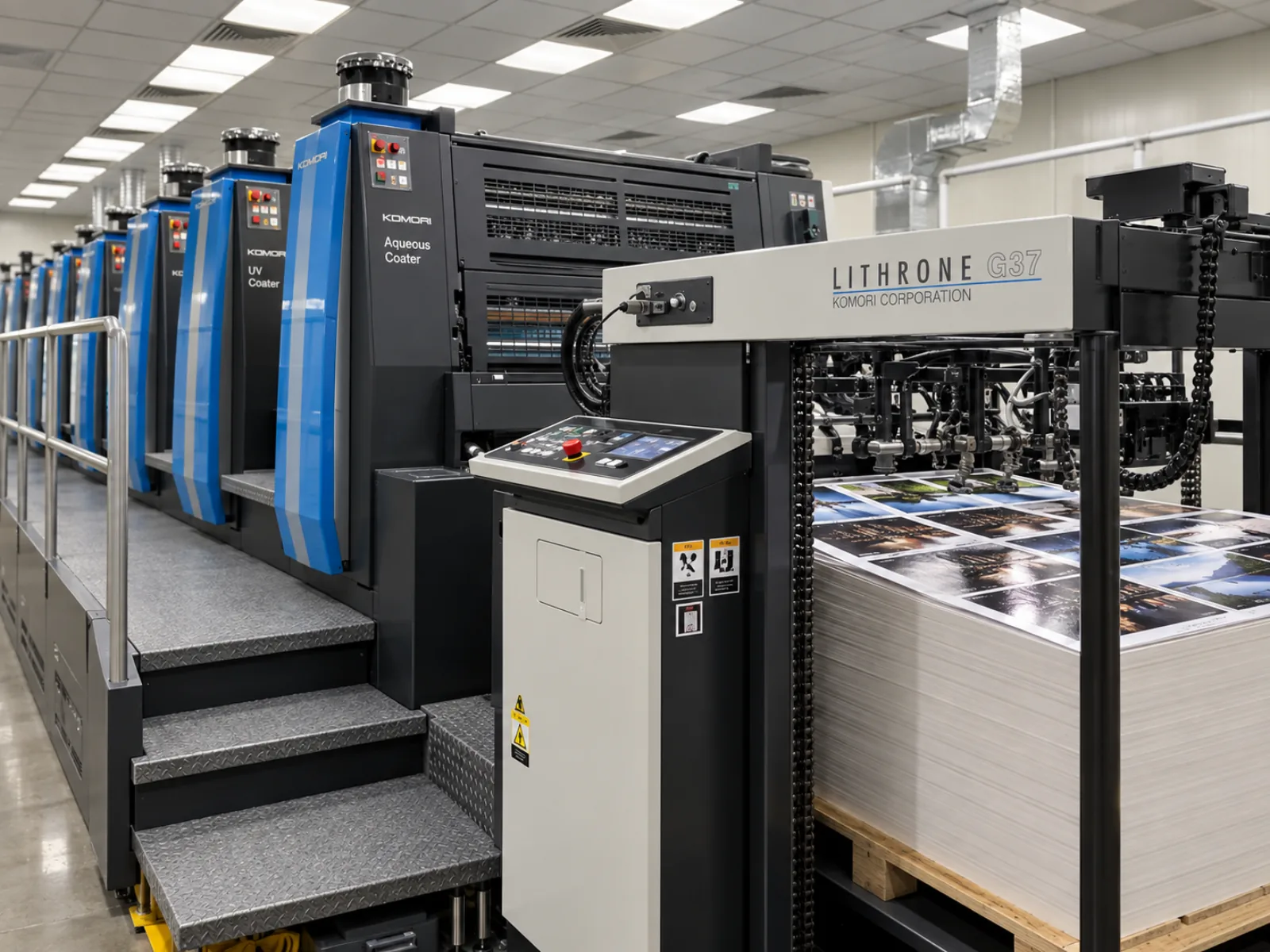
Both coatings go on in one press pass
The matte aqueous and the gloss UV are laid in the same pass, with infrared drying between them. The machine has to carry two coating stations and interstage curing, and the job is scheduled through both at once. The six color Komori does that.
The two coatings repel each other
The matte aqueous is imaged from a plate. When the gloss UV floods the sheet it pulls away from wherever the matte already sits. Nothing registers to anything, so a drip off pattern cannot be out of register, and its edges are softer than a spot UV plate would give.
Drip off and spot UV on one panel
One panel carrying a drip off pattern beside the same pattern in flat spot UV. The two edges can be compared directly.
Cost logic
Drip off delivers full coverage contrast in one pass. Spot UV applies the coating to a defined area and is priced by that area. On designs where the contrast covers most of the panel, drip off is the cheaper route to the same visual result.
A gloss pattern over ten percent of a face is a spot UV job. Over seventy percent, spot UV gets expensive. Drip off takes coverage out of the price, so it is common on confectionery and household cartons where the pattern is the whole face.
What it costs against a US supplier
Landed cost runs 20 to 30 percent below a comparable US supplier quote. That is one price: board, printing, finishing, tooling, import duty, shipping and delivery to your door, with nothing added later.
Get a quoteQuestions about drip off coating
A way of producing matte and gloss on the same panel in one pass through the press. A matte aqueous coating is laid down as an image from a plate, then a gloss UV coating is flooded across the whole sheet, and the UV pulls away from wherever the matte coating already sits. The result is high gloss everywhere the matte was not, with no separate operation and nothing to register.
Spot UV puts a gloss coating exactly where a plate places it and is priced by the area that coating covers. Drip off produces the contrast chemically across the whole sheet in one pass, so coverage does not move the price. The trade is edge quality: a spot UV boundary is as sharp as the plate, and a drip off boundary is soft because it is where one coating stops accepting the other. Small crisp elements are a spot UV job and large graphic fields are a drip off job.
No. Fine type and hairline rules close up as the two coatings meet, and the resulting edge reads as a printing fault rather than as a finish. The practical rule is to keep the effect to shapes and fields and to set any type outside the pattern. Where the detail matters, use spot UV.
It is a coated carton rather than a laminated one, so there is no film to separate from the fiber before the board can be repulped. The matte side is a water-based aqueous coating, which stays in the fiber stream, and the gloss side is a UV coating, which is generally repulpable and harder on the stream than aqueous. Against a matte laminated carton with a spot gloss over it, which is the usual way of reaching the same look, drip off is the easier of the two to recycle.
The matte areas supplied as their own layer, solid rather than as a tint, because the matte coating is imaged from a plate and a plate has no halftones. Keep the elements in that layer large: fine type and hairline rules close up where the two coatings meet, so set any type outside the pattern. You do not need to draw the gloss areas at all, since the gloss floods the whole sheet and lands wherever the matte is not. Send the design before it is committed and we will say which parts of it survive the process.
No. Both coatings are applied in the same pass through the press with infrared drying between them, which is what the effect depends on. The press has to carry two coating stations and interstage curing, and the job is scheduled through both at once.
Last reviewed
One panel, two processes, side by side
The swatch carries a drip off pattern next to the same pattern in flat spot UV. Send the design with the request and we will say which of the two it needs.