Straight tuck end
The other tuck construction: both flaps to the back, an unbroken front panel, and the one to specify for a hero SKU.
See the structure: Straight tuck endFOLDING CARTONS
A reverse tuck end box is a tuck carton whose top flap hinges to the back panel and whose bottom flap hinges to the front, so the two ends tuck in opposite directions.
Opposed flaps mean the blank has a tab standing off each end rather than two off one, and that is what lets one blank nest against the next on the press sheet.

In a reverse tuck blank, one tuck panel stands off the left end and the other off the right. Compare it to the straight tuck blank, where both stand off the same end.
How a reverse tuck end carton is made, in five steps.
Drawn to illustrate the structure. Your dieline is developed to your product, free, before you commit. Sheet yield is calculated on your own blank at your own dimensions when the job is quoted. No percentage is published here, because the gain moves with the size of the blank against the size of the sheet.
Ask for a structural designOne blank, one glue seam, and the two tuck panels hinged off opposite panels. The sequence beside this cuts, scores and then folds the blank in the order the plant makes it: wrap the body, glue the seam, close the bottom, dust flaps in, tuck over, and the second end tucks the other way round from the first.
This is the reverse tuck end as Eastface makes it. Board is stated in gsm and in points of caliper, and the dimensions of your own carton are settled at structural design, before tooling is cut.
A press run is priced by the sheet, so unit cost depends on how many cartons fall on one. Opposed flaps fit more of them.
Straight tuck
Twenty blanks, three waste lanes
Reverse tuck
Twenty-five blanks, no waste lane
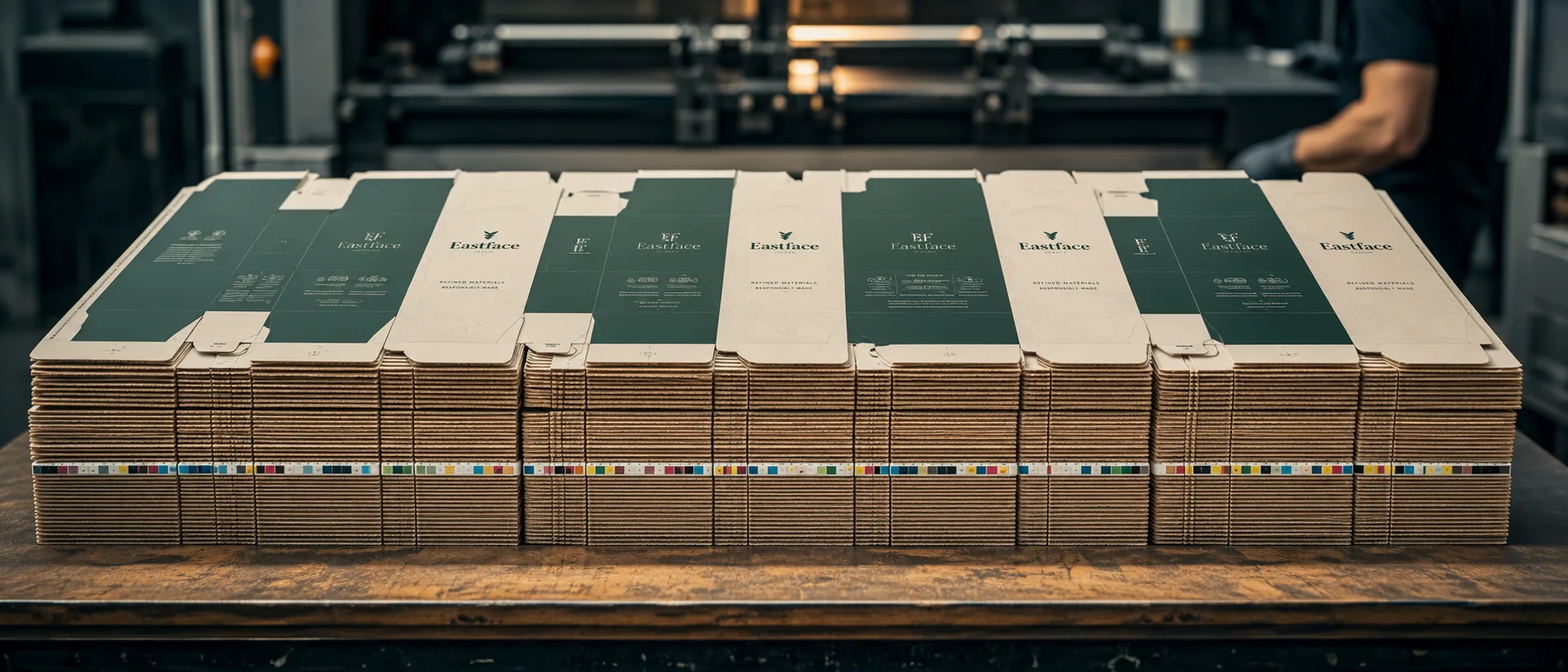
A better nesting on the sheet is a saving on every carton of every version.
What each costs depends on whether the blank itself changes.
A plate change against the same tooling. The blank and the die stay the same, so the twenty-first version costs a plate rather than a die. This is the change a family makes most often.
A new dieline and new tooling, because the carton itself is a different shape. Plan the whole range of sizes before the first die is cut.
Runs against the stored job record and the approved shade card for that part number, so version nineteen matches version one across a year of staggered reorders.
Every row here is multiplied by the number of versions you run.
| One carton | A family of twenty | |
|---|---|---|
| Sheet yield | A small saving on one run | A saving on every carton of every version, compounding across the line |
| Tooling | One die, cut once | Still one die, as long as every version is the same size |
| Version changes | None to plan for | A plate change each time, against tooling that does not move |
| Reordering | One job record | A part number and a retained shade card per SKU, recalled rather than reset |
| What decides the structure | The front panel, because one carton faces the shopper | The yield, paid on every unit of every version |
The property-by-property comparison of the two tuck constructions (flap hinges, front panel, opening, where each one wins) is on the tuck boxes page.
A brand running one carton chooses a straight tuck for the unbroken face. A brand running twenty chooses a reverse tuck, because every cost is multiplied by twenty.
The yield is the first multiple. A better nesting on the sheet is a saving on every carton of every version, and it compounds across a line.
Versioning is the second. On an offset line a flavor change or a count change is a plate change against the same tooling, so the twenty-first version costs a plate rather than a die. A reverse tuck tools once and runs many times.
Reordering is the third. Each SKU carries its own part number here, and a repeat runs against the stored job record, so a family of versions stays consistent over a year of staggered reorders. Against a straight tuck, you trade an unbroken front panel for a better yield; the full comparison is on the tuck boxes page.
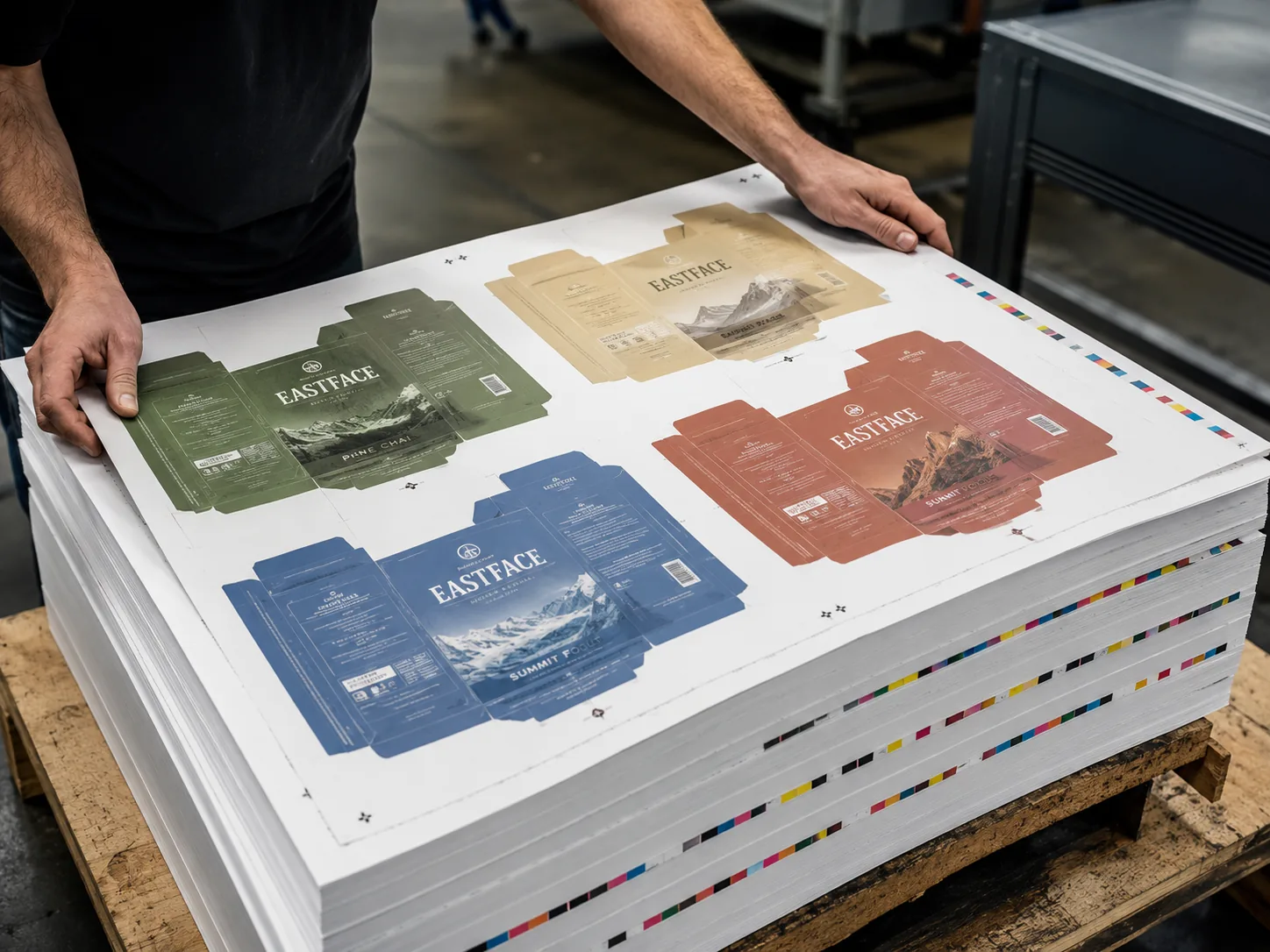
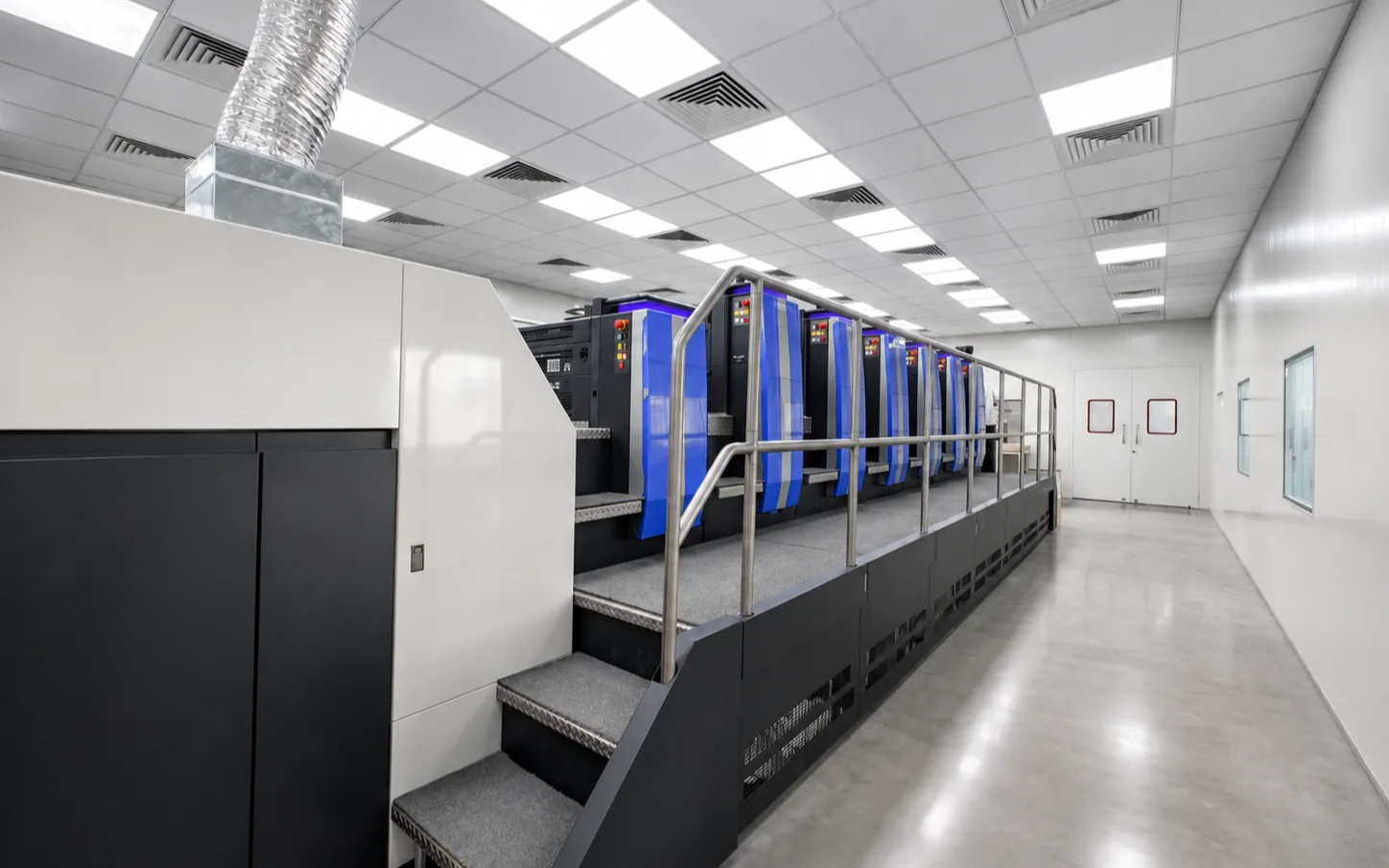
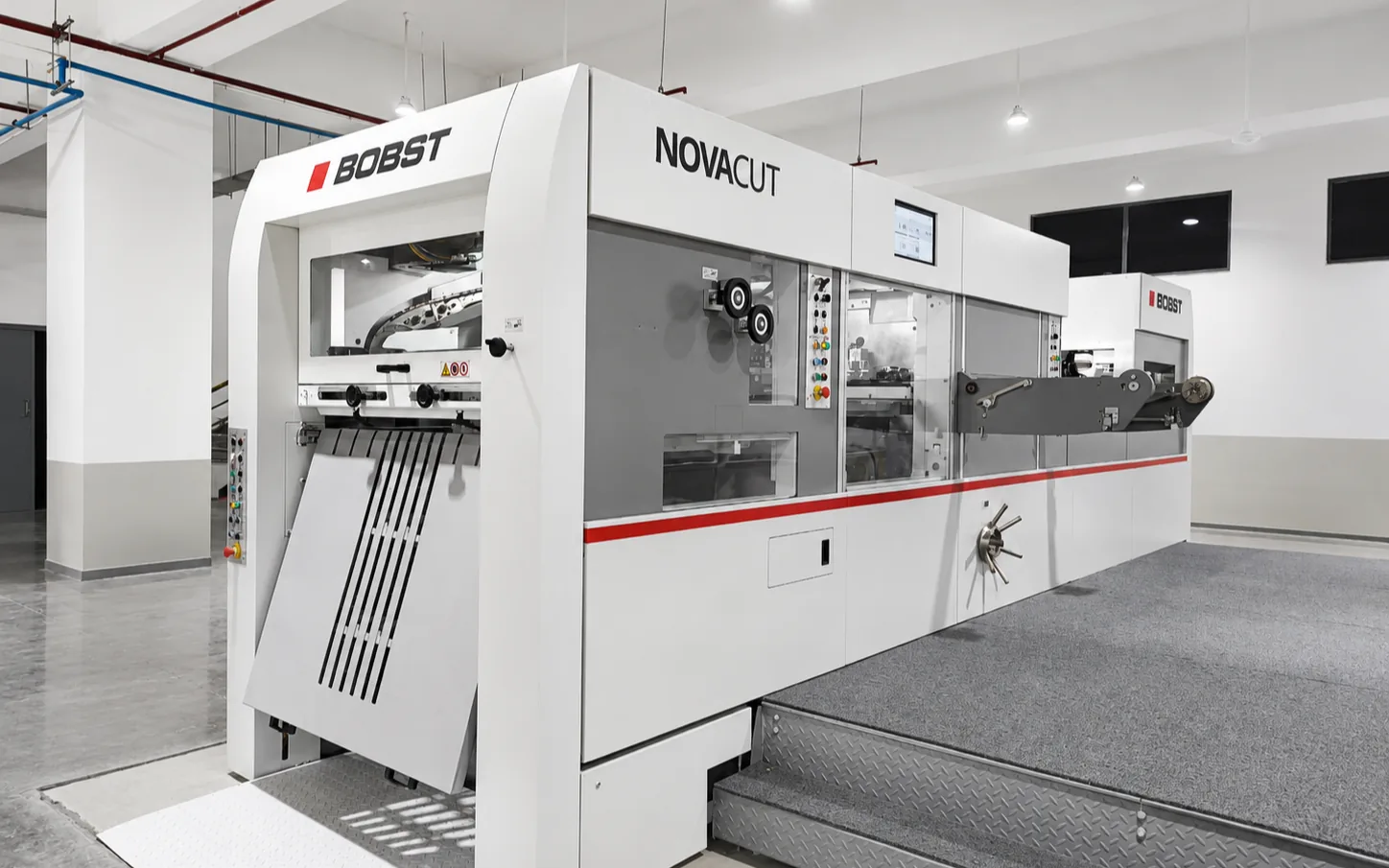
The yield is set by the imposition on the press sheet, in one plant in Ahmedabad. Cutting and creasing, folding and gluing all follow the sheet, and the whole family of versions runs on the same tooling behind the same six-color line.
Cartons here are made on bulk production runs, and the cost per carton falls as the run grows, because plates, tooling and make-ready are fixed per run rather than per carton. A quote is priced against the volume you are planning. Landed pricing typically runs 20 to 30 percent below comparable US supplier quotes for the same specification. The quote is one landed price: the cartons, tooling, structural design, proofing, the documents that travel with the order, import duty, shipping and delivery to your address, in the US or anywhere else. Nothing is quoted on top of it later.
Same board, same press, same lead time. What changes is the geometry at the ends.
The other tuck construction: both flaps to the back, an unbroken front panel, and the one to specify for a hero SKU.
See the structure: Straight tuck endThe parent page, and where the two tuck constructions are compared property by property.
See the structure: Tuck boxesA tuck at the top over a pre-glued locking base, for a fill a tuck flap will not hold.
See the structure: Auto lock bottomSupplement lines run the most versions of this structure: a single livery across capsules, gummies, powders and sachets, in three counts each, reordered on staggered cycles through the year. The supplement hub is written for that buyer, with the panel, the fitment and the format decisions in one place.
Supplement packaging
A reverse tuck end box is a tuck carton whose top flap hinges to the back panel and whose bottom flap hinges to the front, so the two ends tuck in opposite directions. It is cut from one blank, glued on a single side seam and shipped flat, and it is the most widely specified folding carton construction in retail.
Because more blanks fall on a press sheet. With a tuck panel standing off each end rather than both off one, a row of blanks nests against the row above it instead of leaving a lane of board between them, and board is bought by the sheet. Nothing else about the job changes: the same press, the same plates, the same finishing and the same lead time.
Specify a reverse tuck when you are running a family of versions and the yield is being multiplied across all of them. Specify a straight tuck when a single carton faces the shopper and the front panel has to be unbroken, because a reverse tuck puts a crease across the face where the bottom flap hinges. The full comparison is on the tuck boxes page.
Supplement and vitamin lines with many counts and flavors, cosmetic tube cartons, over the counter healthcare packs, and anything sold as a range rather than as a single hero product. It is also the usual answer where a carton ships in an outer and never faces a shelf, because there is no face to protect.
If the new version is the same carton with different artwork (another flavor, another count, a seasonal), it is a plate change against the same tooling, because the blank has not moved and the die does not have to. If the new version is a different size, it is a new dieline and new tooling, because the blank itself is a different shape. So plan the range of sizes before the first die is cut.
An approved shade card is retained against each part number and is the production reference for every run that follows. On press, PDC-SG closed loop density control reads the color bar and corrects ink balance while the run is happening, and stored job parameters recall the settings rather than having them dialed in again. Color is checked against the approved standard under D65 and TL84 viewing conditions before release.
Yes, and across a family rather than one SKU. Send one carton per size and the versions that share a size run off one die. The structure is measured, board and caliper matched, and color matched to your existing standard under D65 and TL84 viewing conditions. Most switching programs are matched from a sample rather than rebuilt from a specification.
Last reviewed
Send the family: the dimensions, the number of versions and the volume you are planning across them. The yield, the plate changes and the reorder pattern decide the price. A packaging planner replies within one business day.