Skip to content

MACHINERYAutomatic platen die cutter

Bobst Novacut

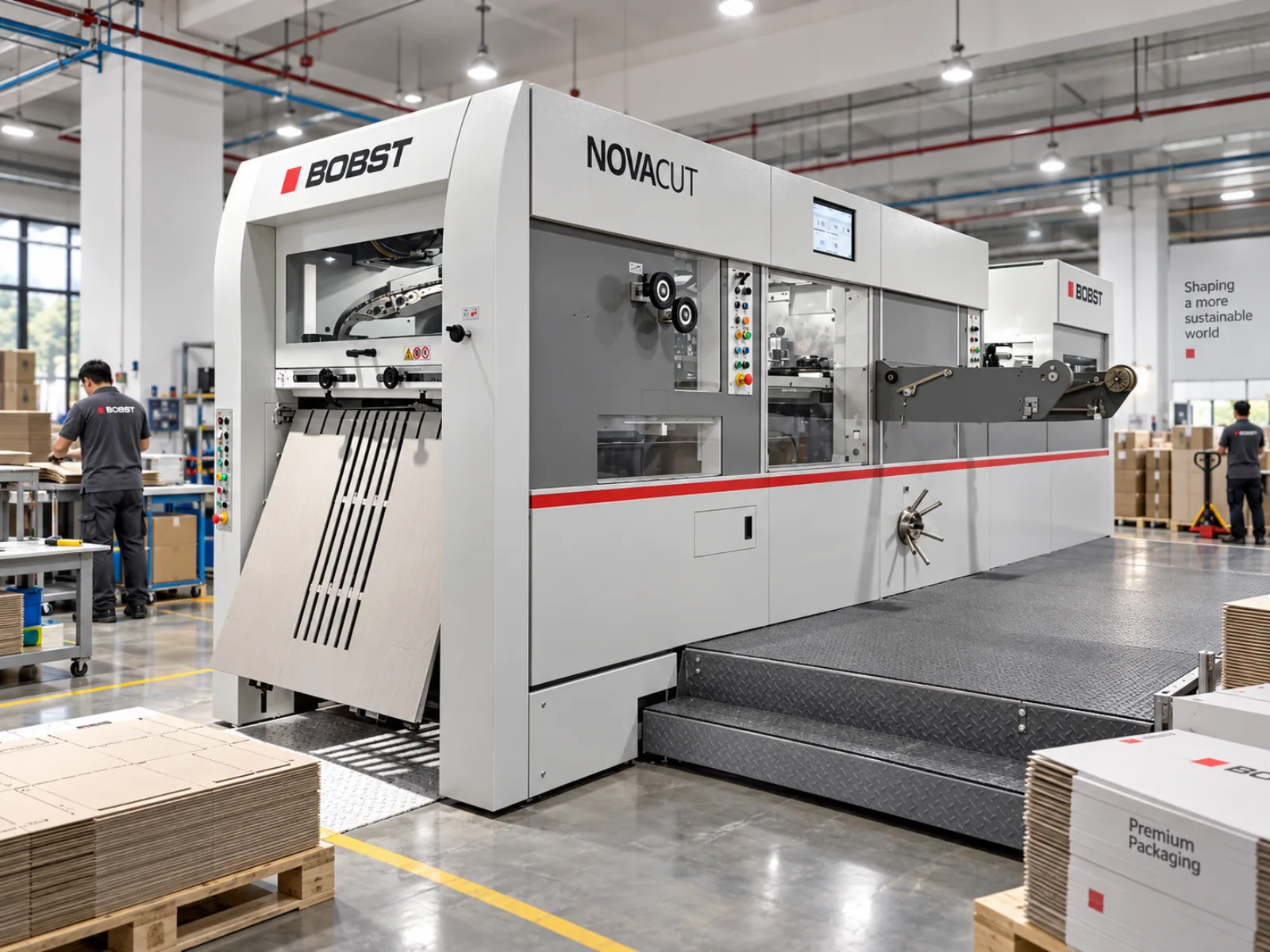
The Bobst Novacut is the automatic platen die cutter every Eastface carton is cut and creased on: it strikes the printed sheet against the cutting forme, holds registration across the run, and strips and blanks in line.

The press decides how a carton looks. The die cutter decides whether it erects square, closes cleanly and runs on your line. Below is what it holds and how it is checked.

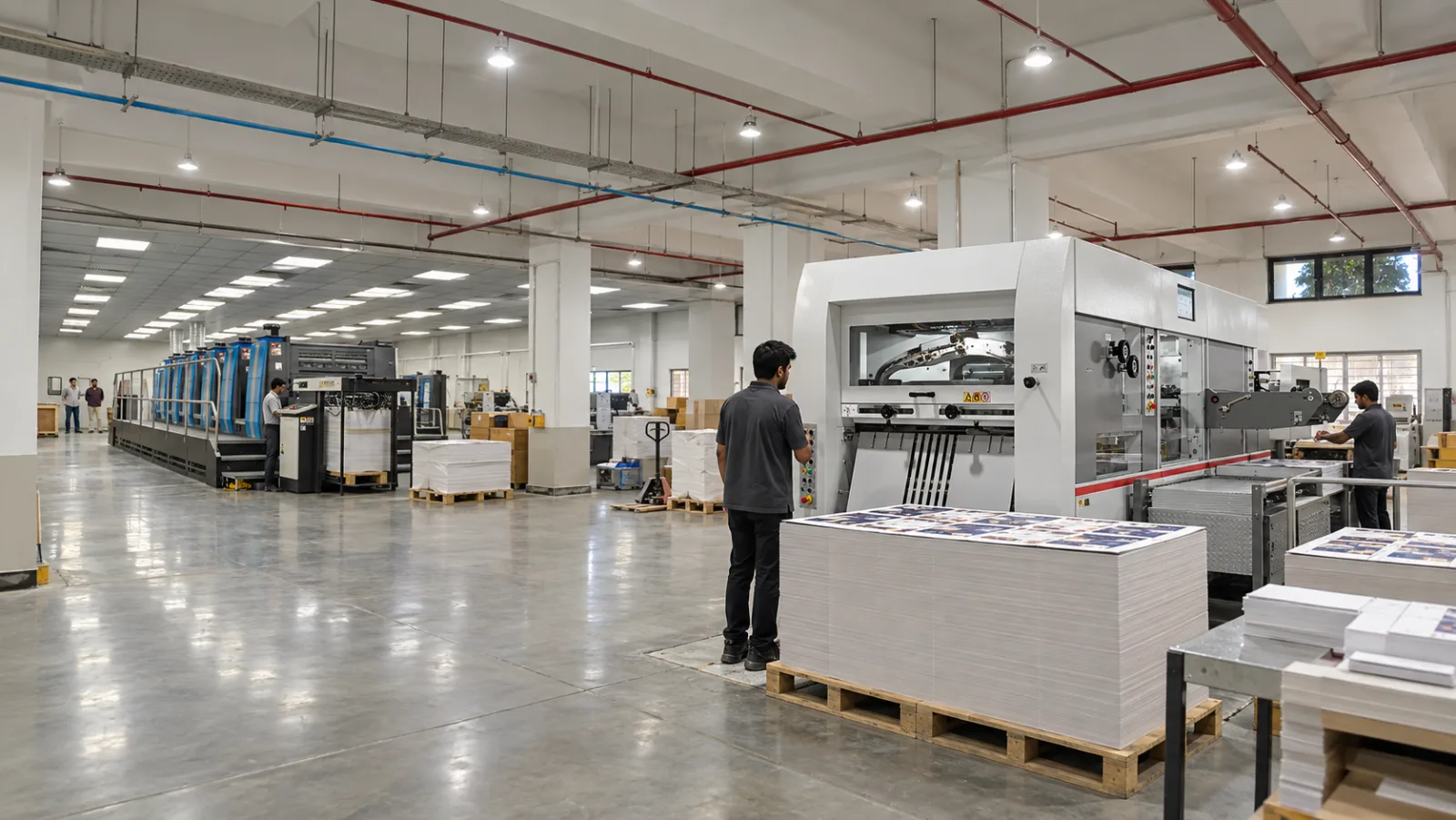
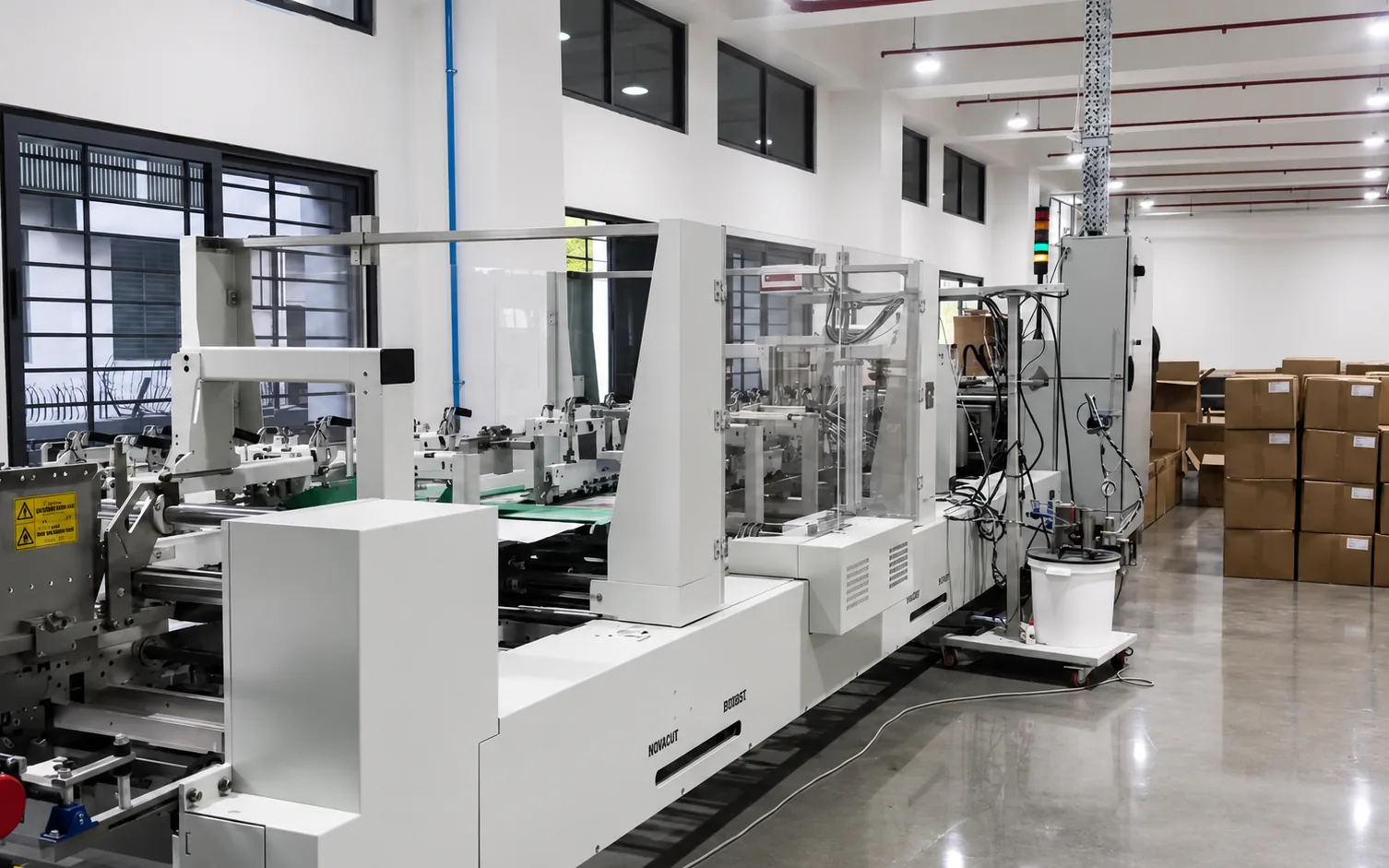
The Bobst Novacut platen die cutter on the plant floor, seen from the feeder end with the whole line running back to the delivery and pallets of cut blanks standing at both ends of it.

On our floor

Feeding
AUTOPLATEN registration
Changeover
CENTERLINE system
Output
Stripping and blanking, in line

What comes off the die cutter

Three things this machine decides, photographed on our floor.

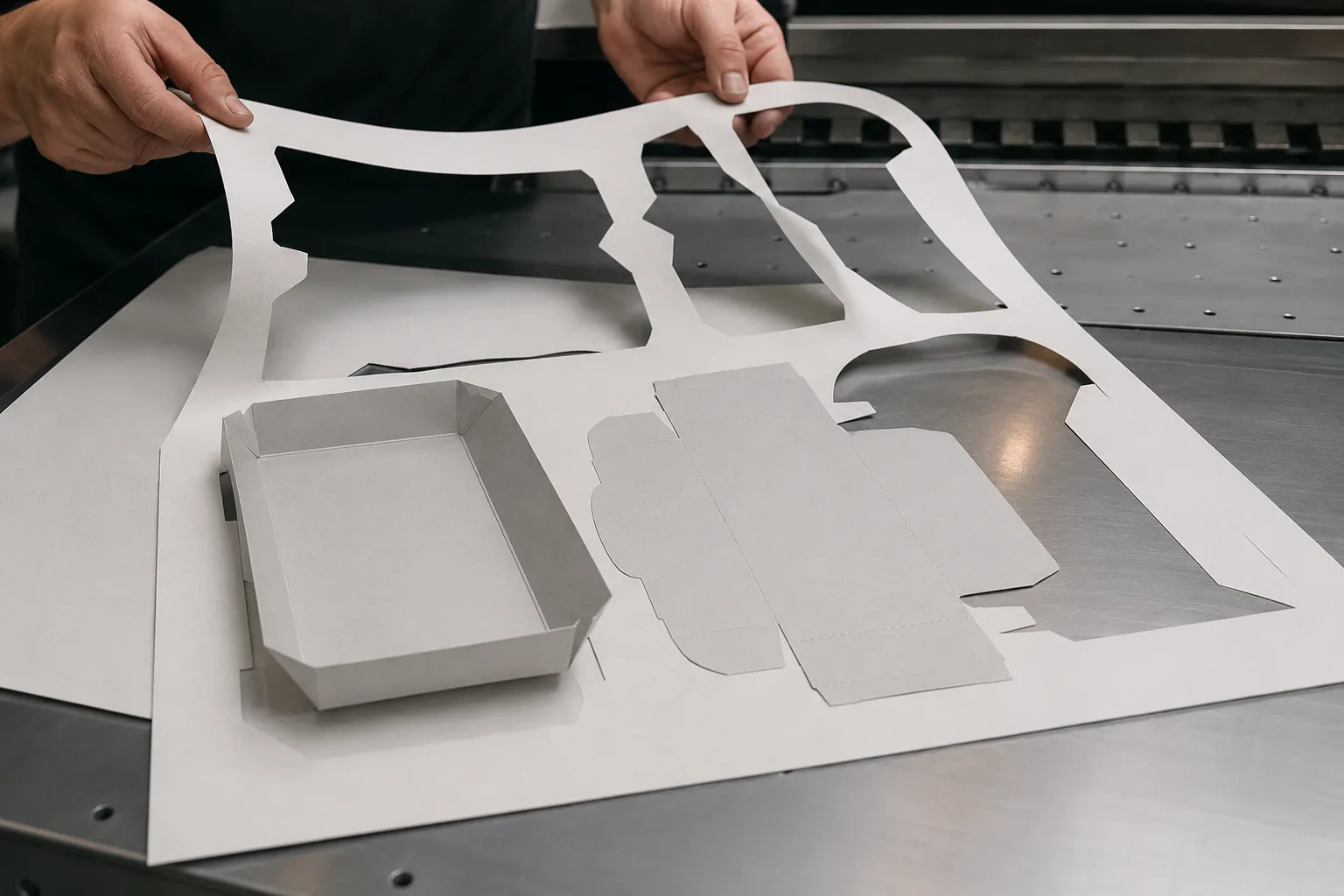
  • A die cut sheet lifted off the pile with the waste skeleton coming away from it, the separated blanks and an erected tray on the table beneath.
    The waste comes out of the sheet on the machine, so clean board reaches the folder gluer.
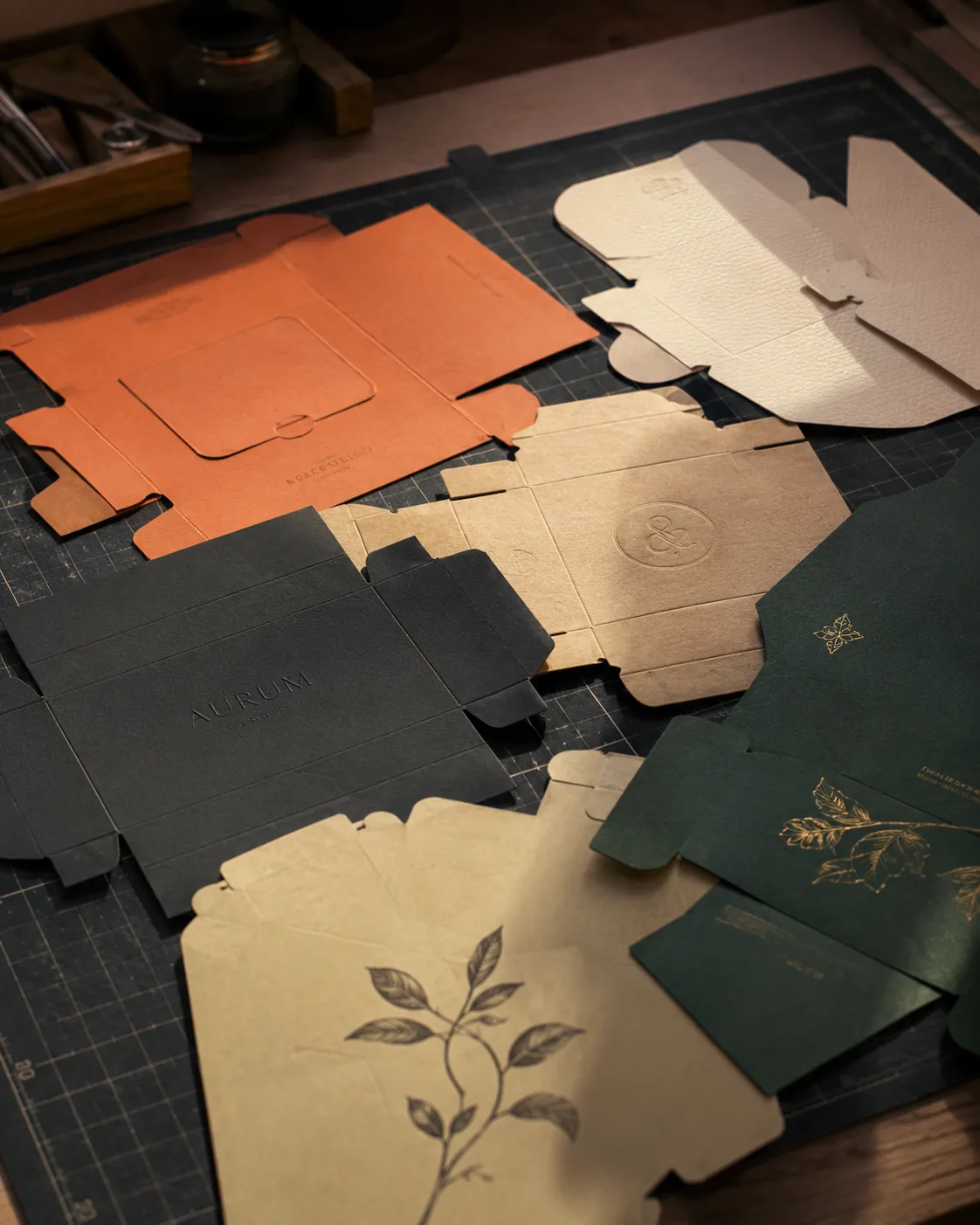
  • Cut and creased blanks in six board colors laid out across the cutting table, their creases and glue flaps visible flat.
    Cut and creased in one strike. Every crease sits where the dieline put it, so the carton erects square on your line.
  • A digital caliper closed across the width of a finished carton on the bench, the specification sheet with the carton’s dimensions written out beside it.
    Checked against the approved dieline in our own laboratory, at the end of a run as well as the start.

The die cutter, from the pile to the pallet

One sheet, one strike, four operations. Every station below is on the specification further down this page, drawn where it sits on the machine.

The Bobst Novacut drawn as a line: the feeder pile and feed board, the platen with the cutting forme locked into the crown above the sheet and the bed beneath it, the stripping station pushing waste down through an open frame into a bin, the blanking station where the sheet leaves as separated blanks, and the delivery pile.0102030405

The Novacut as configured on our floor. Stripping and blanking are on the machine, not on a bench behind it.

01Feeder

Printed sheets are lifted one at a time off the pile and squared against the front lays. AUTOPLATEN registration presents the sheet to the forme the same way on impression fifty thousand as on impression one.

The converting floor with the die cutter in the foreground, an operator at its feeder and a pallet of printed sheets standing at it, and the press running on the same floor behind it.

The plant runs one die cutter. A sheet that was printed here is cut here, on the same floor and inside the same climate. There is no second line.

One die cutter, one floor

The specification, and what each line decides

The same six rows the homepage press room band publishes, with what each line decides for your carton beside it. The plant does not publish a model number for this machine.

  1. Type

    Automatic platen die cutter

    The sheet is struck flat against a steel rule forme rather than rolled past a rotary die, and that holds a tight tolerance on a folding carton. A window aperture stays centered on its panel and a foil block stays inside its border instead of creeping across a long run.

  2. Feeding

    AUTOPLATEN registration

    The sheet is presented to the platen the same way every time, so a carton cut in the last hour of a run drops into your filling line the way the first one did.

  3. Changeover

    CENTERLINE system

    A returning die goes back to the position it ran in instead of being dialed in again by hand. A reorder off a stored job record is a repeat, not a new setup.

  4. Monitoring

    Die identification and impression counters

    Strikes are counted against the die record, so a worn forme is caught by the equipment, not by your customer finding a ragged edge. A forme wears gradually, and gradual wear is easy for a person to miss.

  5. Control

    Automatic lockout beyond set limits

    Past its limits the machine stops instead of cutting worse cartons. Tolerance is checked against the same limits at the end of a run as at the start.

  6. Output

    Inline stripping and blanking

    Waste is pushed out of the sheet and the blanks are stacked on the machine, so what reaches the folder gluer is clean board, with no waste attached and no handling step in between.

The die cutter sits on the same floor as the press that printed the sheet, so a sheet moves from one to the other the same shift and inside the same climate. Board that picks up or loses moisture between the two cuts to a different size than the die was made for.

Four operations, one pass

A platen die cutter does four things to a printed sheet in a single strike and the sheet leaves as separated blanks. Each of the four decides something different about the carton.

The four operations of a platen die cutter and what each decides
OperationWhat happensWhat it decides
CuttingSteel rule in the forme cuts the outline of the blank, the window aperture and any hang tab or lock slot.The finished dimensions of the carton, and whether an aperture sits where the artwork drew it.
CreasingBlunt rule presses a channel into the board against a matrix, compressing the fibers rather than cutting them.Where the carton folds, how square it erects, and whether a laminate cracks along the fold.
StrippingThe waste between and around the blanks is pushed out of the sheet in line, on the machine.Whether the skid that reaches the folder gluer is clean board or board with waste still hanging off it.
BlankingThe separated blanks are collected in line and stacked for the next operation.How the blanks are presented to folding and gluing, and how much handling sits between the two.

A crease is a controlled bruise in the board. Too shallow and the panel folds where the board decides, not where the dieline says; too deep and the outer liner splits along the line. The crease is set against the board and the finish on it, so board grade and lamination are part of the die cutting conversation.

Registration across the run

A die cutter is judged on whether the strike lands in the same place on sheet fifty thousand as on sheet one. AUTOPLATEN registration presents the sheet to the platen the same way every time, and the specification leads with it.

Tolerance stacks. A carton a fraction long, with a crease a fraction off its line and an aperture crept toward its edge, can still be folded by hand. A cartoner running at speed may not erect it. It jams, and the jam stops the line.

A cutting forme is a consumable. It cuts well for a known number of impressions, then gradually less well. Impression counters track the strikes against the die record and lock the machine out beyond set limits, so the equipment makes that call, not the operator.

Before any tooling is cut, the plant folds a physical prototype in the production board, around the product it will hold. Structural design and a prototype are included in the quote. A structural problem costs least to fix before the forme exists.
How a custom structure is developed
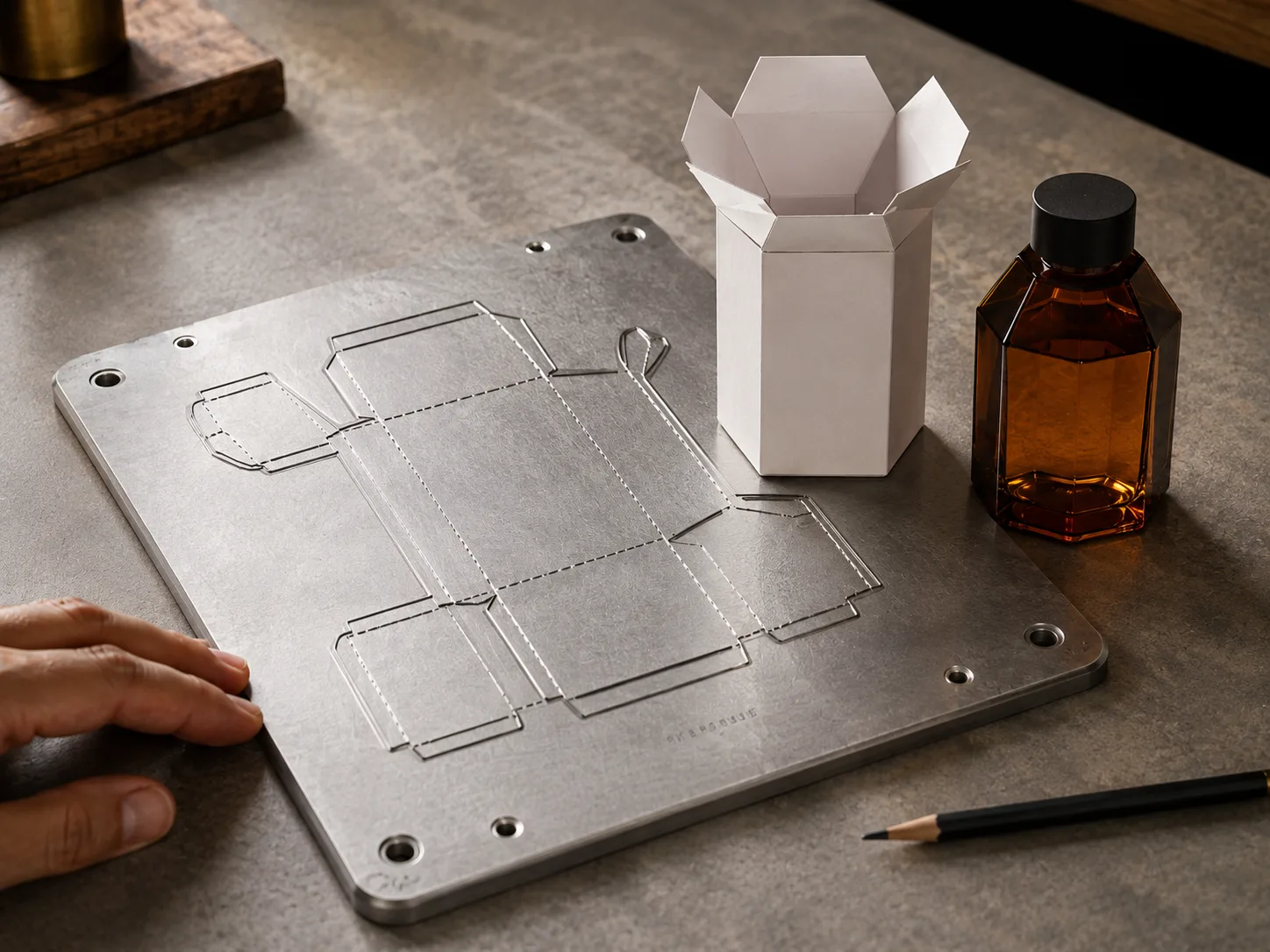
A steel rule cutting forme on the bench, the blank drawn out in rule and crease, with the carton it cuts standing erected beside it.

Cut here

The die cutter is on the floor of one plant in Piplaj, on the edge of Ahmedabad, with the press in front of it and the folder gluer behind it. A sheet is printed, coated, die cut, folded and glued without leaving the building, and a job keeps one specification and one part number from plate to pallet.

Certificates for every mark above are available on request, and a factory tour is the quickest way to check any of it.

Plant
90,000 sq ft, Ahmedabad
Press
Komori Lithrone GL-637
Die cutting
Bobst Novacut
Folding and gluing
Bobst Novafold
Subcontracted
No part of the carton line
Printing since
1962
  • ISO 9001
  • ISO 14001
  • ISO 45001
  • BRCGS
  • SEDEX
  • FSC compliant

The rest of the line

A blank leaves this machine flat and clean. What happens either side of it is on the same floor.

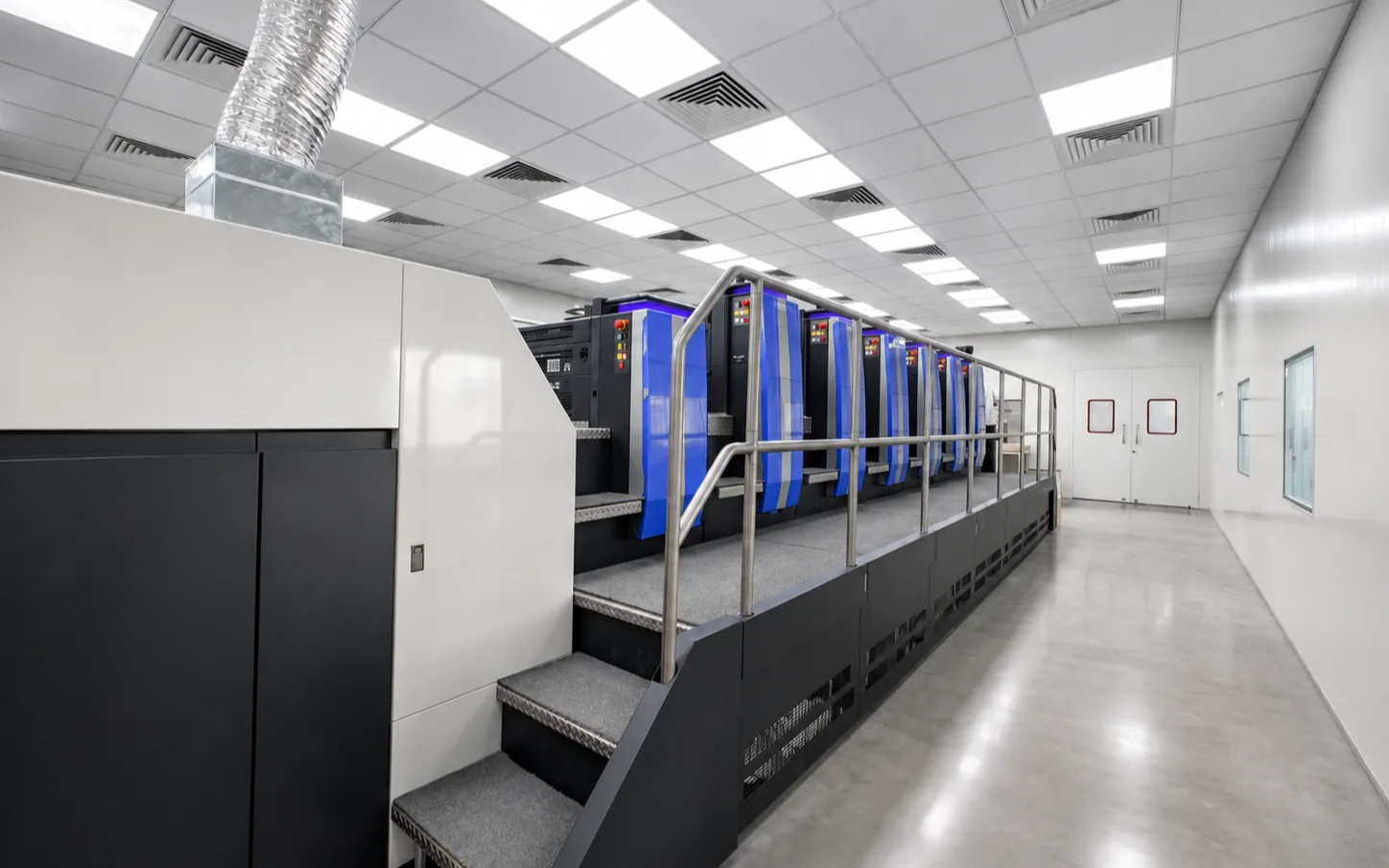
  • The Komori Lithrone GL-637 in the press hall, its six printing units receding in a row down the operator walkway.

    Printing

    Komori Lithrone GL-637

    The six color offset press, with two units kept free for spot inks, closed-loop color correction on every sheet and inline sheet inspection. It decides how the carton looks.

    • Six color units
    • 15,000 sheets / hour
    • Closed loop color

    The full specification

  • The folder gluer line on the plant floor, belt conveyors and the glue station running back to stacked cases at the delivery.

    Folding and gluing

    Bobst Novafold

    The folder gluer, pre-breaking every crease and laying a controlled glue bead on straight line, crash lock, four and six corner and sleeve structures. It decides whether the seam holds.

    • Crash lock and corner trays
    • Crease pre-breaking
    • 5,000 stored jobs

    The full specification

  • The plant floor in Ahmedabad, the press hall and the converting line running back under a clean ceiling.

    The floor

    The plant

    The 90,000 square foot floor the three machines sit on, the route a sheet takes across it in seven stops, and the climate control that keeps the board stable.

    • 90,000 sq ft
    • Ahmedabad
    • Printing since 1962

    Inside the plant

Questions about die cutting

A Bobst Novacut automatic platen die cutter, with AUTOPLATEN registration on the feed, CENTERLINE changeover, die identification with impression counters, automatic lockout beyond set limits, and inline stripping and blanking. It is on the same floor as the press, so a printed sheet reaches it the same shift and inside the same climate.

The cutting forme is made against the dieline approved for your carton, and structural design and a physical prototype are included in the quote rather than billed separately. The tooling is held against your part number, so a reorder returns to the same die in the same position without new tooling. A repeat takes 8 days in production; a new order takes 15 to 20.

Yes. A supplied dieline is checked against the board, the finish and the way the carton has to erect on your line, and anything that would not run is raised before tooling is cut rather than after. If the file is sound it is used as it stands.

Registration is held across the run and dimensional checks are made against the approved dieline in the plant’s own laboratory, alongside carton formation testing, rather than at the start of the run alone. Impression counters are validated against the die record and the machine locks out beyond set limits, so a forme that has gone past its life stops the machine instead of cutting worse cartons.

Yes. An aperture, a euro slot or a delta or rocker tab, and the slots a crash lock bottom needs, are all cut in the same strike as the outline, so they cost tooling, not an extra operation. Where a window is patched with film, the patch is applied to the inside face after cutting.

Last reviewed

See it running

The clip at the top of this page is our own machine on our own floor. A factory tour is the longer version, planned around the carton you are sourcing. Landed cost runs 20 to 30 percent below a comparable US supplier quote.

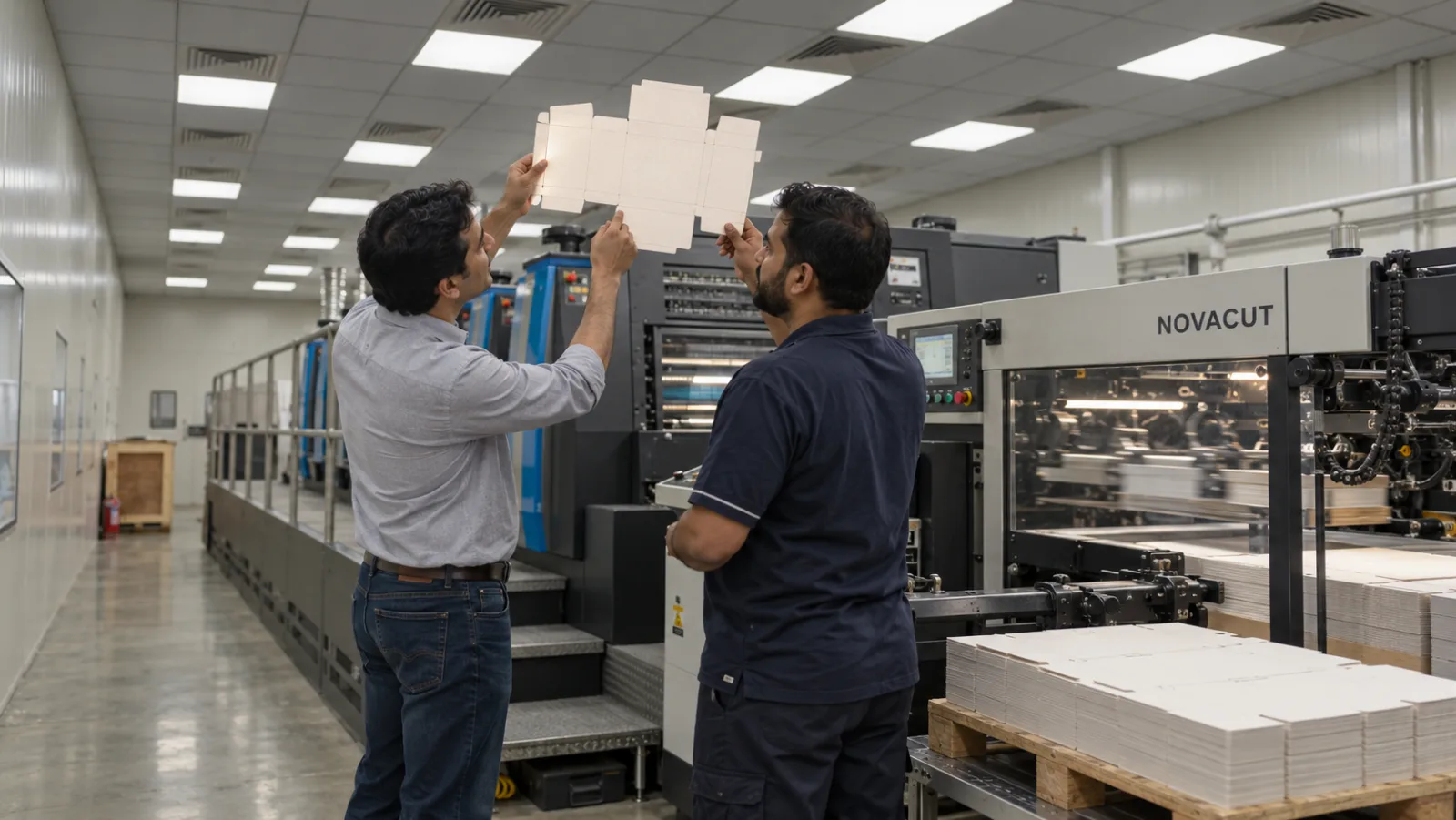
A visitor and an operator holding a cut and creased blank up to the light between them beside the Novacut, with stacks of cut blanks on a pallet at its delivery and the press standing behind.