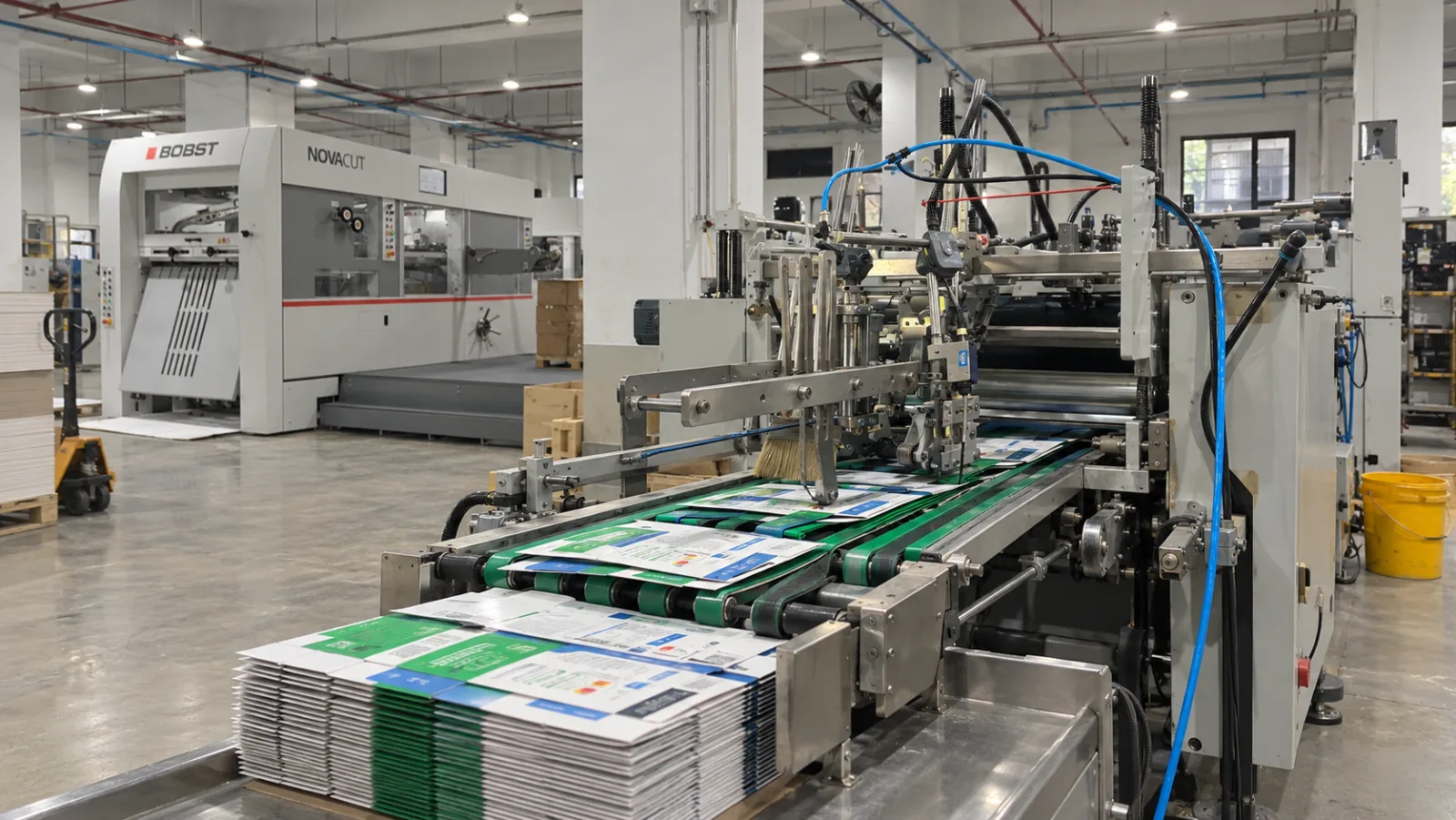
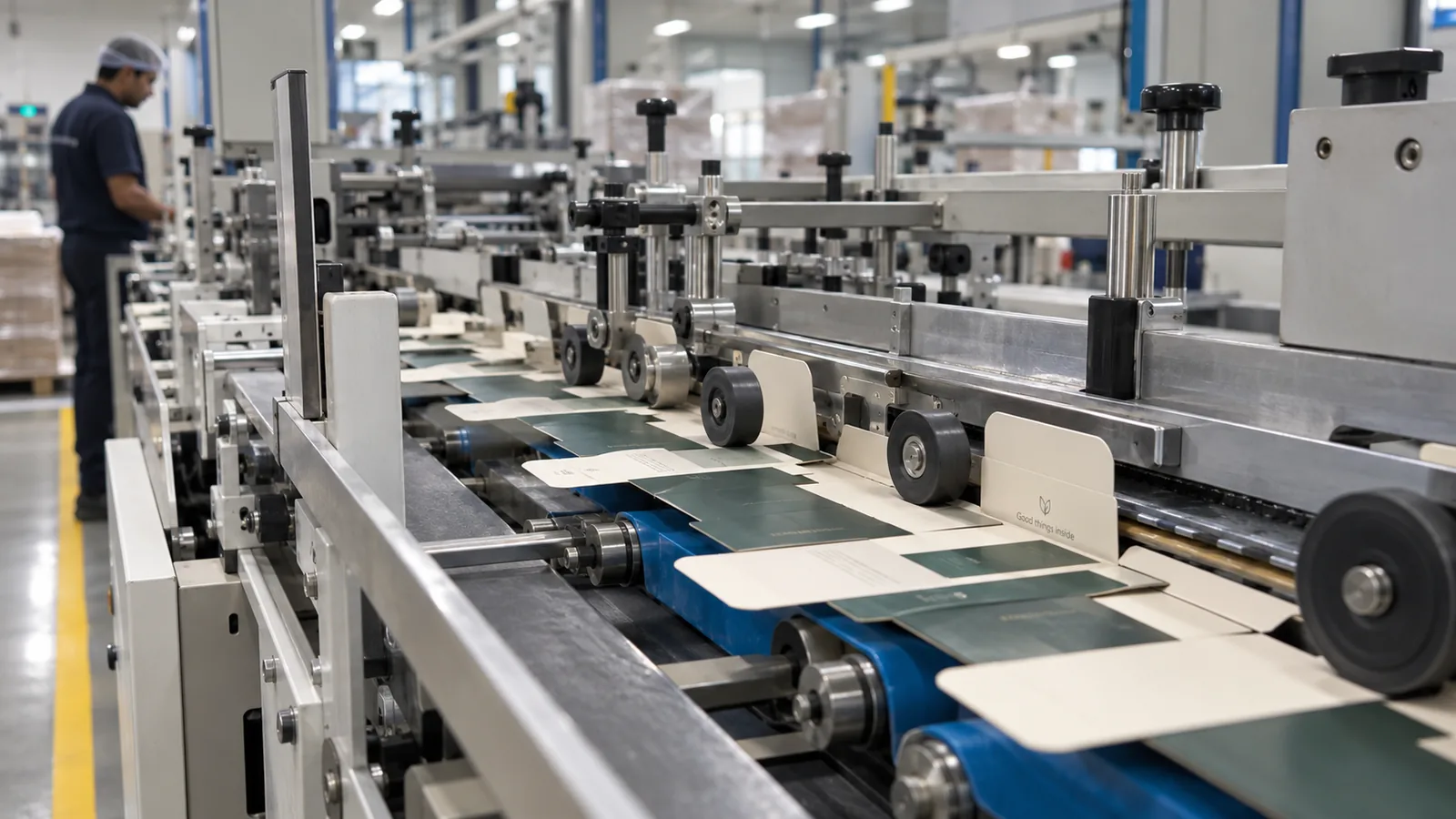
The Bobst Novafold is the folder gluer every Eastface carton is closed on: it pre-breaks each crease, folds the blank and lays a controlled glue bead on straight line, crash lock, four and six corner and sleeve structures.
This is where a flat blank becomes a carton, including the structures most plants finish by hand. Below is what it runs and how each structure is glued.
Three things this machine decides, photographed on our floor.
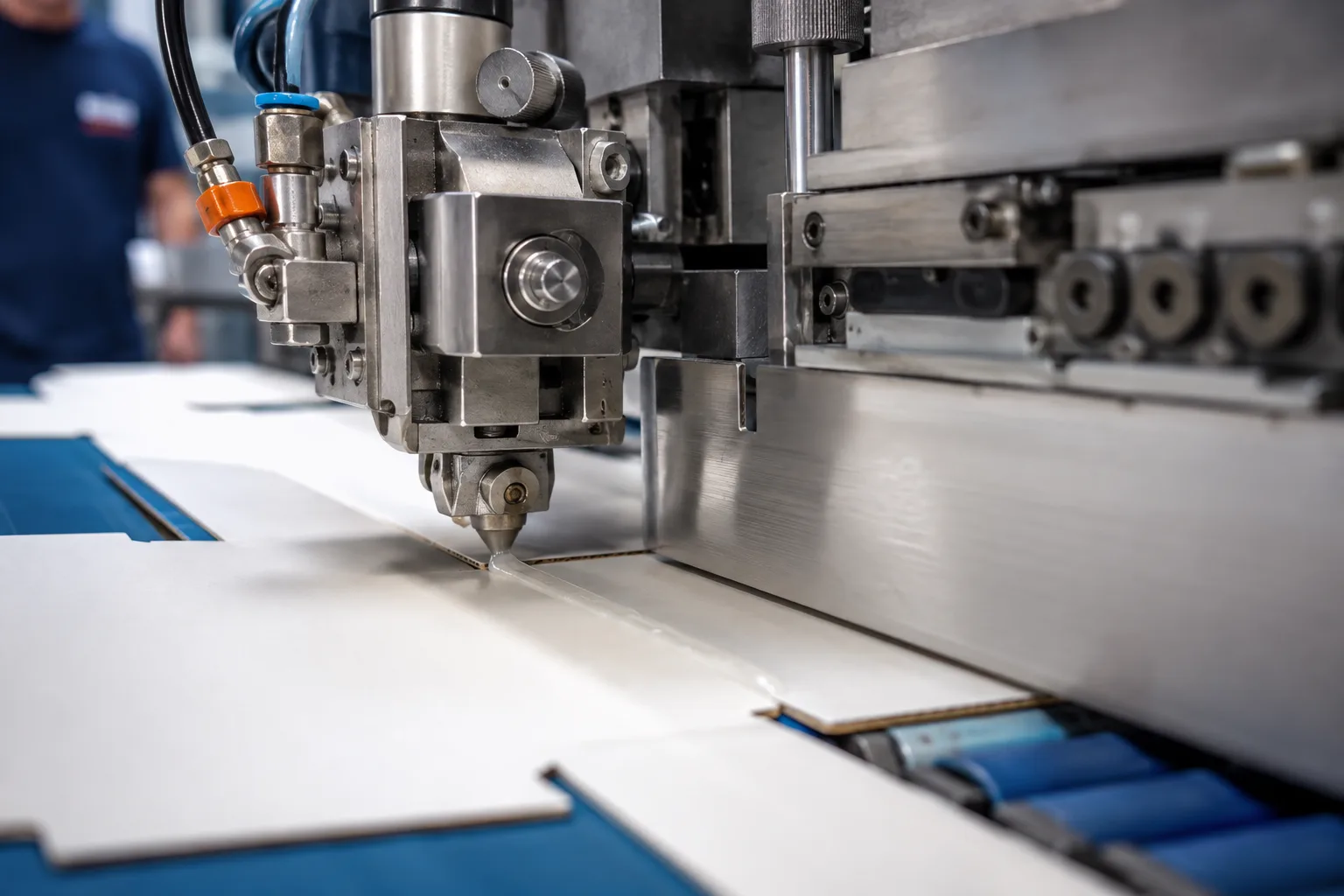
The bead is a stored setting. Too little and the seam pops in a container; too much and it squeezes onto the printed face.
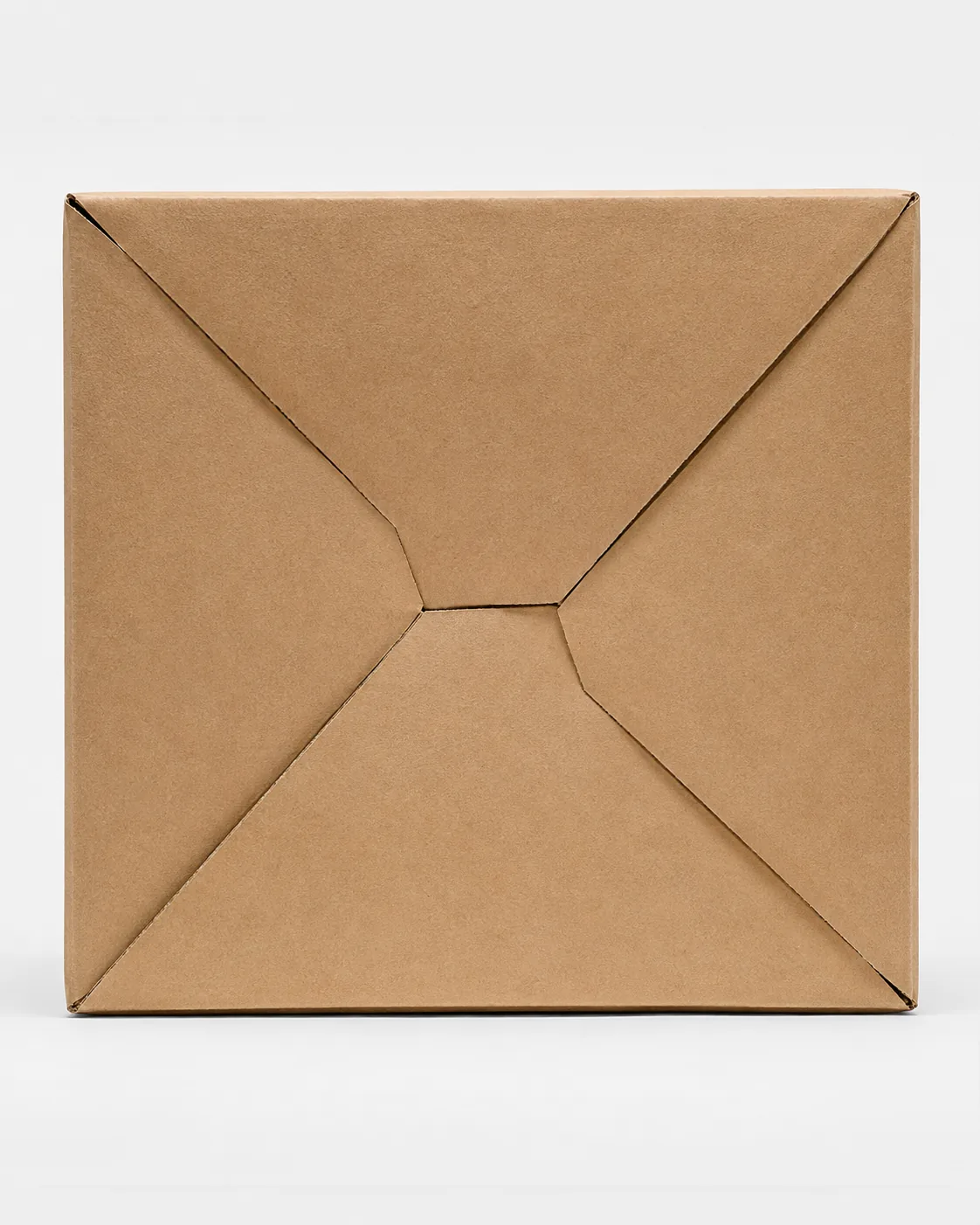
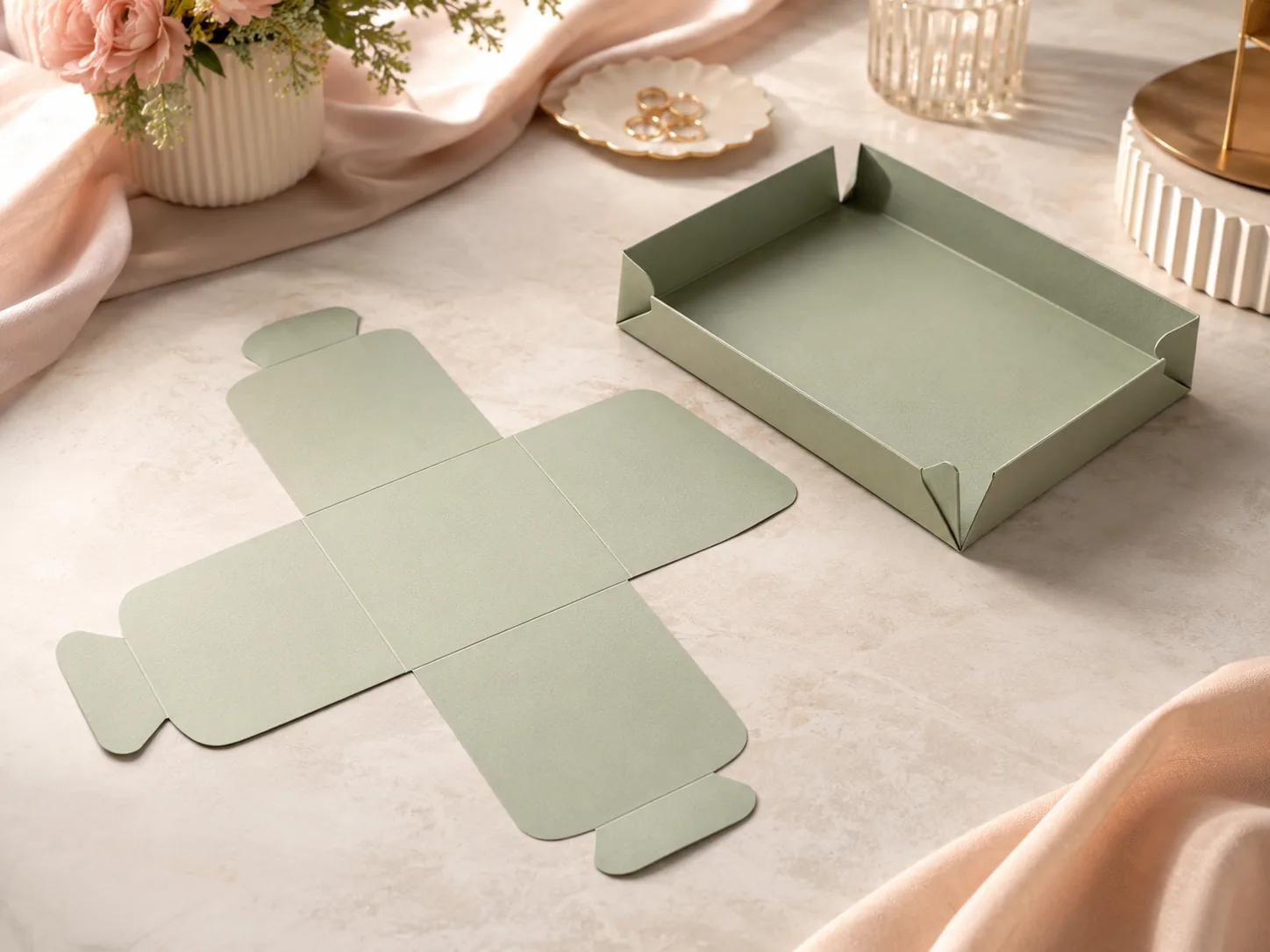
A crash lock base, closed by the machine. It arrives flat and locks itself as the carton is opened, so nobody on your line tapes a bottom.
The blank and what it becomes. A four corner tray glued on the machine runs from a setting stored against a part number.
The folder gluer, from the magazine to the pile
One blank, six stations, one pass. Every station below is on the specification further down this page, drawn where it sits on the machine.
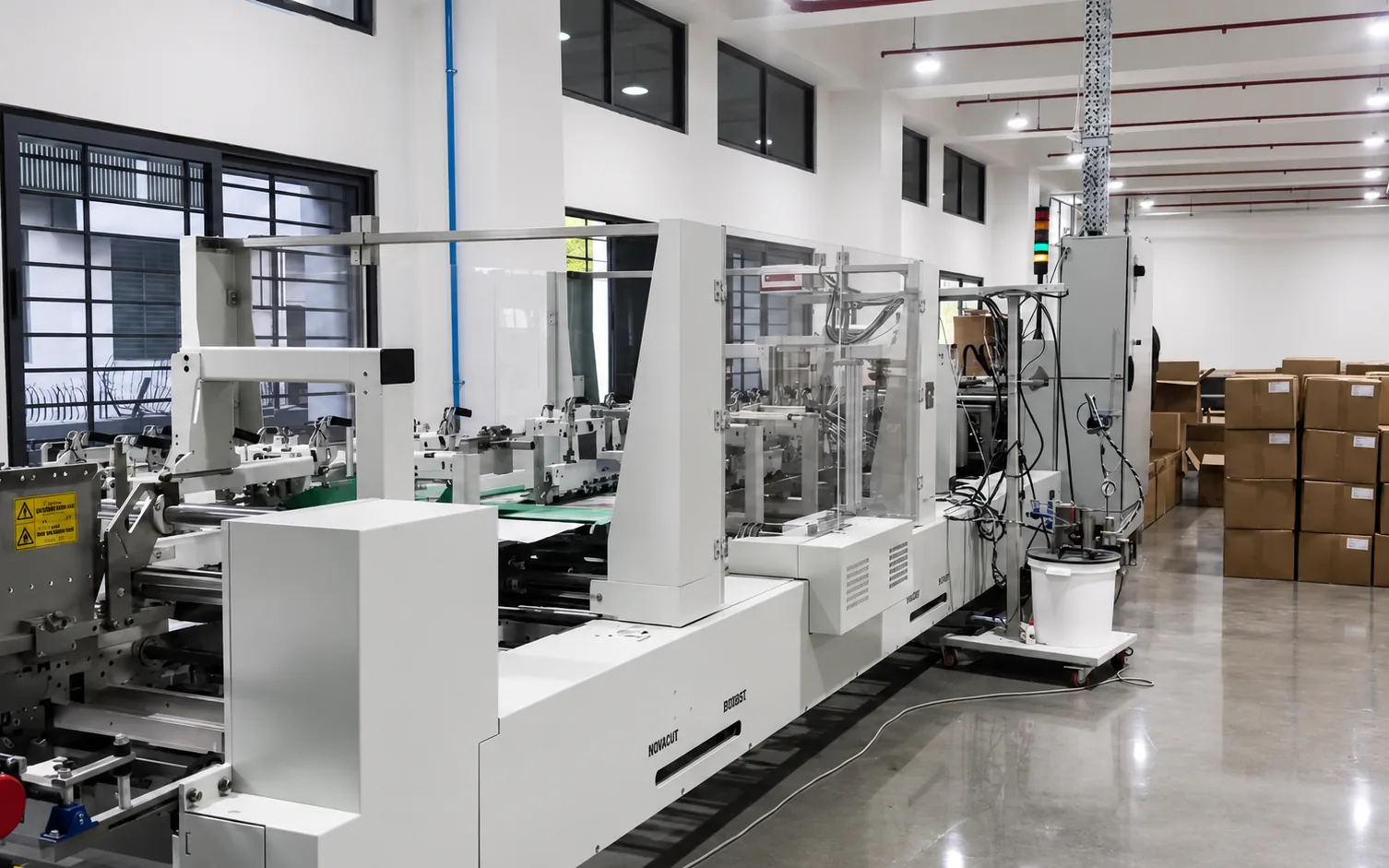
The Novafold as configured on our floor. Four and six corner trays are glued in this line, not on a bench beside it.
01/Infeed
Flat blanks stand on edge in the magazine and are taken onto the belt one at a time. The specification row here is a conveyor rather than a gripper feed: a four corner tray blank does not present a clean straight edge.
02/Pre-breaking
Every crease is folded right over and returned flat before anything is glued. Board that has been worked folds where it was scored instead of cracking a laminate or breaking a foil along the fold.
03/Gluing
A German glue gun lays a bead along the seam flap as the blank runs under it, drawn dashed as it is laid. Too little and the seam pops inside a container; too much and it squeezes onto the printed face.
04/Folding
The rails bring the panels over from both sides until the carton closes on itself. This is where a crash lock base is made, and where the returned corners of a four or six corner tray are closed.
05/Compression
The top belt runs down onto the carton and holds it against the belt beneath while the adhesive takes. The length of this section is the time the adhesive needs.
06/Delivery
Folded, glued cartons stack flat in the pile and are counted into batches for the case. The settings that made them go back to the job record, to 5,000 stored jobs.
This is the last machine the carton meets, and the quality bench sits directly behind it.
The last machine the carton meets
The specification, and what each line decides
The same six rows the homepage press room band publishes, with what each line decides for your carton beside it. The plant does not publish a model number for this machine.
01
Type
Automated folder gluer
The carton is folded and glued by machine, not by hand, and a machine setting can be recorded and returned to. Hand assembly shows as uneven corners and glue squeeze on the panel a customer sees first.
02
Structures
Straight line, crash lock, four and six corner, sleeves
Many plants finish four and six corner trays by hand. Glued on the machine, every corner tray in a run comes out the same.
03
Glue system
German glue gun, controlled bead
The side seam stays closed under compression through ocean transit rather than opening inside a case on arrival. Too little glue and the seam pops; too much and it squeezes onto the printed face.
04
Pre-breaking
Accurate crease pre-breaking
Board folds where it was scored instead of cracking a laminate or breaking a foil line along the fold. An unworked crease can crack or wander, and it shows on a dark panel.
05
Infeed
Conveyor for irregular edges
A tray blank with returned corners does not present a clean straight edge to a feeder the way a tuck carton does. Without a conveyor infeed, those structures come off to be finished by hand.
06
Memory
To 5,000 stored job settings
A returning job is retrieved against its stored record rather than set up again from a drawing. The side seam lands in the same place, so the carton erects square on an automated line.
On a reorder the job is retrieved against its stored record, the die goes back to the position it ran in, and the press starts from stored make ready.
What this machine glues
The structures row on the specification, one line each, with where each is used beside it. All of them are glued on the machine here.
The structures the folder gluer runs and how each is glued
Structure
How it is glued
Where it is used
Straight line
How it is gluedOne side seam down the length of the blank, the simplest and fastest pass on the machine.
Where it is usedTuck end cartons, straight and reverse, and seal end cartons. The bulk of what this plant ships.
Crash lock
How it is gluedThe side seam plus the two glued flaps that make the base lock itself as the carton is squared up.
Where it is usedAuto lock bottom cartons, where a filling line needs the base closed without anybody folding it.
Four corner
How it is gluedTwo glued corners at each end of a tray, folded and held while the adhesive takes.
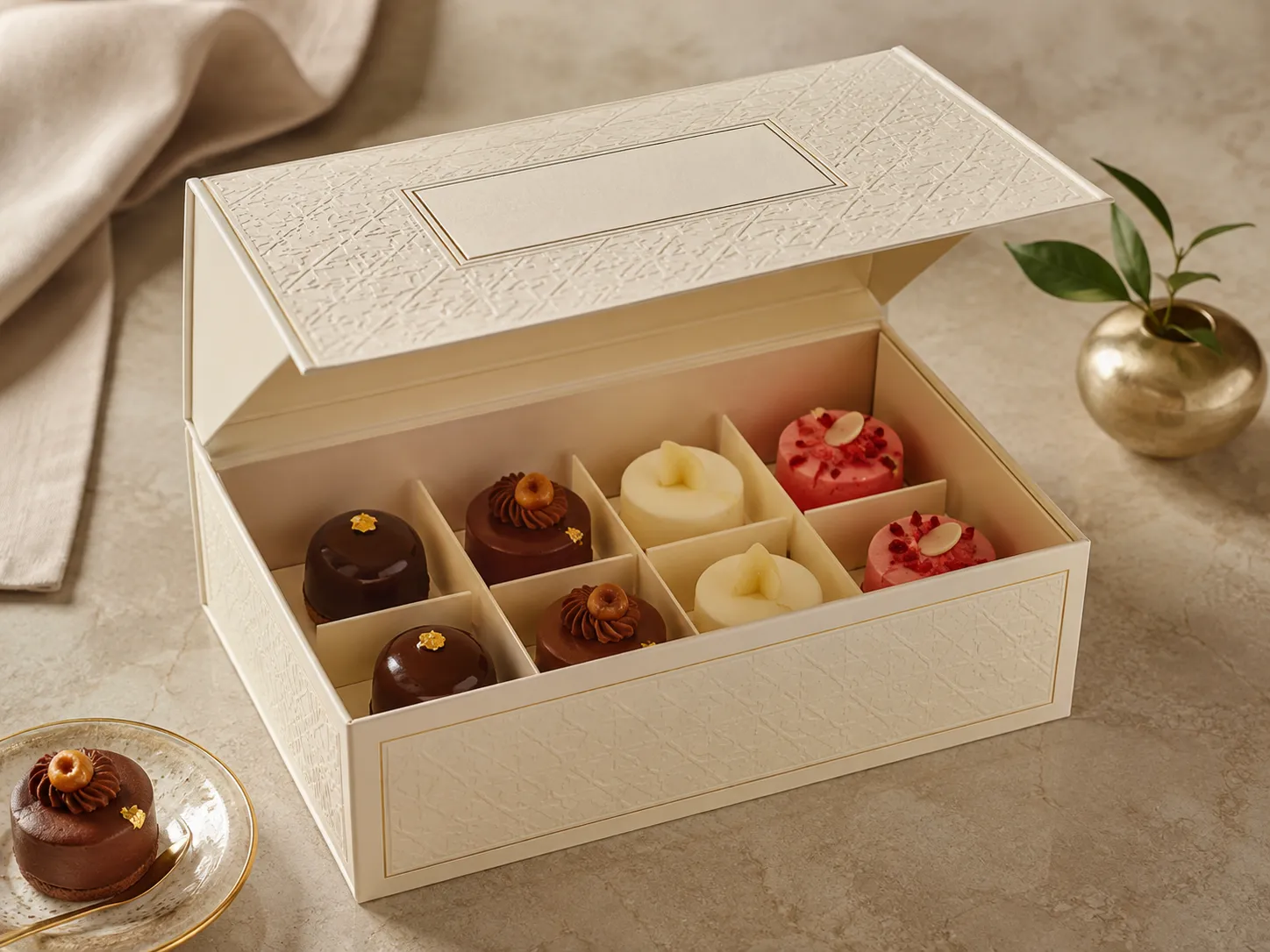
Where it is usedTrays for confection, mithai and gift sets, usually under a lid or a sleeve.
Six corner
How it is gluedThree glued corners at each end, so the tray walls return on themselves for a deeper, stiffer wall.
Where it is usedDeeper trays carrying weight, where a four corner wall would bow.
Sleeves
How it is gluedA single seam closing the band into a loop, with the fit to the tray or carton set before it is glued.
Where it is usedTray and sleeve packs, sleeved cartons, and sleeves printed to change a pack without new tooling.
The conveyor infeed takes the corner trays. A tray blank with returned corners does not present a clean straight edge to a feeder the way a tuck carton does.
Machine gluing and hand assembly
A four corner tray can be made by hand: somebody folds the corners, holds them and glues them. Over four hundred thousand trays the pressure, timing and bead placement vary with the person, and the result is four hundred thousand slightly different trays.
On a shelf that shows as a corner standing a little proud, a wall leaning a degree, and glue squeezed past the seam onto the face the customer sees. None of it would fail a test. All of it is visible.
A filling line works to a tolerance. A tray a degree out of square erects a degree out of square, and a cartoner running at rate jams on it.
A machine setting can be recorded, stored against a part number and returned to on the reorder. The folder gluer holds up to five thousand of them.
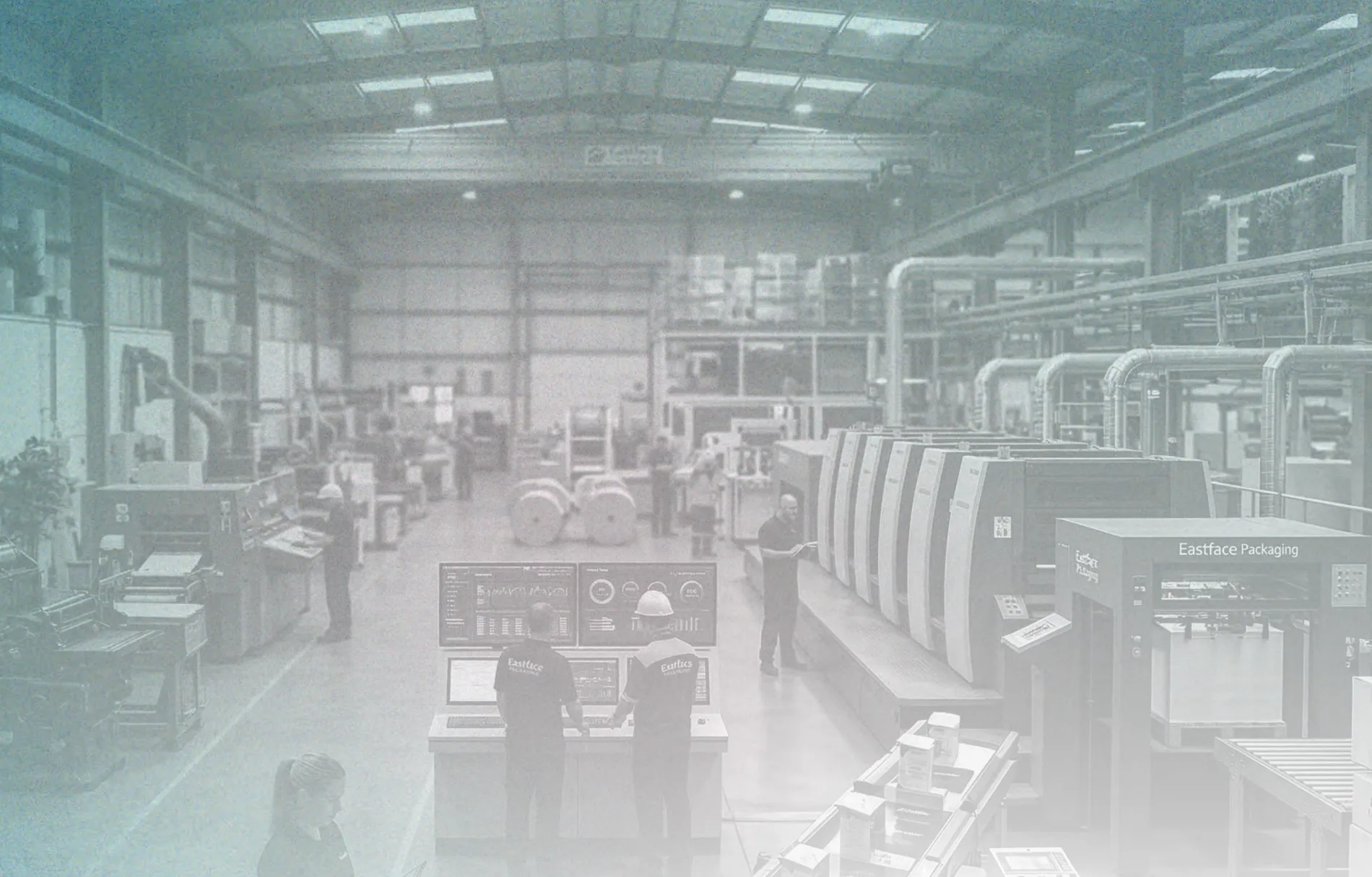
The folder gluer is the last machine on the floor of one plant in Piplaj, on the edge of Ahmedabad, with the die cutter in front of it and the quality bench and the dispatch bay behind it. A sheet is printed, coated, die cut, folded and glued without leaving the building, and a job keeps one specification and one part number from plate to pallet.
Certificates for every mark above are available on request, and a factory tour is the quickest way to check any of it.
Plant
90,000 sq ft, Ahmedabad
Press
Komori Lithrone GL-637
Die cutting
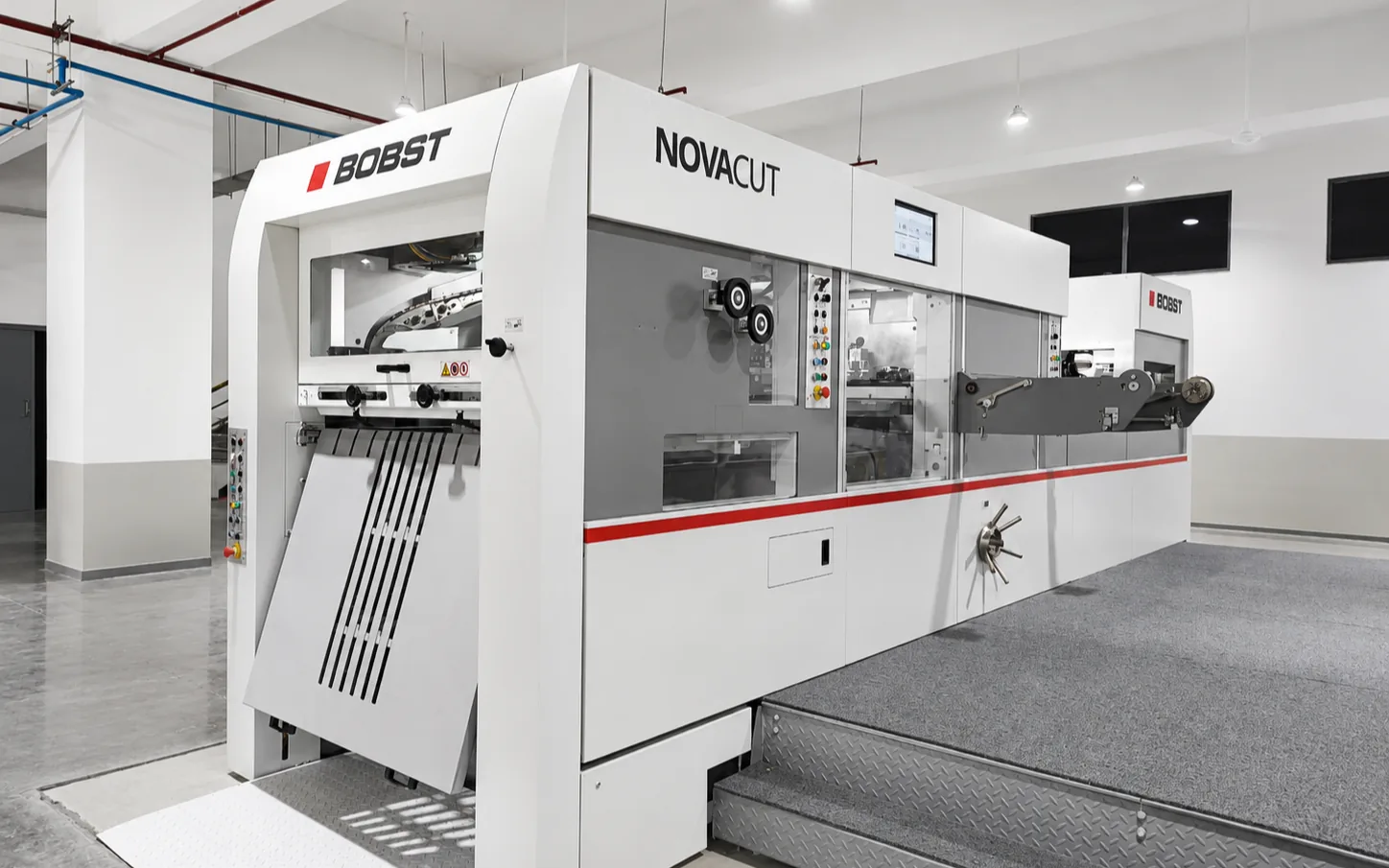
Bobst Novacut
Folding and gluing
Bobst Novafold
Subcontracted
No part of the carton line
Printing since
1962
ISO 9001
ISO 14001
ISO 45001
BRCGS
SEDEX
FSC compliant
The rest of the line
A carton leaves this machine flat, glued and ready to be counted into a case. What happened to it before is on the same floor.
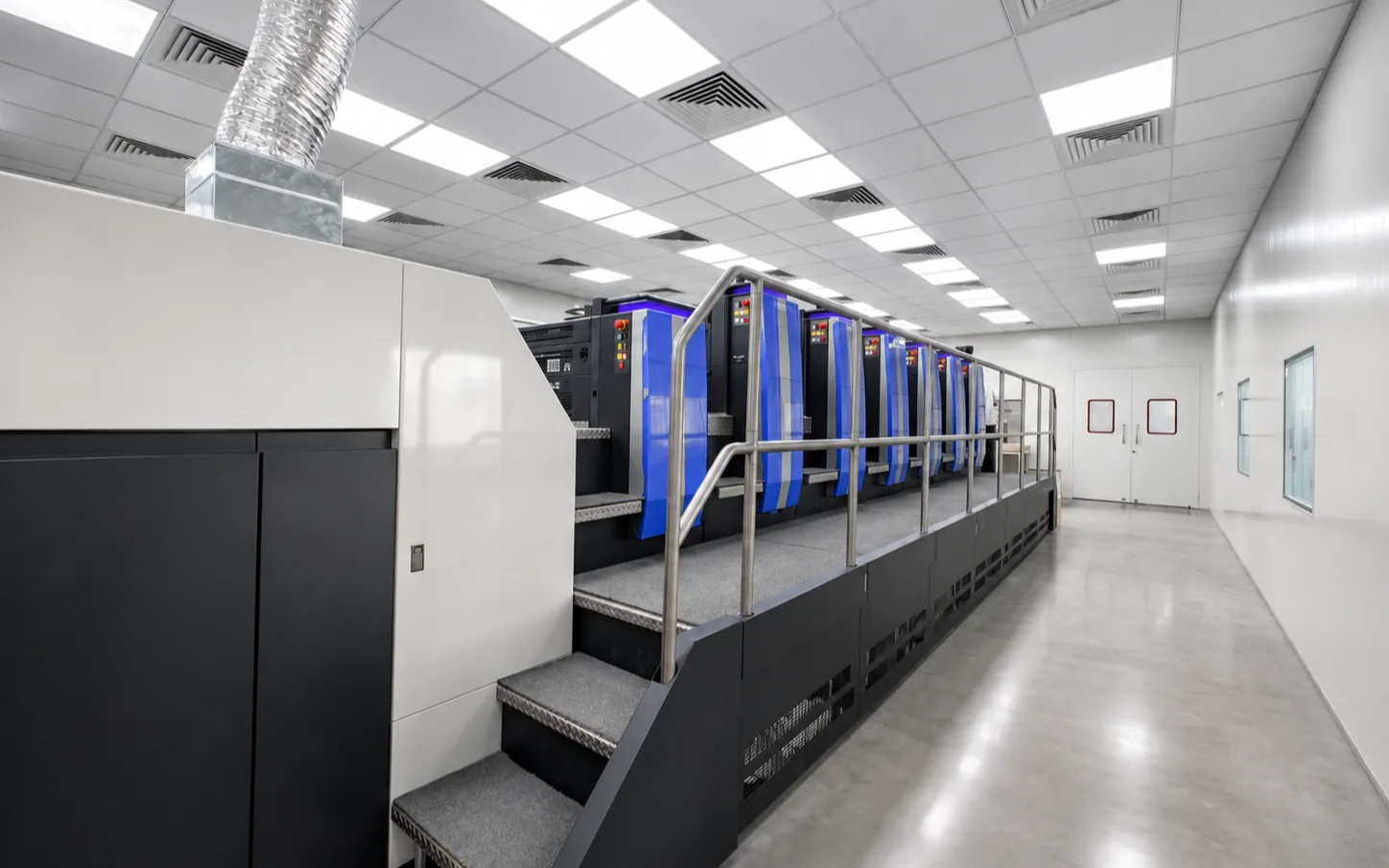
The six color offset press, with two units kept free for spot inks, closed-loop color correction on every sheet and inline sheet inspection. It decides how the carton looks.
The automatic platen die cutter, cutting and creasing to the approved dieline with registration held across the run and stripping and blanking in line. It decides whether the carton erects.
The 90,000 square foot floor the three machines sit on, the route a sheet takes across it in seven stops, and the climate control that keeps the board stable.
90,000 sq ft
Ahmedabad
Printing since 1962
Inside the plant→
Questions about folding and gluing
A Bobst Novafold automated folder gluer, running straight line, crash lock, four and six corner and sleeve structures, with accurate crease pre-breaking, a German glue gun laying a controlled bead, a conveyor infeed for blanks with irregular edges, and up to 5,000 stored job settings.
Standard. Crash lock bottoms, and the four and six corner trays that many plants assemble by hand, are glued on the machine here as ordinary work. They do not carry a hand-finishing premium.
Before the blank is folded, every crease is worked once through its full fold and returned flat. That breaks the fibers along the score under control, so when the carton is folded the board goes where it was creased rather than finding its own line. On a laminated or foiled panel it prevents cracking along the fold, the most common visible failure on a premium carton.
Yes. The controlled bead keeps the side seam closed under the compression of a stacked, strapped and shipped case for the weeks a container takes, and the same lot is box compression tested in the plant’s own laboratory against ASTM D642, ASTM D4169 and TAPPI T804 before it is released. Test results for your batch ship with the order.
No. The job is retrieved against its stored settings: the folder gluer holds up to 5,000 stored job settings, the die returns to the position it ran in through CENTERLINE changeover, and the press starts from stored make ready parameters. A repeat takes 8 days in production; a new order takes 15 to 20.
Last reviewed
See it running
The clip at the top of this page is our own machine on our own floor. A factory tour is the longer version, planned around the structure you are sourcing. Landed cost runs 20 to 30 percent below a comparable US supplier quote.