COMPANY
The quality lab
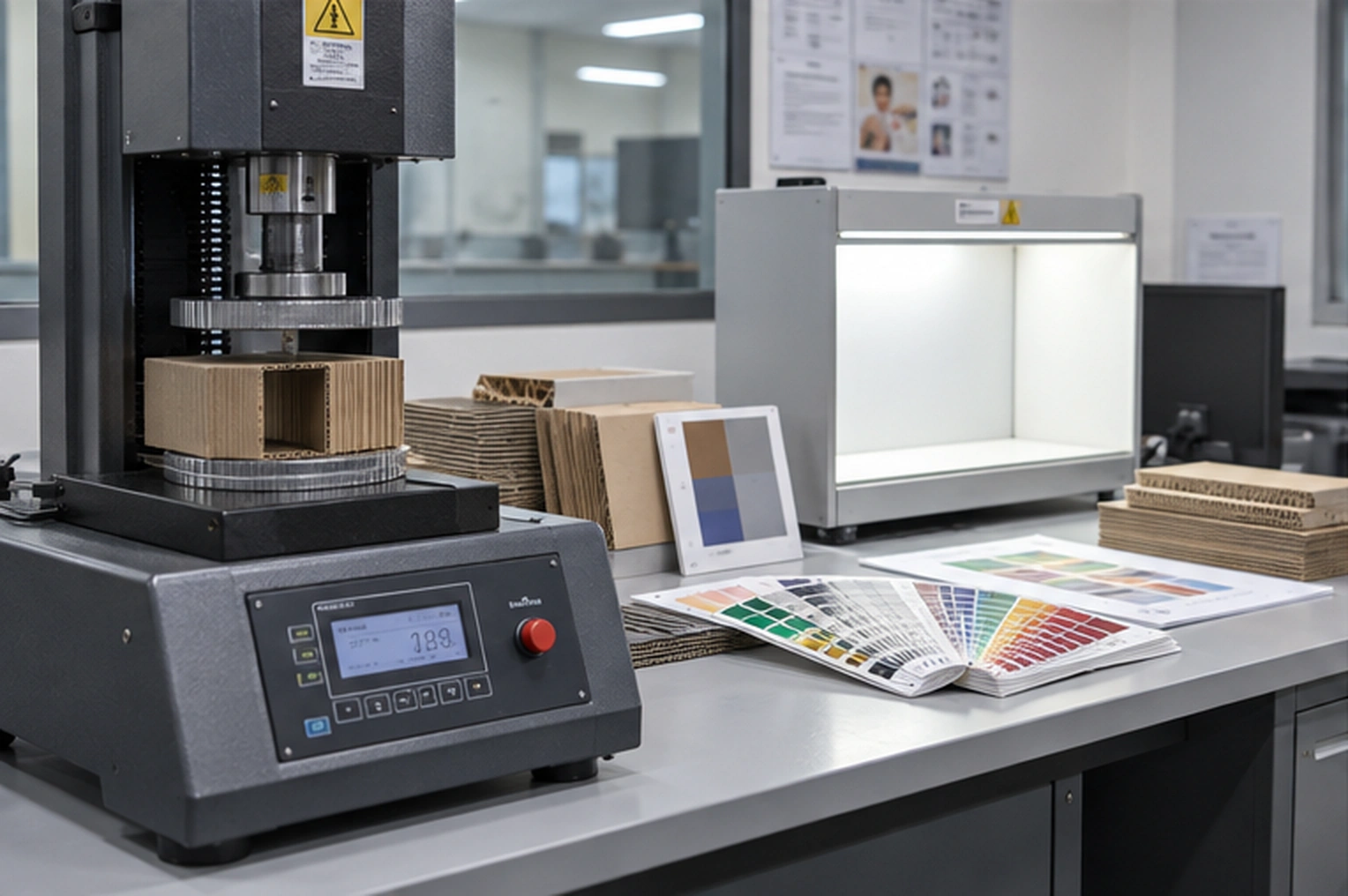
Eastface Packaging runs its own physical testing laboratory inside the plant, and every production run is tested in it and released against its acceptance criteria before it ships.
Six physical tests, three inspection points, and a document set that travels with the order.
A reorder is a repeat
Run five of a carton matches run one. That rests on a retained reference, a measured result and a record against a part number. The lab takes the measurement, and the part number keeps it.
Every order ships with the completed test report showing the results for your batch against each of the six methods, and every lot ships with a Certificate of Conformance against the proof and shade card you approved.
- Tests per run
- Six, in our own laboratory
- Inspection stations
- Three, from goods-in to dispatch
- Documents per lot
- Certificate of Conformance and test report
The journey of one lot
Three stations. Board is checked before it is printed, cartons are checked while they are being made, and the lot is checked again before anything is counted into a case.
- Station 1 of 3
 Before the press
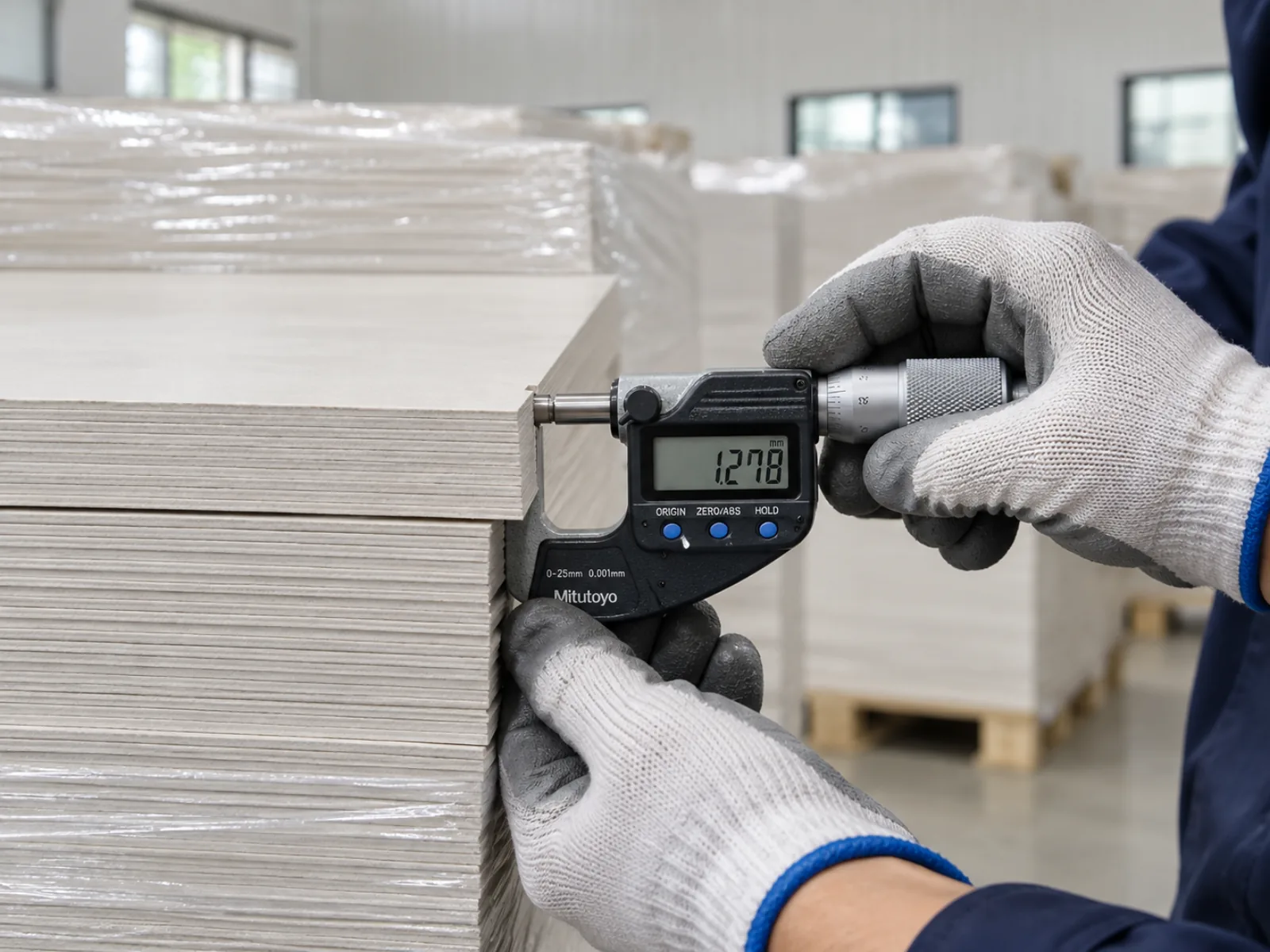
Incoming board
Board is tested against what was ordered before it reaches the press, so you receive the board you specified and paid for.
Grammage
Round cutter and digital balance. The average sits within ±4% of the ordered gsm.
Bursting strength
At or above the minimum for the grade.
Board grade cannot be checked once the carton is printed.
- Station 2 of 3
 During the run
In process
Cartons are checked against the approved proof while the run is on the line.
Color and shade
Against the approved shade card in a D65 and TL84 light box, and against the PDC-SG readings coming off the press.
Dimensions
Verified against the approved dieline.
Formation
Tested by making cartons up rather than by measuring blanks.
Defect sorting
Runs alongside the line. Rejects are removed before the lot leaves it.
- Station 3 of 3
 Before release
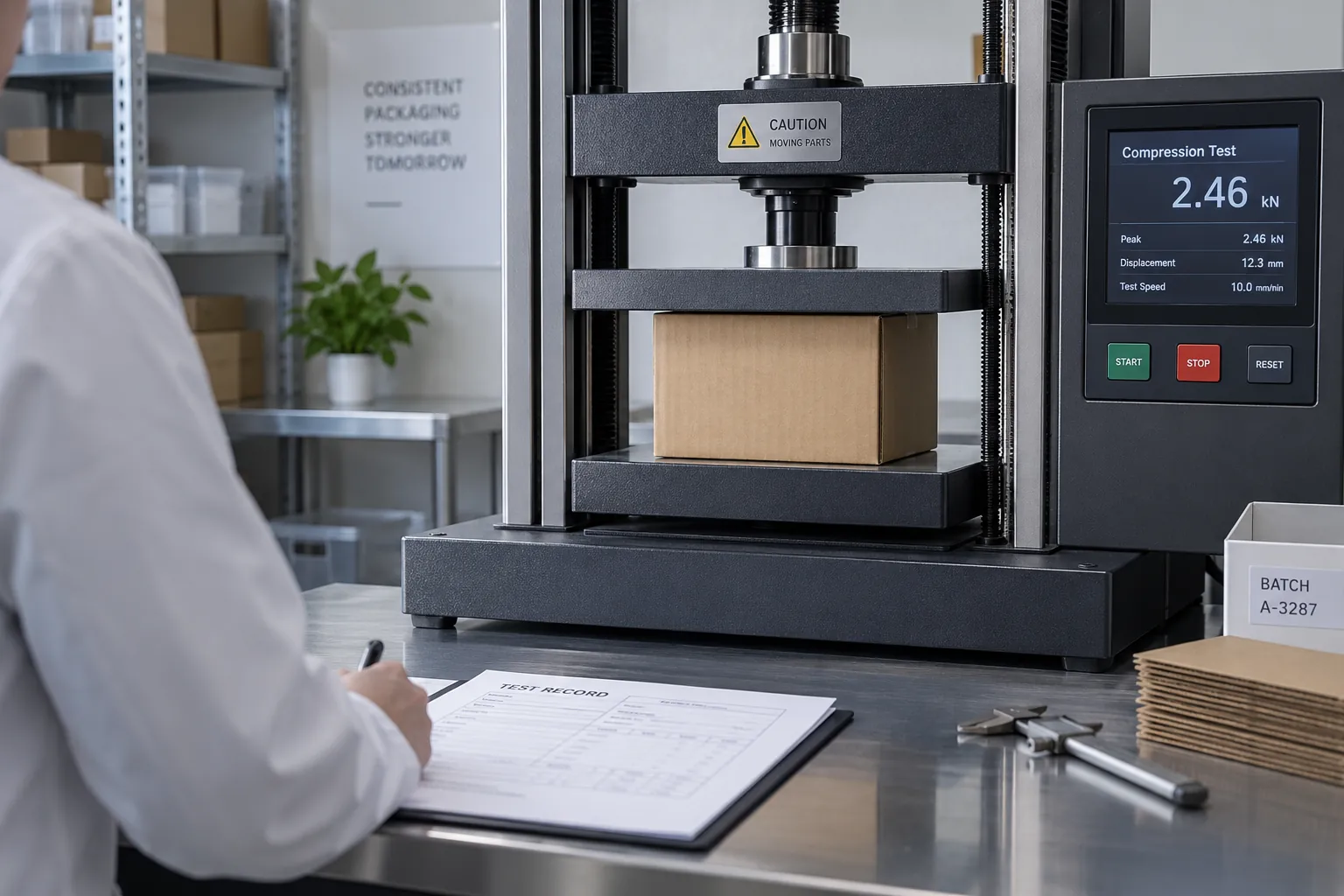
Pre-dispatch
The finished lot is tested again before it is released.
Box compression
Against the stacking requirement for your storage and transit conditions.
Stiffness
Measured in machine and cross direction.
Scuff and rub
Run at 2 psi and 60 rpm to the specified count.
The lot is then counted into master cases, batch labeled and palletized with moisture safeguards.
Released
The lot ships with its Certificate of Conformance and the completed test report.
What the lab covers
The six laboratory tests: the method each runs to, what it is held to, and what it proves.
Grammage
ISO 536 / TAPPI T410
GSM round cutter and digital balance.
Held to
Average within plus or minus 4 percent of ordered GSM.
What it proves
You are receiving the board you specified and paid for.
Bursting strength
ASTM D3786 / ISO 1060 Part-1
Digital pneumatic burst tester.
Held to
Meets or exceeds the minimum for the ordered grade.
What it proves
The board resists rupture in handling and transit.
Color and shade
ISO 3664 / Pantone Matching System
D65 and TL84 light box with the approved color standard, and PDC-SG closed loop control on press.
Held to
Visual match to the approved color standard under standard illuminant with no metamerism.
What it proves
Your brand color is the same in run five as it was in run one.
Box compression
ASTM D642 / ASTM D4169 / TAPPI T804
Box compression tester.
Held to
Peak load meets the stacking requirement for your storage and transit conditions.
What it proves
Your pallets stack without crushing the cartons underneath.
Stiffness
TAPPI T489 OM-08
Taber type stiffness tester, machine and cross direction.
Held to
Within the approved range for the specified caliper.
What it proves
The carton erects cleanly and stands on shelf without bowing.
Scuff and rub resistance
ASTM F2497-05 / BS 3110:1959
Scuff resistance tester at 2 psi, 60 rpm.
Held to
No visible fuzz or color transfer to the specified count.
What it proves
Print and lamination survive the journey looking new.
Color as a system
A brand color is matched once, at approval. The approved shade card is retained against your part number and is the production reference for every run that follows. Nothing is matched to the last delivery: small acceptable differences between runs add up, and within a handful of runs the color has walked away from the standard.
On press, PDC-SG closed loop density control reads the color bar and corrects ink balance during the run, and stored job parameters recall the settings the approved run used. In the lab, the printed sheet is checked against the shade card under D65 and TL84 illuminants. A match that holds under one light source and fails under the other is metamerism, and a carton is seen under store lighting, not in a light box.
Each SKU carries a part number from order entry through delivery, and a reorder runs against its stored job record: the same board, the same plates, the same settings, checked against the same retained card.
- Reference
- An approved shade card retained against your part number
- On press
- PDC-SG closed loop density control, correcting during the run
- Viewing
- D65 and TL84, so a metameric match is caught
- Recall
- Stored job parameters, run against the part number

The paper trail
Three documents leave with every order, and together they let a batch be traced a year later.
Certificate of Conformance
Issued per lot, against the proof and the shade card you approved. It states that this lot was made to the specification you signed off, and it is the document a procurement team files.
Test report
The completed results for your batch against each of the six methods, with the criterion each was measured against. For a food or pharmaceutical buyer this is the batch document, in place of a certificate of analysis, which is a chemistry document rather than a converting one.
Packing detail
The invoice, the packing list and the packing detail by master case, so what arrives can be reconciled against what was counted. Batch labels on the cases tie the delivery back to the production record by part number.
Questions about testing
Six physical tests run in the plant’s own laboratory on every production run: grammage, bursting strength, box compression, stiffness, scuff and rub resistance, and color and shade. Alongside them, dimensions are verified against the approved dieline and carton formation is tested by making cartons up. Board is tested at incoming, cartons are checked in process, and the lot is tested again before release.
A Certificate of Conformance is a document issued per lot stating that the lot was manufactured to the specification you approved, against the proof and the shade card that were signed off. It ships with the order alongside the completed test report for that batch, and a buyer can file it as evidence for the delivery.
Against a retained standard rather than against the last delivery. An approved shade card is held under your part number and is the reference for every run that follows, PDC-SG closed loop control corrects ink balance on press during the run, and stored job parameters recall the approved settings. The printed result is checked against the card under D65 and TL84 illuminants so a match that only holds under one light source is caught.
Every run is tested before it ships and released against its acceptance criteria, so most issues are found in the plant rather than by a customer. A failed lot is scrapped and sent back to the mill for recycling, and the run is reprinted on new board at no cost to you.
Last reviewed
Ask for the documents
The test report and the Certificate of Conformance travel with every order rather than being produced on request. Certification documents for the standards this plant holds are sent to a buyer who asks. Landed cost runs 20 to 30 percent below a comparable US supplier quote.