Four corner tray
The usual thing under a sleeve: a plain tray holds the product and the band carries the print.
See the structure: Four corner trayFOLDING CARTONS
A sleeve box is a band of printed board with one glue seam and no ends, slid over a pack that is already made. It adds print surface, holds two things together or hides what is underneath, and it is the least board any structure here uses.
A sleeve is sized to the pack inside it, so the fit is the specification.

The simplest blank in the range. A seal end blank has eight flaps; this one has nothing at either end.
How a carton sleeve is made, in five steps.
Drawn to illustrate the structure. Your dieline is developed to your product, free, before you commit. A sleeve is drawn from the pack it goes over, so send the pack rather than its dimensions.
Send a pack to be sleevedOne blank, four creases, one glue seam. The band wraps and the seam closes. It comes off the folder gluer flat, ships flat, and is opened into a rectangle by hand or by a machine at the point it goes on.
The work is in the sizing. A sleeve is cut to the pack it goes over, plus a clearance, measured from the actual carton or tray rather than its drawing. Too tight and it will not go on. Too loose and it slides in transit, and a two piece pack can come apart.
A sleeve is added to an existing pack to do one of these. Which one decides the fit, the board and where the ends sit.
The pack underneath is plain board or a plain tray, and everything a shopper sees is on the band. The cheapest way to put a full offset print, a foil and an emboss onto a pack whose structure is already fixed.
A tray and its lid, a bottle and its dosing cup, two SKUs sold as a pair. The sleeve is the only thing making the multipack a pack, so the clearance is tighter and the board is usually a step up.
A seasonal edition, a market variant, a promotional claim with an end date on it. New plates and a new sleeve run, with the carton or tray underneath untouched and its tooling still good.
A band that covers the middle of a bottle and leaves the shoulders out, or a sleeve with a shaped end. What stays visible is set by the structure, not the artwork.
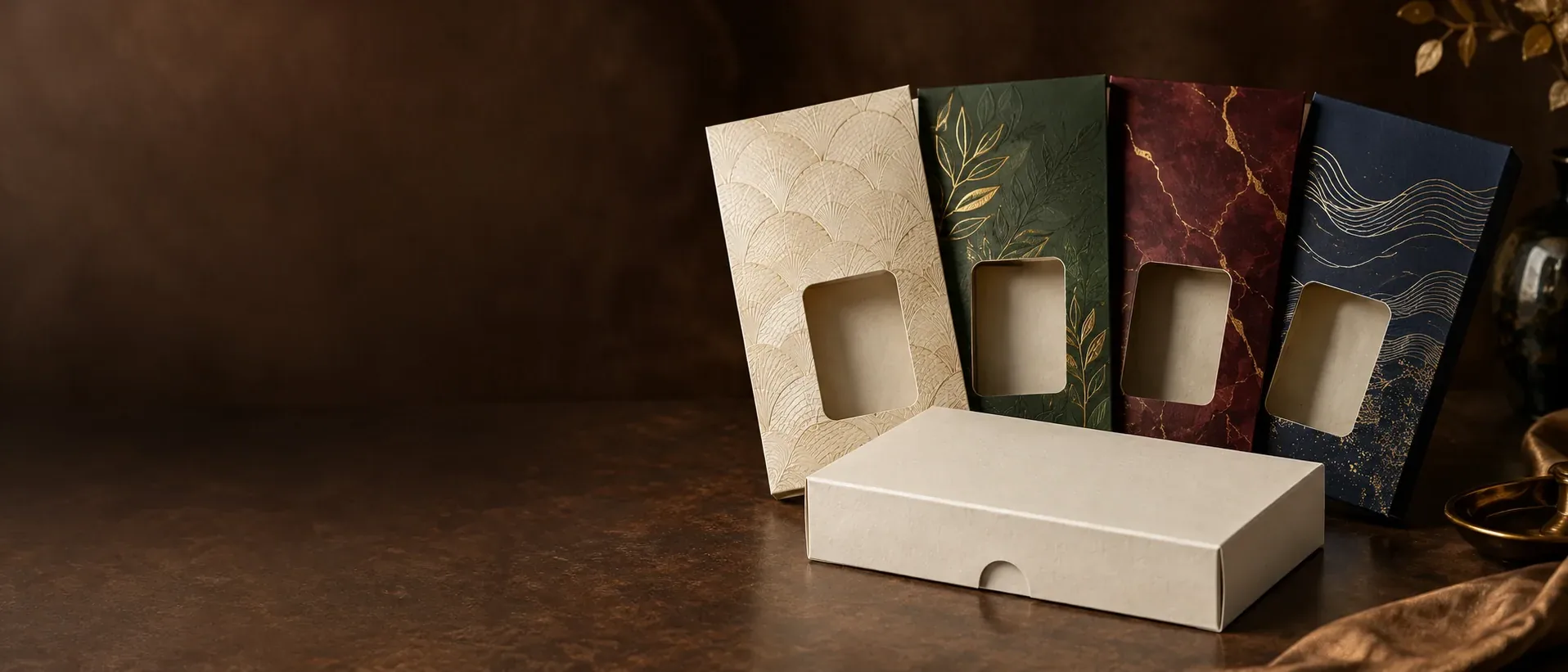
A sleeve is the cheapest way to change a pack without changing the tooling underneath it.
A cost-led brief often proposes a printed carton in place of a printed band. This is what changes.
| Sleeve | Printed outer carton | |
|---|---|---|
| Board used | Four panels and a seam. The least of any structure here | Four panels, plus flaps at both ends |
| What it does structurally | Nothing. The pack underneath carries the contents and the stack | Everything. It is the pack, and it is what gets stacked |
| The ends | Open. Product is visible at both, and so is any inner pack | Closed. Nothing is visible and nothing falls out |
| Applied | Over a finished pack, by hand or inline | Filled, then closed |
| Changing the design | New plates and a sleeve run. The pack underneath is untouched | New plates, and the whole pack is reprinted |
| Where it wins | Variants, multipacks, and any pack whose structure is already settled | A single design in volume, where the outer may as well be the pack |
A sleeve deep enough to cover the pack is a tray and sleeve, and it has a different fit tolerance.
A sleeve is open at both ends.
It cannot fall open. It also cannot hold anything in, so the pack underneath has to be finished before the sleeve goes on. Both ends are cut edges, so the board shows at them: a white cut edge on a dark printed sleeve is visible from a meter away, and the design has to allow for it.
The ends are also where a sleeve is opened. A thumb notch cut into one end lets the band come off in one movement. It is cut on the same die as the outline, so it costs nothing. On a pack meant to be re-sleeved after opening, it keeps the sleeve intact after the first use.
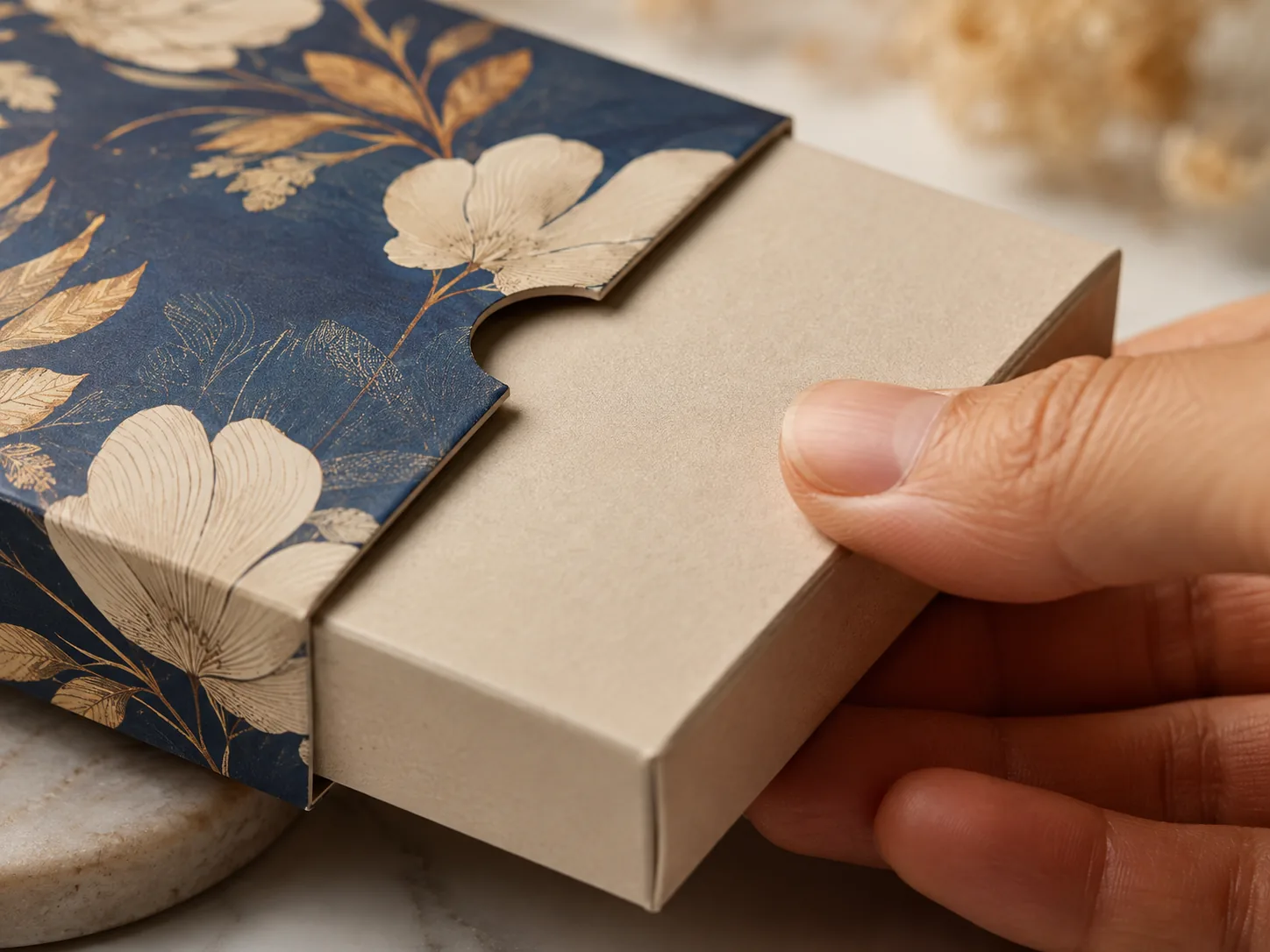
On a sleeve the specification is the gap between the band and the pack.
A sleeve is cut to the outside of the pack it goes over plus a clearance, and the clearance has to absorb everything the pack underneath is allowed to vary by: the caliper of its own board, the bulge of a full carton against an empty one, the thickness of a label, the swell of a tray that has been sitting under weight. These are the ordinary tolerances of the pack, and a sleeve drawn from a dimension sheet misses them.
Send the pack. A physical sample of the carton, tray or bottle the sleeve has to go over, in the state it will be in when it is sleeved: filled if it is filled, labeled if it is labeled. The sleeve is drawn from that, and the prototype comes back to go over that same sample before anything is tooled.
Where the sleeve is going on inline rather than by hand, say so at the same time. A sleeve applied by a machine has a tighter clearance and a lower friction requirement than one applied by hand, and it is drawn differently.


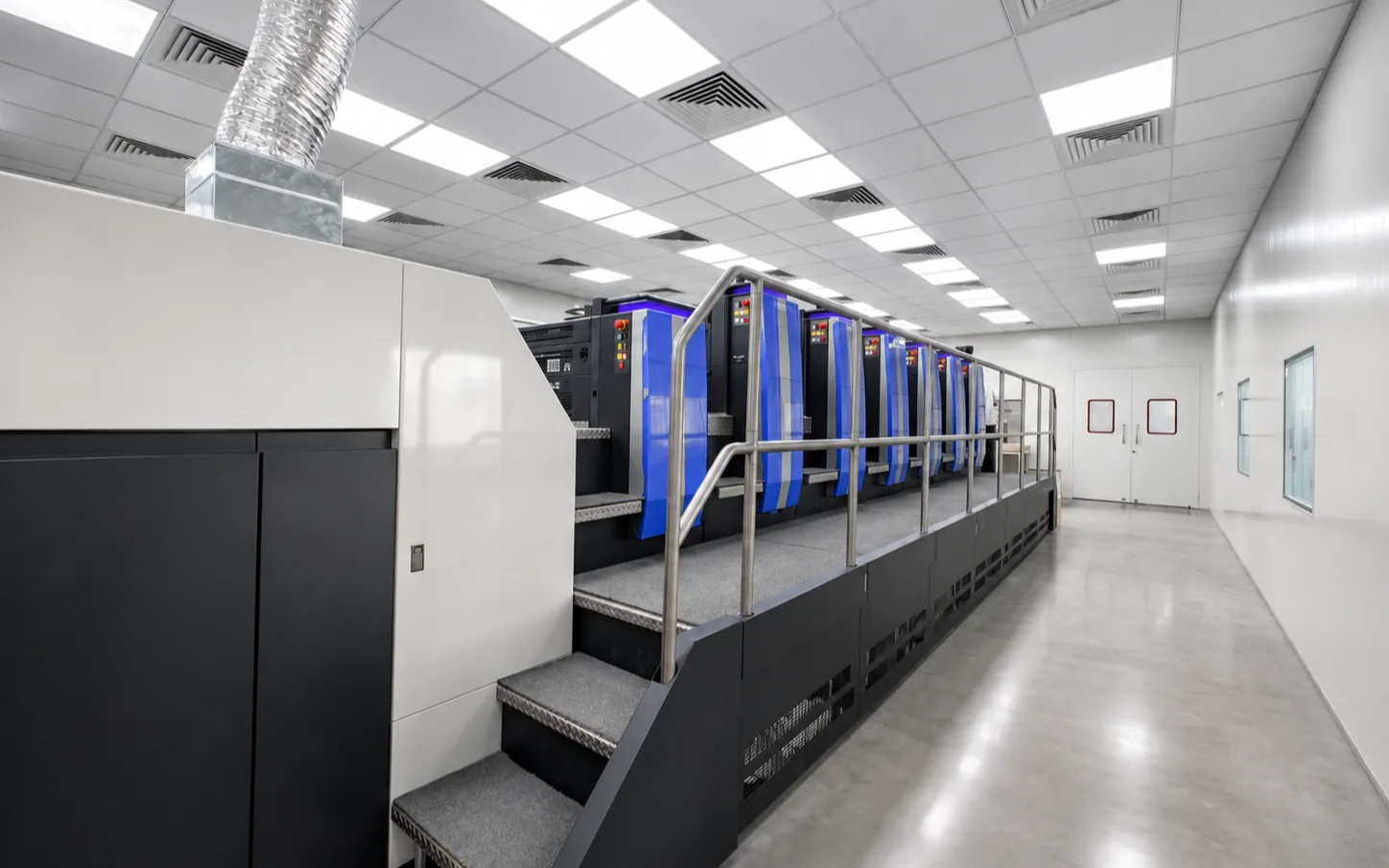
Nearly all the board in a sleeve is printable surface, with no flaps folding out of sight. It runs on the same six-color line as everything else, takes every finish the plant offers, and comes off the folder gluer as a flat band with a single glued seam.
Cartons here are made on bulk production runs, and the cost per carton falls as the run grows, because plates, tooling and make-ready are fixed per run rather than per carton. A quote is priced against the volume you are planning. Landed pricing typically runs 20 to 30 percent below comparable US supplier quotes for the same specification. The quote is one landed price: the cartons, tooling, structural design, proofing, the documents that travel with the order, import duty, shipping and delivery to your address, in the US or anywhere else. Nothing is quoted on top of it later.
The three pieces a sleeve is most often specified with here.
The usual thing under a sleeve: a plain tray holds the product and the band carries the print.
See the structure: Four corner trayA deeper outer the tray slides out of. An alternative to a rigid box.
See the structure: Tray and sleeveA finished carton under a seasonal or market band, with its own tooling left untouched.
See the structure: Straight tuck endA sleeve box is a band of printed board with one glue seam and no ends, slid over a pack that is already made. It is the least board of any structure in the folding range, it carries no contents itself, and it is specified to add print surface, to hold two pieces together or to change a pack without changing what is underneath it.
To the outside of the pack it goes over, plus a clearance that absorbs everything that pack is allowed to vary by: its own board caliper, the difference between full and empty, a label, the swell of a tray under weight. So a sleeve is drawn from a physical sample of the pack, not from a drawing of it. Send the carton, tray or bottle in the state it will be in when it is sleeved.
Yes. It is worth doing wherever the sleeve comes off in front of the buyer, since the inside face is seen only by someone who has bought the pack. Both faces print on the same sheet in the same pass, so the cost is ink and a second plate set, not a second operation.
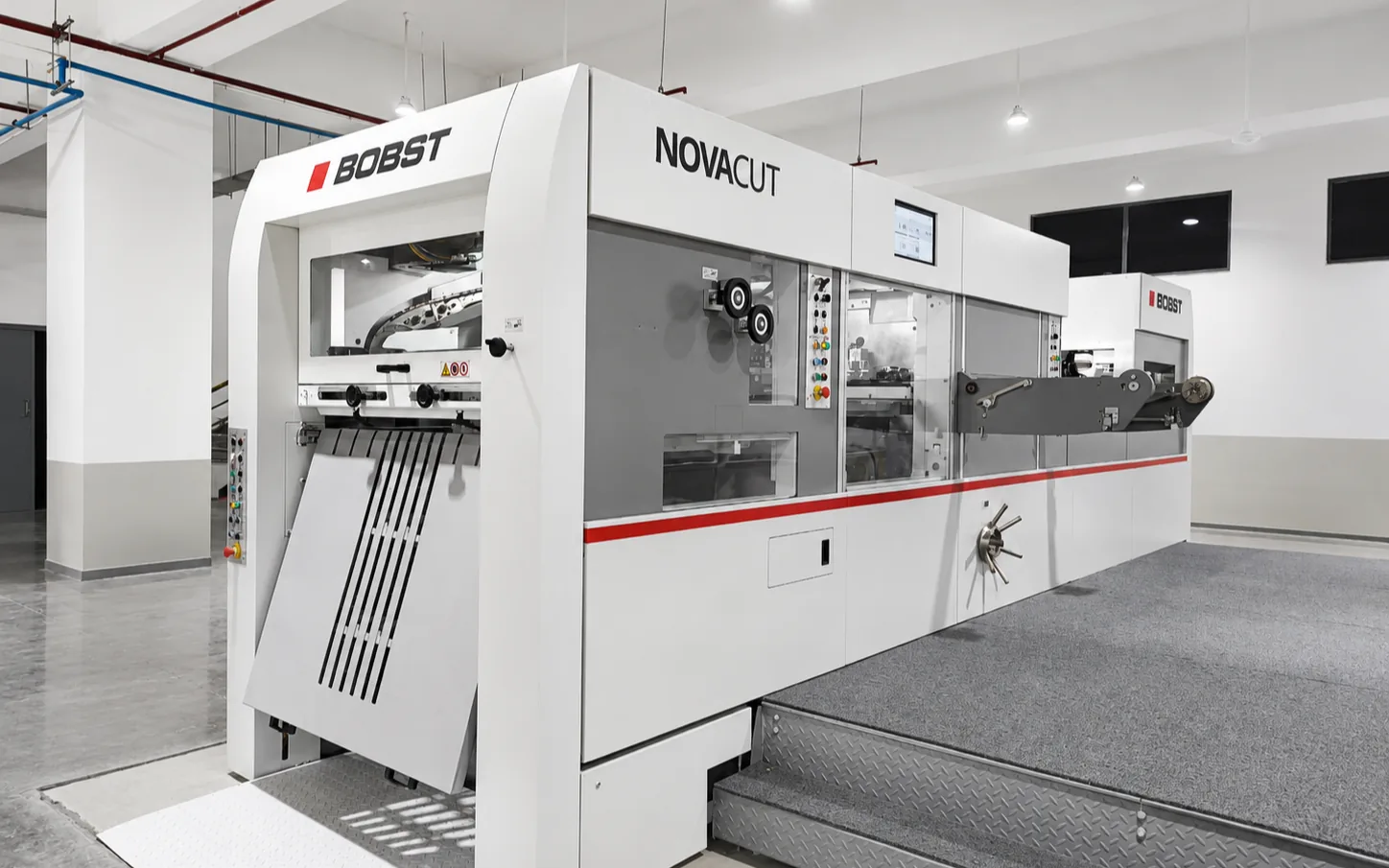
Both, and neither is an extra operation: a notch, a shaped end and a die-cut aperture are all cut on the same die as the outline. A window in a sleeve needs a film patch in the same way a window carton does, applied while the sheet is flat. A notch costs nothing and helps the sleeve survive being taken off.
Depth, and what the outer is doing. A sleeve is a band around the middle of a pack, leaving most of it visible at both ends. A tray and sleeve is a fitted outer that covers a tray almost completely, and the tray is drawn out of it like a drawer. The second is a two piece pack designed as a pair with a fit tolerance between them; the first is a band added to a pack that already exists.
Yes. It changes the drawing, so say so at the start. A sleeve applied inline runs to a tighter clearance and a lower friction than one applied by hand. Tell us the applicator, or send the pack and say how it will be sleeved, and the clearance is set to that.
Yes, and send the pack it goes over as well as the sleeve, because the clearance between the two is the specification. The structure is measured, board and caliper matched, and color matched to your existing standard under D65 and TL84 viewing conditions. Most switching programs are matched from a sample rather than rebuilt from a specification.
Last reviewed
A sleeve is drawn from the object it goes over, in the state that object is in when it gets sleeved. Send one, say whether it goes on by hand or inline, and a fitted prototype comes back to try on that same sample before anything is tooled. A packaging planner replies within one business day.