MATERIALS
Paperboard cartons and the boards we print them on
Paperboard is single ply board made from wood or recovered paper fiber, and it is what every folding carton is made from. Six grades cover almost all of it: SBS, bleached virgin fiber throughout; art card, the same fiber under a mineral coating; FBB, virgin with a bulky middle ply; kraft, virgin and unbleached; duplex board, reclaimed fiber under a white liner; and recycled board, reclaimed fiber left bare.
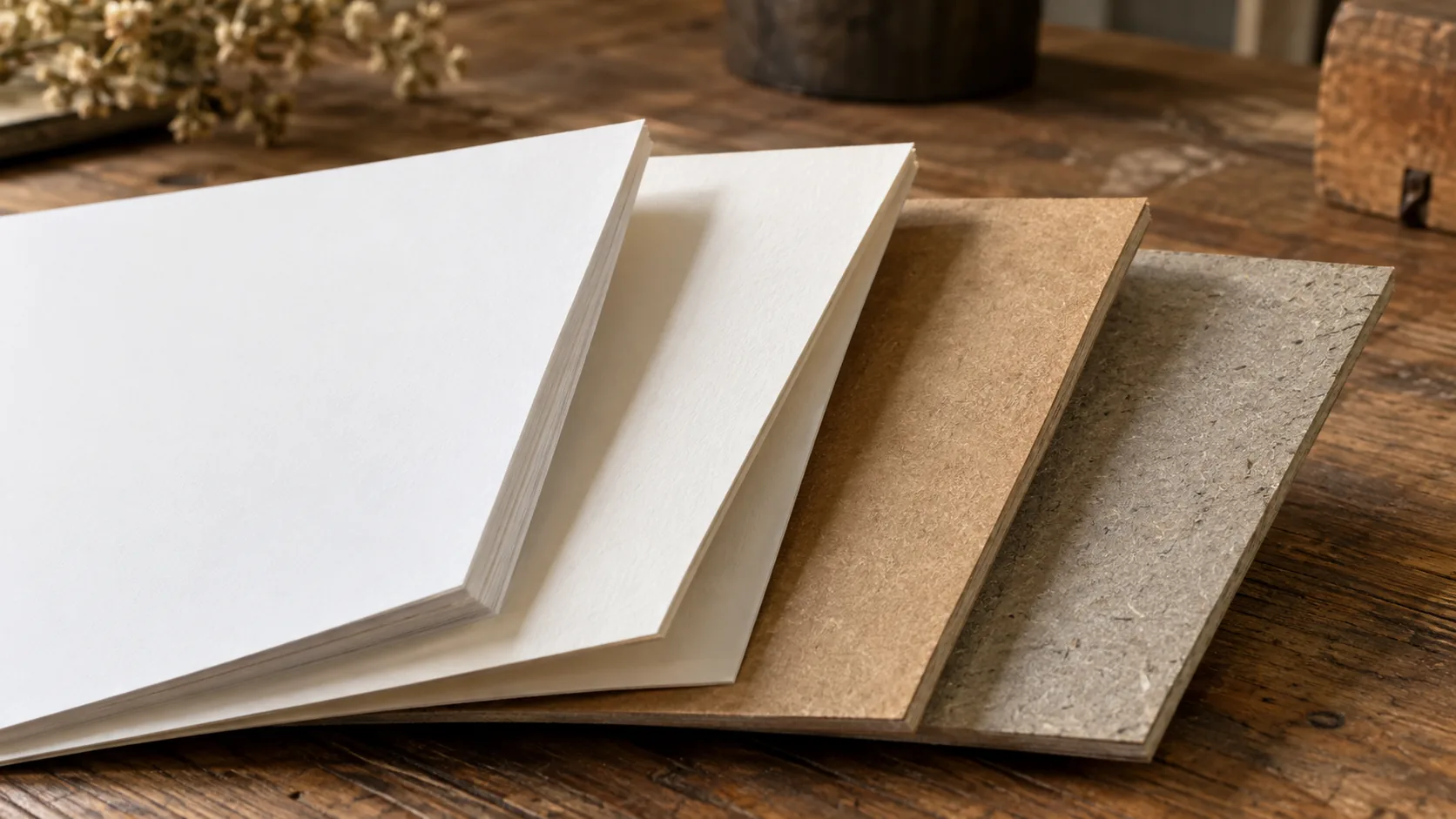
The six boards, in section
The same cut edge on all six, so the only thing changing between them is what the sheet is made of. What the grade costs, how it prints and whether the inside of the carton is white are all consequences of what is in this drawing.
Which board suits which carton
Six boards, each with the carton it suits.
- BoardFolding Box BoardA large carton that has to stand up on a shelf at a lower board weight.Multi-ply virgin board with a bulky mechanical middle, so it reaches a given stiffness at a lower weight than SBS does.
- BoardSBS PaperboardRetail shelf, photographic artwork, a brand color that has to be exact, and a carton whose inside is seen.Bleached virgin fiber the whole way through, white on both faces, and the cleanest printing surface a folding carton can have.
- BoardArt Paper and Art CardA quotation from overseas names the stock in gsm, and the carton, wrap or insert has to be specified against it.The Asian and British name for coated paper, and for the board weight of it that folding cartons are cut from.
- BoardKraft BoardThe brown is part of the design, and the pack is meant to look unbleached.Unbleached chemical pulp, brown because it was never bleached, and the strongest fiber of the four at the same caliper.
- BoardDuplex BoardA recycled carton that still has to print clean on the outside, and a decision to make about what the inside looks like.Reclaimed fiber under a white lined print face, with a reverse left gray or lined white a second time.
- BoardRecycled BoardAn outer carton, a divider, or a rigid box wrap, where recycled content is worth more than a white reverse.Reclaimed paper fiber reformed into board, gray or brown through the core, sold under the name chipboard in US packaging.
The six boards compared
Every column is a property of the board. Caliper ranges are the folding carton ranges for each grade, and the cost index is relative to the other five rather than to a price.
| Grade | Carton caliper | Surface | How it prints | Fiber | Cost index |
|---|---|---|---|---|---|
| SBS | 12 to 30 pt | Clay coated, white. White on both faces and through the caliper | The cleanest surface in folding cartons. Photographic images and exact brand colors hold | 100 percent bleached virgin chemical pulp | Highest |
| Art card | 9 to 18 pt | Clay coated, white. Coated one face as standard, both faces on request | The same surface as SBS and the same result. Denser, so it measures thinner at a given weight | 100 percent bleached virgin chemical pulp, woodfree | Highest |
| FBB | 12 to 30 pt | Clay coated white face, cream middle ply visible on every cut edge | As a coated virgin board. Takes a slightly deeper crease, and emboss holds a softer shoulder | Virgin, bleached outers over an unbleached mechanical middle | High |
| Kraft | 14 to 24 pt | Brown and unbleached, with visible fiber. White kraft carries a bleached top ply | Warms every color. Pale tints are lost, and white needs an opaque underbase | Virgin unbleached chemical pulp. The longest fiber of the six | Moderate |
| Duplex | 12 to 24 pt | Clay coated over a white liner. Reverse gray on GD grades, white on GT | As coated virgin board on the face. The liner is what stops the core reading through | Reclaimed fiber core under a bleached liner | Low |
| Recycled | 16 to 24 pt | Gray or brown core. A white liner and clay coating on the coated grades | As coated virgin board on a lined grade. Unlined, the gray core reads through light colors | 100 percent reclaimed fiber, and the shortest of the six | Lowest |
Stiffness is not a column. It depends on caliper and on how far apart a sheet holds its outer plies. At the same caliper FBB is the stiffest of the six and recycled board the least stiff, and at the same stiffness FBB is the lightest. Two of these grades are ordered in grammage rather than in points, and both of their pages carry the conversion between the two units: art card in gsm and points, and duplex board in gsm and points.
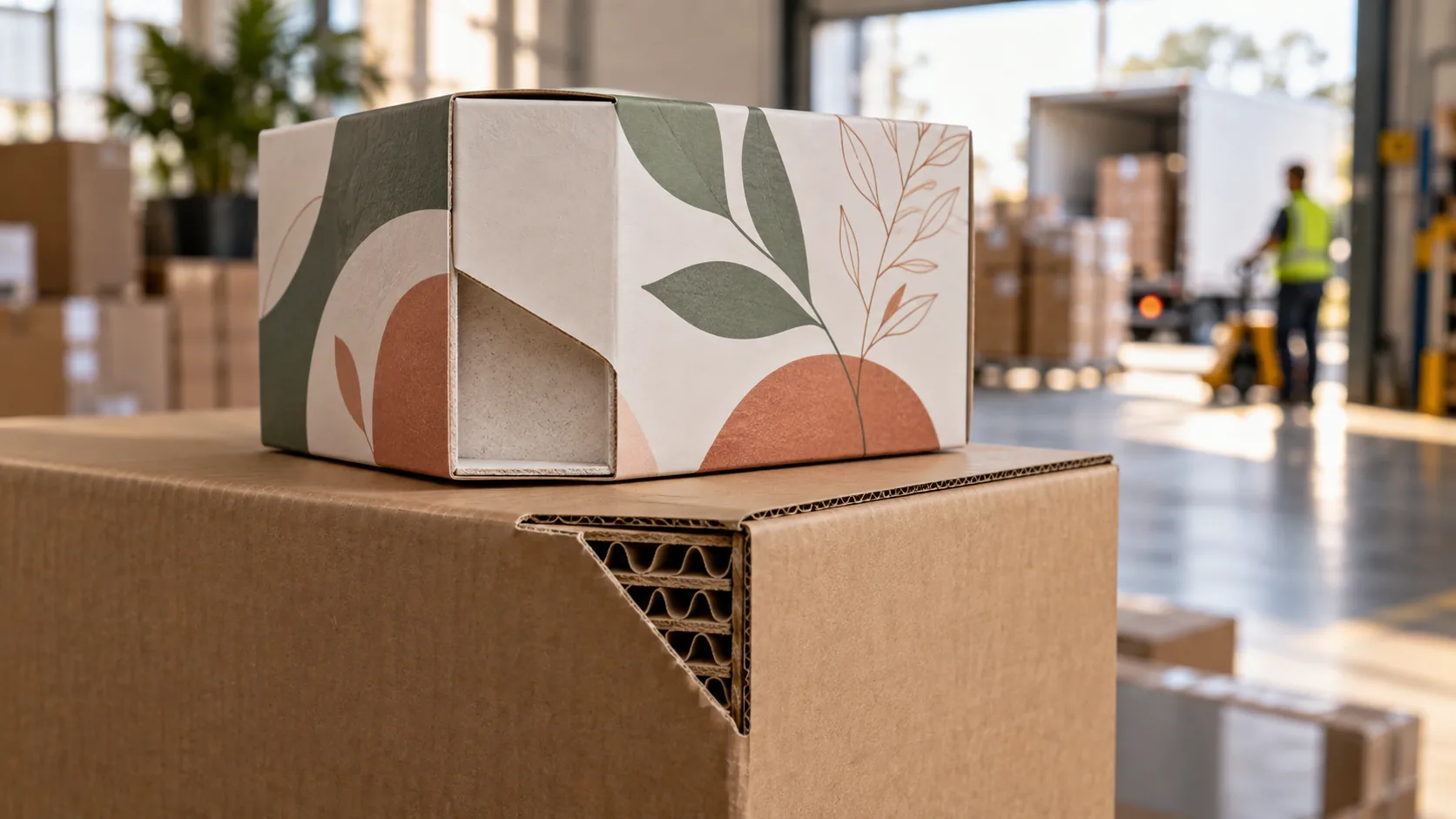
Folding cartons are paperboard. Shipping cases are corrugated.
Paperboard vs cardboard: what the terms mean
Cardboard is not a grade and no mill sells it. It is a colloquial word for any stiff paper product, used for two different things.
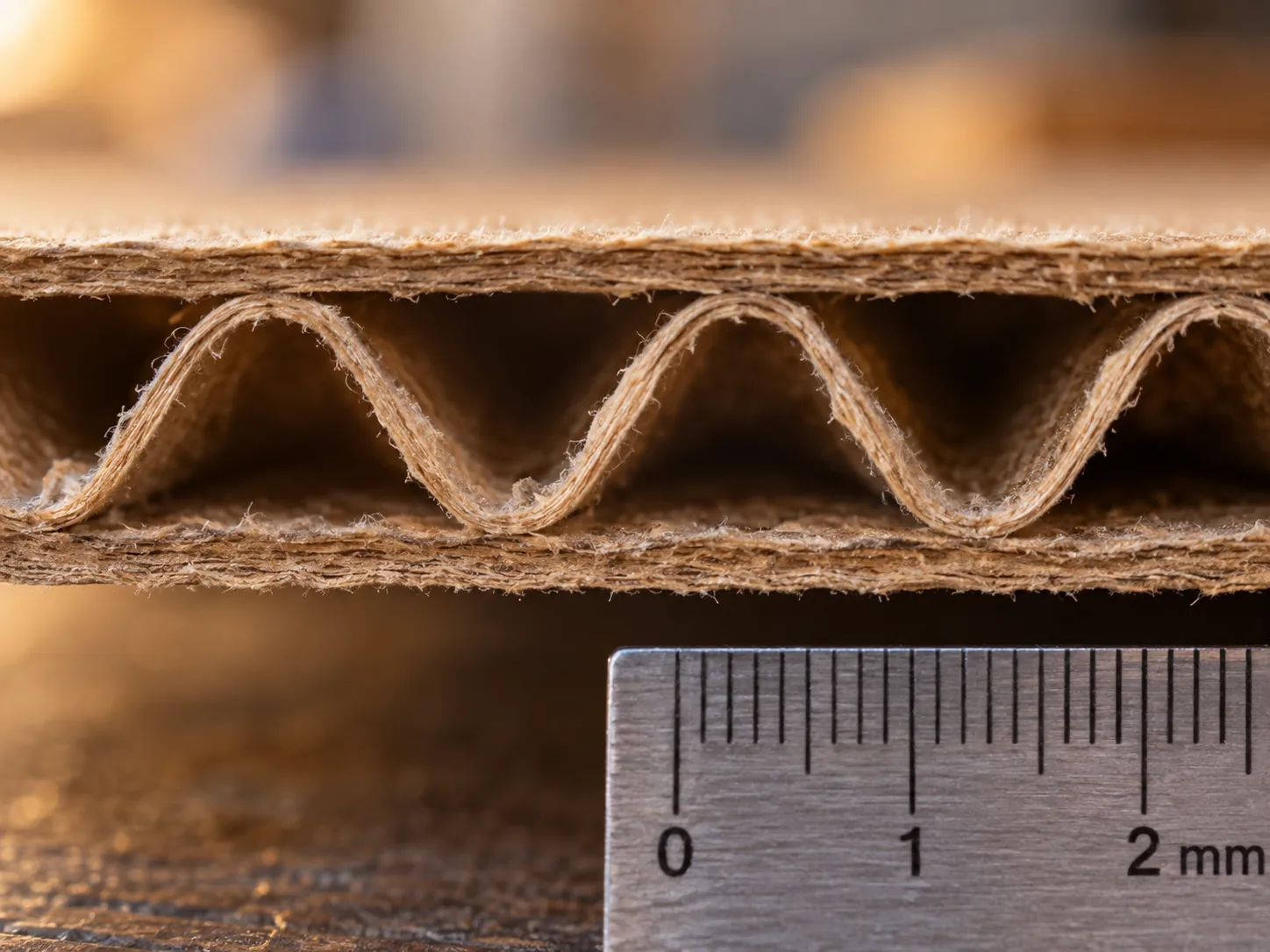
Paperboard is single ply: one solid sheet, thin enough to crease and fold, smooth enough to print a photographic image on. Every folding carton is paperboard. Corrugated is built from two flat liners with a fluted layer glued between them, which makes it thick, strong and comparatively rough, and every shipping box is corrugated.
So a retail carton on a shelf is paperboard and the case it arrived in is corrugated. When somebody says cardboard box they almost always mean corrugated; when they say cardboard carton or cardboard packaging for a retail product, they mean paperboard.
This plant makes folding cartons from paperboard. Corrugated transit packaging is a different product on different machinery and is not made here.
See folding cartons compared with corrugated and rigid boxes
FBB vs SBS: the two virgin grades
These are the two grades a premium carton is usually specified between, and the table above sets them out field by field.
- FBB gives more stiffness per dollar.
- The bulky mechanical middle ply holds the outer plies apart, and stiffness is governed by how far apart they sit. So FBB reaches a given stiffness at a lower weight, and since freight is charged by weight the saving grows with the size of the carton.
- SBS gives the best print surface and a white reverse.
- Bleached fiber the whole way through means no middle ply on a cut edge, a reverse as white as the face, and the cleanest printing surface available in folding cartons. It is worth paying for on a photographic image or an exact brand color.
- The carton interior can decide it.
- Where the inside of the carton is part of the design, only one of the two is white on the reverse. FBB is cream in the middle and cream or white on the back depending on the grade.
Board for food cartons
Suitability for food is decided by the specification rather than by the grade. It depends on the product, on whether the board is in direct contact or separated from it by an inner wrapper or a bag, and on the coating and the inks going over the board.
What the grade decides is the starting point. Virgin grades start from unrecovered fiber, which is where a food packaging specification is usually written from, and SBS is the grade most often specified for direct contact because it is white through the caliper with a coated face. A recovered stream is not specified for direct contact by default.
This plant controls the checking. Incoming board is tested against what was ordered in an in-house quality laboratory before it reaches the press, and the inks are vegetable based and low VOC. The plant is certified to ISO 9001, ISO 14001 and ISO 45001, operates to BRCGS packaging standards and SEDEX, and is FSC compliant. Certificates are available on request.
See what the quality laboratory tests and whenHow board gets specified on a quote
Three things settle the board on a carton quote. A request with all three comes back as a specification.
- Caliper, in pointsUS buyers specify in points of caliper, where a point is one thousandth of an inch. Send the filled product weight if the caliper is not already fixed, and the recommendation comes back in points against what the carton has to hold.
- The finish going over itThe board and the coating are decided together rather than one after the other. A recyclability requirement rules out film before anything else is discussed, a heavy overall coating can close up fine type, and a foil line will crack along a crease that has not been pre-broken.
- Whether it runs on an automated cartonerA carton that is hand packed and a carton that is machine erected are two different specifications at the same dimensions. Say which, and whether the line is yours or a contract packer's, and the board and the creasing are set against it.
What gets decided alongside the board
Board is one of three things settled on a carton quote. These are the other two, and each one changes what the board has to do.
 Read nextCarton structuresEvery structure this plant makes, from tuck ends to trays and sleeves, and how a folding carton compares with corrugated and with a rigid box.
 Read nextFinishesFoil, emboss, lamination, spot UV and coating. What each one does on each board, and which of them decide whether the carton is recyclable.
Questions about paperboard
Folding cartons, which is the printed retail pack a product stands in on a shelf: food and cereal boxes, pharmaceutical and supplement cartons, cosmetics and personal care packs, confectionery, and the sleeves and trays that go with them. It is also used for rigid box construction, dividers, inserts and card backing. The common property is that paperboard is single ply and thin enough to crease and fold while being smooth enough to print on, which is what separates it from the corrugated used for shipping boxes.
Not quite. Cardboard is a colloquial word, not a grade. It is used loosely for both paperboard and corrugated, which are different products. Paperboard is single ply: one solid sheet, creasable and smooth enough for a photographic image, and every folding carton is made from it. Corrugated is two flat liners with a fluted layer glued between them, which is thicker, stronger and rougher, and every shipping box is made from it. A retail carton is paperboard and the case it shipped in is corrugated, so when somebody says cardboard box they usually mean corrugated and when they say cardboard packaging for a retail product they usually mean paperboard.
Most folding cartons sit between 14 and 24 points of caliper, where a point is one thousandth of an inch. Small light cartons and sleeves run 12 to 14 points, standard retail cartons 16 to 18, cartons carrying real weight 20 to 24, and large cartons or crush-resistant bases 26 to 30. Above about 40 points the board stops folding and becomes rigid box board, cut and wrapped rather than creased. Which caliper a particular carton wants is decided against what it holds and how it is handled, at structural design, before tooling is cut.
Start from what the carton is being judged on. If it is the printed face, with a photographic image or a brand color that has to be exact, that is SBS, or art card, which is the same board under the name most overseas quotations use. If it is a large carton that has to hold a panel flat without the freight cost of solid bleached fiber, that is FBB. If the pack is meant to read as unbleached and the artwork is type and line work rather than photography, that is kraft. If the carton has to print clean on recovered fiber, that is duplex board, and the decision left after that is whether the inside is gray or white. If the recycled content is the claim on the pack, or the carton is an outer whose interior nobody sees, that is recycled board. The comparison table on this page sets all six out field by field, and each grade has a page with its own thickness ranges and print behavior.
Usually yes, and the unit is a regional habit rather than a difference in the board. US buyers specify caliper in points, where a point is one thousandth of an inch. Quotations written in Asia, India, the Middle East and much of Europe specify grammage in grammes per square meter, which is weight rather than thickness. The two are related by bulk, which changes from grade to grade, so there is no single conversion factor: 300 gsm of art card is around 12 points, and 300 gsm of duplex board is around 16, because a recovered core is loosely formed and a mineral coating is dense. That is why a conversion is done per grade rather than off one chart. Art card and duplex board are the two grades most often quoted in grammage, and each of their pages carries the ranges in both units.
Send the carton and we will name the board
Send a dieline, a sample carton, or the product and its filled weight. The grade and the caliper come back against what the carton has to do, with the print consequence of the board stated for your artwork. Board samples go out on request.