FINISHES
Gloss and matte lamination for boxes
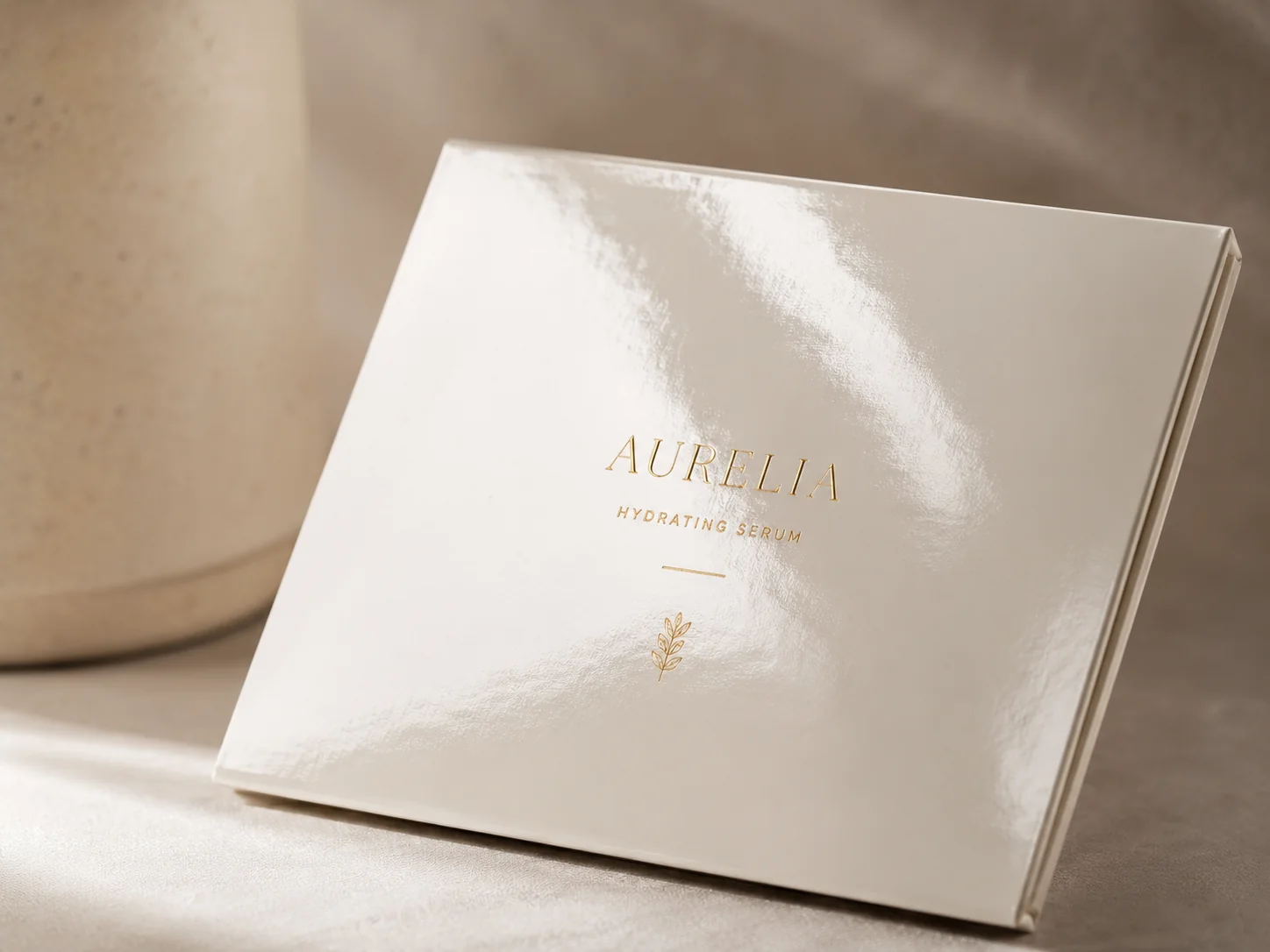
Lamination bonds a thin plastic film to a printed folding carton. Gloss lamination raises apparent ink density and reflects light. Matte lamination scatters light and mutes printed color. Both add scuff and moisture resistance to the box, and the choice changes how artwork must be prepared before printing.
What it is
A film, not a coating
BOPP bonded to the printed sheet. Gloss and matte are the same operation.
Sequence
After print, before cutting
The sheet is laminated whole, then it goes to the die.
What it changes
Color, and the feel
Gloss lifts apparent ink density. Matte scatters the light and mutes it.
Best at
Whole cartons
It is a flood. Contrast on one panel is spot UV over a matte film.
Where the film sits, and what it does to the light
The two films are one material with two surfaces. Step through the last two frames to see the only difference that matters, which is what each one does to a single ray of store lighting.
A cross-section showing how a laminated carton is built, in 4 steps.
- Printed board. The sheet reaches lamination dry, because the press cures with UV and IR at the delivery. A heavy solid that had not hardened would pick under the nip.
- The nip. Heat and pressure bond a BOPP film across the whole sheet. There is no spot version of this: a film is a sheet of material, so anything selective is a coating under a different name.
- Gloss. Gloss reflects at one angle, so a spotlight becomes a highlight across the panel and apparent ink density rises. Solids read deeper than they did on the printed sheet.
- Matte. Matte scatters the same ray. That is the whole finish, and it is also why apparent ink density drops and the build has to be corrected before plate rather than after proof.
01Printed board
Printed sheet, cured dry
Cross-section, magnified. Not to scaleHover a layer to name it
01/04Step through it
Gloss and matte lamination specification
The two films side by side, field by field. One material with two surfaces. The other seven finishes are set out the same way.
The film and how it goes on
| Field | Gloss lamination | Matte lamination |
|---|---|---|
| Film | BOPP gloss | BOPP matte |
| Coverage | Full sheet only. A film cannot be applied to a spot area. | Full sheet only. A film cannot be applied to a spot area. |
| Applied | After printing, as its own pass. Sheets leave the press dry, so the film goes on the same shift. | After printing, as its own pass. Sheets leave the press dry, so the film goes on the same shift. |
How it behaves in use
| Field | Gloss lamination | Matte lamination |
|---|---|---|
| Effect on printed color | Raises apparent ink density. Solids read deeper and saturated colors read brighter than the printed sheet did. | Lowers apparent ink density. Solids mute, and a dark ground loses some of the depth it had on the sheet. |
| Scuff resistance | Higher. The sealed surface takes handling well. | Lower. Marks show on dark solids in particular. |
| Fingerprints on dark solids | Low. A print wipes off a gloss surface. | Visible. A dark matte panel holds a fingerprint. |
What goes over it, and what happens after
| Field | Gloss lamination | Matte lamination |
|---|---|---|
| Spot UV over it | Weak contrast. Gloss on gloss is a difference in level, not in sheen. | The standard pairing. High gloss reads against the matte ground. |
| Foil over it | Yes, and it is a common pairing where a brighter overall ground is wanted. | Yes. The order of the two passes is set at artwork stage. |
| Recycling | The film has to be separated from the fiber, so a laminated carton is a harder stream than a coated one. | The film has to be separated from the fiber, so a laminated carton is a harder stream than a coated one. |
| Also called | Gloss lam, BOPP gloss | Matte lam, BOPP matte |
Where a design carries both a foil block and a laminated ground, the order the two go on in is set in prepress against your file.
Check the color before the plates are made
Send the file and we will say what matte will do to your solids, and what has to move in the build for the carton to match the color you signed off.
Gloss or matte lamination: which to choose
Soft touch has a page of its own and is included here, because a buyer choosing between gloss and matte is usually weighing it too.
| Compared on | Gloss | Matte | Soft touch |
|---|---|---|---|
| Appearance | Reflective. The highlight moves as the pack moves | Flat and even, no specular highlight anywhere | Flat like matte, with a visible depth matte does not have |
| Printed color | Reads deeper and more saturated than the sheet | Reads muted. Solids lose density | Reads muted, slightly further than matte |
| Scuff and marking | Best of the three through transit and handling | Marks on dark solids | Marks on dark solids, and a mark is more visible in the nap |
| Fingerprints | Wipe off | Show on dark grounds | Show on dark grounds and stay |
| Shelf glare under retail lighting | High. A spotlight becomes a highlight across the panel | None. The panel reads the same from every angle | None, and the pack reads heavier than it weighs |
| Spot UV over it | Weak contrast, rarely worth specifying | Standard pairing, and the most common use of matte | Standard pairing, and the strongest contrast of the three |
| Foil over it | Yes | Yes | Yes, with pretreatment |
| Recyclability | Film separation required | Film separation required | Film separation required |
| Typical categories | Confectionery, household, anything handled hard before it is seen | Skincare, supplements, spirits | Prestige beauty and fragrance |
Soft touch has a page of its own. For gloss in some places and not others, see gloss on selected areas.
How lamination runs here
Matte is corrected before plates are made
Matte film lowers apparent ink density, so a solid that was right on the printed sheet is not right on the finished carton. The correction goes into the build before plate, against the shade card you approved and not against the press sheet. A carton that arrives flatter than the proof has usually skipped that step.
The sheet reaches lamination dry
UV and IR curing at the delivery of the press it comes off hardens the ink film before the laminate goes on, so a heavy solid does not pick or ghost under the nip.
The film covers the whole sheet
There is no spot lamination. A film is bonded across the whole sheet, so anything selective is a coating, usually spot UV. It is the most common request we get on this finish.
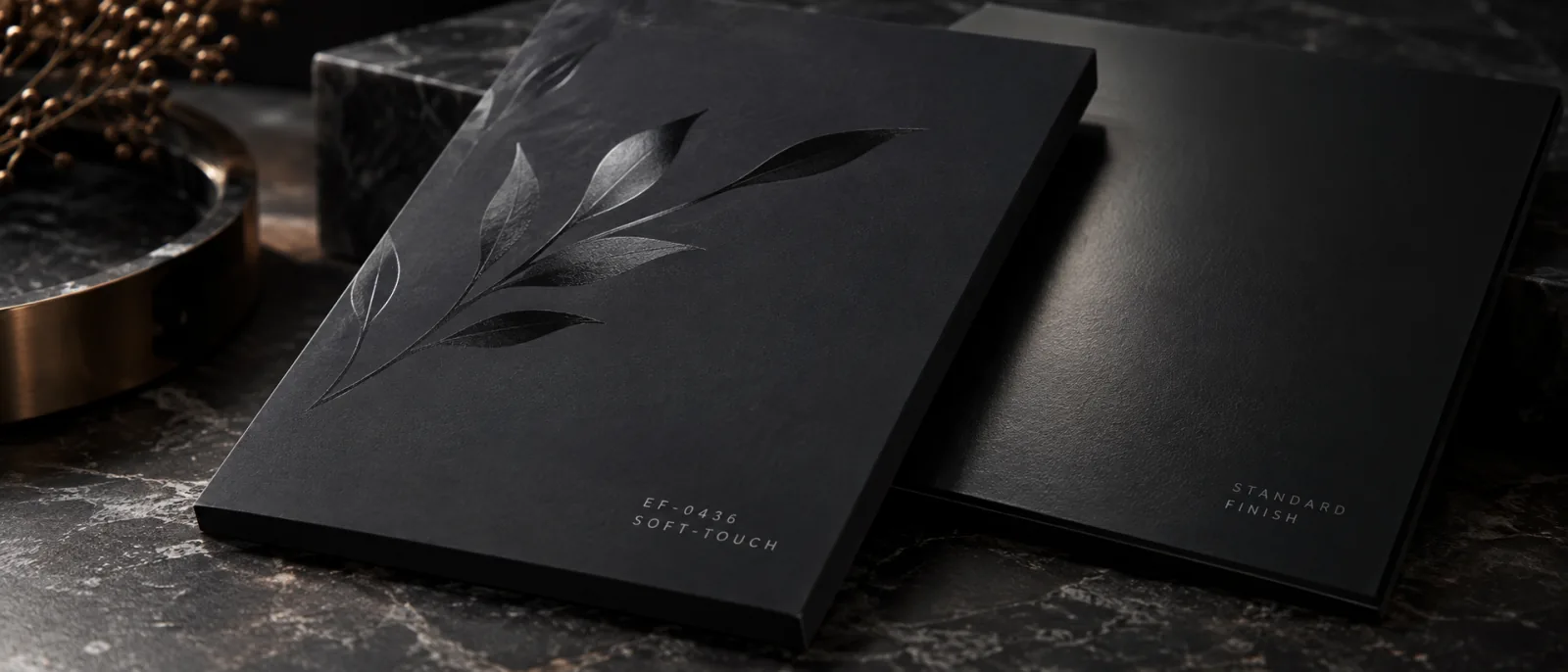
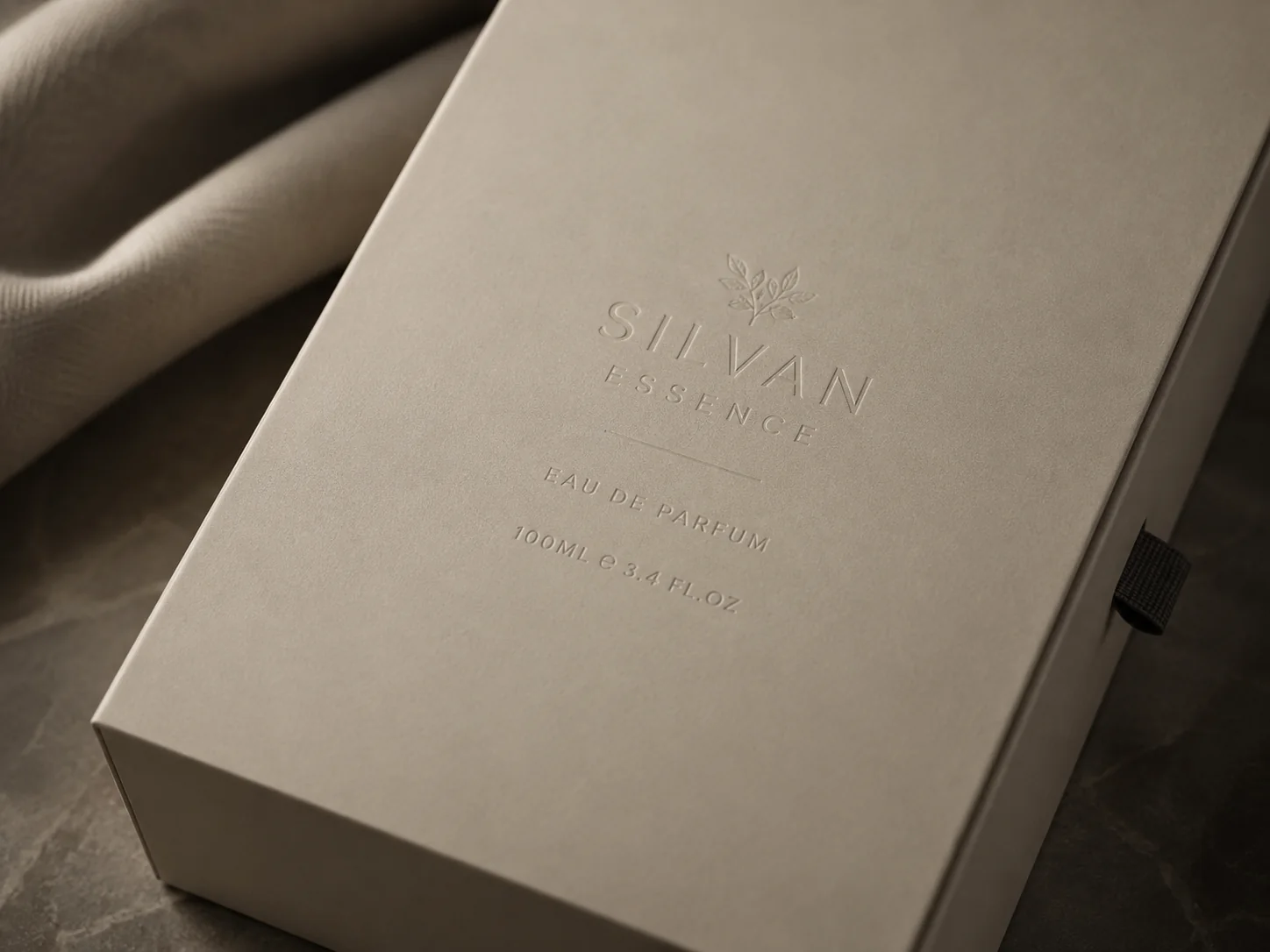
The same artwork, twice, on your own board
A photograph of a gloss panel mostly shows the light source. The set is one piece of your artwork laminated both ways, on your own board.
Cost logic
Film cost is close between gloss and matte. Choose on how the artwork reads on shelf.
Neither is the premium option. A quote that prices them far apart is pricing something other than the film.
What it costs against a US supplier
Landed cost runs 20 to 30 percent below a comparable US supplier quote. That is one price: board, printing, finishing, tooling, import duty, shipping and delivery to your door, with nothing added later.
Get a quoteWhen to laminate, when to coat instead
Laminate when
The carton is handled before it is seen.
A film is the most durable surface a folding carton can have. It keeps the face clean through a distribution center and onto a shelf.
Spot UV is part of the design.
Spot UV needs a matte ground to read against, and matte film is the usual one.
Shelf glare is working against the pack.
Retail lighting is directional and a gloss panel turns it into a highlight. Matte removes it. Most skincare and spirits cartons are matte.
Coat instead when
Recyclability is a stated requirement.
An aqueous coated carton stays in the fiber stream. A laminated one has to have the film taken off it first. See coating instead of laminating.
The carton is direct food contact.
The compliant options for direct food contact are coatings, not films.
The gloss is only wanted in places.
A film covers the whole sheet. Selective gloss is a coating operation.
Which film, by category and structure
The pairings that come up most. The last column gives the reason, usually the lighting and handling the pack meets.
The in-house quality lab runs the same physical tests on a laminated carton as on an uncoated one. A film that cracks at the crease is caught there, before it reaches your filling line.

| Category | Structure it usually sits on | Why that film |
|---|---|---|
| Skincare and beauty | Straight tuck end, sleeve | Matte, because the shelf is lit from above and gloss throws a highlight across the face |
| Confectionery | Tray and sleeve, window boxes | Gloss, which deepens saturated food photography |
| Supplements | Straight tuck end, reverse tuck end | Matte, because the panel carries small legal type that has to be read under store lighting |
| Household and cleaning | Seal end, auto lock bottom | Gloss, because the pack is handled hard and meets moisture |
| Spirits | Tray and sleeve, hinge lid | Matte, usually with foil over it, so the only bright thing on the face is the metal |
Questions about gloss and matte lamination
Start with the lighting where the pack is sold. Retail lighting is directional, so a gloss panel turns a spotlight into a highlight across the face. Skincare, supplements and spirits usually sit on matte. Gloss suits saturated color, as on confectionery and food, and cartons handled hard before they are seen. A design with a spot gloss pattern needs a matte ground under it.
Yes. Matte film scatters light rather than reflecting it, so apparent ink density drops and solids read muted against the printed sheet. The correction is made in the build before plates are made, against the approved shade card rather than against the press sheet, so the carton that arrives matches what was signed off. A carton that comes back flatter than the proof is usually one where that correction was never applied.
Gloss, and the difference is most visible on dark solids. Both films seal the surface against moisture and both resist scuffing far better than a varnish, but a matte surface holds a mark where a gloss surface releases it, and a fingerprint on a dark matte panel stays until it is wiped. A dark matte carton is often specified with a scuff resistant matte film for that reason.
No. A film is bonded across the whole sheet or not at all, so there is no spot lamination. What people usually mean when they ask for it is spot UV, which is a coating printed through a plate and can be placed anywhere on the panel, or a drip off effect where two coatings hold each other apart. Matte film with spot UV over it gives the look most people have in mind.
Which film, decided before plates are made. Matte lowers apparent ink density, so the build is corrected for it at plate stage rather than after a proof, and a decision made later costs a plate set. Send the shade card or the Pantone references the correction should aim at. Mark the glue flaps on the dieline, since the film has to be checked against the adhesive at the seam. And where a spot gloss is going over matte film, supply those areas as their own layer.
It is recyclable where the stream can separate the film from the fiber. The film has to come off before the board can be repulped. An aqueous coated carton stays in the fiber stream as it is. If a recyclable substrate is a stated requirement, specify a coating and accept less protection.
Last reviewed
Gloss and matte swatches on your own board
One piece of your artwork, laminated gloss and laminated matte, on your own board. Ask for the color note with it and the file comes back marked with what matte will do to your solids.