Skip to content

COMPANY

Machinery and facility

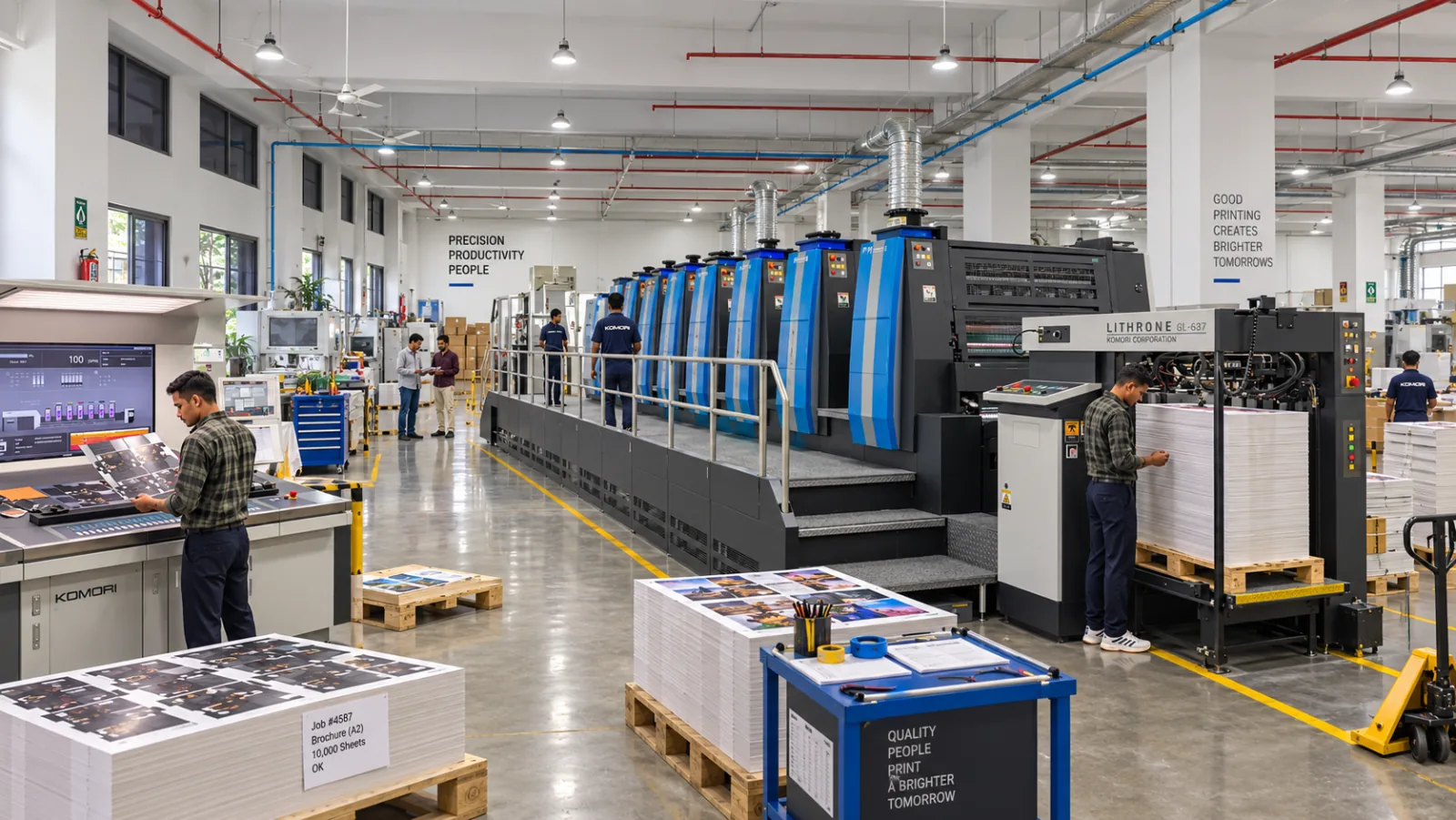
Eastface Packaging runs one plant of 90,000 square feet in Ahmedabad, with printing and converting on the same floor: a Komori Lithrone GL-637 six-color offset press, a Bobst Novacut die cutter and a Bobst Novafold folder gluer.

Three machines and the workflow around them. What follows is what each one decides about your carton, and each machine has a page of its own below.

90,000sq ft
One floor, Ahmedabad
6units
Offset, UV and IR curing
15,000sheets / hr
Press speed
1962
Printing since

TOUR THE FACILITY

Walk the floor, goods in to dispatch

Seven rooms in one building of 90,000 square feet, in the order a visitor walks them, starting at the board store, one room before prepress.

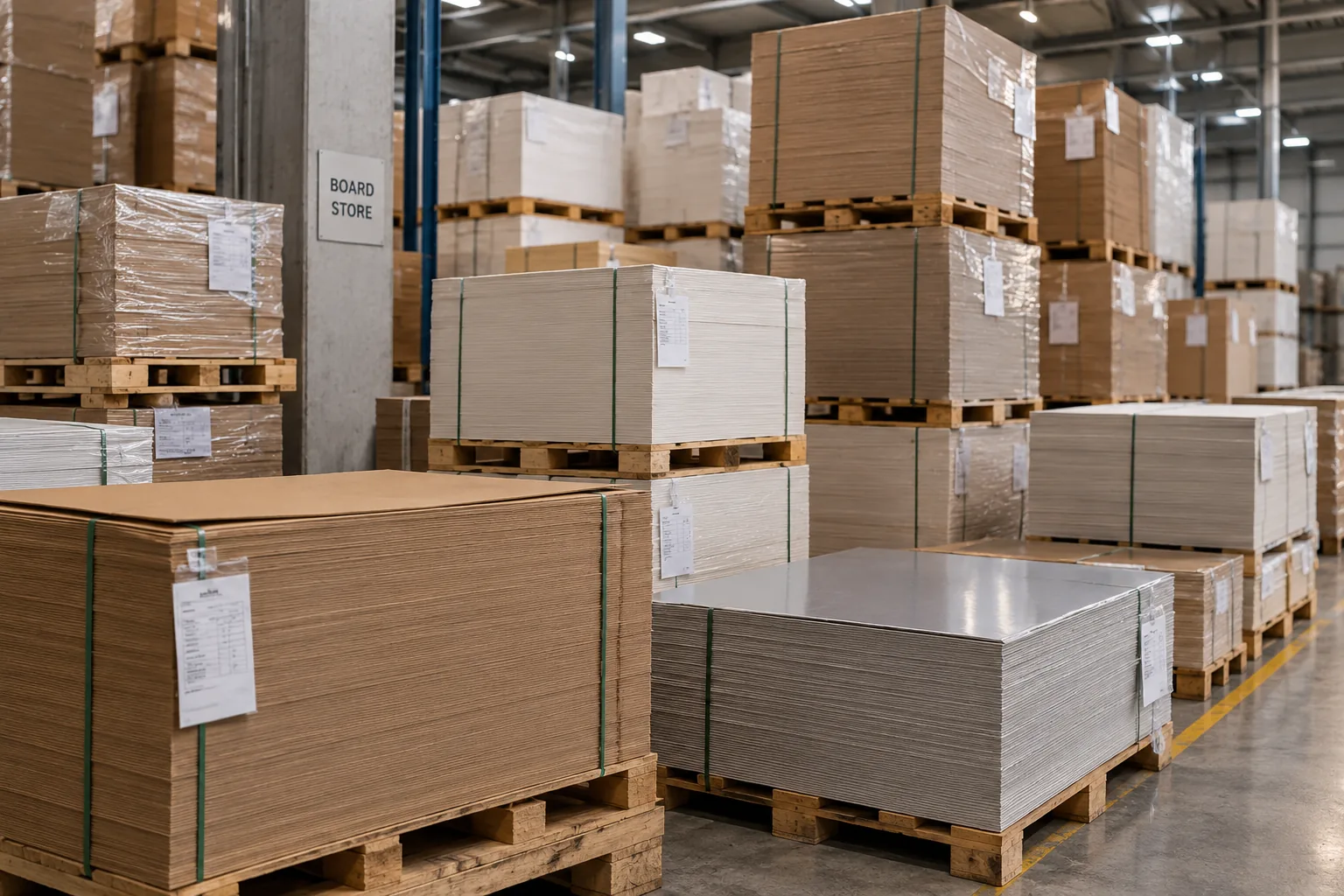
  1. The board store, strapped pallets of kraft board in front, white folding boxboard stacked two high behind and a pallet of silver metallized board to the right, each with a docket on its side and a BOARD STORE sign on the column.
    01 / 07Goods in and the board store

    01 / Board on pallets

    Goods in and the board store

    Kraft, folding boxboard and metallized board arrive by the pallet and stand in the store until a job calls for them. Grammage and caliper are checked against the docket at this door.

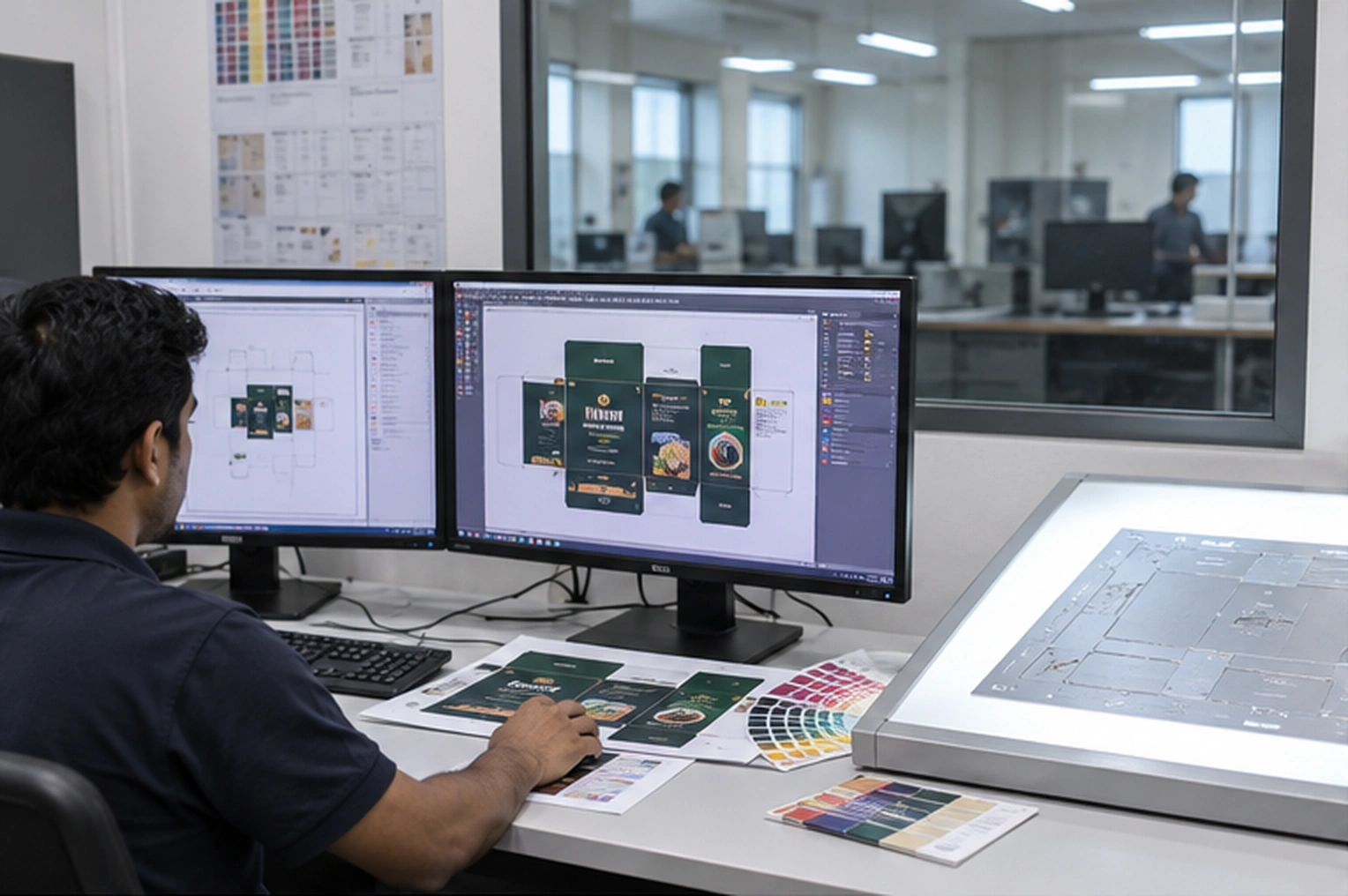
  2. A prepress operator at two calibrated monitors with a carton flat open on screen, the printed proof and a shade fan on the desk, and a plate on the light table beside it.
    02 / 07Prepress

    02 / Plates and proofs

    Prepress

    Trapping, imposition and proofing run on one color-managed workflow. Plates leave for the press with CIP3 and CIP4 ink presetting data alongside them, and the proof you approved is the reference the press corrects against.

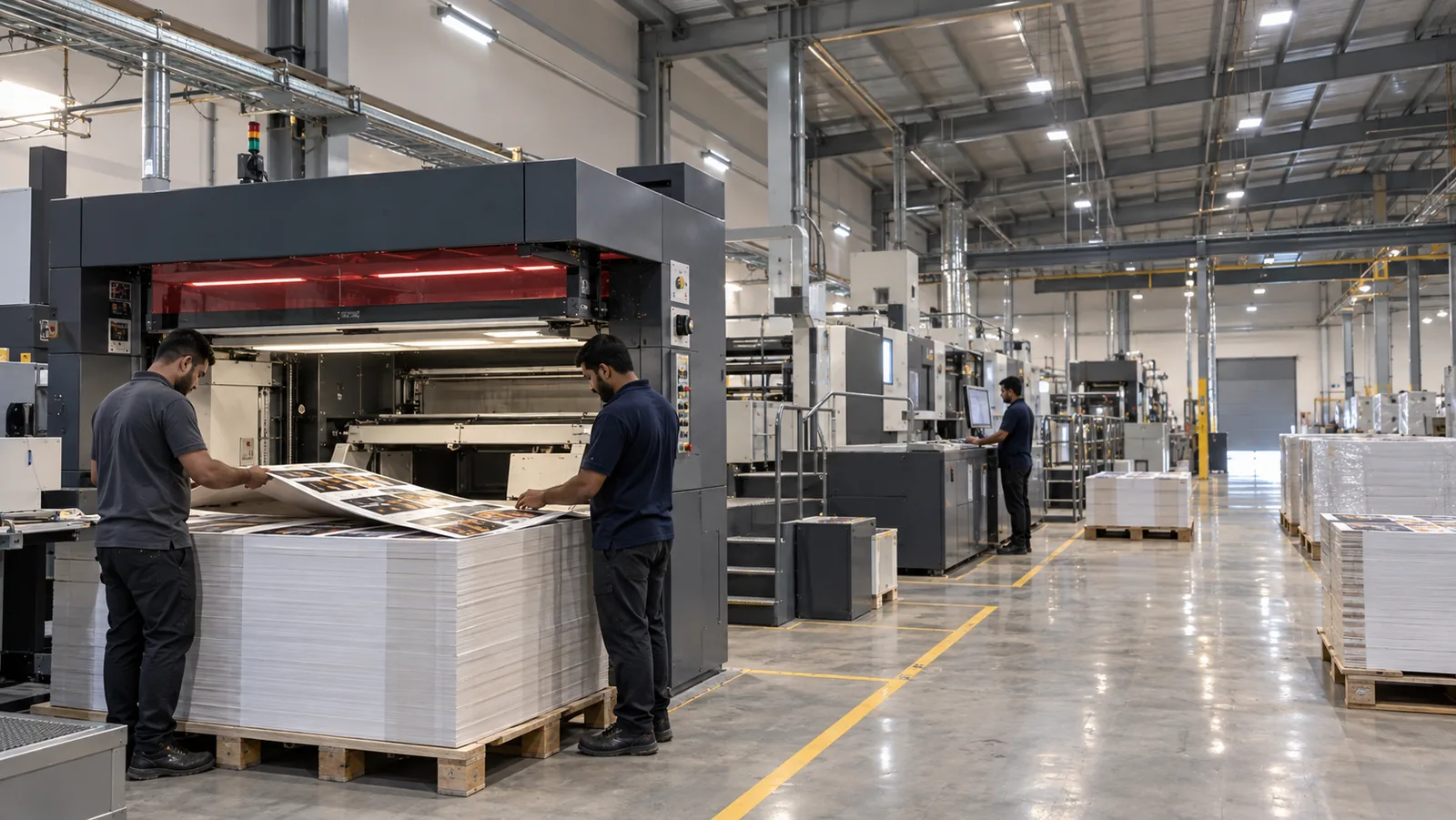
  3. The press hall from the delivery end, two operators drawing a printed sheet off the top of a landed pile to check it, the press standing behind them with its curing hood lit and the floor running clear down the hall past a second operator at a console.
    03 / 07The press hall

    03 / Six units, one pass

    The press hall

    The Komori GL-637 stands on its own in the hall with six units on one sheet path. Four carry process color and two stay free for Pantone spot inks, so a five or six color job runs in one pass.

    Komori GL-637

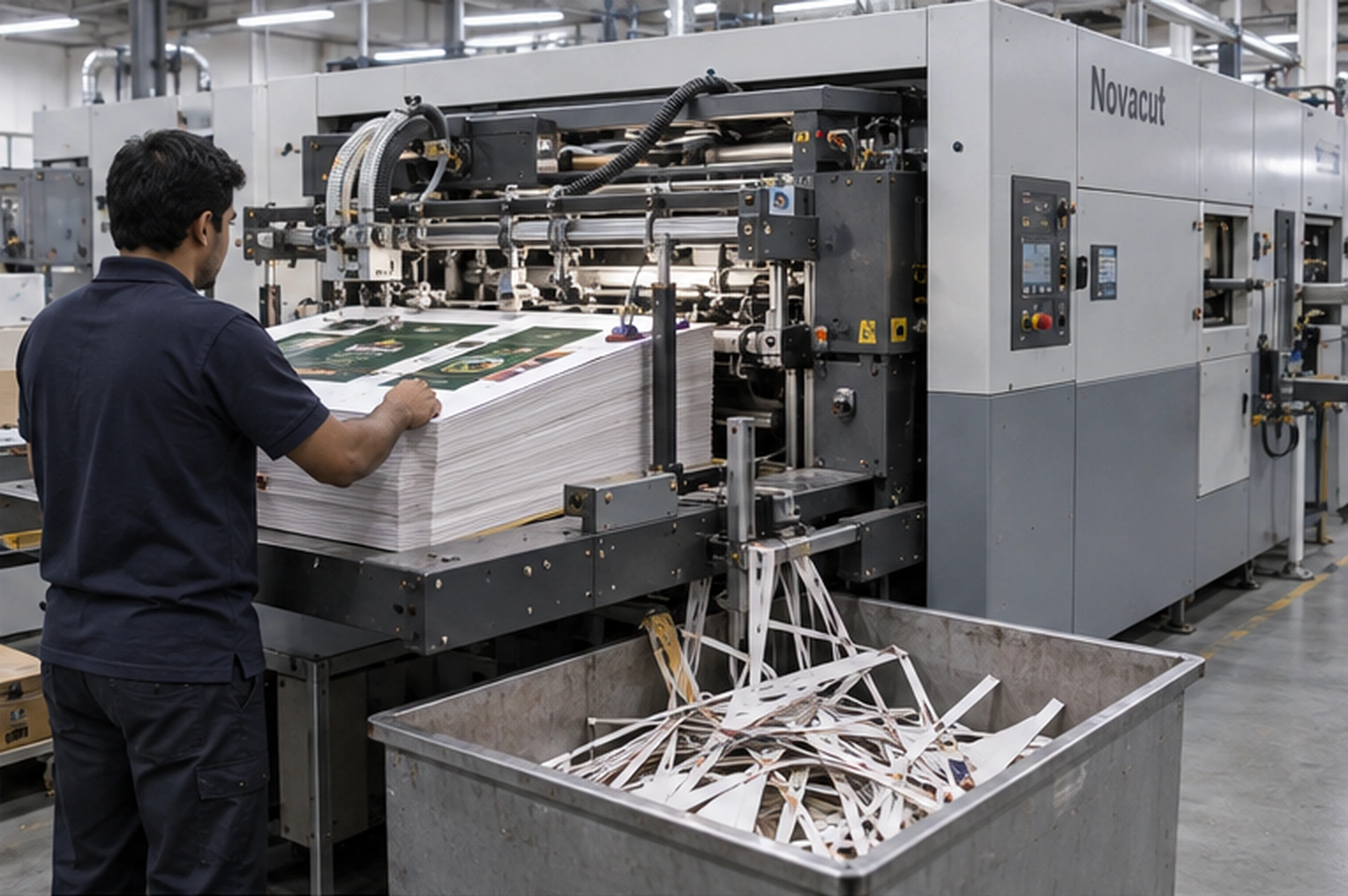
  4. The die cutter mid-run from the feeder end, an operator squaring a lot of printed sheets on the feed board and the stripped waste falling into a steel bin under the machine.
    04 / 07Die cutting

    04 / One strike

    Die cutting

    The Bobst Novacut takes printed sheets off the same floor and strikes them flat against a steel rule forme. Stripping and blanking happen on the machine rather than on a bench behind it.

    Bobst Novacut

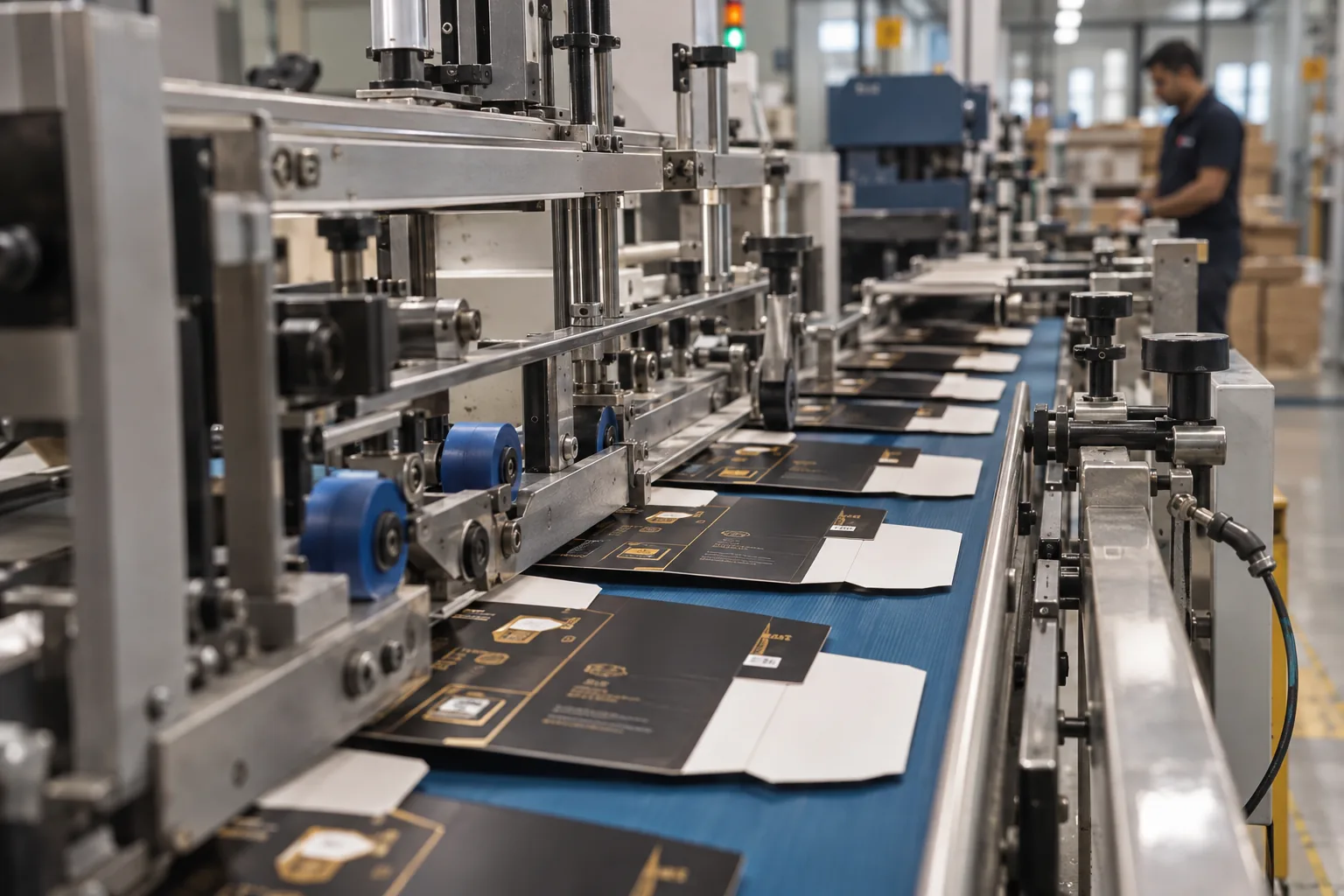
  5. Folded black and gold cartons shingling along the delivery belt of the folder gluer, the compression rollers holding each seam closed above them, with an operator packing counted stacks at the end of the line.
    05 / 07Folding and gluing

    05 / The seam closed

    Folding and gluing

    The Bobst Novafold pre-breaks every crease, lays the bead and holds the seam closed while the adhesive takes. Four and six corner trays are glued on the machine here rather than assembled by hand.

    Bobst Novafold

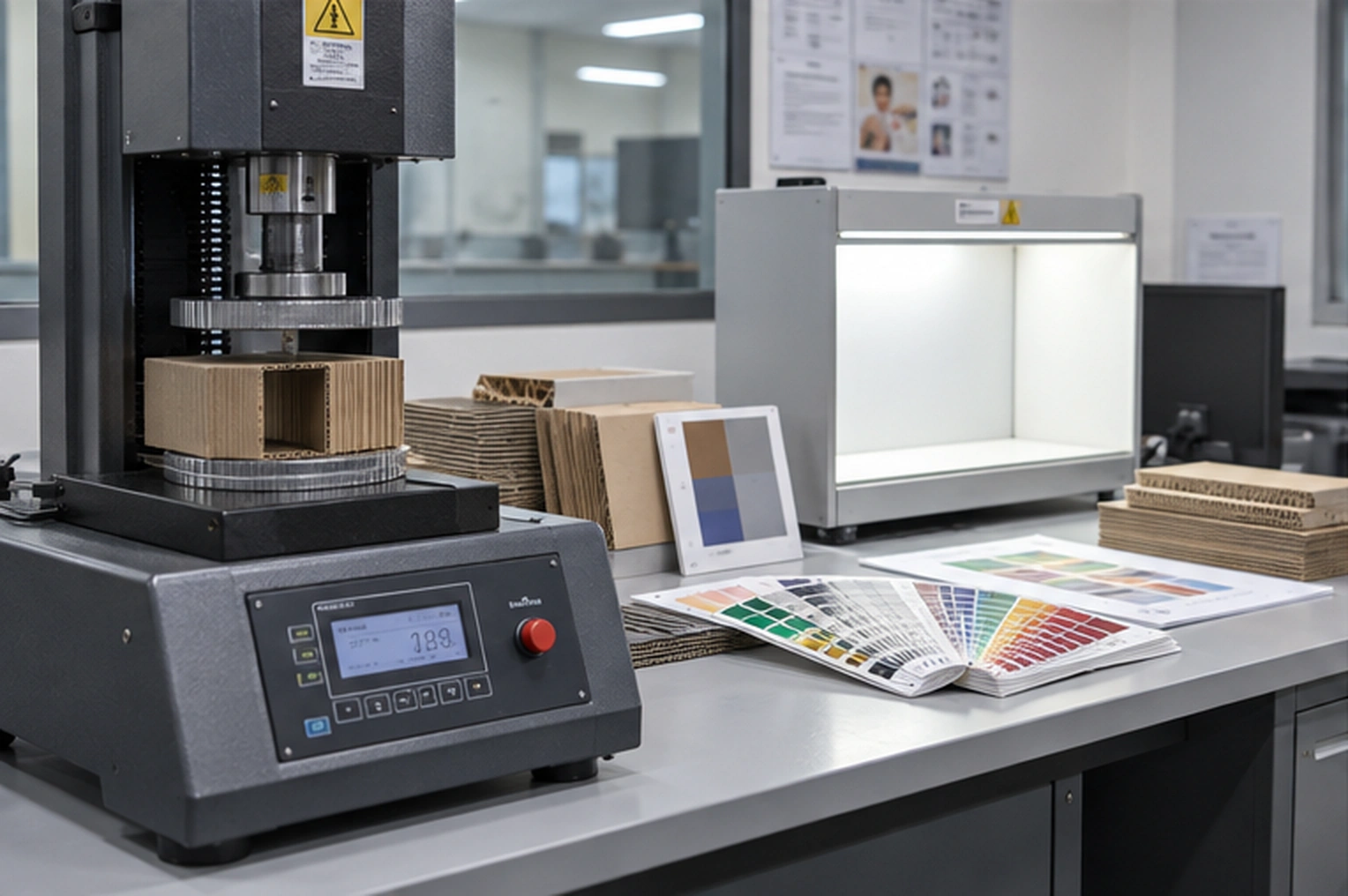
  6. The quality bench with a compression tester part way through a crush on a board sample, shade cards laid on the table and a light box behind it.
    06 / 07The quality bench

    06 / Six tests, every run

    The quality bench

    The laboratory sits directly behind the folder gluer, the last machine the carton meets. Six physical tests run on every production run.

    The quality lab

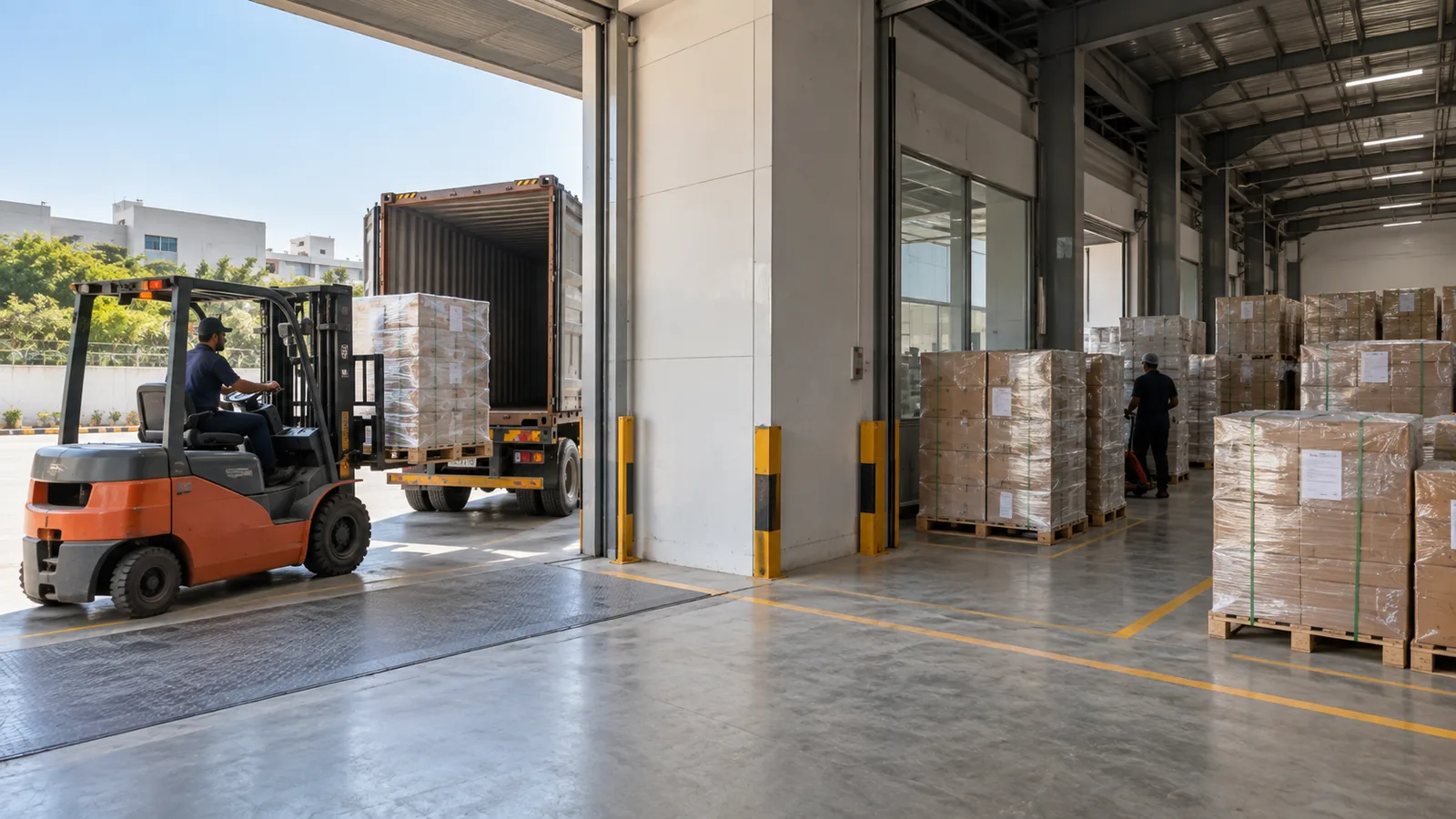
  7. The dispatch dock with a container backed up to the door, a forklift running a wrapped and banded skid of cases up into it, and staged rows of labeled, strapped skids on pallets waiting under the canopy beside a second man with a pallet truck.
    07 / 07Dispatch

    07 / Counted and palletized

    Dispatch

    Cartons are counted into master cases, labeled by batch and palletized with moisture safeguards. The test report, the Certificate of Conformance and the packing detail by master case travel with the order.

Book a factory tour

Booked as a thirty minute call first, so the visit is planned around what is on press that week.

The route a sheet takes

Ten stops between an approved file and a skid on a truck, all inside the same building. Turn through them one at a time, or go straight to the stop you came for.

The floor, left to right. One sheet, ten stops, no subcontractor.0110

01

Prepress

File to plate

A color-managed workflow handles trapping, imposition and proofing, and plates go to the press with CIP3 and CIP4 ink presetting data alongside them.

Make-ready starts from your file rather than from an operator judging the first sheet.

The order above is how a sheet moves on a job that carries every finish. A job without MetPET, a coating, BOPP or foil passes those stops by, and nothing else about the route changes.

The three machines

Print, cut and crease, fold and glue, in the order a sheet meets them. Each one has its own page, opening on a full width photograph of the machine with the same machine running one press behind it, and carrying the specification the plant states for it.

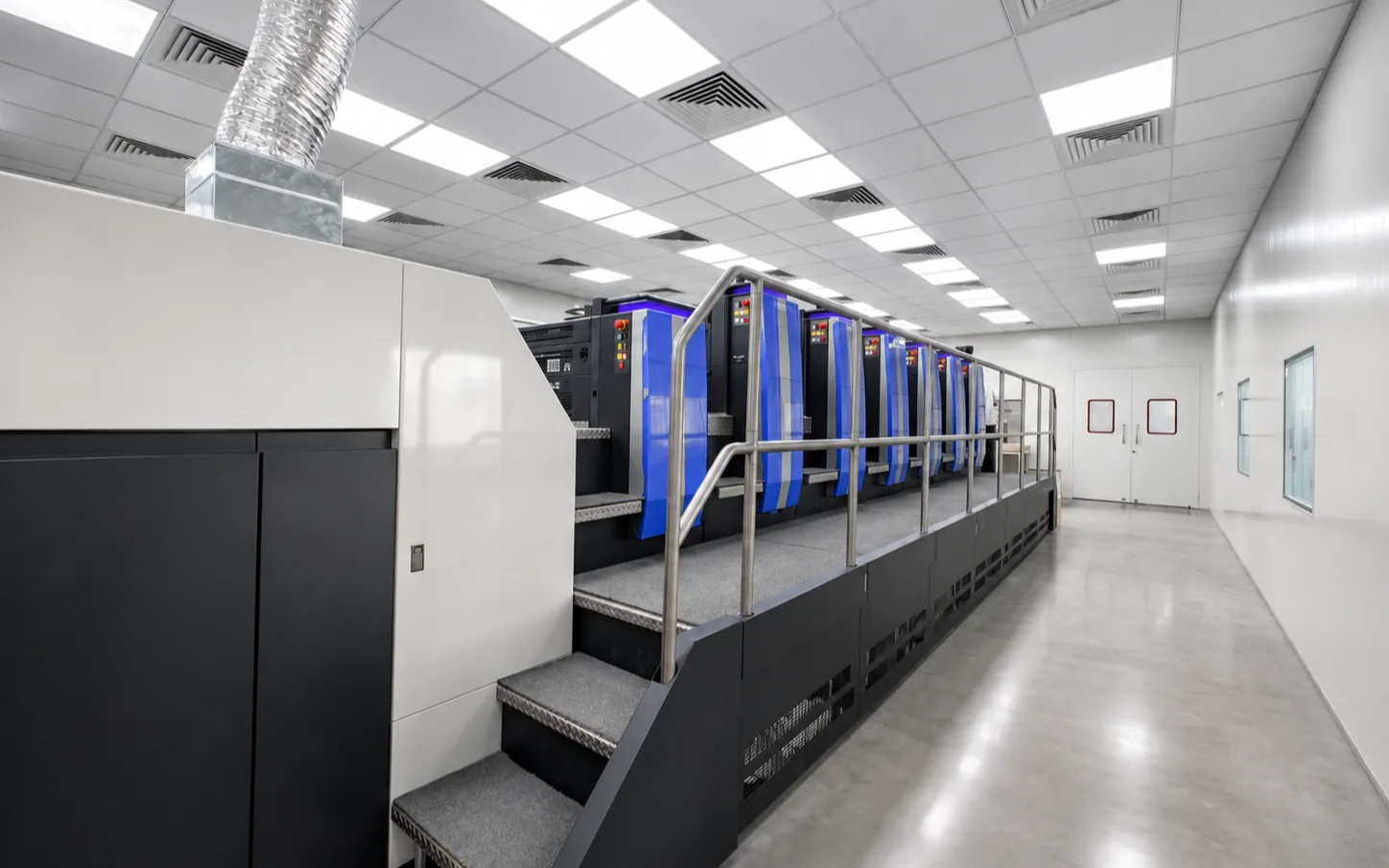
  • The Komori Lithrone GL-637 in the press hall, its six printing units receding in a row down the operator walkway.

    Printing

    Komori Lithrone GL-637

    The six color offset press, with two units kept free for spot inks, closed-loop color correction on every sheet and inline sheet inspection. It decides how the carton looks.

    • Six color units
    • 15,000 sheets / hour
    • Closed loop color

    The full specification

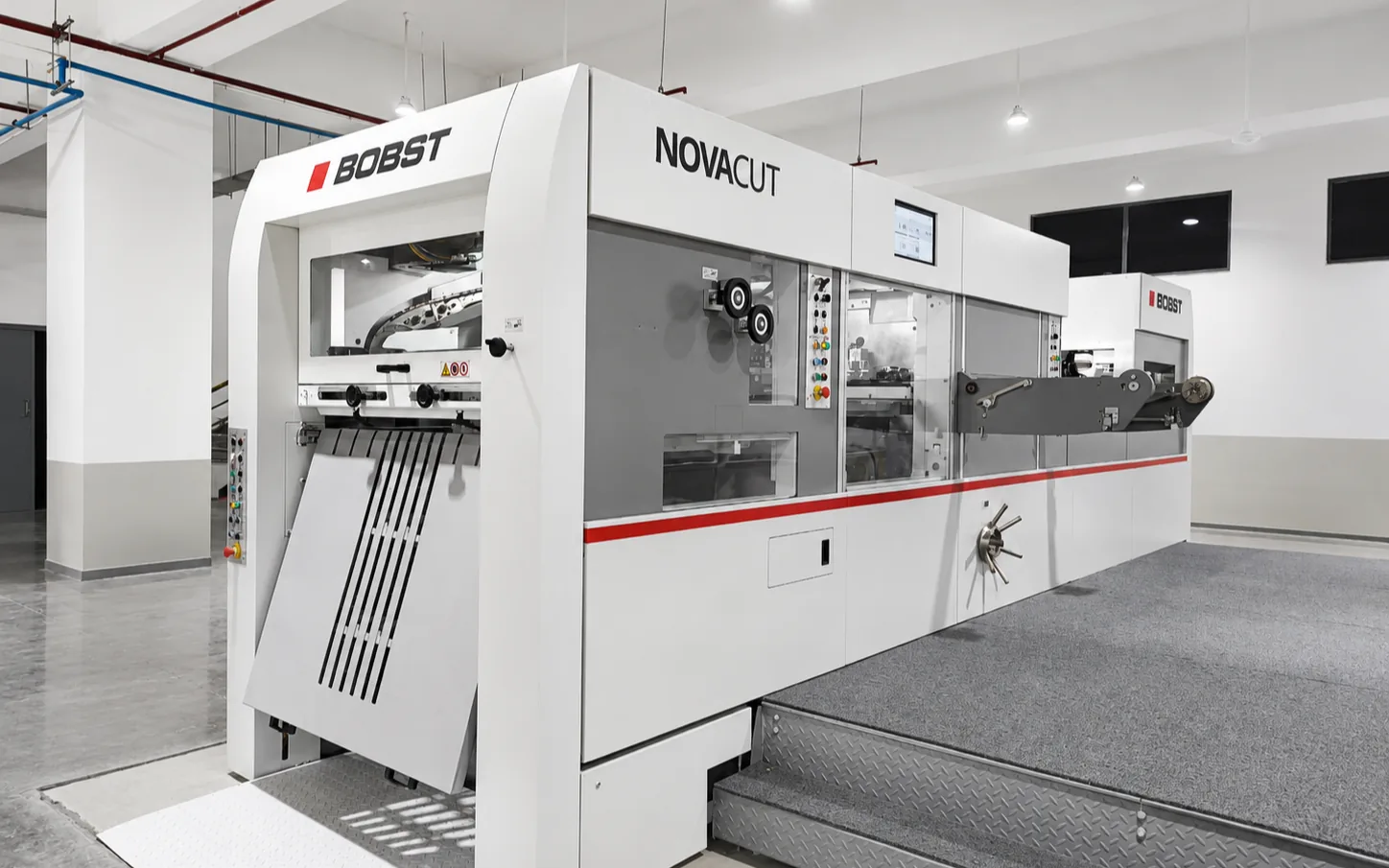
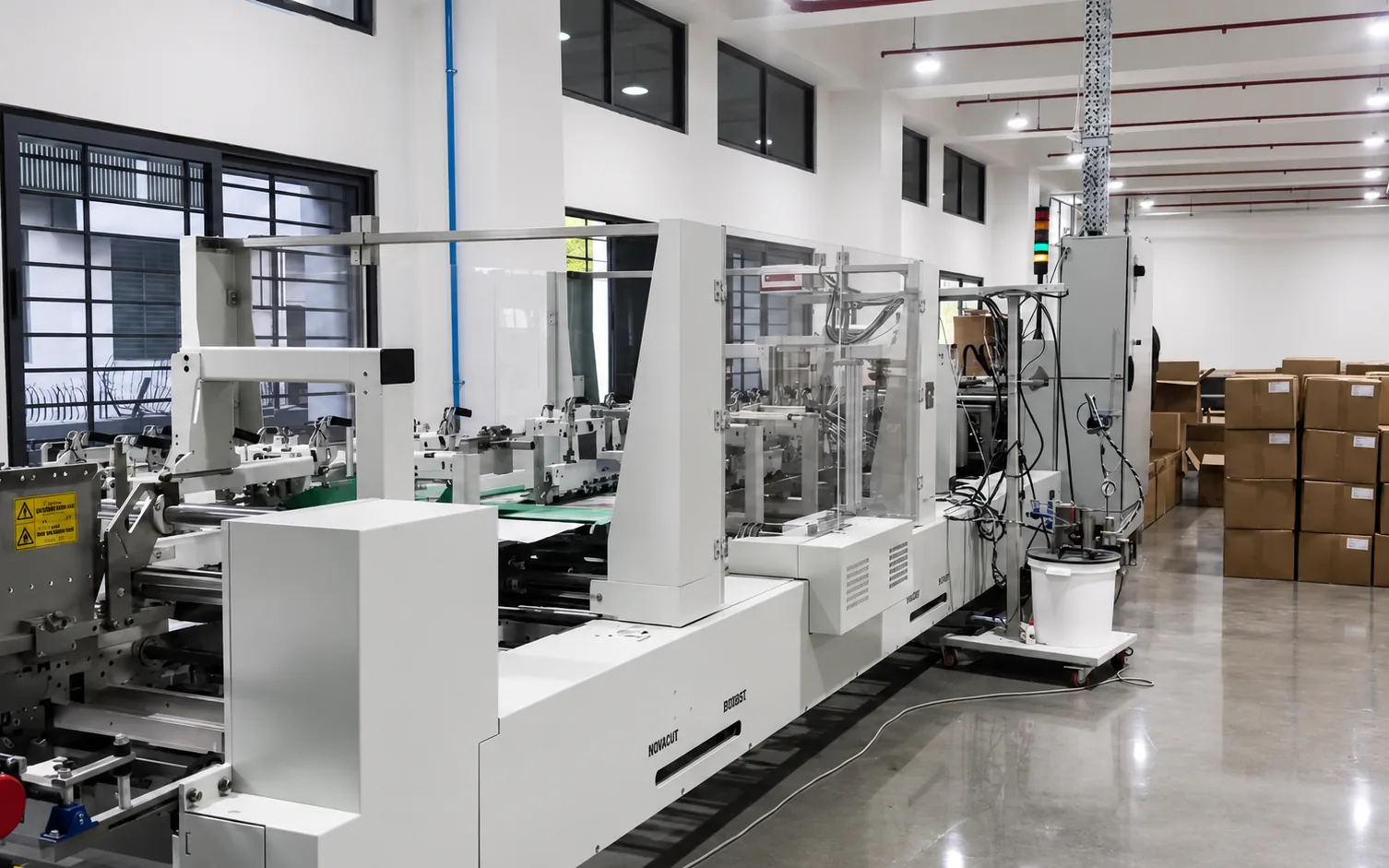
  • The Bobst Novacut platen die cutter on the plant floor, seen from the feeder end with the line running back to the delivery.

    Cutting and creasing

    Bobst Novacut

    The automatic platen die cutter, cutting and creasing to the approved dieline with registration held across the run and stripping and blanking in line. It decides whether the carton erects.

    • AUTOPLATEN registration
    • CENTERLINE changeover
    • Inline stripping

    The full specification

  • The folder gluer line on the plant floor, belt conveyors and the glue station running back to stacked cases at the delivery.

    Folding and gluing

    Bobst Novafold

    The folder gluer, pre-breaking every crease and laying a controlled glue bead on straight line, crash lock, four and six corner and sleeve structures. It decides whether the seam holds.

    • Crash lock and corner trays
    • Crease pre-breaking
    • 5,000 stored jobs

    The full specification

The press, and what it holds

A press specification lists what a machine can do. These are the things this press holds over a run, on every job.

Six units, not four. Four carry process color and two stay free for Pantone spot inks, so a brand color prints as the ink itself instead of a four-color build, and a five or six color job runs in one pass, with one registration.

Closed-loop density control. PDC-SG reads the color bar on every sheet and corrects ink balance during the run, so drift is caught in sheets rather than in thousands. It corrects against the shade card you approved, so a reorder matches the first run.

Inline inspection. PQA-S V5 checks sheets as they print, so a defect is found on our floor, not on your filling line. With UV and IR curing, sheets leave the press dry and move to converting the same shift.

Configuration
Six color offset, UV and IR curing
Speed
To 15,000 sheets per hour
Color control
PDC-SG spectral print density, closed loop
Inline inspection
PQA-S V5
Make ready
KHS-AI with stored job parameters
The press in full
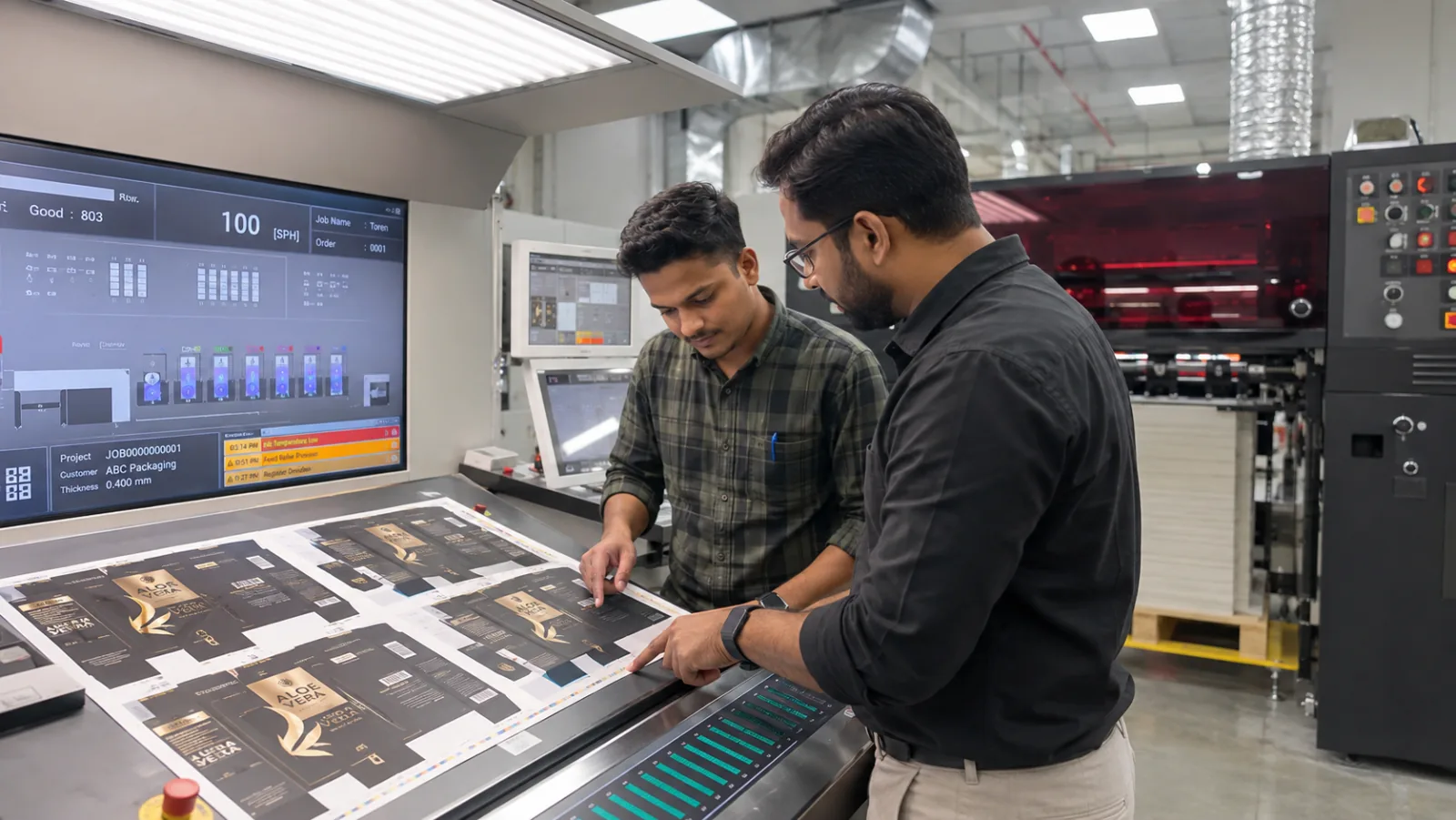
Two press operators at the console beside the job screen, carton press sheets laid across the light table with several carton fronts imposed on each, one of them pointing to a panel and the press delivery behind.

Printed and converted on one floor

The sheet is printed, coated, die cut, folded and glued without leaving the floor. A job has one specification, one part number and one team responsible for it from plate to pallet. Nothing in the carton line is subcontracted.

Certificates for every mark above are available on request, and a factory tour is the quickest way to check any of it.

Plant
90,000 sq ft, Ahmedabad
Press
Komori Lithrone GL-637
Configuration
Six color offset, UV and IR curing
Die cutting
Bobst Novacut
Folding and gluing
Bobst Novafold
Printing since
1962
  • ISO 9001
  • ISO 14001
  • ISO 45001
  • BRCGS
  • SEDEX
  • FSC compliant

Prepress, and what reaches the press with the plates

Prepress is where the artwork is trapped, imposed on the sheet and proofed, and where the dieline the structure was approved on becomes the geometry every downstream operation works to.

Trapping is the small overlap that keeps a hairline of white board from showing where two inks meet, set for this press. Imposition is how many cartons fall on a sheet and in which orientation. It decides the yield, and yield is most of the difference between two quotes for the same carton. Proofing turns a Pantone number into an approved physical reference, viewed under D65 and TL84.

The plates go to the press with CIP3 and CIP4 ink presetting data taken from the same file. The ink keys start where the artwork sets them, not where an operator estimates from the first sheet, so the head of the run is short and close to color from the start. Make ready is measured in sheets rather than hundreds of sheets, on every reorder too.

The approved standard is retained against your part number, and every run that follows is corrected against it. A reorder here is a repeat of the first run.
A carton flat proofed on the prepress bench, a loupe held over the printed panel, the named Pantone patches and the gold foil swatch laid along the foot of the sheet, and the finished carton standing beside it.

The systems that run across all three

Three machines make a carton. The workflow around them makes the fifth run match the first.

  • Color management

    An approved color standard is set at proofing and held as the production reference for every run that follows, under controlled viewing conditions, with closed-loop spectral density control correcting ink balance on press. Color is measured against a retained reference, not judged by eye.

  • Part numbers and the job record

    Every SKU carries a unique part number from order entry through delivery, and the shade card, the die position, the press make ready and the folder gluer settings are all held against it. A reorder is retrieved, not rebuilt. A repeat takes 8 days in production; a new order takes 15 to 20.

  • The documents that travel with the order

    The completed test report for your batch, the Certificate of Conformance against the proof and shade card you approved, the invoice, the packing list and the packing detail by master case. They ship with the goods.

What is made on this floor, and what is not

The scope of this plant, including what it does not make.

The scope of this plant, stated as what is and is not made here
SubjectOn this floorNot on this floor
Folding cartonsPrinted, coated, die cut, folded and glued end to end, on the three machines above.Nothing. No part of the carton line is subcontracted.
Corrugated shippersFinished cartons are counted into master cases and palletized with moisture safeguards for dispatch.The shipper itself. This plant makes the retail carton, not the box it travels in.
Filling and packingCartons ship flat, counted, batch labeled and detailed by master case.Filling, sealing and packing. Your product never comes to Ahmedabad.
Bottles, jars, pouches, labelsThe carton is engineered around the primary pack you supply, on a physical prototype in the real board.The components themselves. This plant makes the carton only.
Vinyl placematsPrinting, proofing and color control, in this plant and to the same standard as the cartons.Laminating and cutting, which run on a separate vinyl line. The plant’s certifications are not claimed for it.

Rigid boxes and corrugated packaging are outside this plant. If a project needs one, tell us at the quote stage.

The building

Ninety thousand square feet in Piplaj, on the edge of Ahmedabad, with the press hall, the converting line, the laboratory and the dispatch bay in one envelope.

The envelope is climate controlled, with HVAC and dehumidification, for the board. Paperboard is hygroscopic: it takes moisture out of the air and gives it back, and its dimensions and its stiffness move as it does. A sheet that has picked up moisture between printing and die cutting cuts to a slightly different size than the one the die was made for, and a board that has dried out cracks along a crease that a conditioned board folds cleanly.

Every downstream tolerance depends on the room. Registration held on press is lost if the sheet changes size before it reaches the die cutter, and a crease pre-broken on the folder gluer only helps if the board still has the moisture content it was scored at.

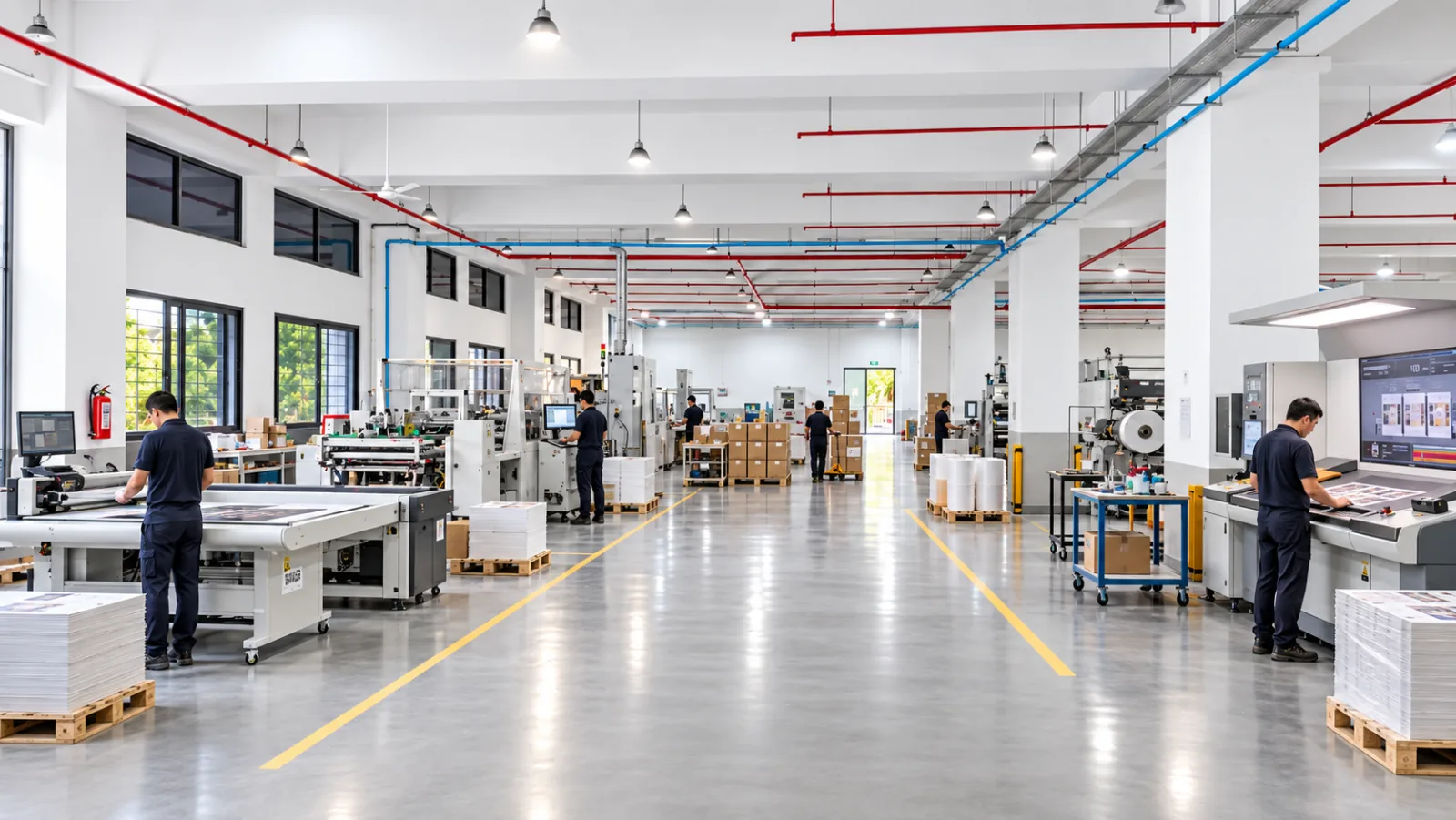
The plant floor in Ahmedabad seen down its length: a single white ceiling with lighting and services running the depth of the hall, clerestory windows along the wall, machines and operators standing off a central aisle, and pallets of board and finished work down both sides.

Questions about the plant

One press: a Komori Lithrone GL-637, six color offset with UV and IR curing, running to 15,000 sheets per hour. It carries PDC-SG closed-loop spectral density control, PQA-S V5 inline sheet inspection and KHS-AI make-ready with stored job parameters, and it takes CIP3 and CIP4 ink presetting data from prepress with the plates.

Every folding carton is. A sheet is printed, coated, die cut, folded and glued on one floor in Ahmedabad, and no part of the carton line is subcontracted. The one thing this does not cover is the vinyl placemat line: its printing, proofing and color control run in the same plant as the cartons, and its laminating and cutting run on separate vinyl equipment for which the plant’s certifications are not claimed.

Yes. Every SKU carries its own part number from order entry through delivery, an approved shade card is retained against that number, and the press stores make-ready settings and the folder gluer stores up to 5,000 job settings. A version change on an offset line is a plate change rather than new tooling, so a family of eight or forty variants runs against one structural family and reorders come back against stored records instead of being set up again.

Yes. A factory tour is booked as a thirty minute call first, so the visit is planned around what you want to see and around what is on press that week. Buyers who cannot travel are usually walked through the line on video against their own job.

See it running

Every line of the specification above can be seen on the floor. Book thirty minutes and the tour is planned around your own carton. Landed cost runs 20 to 30 percent below a comparable US supplier quote.

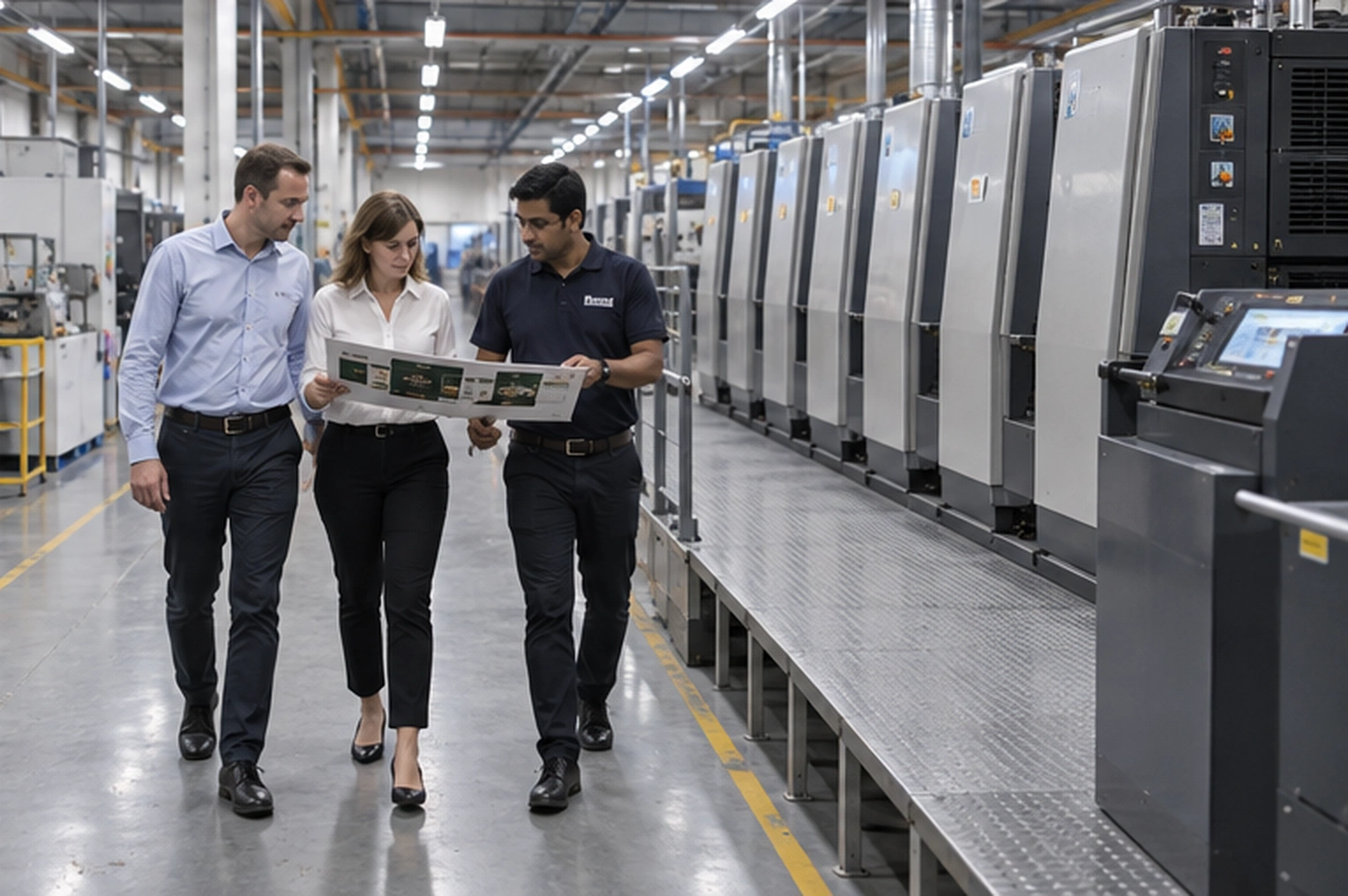
Two visitors walking the press hall with a member of the plant team, a printed sheet held open between the three of them and the printing units running down the line beside them.