Four corner tray
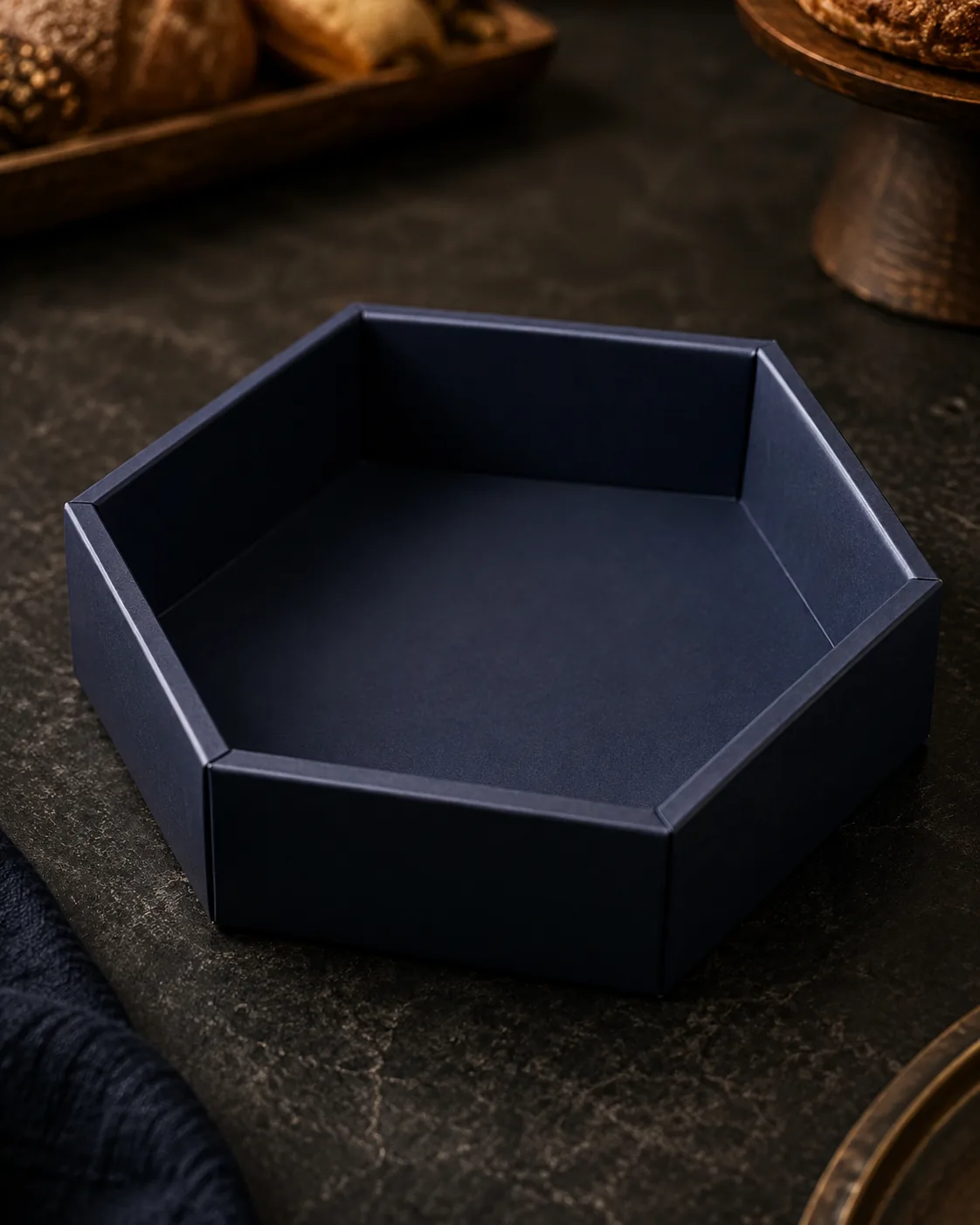
The same tray with single thickness ends. Less board, and the right answer wherever the wall is short.
See the structure: Four corner trayFOLDING CARTONS
A six corner tray is a folding tray whose end walls are cut to twice the wall height and fold back on themselves, trapping and gluing the two corner ears at that end between the two layers. Four ears plus two returned ends is where the six in the name comes from.
It is the structure a four corner tray becomes when the wall gets tall enough that four glue joints stop being enough.

The two end walls come up like any tray wall, then each one folds back down the inside of itself and lands on the ears it has just captured.
How a six corner tray is made, in five steps.
Drawn to illustrate the structure. Your dieline is developed to your product, free, before you commit. The two long creases through the end panels are the returns, and they are the only lines in this blank that a four corner tray does not have.
Ask for a structural designTwo steps: the four walls come up, then each end returns over its own ears and glues there. The tray comes off the folder with six joints in it and nothing done by hand.
The doubled end gives a rim that will not splay and an end wall stiff enough to be lifted by. Board folded back on itself is roughly twice as stiff across the fold, and the fold is where a tall tray tends to give.
A tray wall is a cantilever. It is fixed along the crease where it meets the base and free along its top edge, and everything asked of it is asked at the free end.
On a four corner tray the only thing holding that free edge in place is a glued ear at either end of it. On a shallow tray that is plenty, because there is hardly any wall between them. As the wall grows the span between those two ears grows with it, and the middle of the long wall bows outward under nothing more than the weight of what is inside. Nothing breaks, but the tray stops being square, and a tray that is not square will not take its own sleeve.
A six corner tray stiffens the end walls by doubling them, so the ends stop flexing and hold the long walls apart along their full height, not only at the base. The ears are still there, now clamped between two layers of board.
So the choice between the two depends on the shape of your tray. A wide shallow tray on four corners is sound. A narrow deep one on four corners will arrive square and not stay that way.


The extra two joints are inside the two ends, holding the long walls apart.
Three stages of the return, at the same end of the same tray, from a fixed camera.
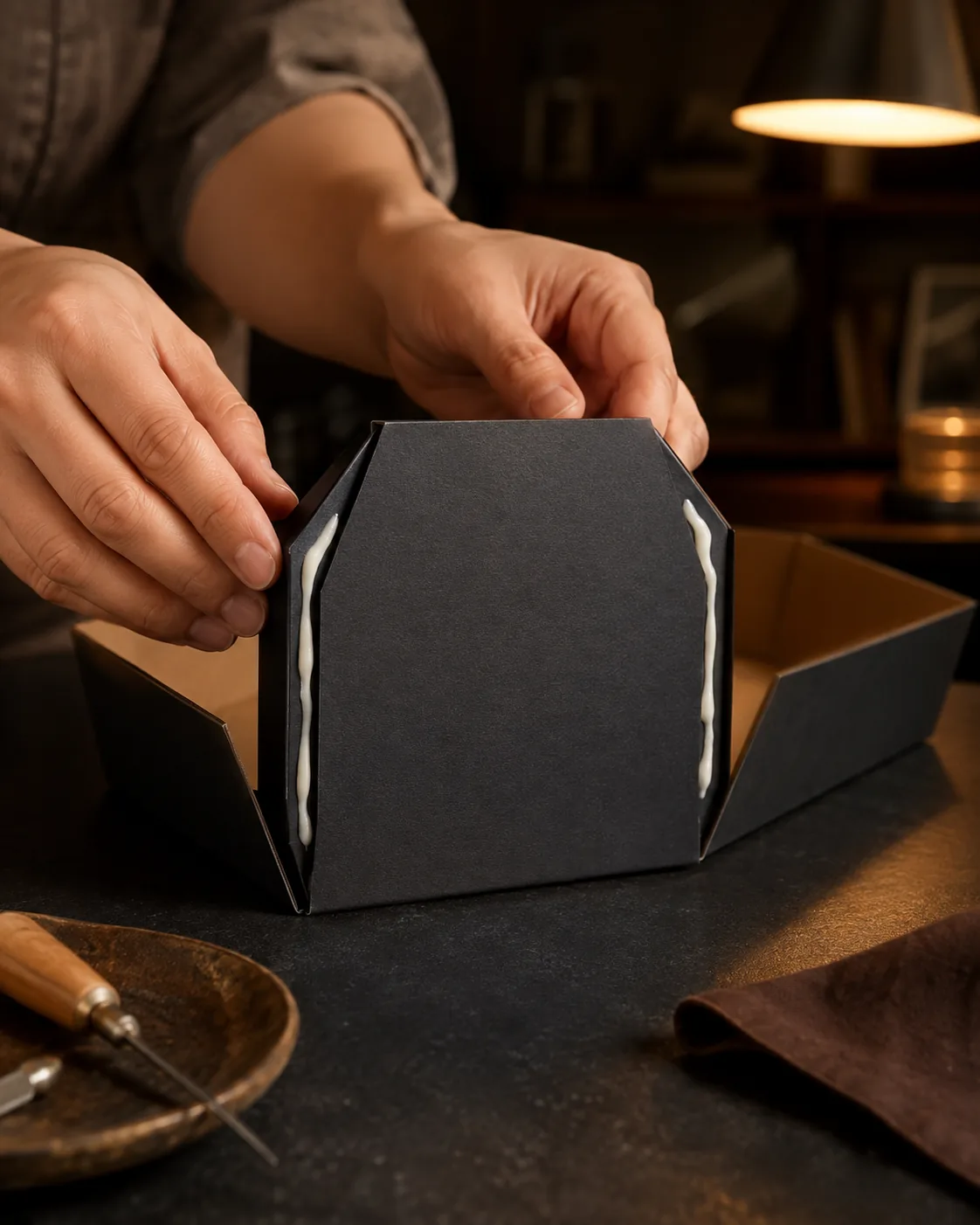
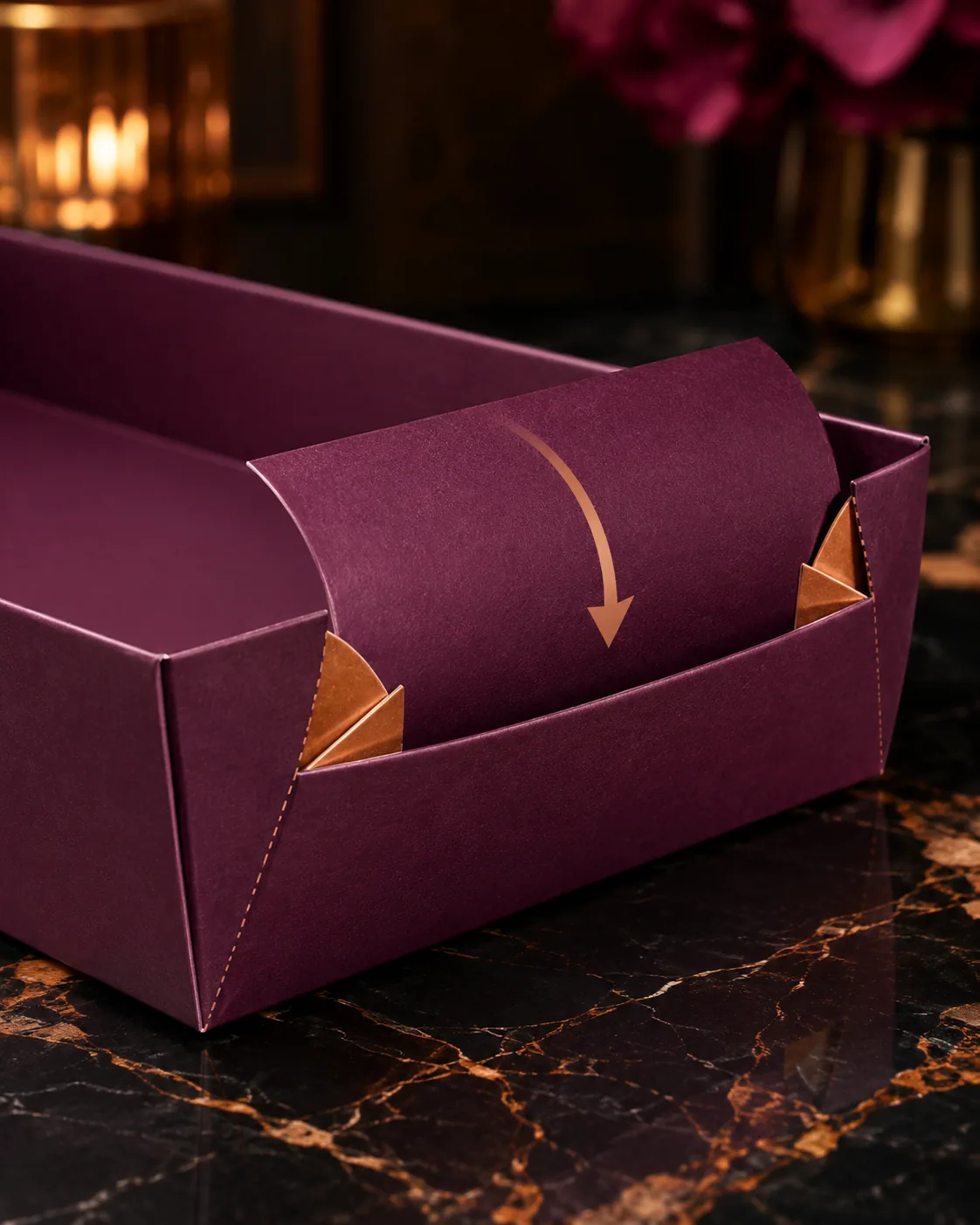
Same base, same board, same print. The difference is in how the two ends are made.
| Four corner | Six corner | |
|---|---|---|
| Joints | Four glued ears | Four glued ears plus two returned end walls |
| End wall | One thickness of board | Two thicknesses, folded back on itself, with the ears captured between them |
| Where it gives | The middle of the long wall bows outward as the wall gets taller | The ends hold the long walls apart along their full height |
| Board on the sheet | Less. The ends are one wall deep | More. The ends are cut to twice the wall height |
| Rim | A single cut edge | A folded edge at both ends |
| Specify it when | The tray is wide and shallow, or is going straight into an outer | The tray is deep, is handled on its own, or has to stay square under weight |
A six corner blank uses more board for the same base, so it is not worth specifying where four corners would hold.
The format turns up wherever a tray has to be deep and has to be picked up.
Bakery and patisserie is the one most people have held: a deep tray carried flat by its rim with something soft in it, where a bowed wall means the lid rides up and the contents move. Confectionery gift trays for the same reason, usually under a fitted outer. Cosmetics sets, where the tray is deep enough to stand bottles in and the rim is visible every time the pack is opened.
In each case somebody lifts the tray by its edge while it is full. A returned end takes that load; a four corner tray handles it least well.

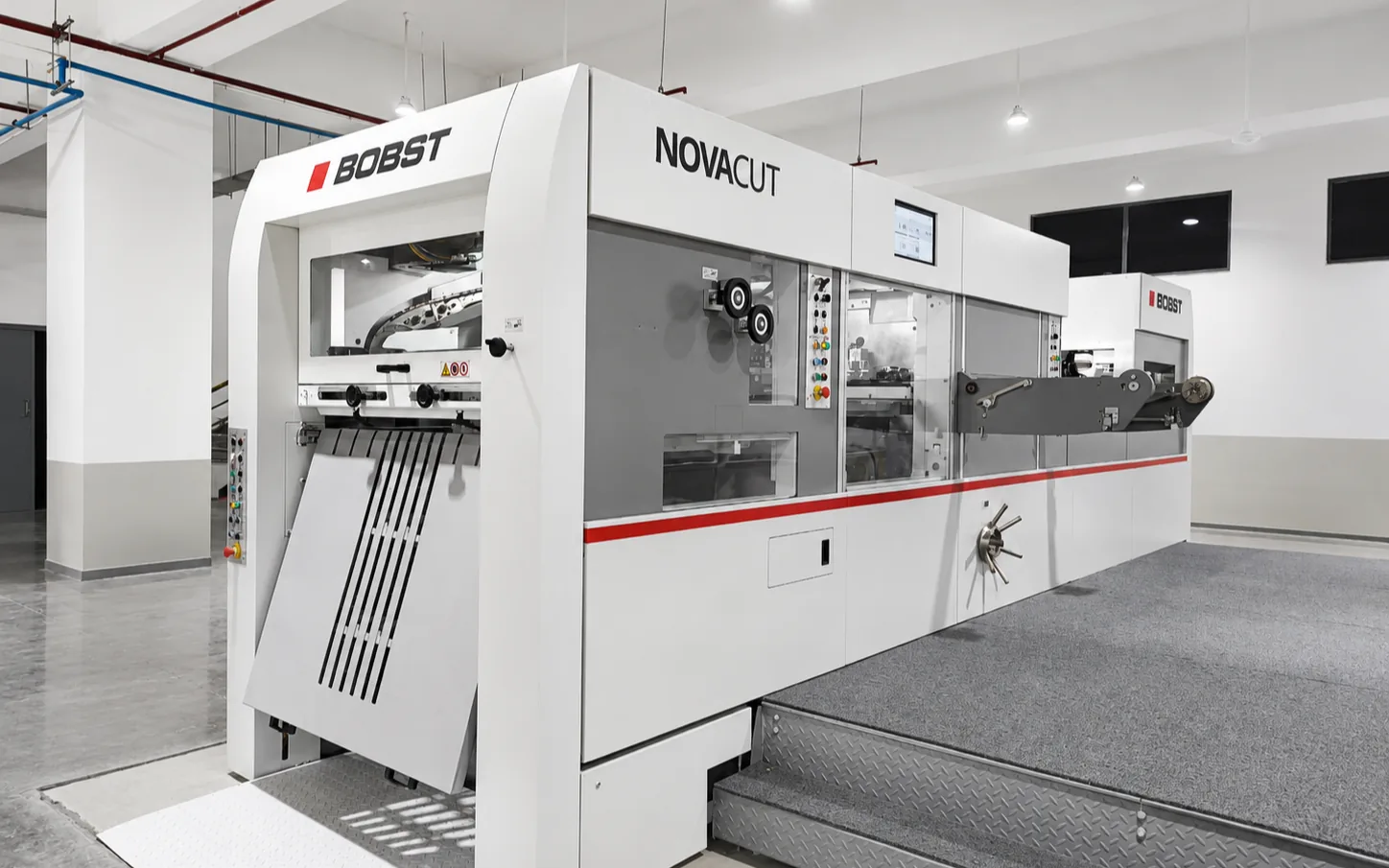
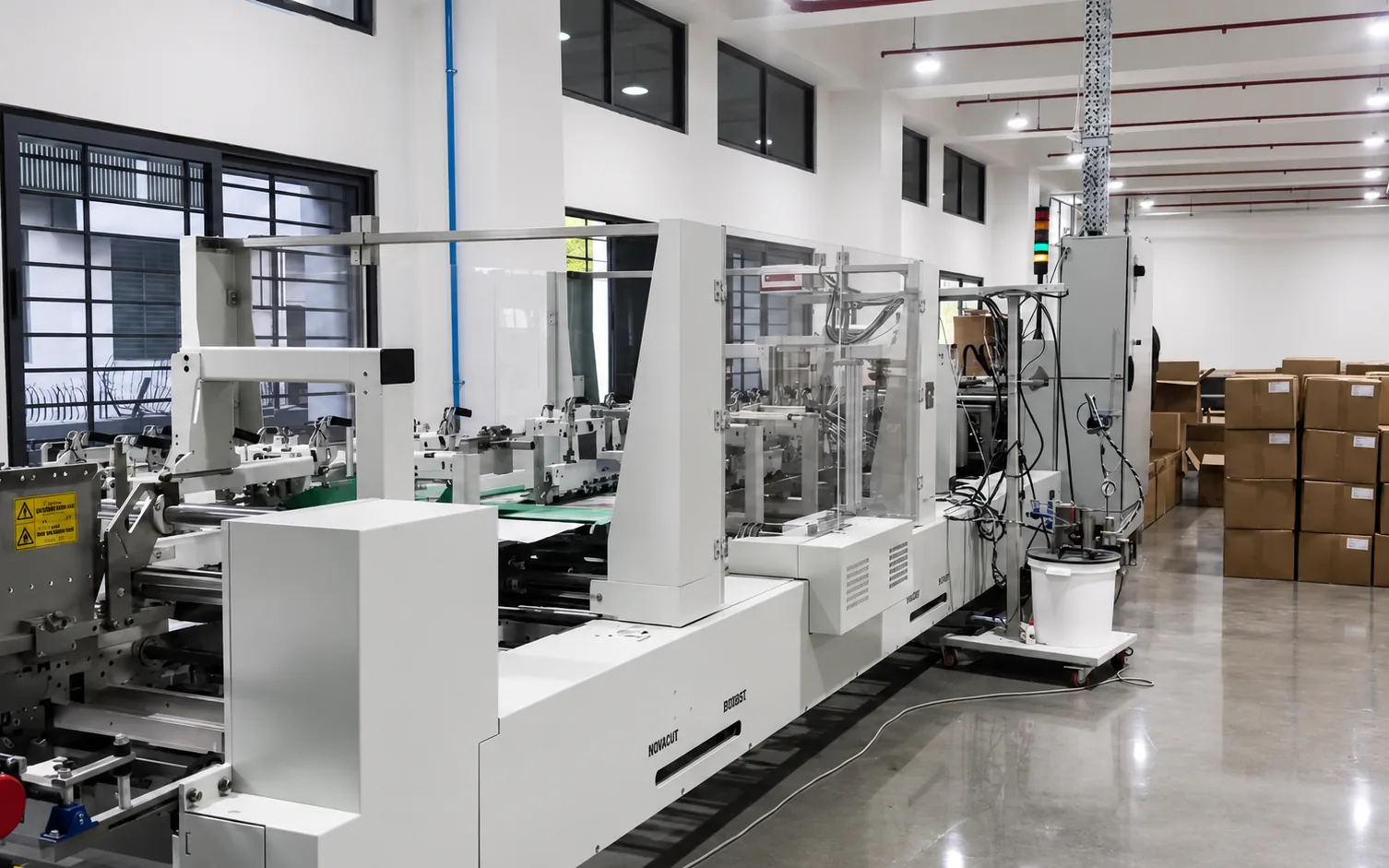
The returned end wall is a second fold in the same pass, landing on wet glue, on board creased accurately enough that the two layers finish flush. The Novafold does it inline, and the tray is then checked for squareness at both ends.
Cartons here are made on bulk production runs, and the cost per carton falls as the run grows, because plates, tooling and make-ready are fixed per run rather than per carton. A quote is priced against the volume you are planning. Landed pricing typically runs 20 to 30 percent below comparable US supplier quotes for the same specification. The quote is one landed price: the cartons, tooling, structural design, proofing, the documents that travel with the order, import duty, shipping and delivery to your address, in the US or anywhere else. Nothing is quoted on top of it later.
The same tray with single thickness ends. Less board, and the right answer wherever the wall is short.
See the structure: Four corner trayEither tray inside a fitted outer, drawn out like a drawer.
See the structure: Tray and sleeveWhen the lid has to stay attached to the tray rather than come off it.
See the structure: Hinge lid boxesA six corner tray is a folding tray whose end walls are cut to twice the wall height and fold back on themselves down the inside, trapping and gluing the two corner ears at that end between the two layers. Four glued ears plus two returned ends make six joints, which is where the name comes from.
Four of them are the corner ears, exactly as on a four corner tray. The other two are not at corners at all: they are the two returned end walls, each of which is a glued joint running the full width of that end. The number counts joints, not corners. From above a six corner tray looks like a four corner tray; from the end it does not.
When the wall is tall relative to the base, when the tray is handled on its own rather than going straight into an outer, or when it has to stay square under the weight of what is in it. A wide shallow tray does not need it. It is made for a deep tray that somebody lifts by the rim while it is full.
It is stiffer where a tray gives. A four corner tray usually fails by the middle of a long wall bowing outward until the tray is no longer square, not by a joint breaking. Doubling the end walls stops the ends flexing, so they hold the long walls apart along their full height. The board itself is the same; there is twice as much of it at the ends.
It uses more board for the same base, because each end is cut to twice the wall height, and it is a slightly longer setup on the folder gluer. Both differences are small on a production run. Wall height is settled at structural design, so six corner is only specified where four would not hold.
Not in the same blank. Like any tray it is closed by a second piece: a printed sleeve, a fitted outer it is drawn out of, or a separate lid tray. Where the lid needs to stay attached, the structure to look at is a hinge lid box, where the top hangs off the back wall as part of the same blank.
Yes. Send the tray, because the returned end wall depth is read off the object rather than from a stated wall height. The structure is measured, board and caliper matched, and color matched to your existing standard under D65 and TL84 viewing conditions. Most switching programs are matched from a sample rather than rebuilt from a specification.
Last reviewed
The choice between four corners and six is settled by wall height and by who picks the tray up. Send the contents and say how the pack is handled, and the structure comes back drawn to it with a prototype you can fill and lift before anything is tooled. A packaging planner replies within one business day.