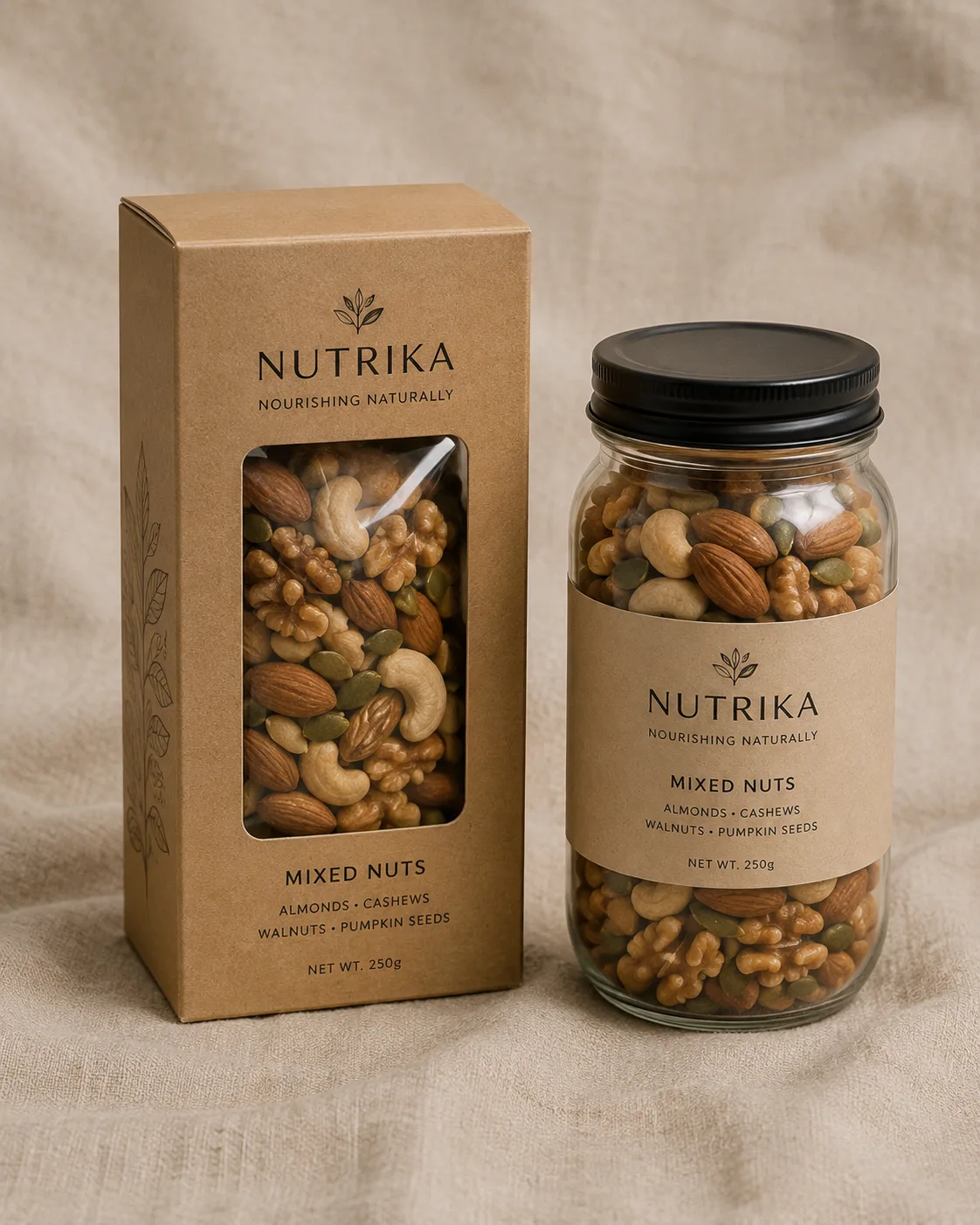
Straight tuck end
The usual host for a window: an unbroken front panel, with the aperture placed clear of both creases.
See the structure: Straight tuck endFOLDING CARTONS
A window box is a folding carton with a die-cut aperture in one of its panels, closed by a clear film patch glued to the inside face so the product is visible without the carton being opened.
The window is cut into the blank and patched before the carton is folded, so it is settled at structural design.

Two lines to read in a window box blank. The solid one inside the front panel is the aperture, and the fine dashed rectangle around it is the film patch, which is larger on every side because it is glued to the board rather than into the hole.
How a window carton is made, in five steps.
Drawn to illustrate the structure. Your dieline is developed to your product, free, before you commit. A window is a variant of whichever construction carries it. The blank drawn here is a tuck end with an aperture in the front panel.
Ask for a structural designOne blank, one glue seam, and two operations the other structures in this family do not have: the aperture is cut with everything else, and the patch goes on while the sheet is still flat. The sequence beside this folds what comes off that: wrap the body, glue the seam, close the bottom, dust flaps in, tuck over, with the window already in the panel before the first crease is folded.
Board is stated in gsm and in points of caliper, and the size, shape and position of your aperture are settled at structural design, against the panel they sit in.
Three things change.
Panel stiffness drops. A panel gets its stiffness from being a continuous sheet, and an aperture removes the middle of it, leaving a frame. A frame is weaker than a sheet across the opening, and a large window in a tall panel is weaker still, because the board either side of it is narrow. A window carton is sometimes specified a step heavier than the same carton without one, to do the same work with less board.
An operation is added. The patch is applied inline over the aperture while the sheet is still flat: one more station and one more material. It cannot be added after the dieline is cut without new tooling.
The aperture has constraints on where it sits. It has to sit clear of both vertical creases, because a patch glued across a fold delaminates the first time the carton is squared, and clear of the panel edges by enough board to keep the frame rigid. There is usually plenty of room between the two, and it is settled while the structure is being drawn.



A panel with a window in it is a frame, and a frame is weaker than a sheet.
Three rules, all settled while the structure is being drawn.
A patch glued across a fold delaminates the first time the carton is squared, so the aperture stops short of both vertical creases. A window that has to wrap two panels is possible, but the patch stops short of the fold, which changes what the carton looks like from the inside.
What is left around the opening is a frame, and a frame needs enough board either side of the window to stay rigid. A large window in a tall narrow panel runs out of room first, and most often moves the board up a step.
A sharp internal corner is where a tear starts, both in the board on the die cutter and in the carton in a buyer’s hand. Shaped windows and multiple windows in one panel are both fine; sharp corners on either are not.
Same carton, same board, same print, with and without a window.
| Solid panel | Window panel | |
|---|---|---|
| What the panel is | A continuous sheet of board | A frame around an opening, closed by a film patch glued to the inside face |
| Stiffness | The full stiffness of the grade, in both directions | Lower across the opening, and lower the larger the window is |
| Board specification | Chosen against the fill and the handling | Sometimes a step heavier, to do the same work with less board |
| Operations | Printed, cut, creased, folded and glued | The same, plus an inline patching station and the film it consumes |
| Changing it later | An artwork change and a new set of plates | New tooling, because the aperture is cut into the blank rather than applied to the carton |
Taking board out of a panel reduces its stiffness, so a window carton is sometimes specified a step heavier than the same carton without one. Stiffness is one of the six physical tests run on every production run here, in machine and cross direction.
A kraft window box is the same construction on an unbleached brown board.
Kraft-back is stocked here, so it is a specification rather than an indent. The brown face changes the artwork: the board is not white behind the print, so a light artwork reads as tinted and a photograph reads as warm. Brands that specify kraft usually want that. Those that do not are usually asking for recycled board rather than kraft.
The window behaves the same way on kraft as on SBS. The patch is glued to the inside face and the aperture is positioned to the same rules. The contrast between a brown frame and a clear window is usually why the pack is specified this way.

The aperture and the patch both happen in Ahmedabad while the sheet is still flat. By the time the carton reaches the folder gluer the window is already part of it, and the stiffness it has left is measured on every run.
Cartons here are made on bulk production runs, and the cost per carton falls as the run grows, because plates, tooling and make-ready are fixed per run rather than per carton. A quote is priced against the volume you are planning. Landed pricing typically runs 20 to 30 percent below comparable US supplier quotes for the same specification. The quote is one landed price: the cartons, tooling, structural design, proofing, the documents that travel with the order, import duty, shipping and delivery to your address, in the US or anywhere else. Nothing is quoted on top of it later.
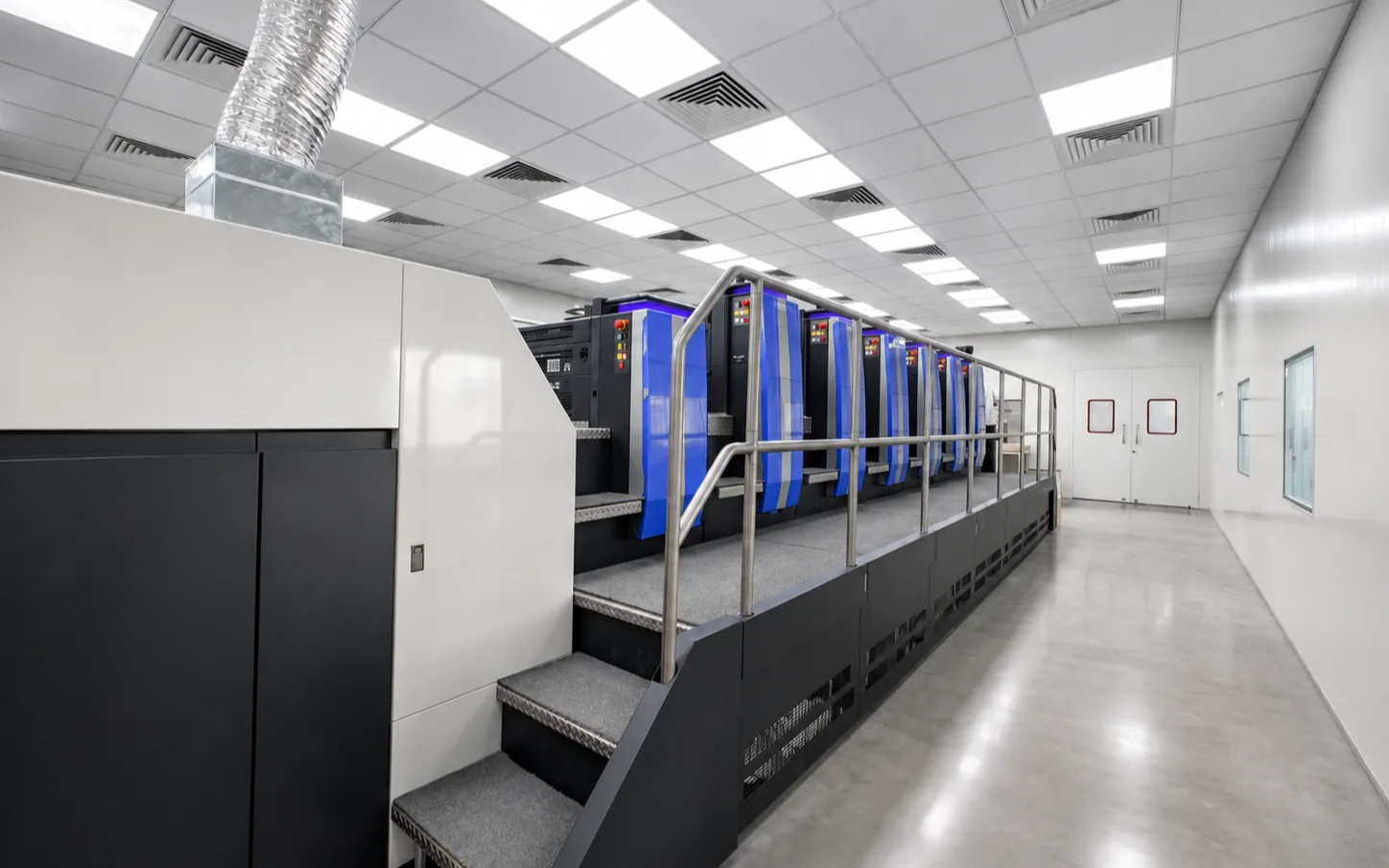
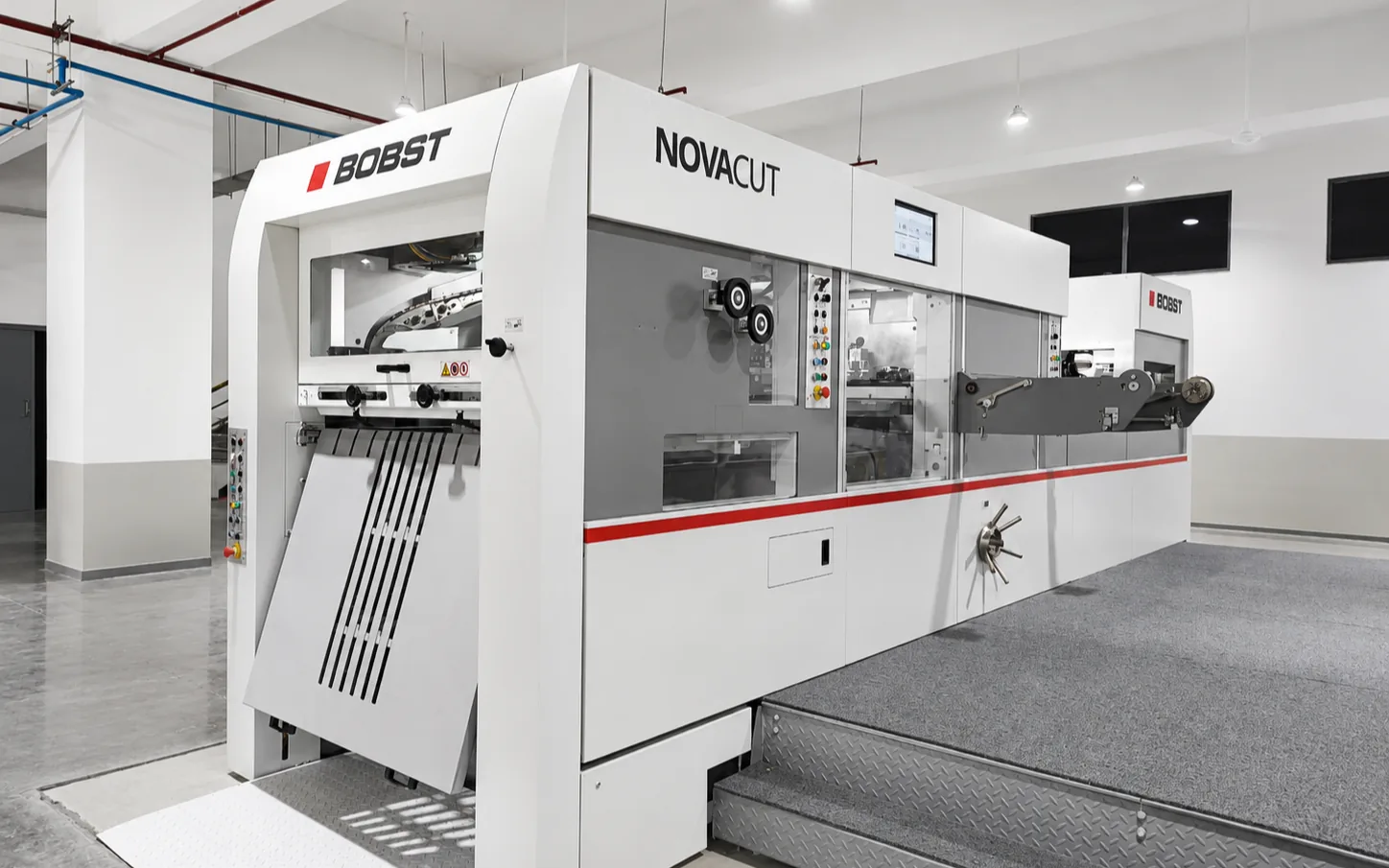
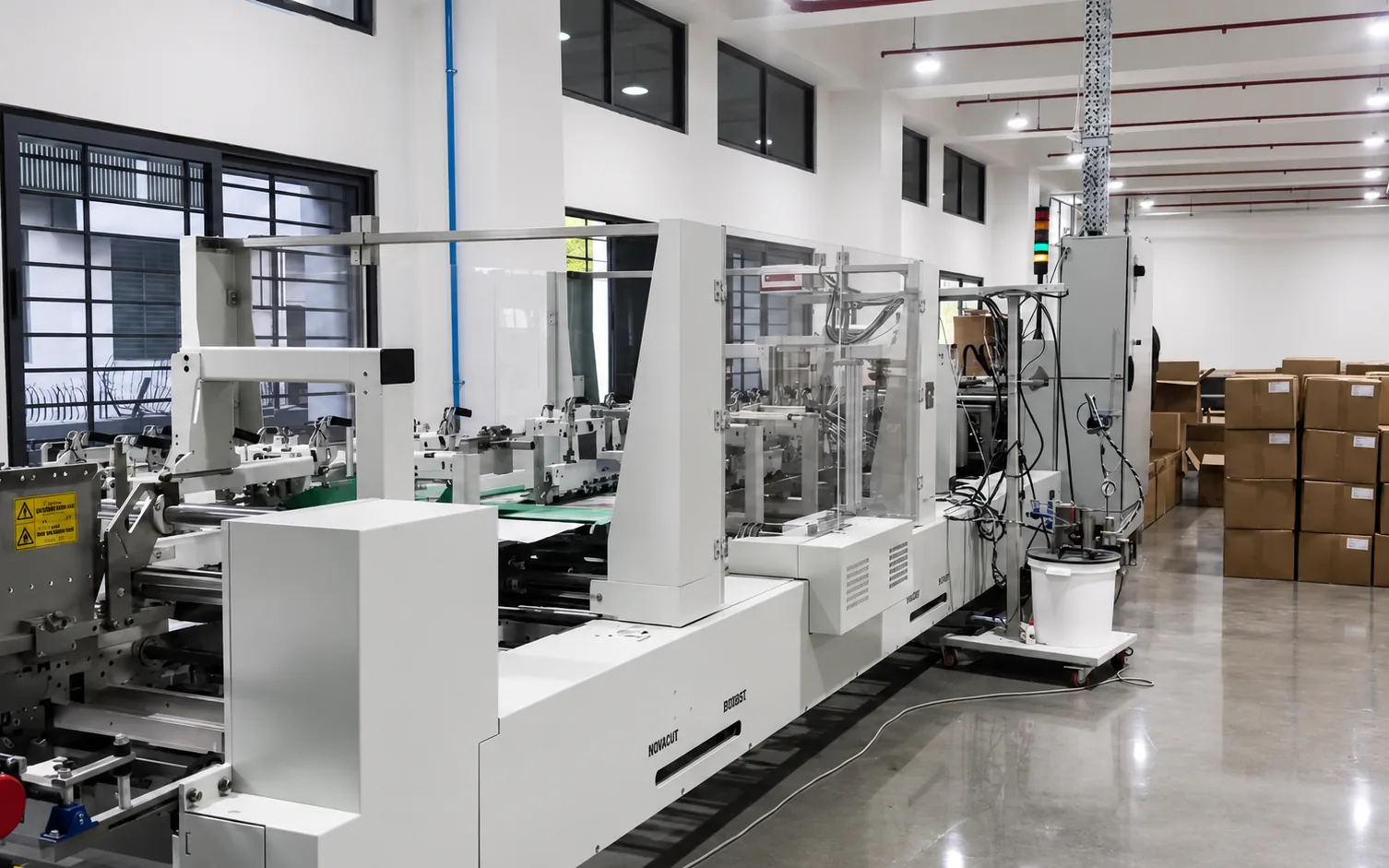
A window is cut into another structure. These are the three it is most often cut into here.
The usual host for a window: an unbroken front panel, with the aperture placed clear of both creases.
See the structure: Straight tuck endThe family the window carton usually belongs to, and where the tuck constructions are compared.
See the structure: Tuck boxesA glued carton with a window in it, for a product filled inline and shown through the face.
See the structure: Seal endGummy vitamins are sold on what they look like, and almost every supplement brief asks about a window. The supplement hub covers that category: the formats, the Supplement Facts panel and the fitment decisions that sit around the window.
Supplement packaging
A window box is a folding carton with a die-cut aperture in one of its panels, closed by a clear film patch glued to the inside face so the product is visible without the carton being opened. The aperture is cut into the flat blank and patched before folding, which makes it part of the structure rather than a finish applied afterwards.
The aperture is die cut with the rest of the blank, and a film patch is applied inline over it while the sheet is still flat, glued to the inside face around the opening. The patch is larger than the aperture on every side, because it is bonded to the board rather than fitted into the hole. Nothing is applied to the carton after it is folded.
It reduces the stiffness of the panel it is cut into, because a panel with a hole in it is a frame rather than a sheet, and the reduction is larger the larger the window is. It does not weaken the carton as a whole in the same proportion, since the load path in a stack runs through the panel walls and the base. Where it matters, the answer is a step up in board, and stiffness is measured on every production run rather than assumed.
Any shape the cutting die can hold, with radiused rather than sharp internal corners: a sharp corner is where a tear starts, both in the board on the die cutter and in the carton in a buyer’s hand. Shaped windows, multiple windows in one panel and windows that wrap two panels are all possible, though a window that crosses a crease needs the patch to stop short of the fold, which changes what it looks like from the inside.
Tuck end, auto lock bottom and seal end constructions all carry one, because the aperture is cut into the flat blank and the blank is what differs between them. The usual host is a straight tuck end, where the front panel is unbroken and the aperture has the most room to sit clear of the creases. The host changes where there is space to put the window.
Yes. Kraft-back board is stocked here, so a kraft window box is a stock specification rather than an indent, and the patching is identical to any other grade. The one thing to settle first is the artwork: the board is brown behind the print, so a light color reads as tinted and a photograph reads as warm. Brands that choose kraft usually want that.
Yes. Send the carton with its patch intact, because the aperture position relative to the creases is the part that has to be reproduced exactly. The structure is measured, board and caliper matched, and color matched to your existing standard under D65 and TL84 viewing conditions. Most switching programs are matched from a sample rather than rebuilt from a specification.
Last reviewed
Aperture size and position decide where the artwork can go. Send the product and the panel you want to see it through, and the structure comes back with the window placed and a prototype to look at. A packaging planner replies within one business day.