Straight tuck end
Both tuck panels hinge to the back panel, so nothing crosses the front. Specified where the carton stands face front and the graphic runs across the face unbroken.
See the structure: Straight tuck endFOLDING CARTONS
A tuck box is a folding carton closed by flaps that tuck into the body, friction-fit, with no glue at the opening.
One glue seam down the side, and both ends open and close by hand as many times as the buyer wants to. It is the most common folding carton construction on a retail shelf.
How a tuck box is made, in five steps.
Drawn to illustrate the structure. Your dieline is developed to your product, free, before you commit. A tuck box also takes a window aperture and a hang tab as variants, and both change the blank rather than being applied to a finished carton: see window boxes.
Ask for a structural designOne blank, one glue seam, four panels and the flaps at each end. The sequence beside this cuts, scores and then folds the blank in the order the plant makes it: wrap the body, glue the seam, close the bottom, dust flaps in, tuck over.
This is the tuck box family as Eastface makes it. Board is stated in gsm and in points of caliper, and everything about your own carton is settled at structural design, before tooling is cut.
Four parts, none of them glued. Each one is set on the dieline.
One body, one seam, three constructions. They differ only at the ends.
The body, the seam and the print are the same across all three; only the ends differ. Tap a photograph for the flat blank it is cut from.
Both tuck panels hinge to the back panel, so nothing crosses the front. Specified where the carton stands face front and the graphic runs across the face unbroken.
See the structure: Straight tuck endThe top panel hinges to the back and the bottom to the front, so the blanks nest on the press sheet. The default across a line running many versions of one carton.
See the structure: Reverse tuck endA tuck at the top over a pre-glued locking base, for a fill a tuck flap will not hold. It erects in one motion and closes by hand at the top.
See the structure: Tuck top auto bottomEach row below is a property of the blank.
| Straight tuck end | Reverse tuck end | |
|---|---|---|
| Flap hinges | Both tuck panels hinge to the back panel | Top panel hinges to the back, bottom panel to the front |
| Front panel | Unbroken. No flap edge and no crease crosses it | A crease runs across it where the bottom panel hinges |
| Sheet yield | Both flaps stand off one edge, so rows leave a lane between them | Flaps stand off opposite edges, so rows nest and more blanks fall on the sheet |
| Opening | Both ends open the same way | The two ends open in opposite directions |
| Where it wins | A single hero SKU that faces the shopper on a shelf | A family of eight, twenty or forty versions of one carton |
Board, print, finishing and lead time are identical between the two. The choice is between an unbroken face and a better yield. Make it before the artwork is drawn.
A tuck box is drawn to the board it will be made in, as well as to what goes inside it. Getting the board wrong is the most common reason a first order rattles.
The inside of a finished carton is smaller than the blank suggests, because every wall is a thickness of board and every crease has a radius. An error in either direction is a dieline problem, so the structure is settled before anything is cut.
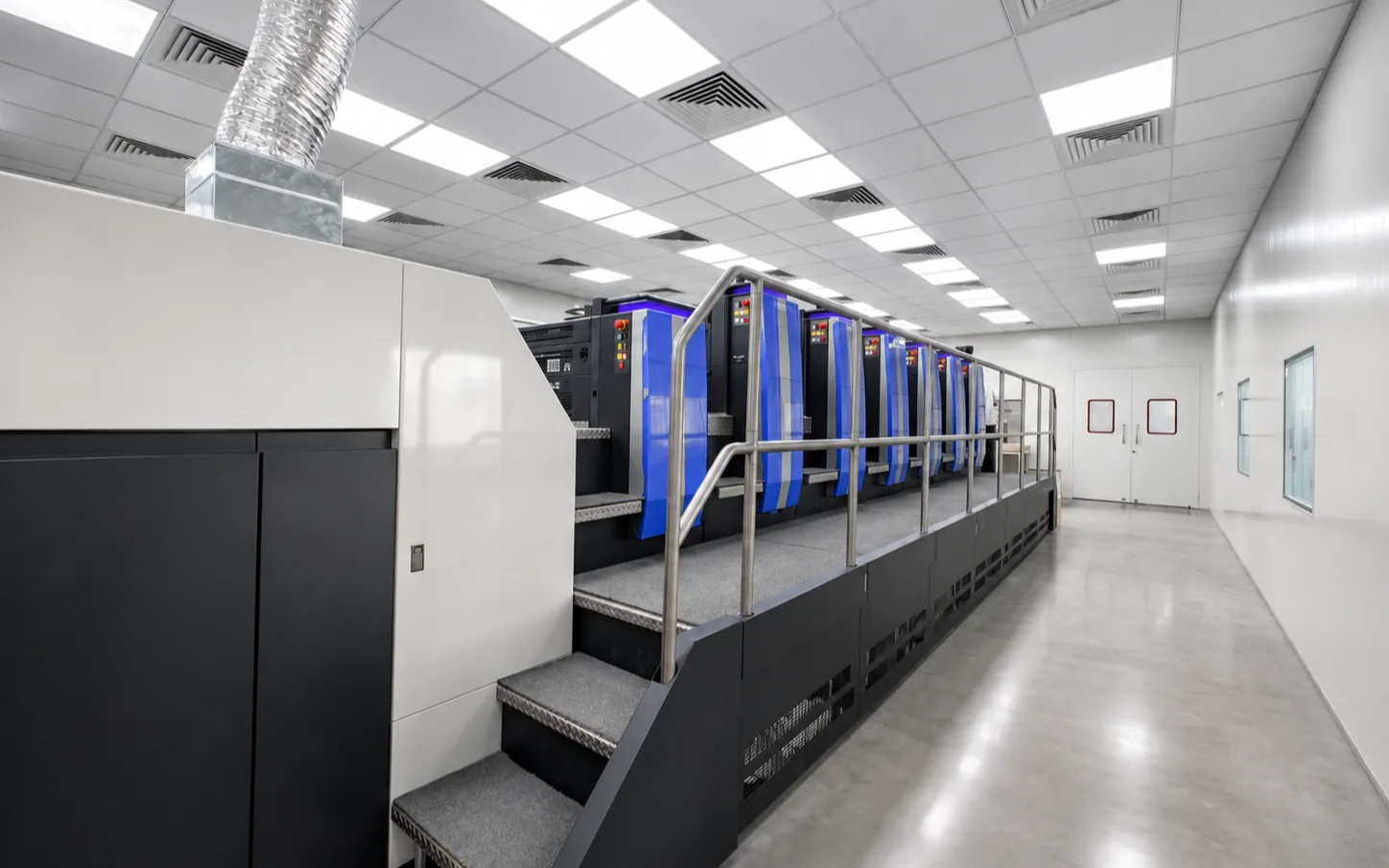
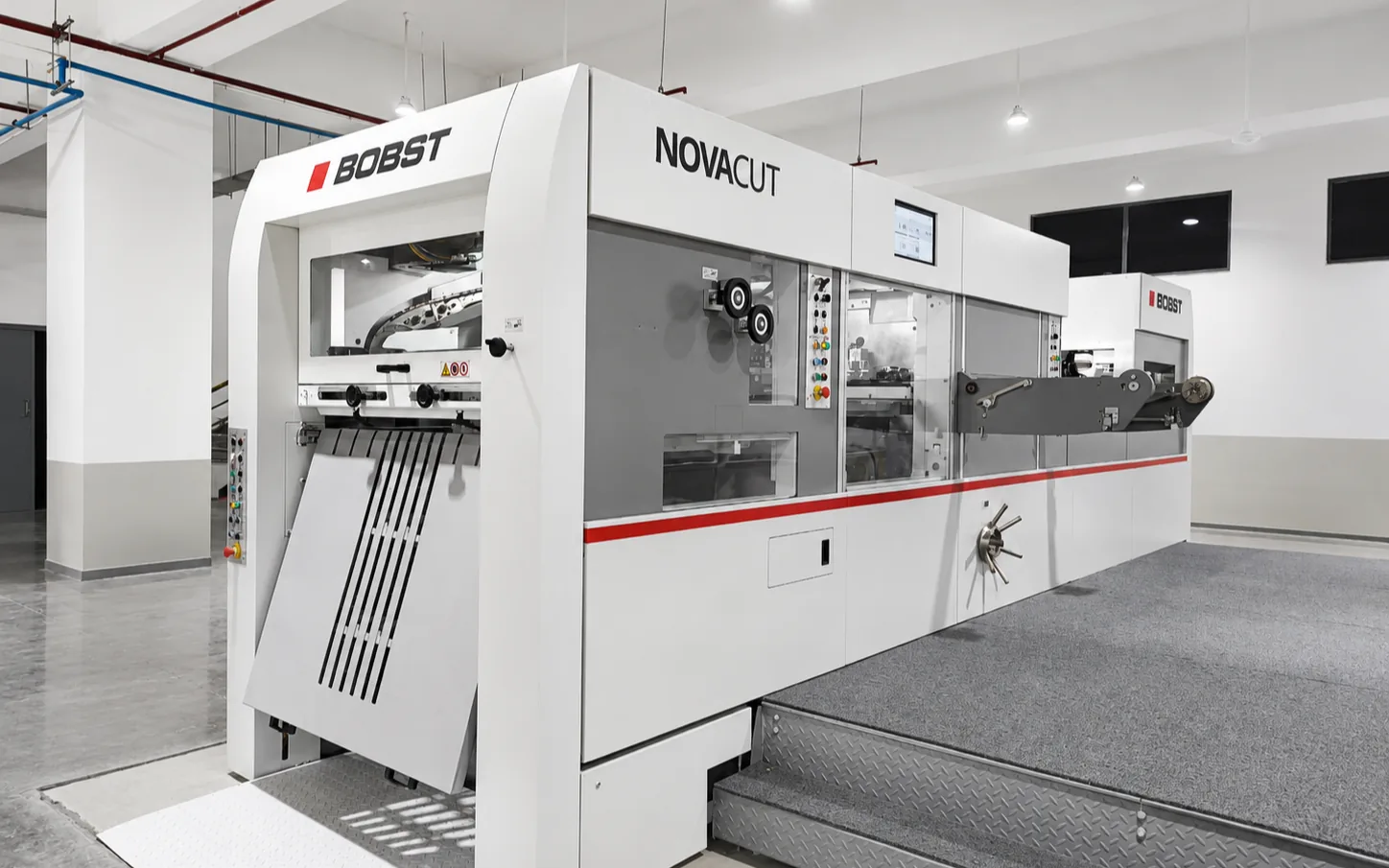
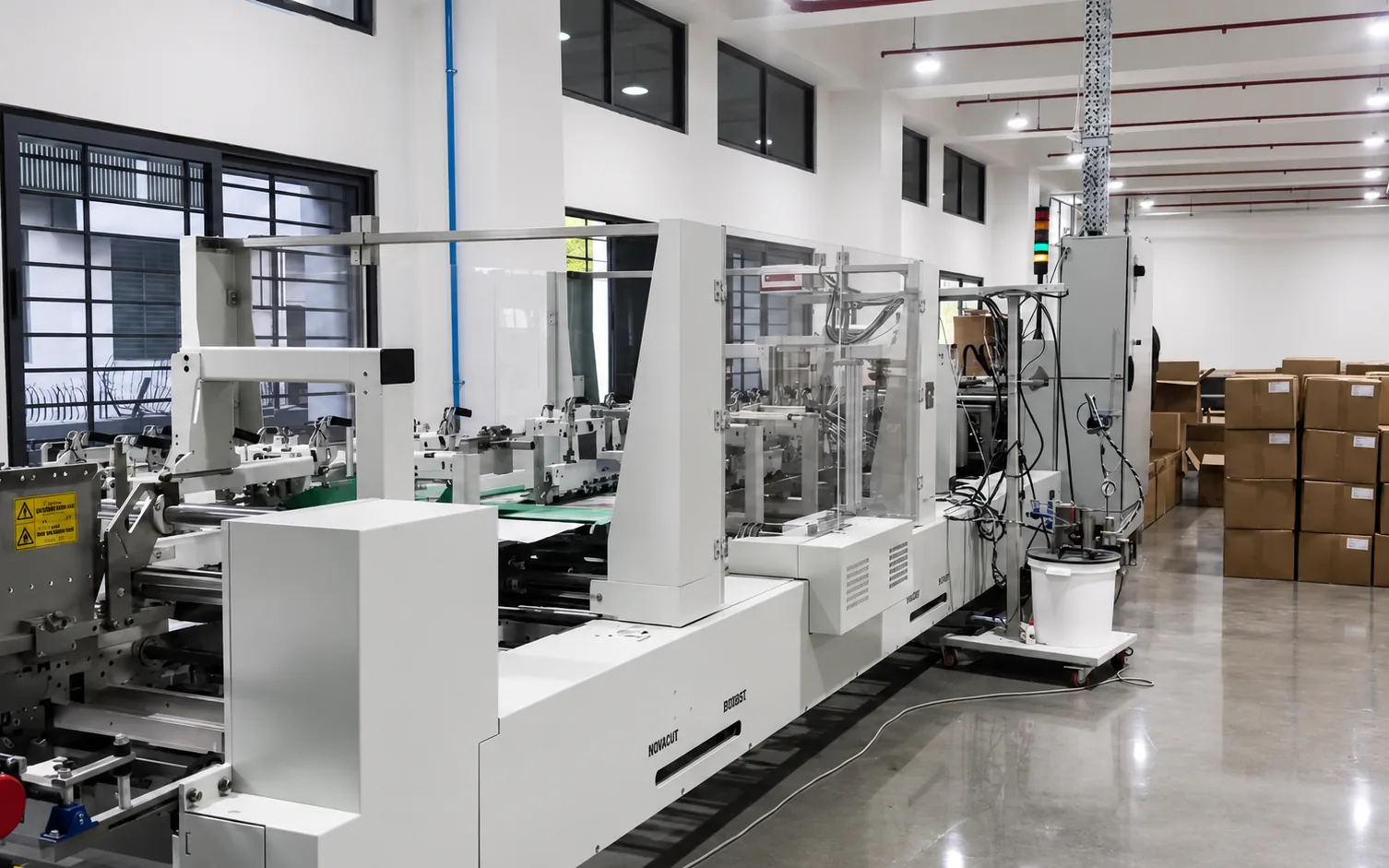
Every tuck box Eastface makes is cut, creased, folded and glued in one plant in Ahmedabad. The press is a six-color line, so a fifth and sixth spot color print in the same pass as the process set.
Cartons here are made on bulk production runs, and the cost per carton falls as the run grows, because plates, tooling and make-ready are fixed per run rather than per carton. A quote is priced against the volume you are planning. Landed pricing typically runs 20 to 30 percent below comparable US supplier quotes for the same specification. The quote is one landed price: the cartons, tooling, structural design, proofing, the documents that travel with the order, import duty, shipping and delivery to your address, in the US or anywhere else. Nothing is quoted on top of it later.
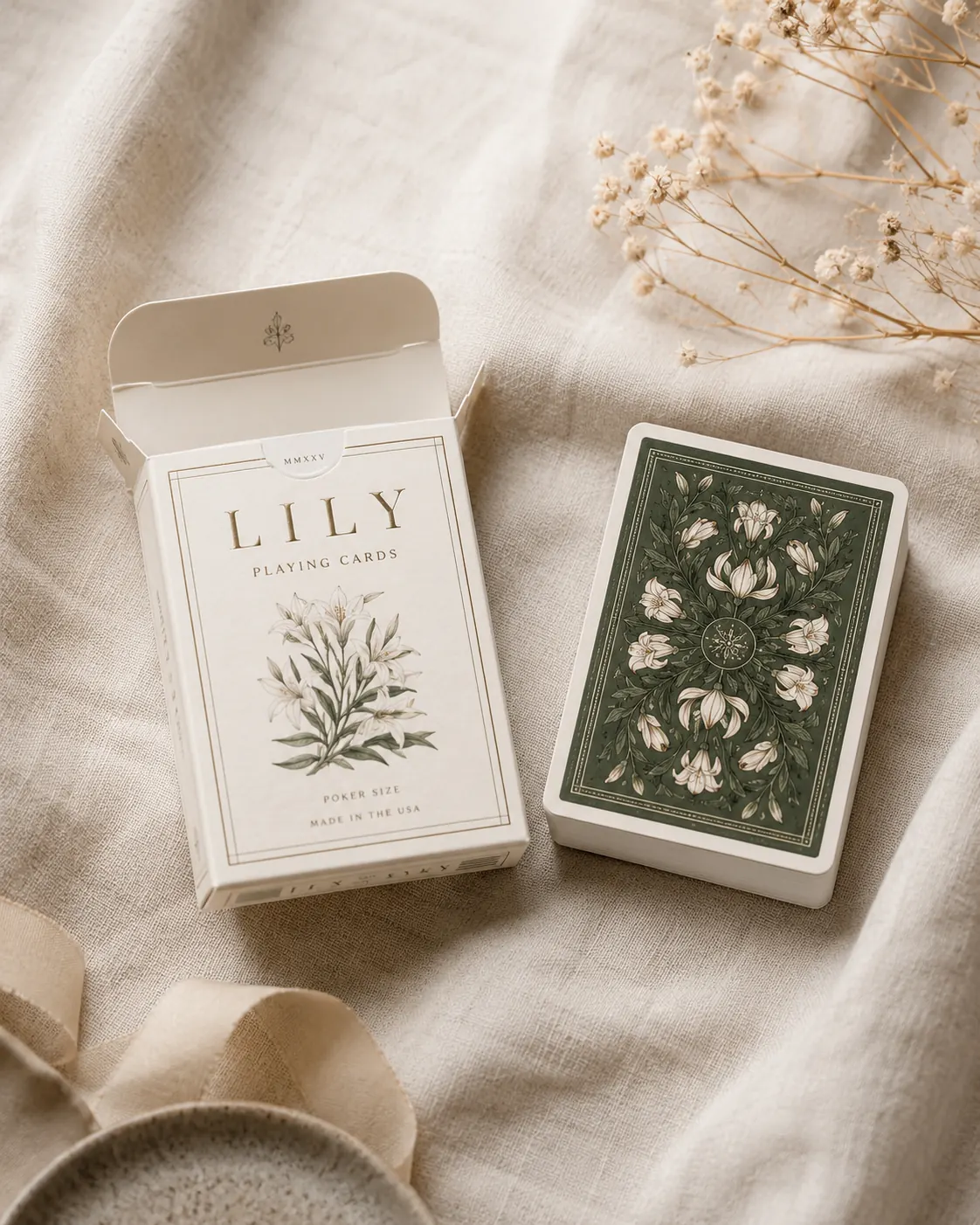
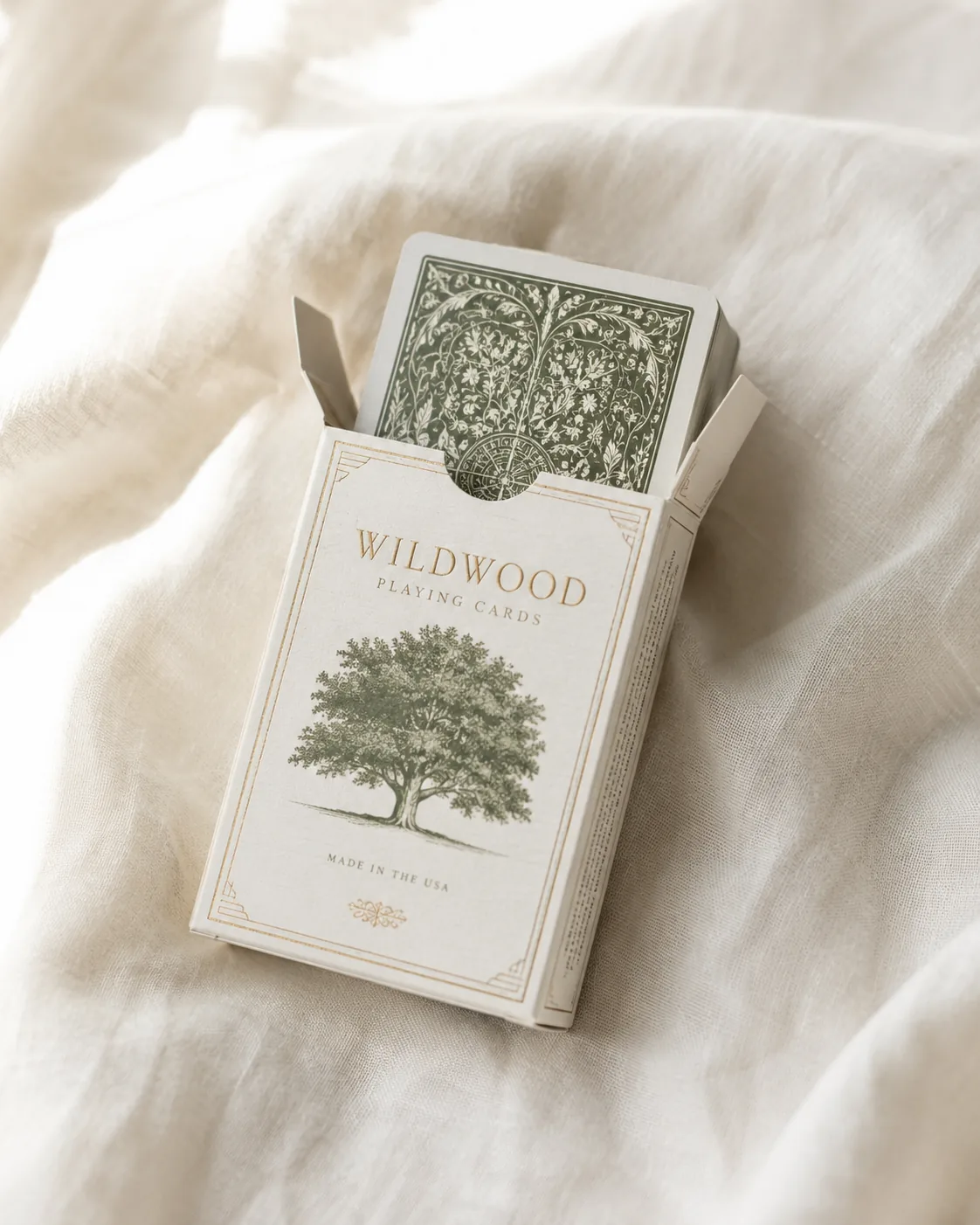
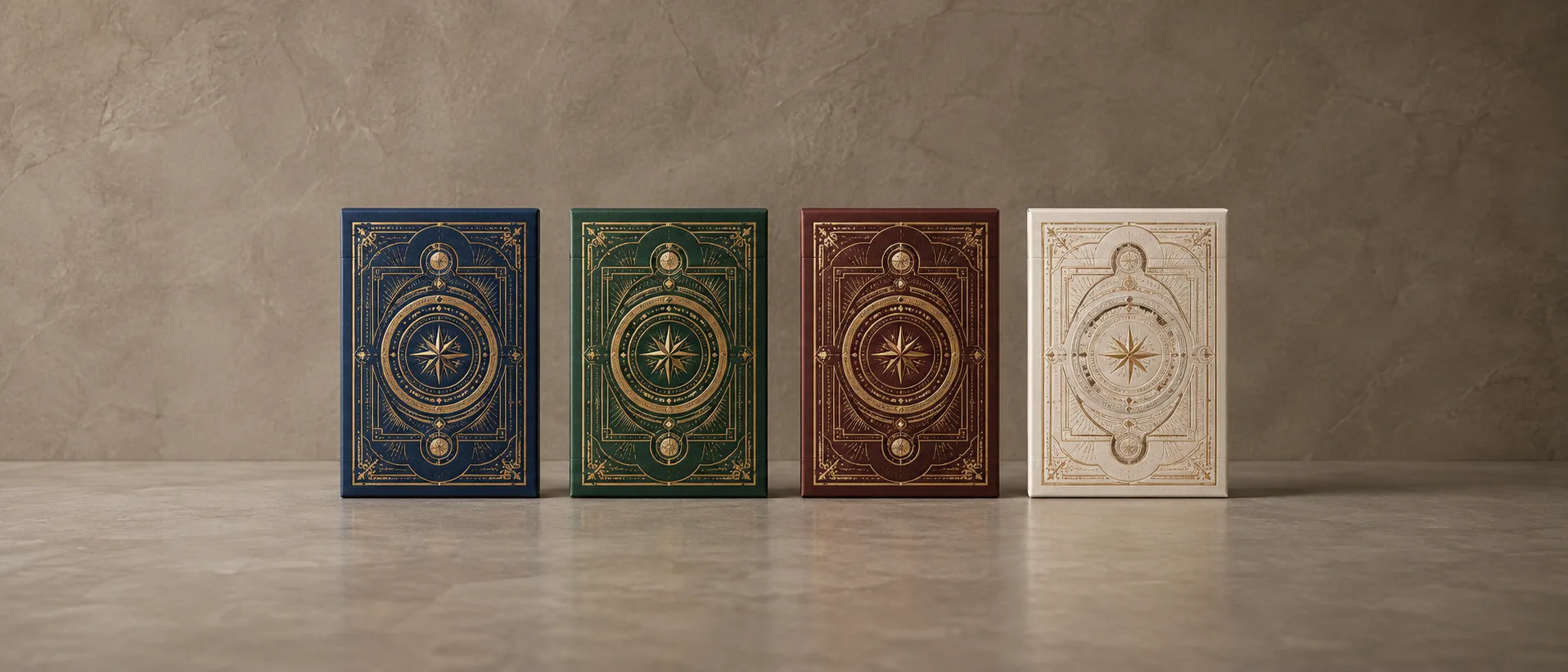
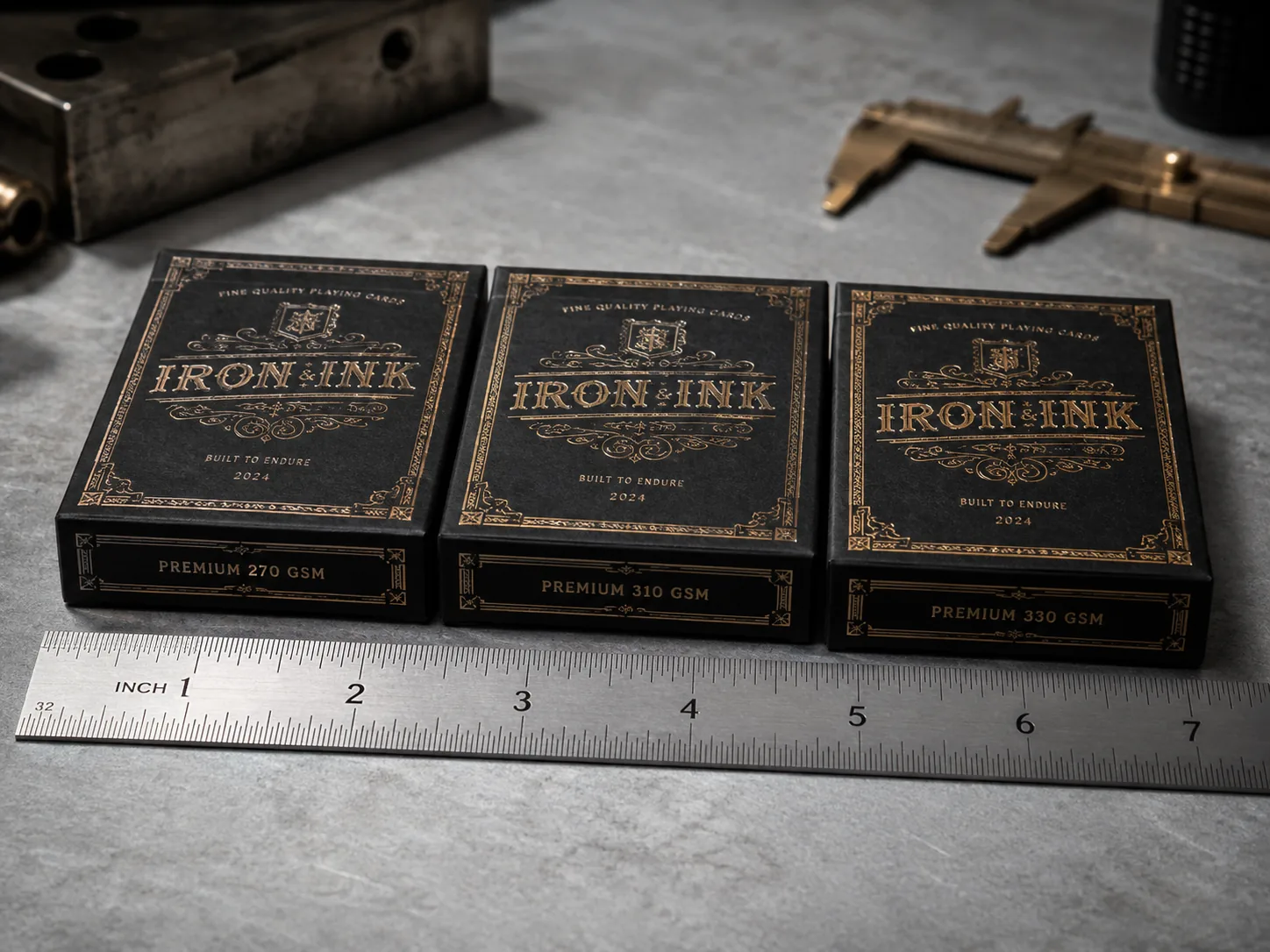
Card work is a line of its own here: the cards are printed on core board and collated to sequence, and the box is checked against a made up deck. The tuck box is the same construction as any other tuck box Eastface makes. What changes is that the tolerance is set by a stack of 54 cards rather than by a nominal dimension.
Card games and decks
A tuck box is a folding carton closed by flaps that tuck into the body, friction-fit, with no glue at the opening. It is cut and creased from one blank, glued along a single side seam, and shipped flat. Both ends open and close by hand, which is what separates it from a seal end carton, where the ends are glued shut on the filling line.
Specify a straight tuck when the carton faces the shopper and the front panel has to be unbroken, because both tuck panels hinge to the back and nothing crosses the face. Specify a reverse tuck when you are running a family of versions, because the blanks nest on the press sheet and more of them fall on it. Board, print, finishing and lead time are the same either way.
A tuck top auto bottom box has a tuck flap at the top and a pre-glued locking base at the bottom. The base is glued flat at the plant and locks square in one motion as the carton is opened out, so it carries a fill weight that would bow a tucked flap, while the top still opens and closes by hand. It is the construction to ask about when the product is heavy and the pack still has to be openable on a shelf.
Tuck boxes here are made to your dimensions rather than from a size list, and the drawing is developed around the thing that goes inside. Send the product or the primary pack and a structure comes back with a prototype to test before tooling is cut. Very small and very tall cartons both have limits set by the crease and the friction lock rather than by the press, and those are worked through at the design stage.
Tuck boxes here run on 190 to 700 gsm, SBS or FBB, with kraft-back and recycled board also stocked. Board is specified in both gsm and points of caliper. Which weight to use is decided by what the carton has to hold and by how the friction lock has to behave: a very stiff board resists bowing and also resists the flex the lock depends on, so heavier is not automatically better.
Yes. The inside is the reverse of the same sheet, so it prints in the same pass and costs a plate rather than an operation. It suits a carton that is opened in front of the buyer. On SBS the reverse is as white as the face, so ask for SBS when the interior carries artwork.
Yes. Send the carton and the thing that goes in it, because the friction lock is a fit tolerance rather than a dimension. The structure is measured, board and caliper matched, and color matched to your existing standard under D65 and TL84 viewing conditions. Most switching programs are matched from a sample rather than rebuilt from a specification.
Last reviewed
A deck, a bottle, a tube, or the carton you are running now. Send it with the volume you are planning, and the construction comes back chosen against how the box is filled and closed, with a prototype to test on your own line. A packaging planner replies within one business day.