MATERIALS
Chipboard and recycled board
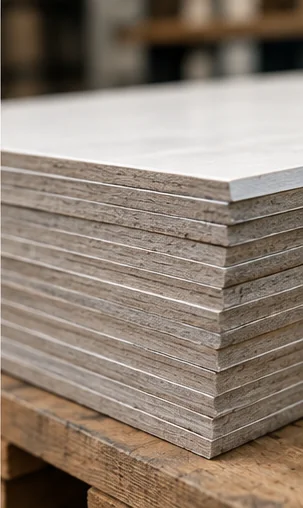
Chipboard is recycled paperboard made from reclaimed paper fiber, pressed into a single-ply sheet with a gray or brown core. It is specified in points of caliper, from about 12 points for carton liners and dividers up to 60 points and beyond for rigid box wraps, and it takes print on a clay coated or white lined face.
In US packaging the word means recycled paperboard. It is the same product sold as CRB and CCNB, and it is not the wood panel of the same name.
Also called
CRB, CCNB, grayboard
Coated recycled board and clay coated news back are both chipboard with a coated face.
Fiber
100 percent reclaimed
Recovered paper, repulped. Nothing in the sheet is virgin fiber and nothing in it is bleached.
Caliper
12 to 120 points
Cartons sit at the bottom of that range. Rigid box wraps and game boards sit at the top.
The catch
The core is gray
It reads through a light color unless a white liner is specified over it.
What is inside a sheet of chipboard
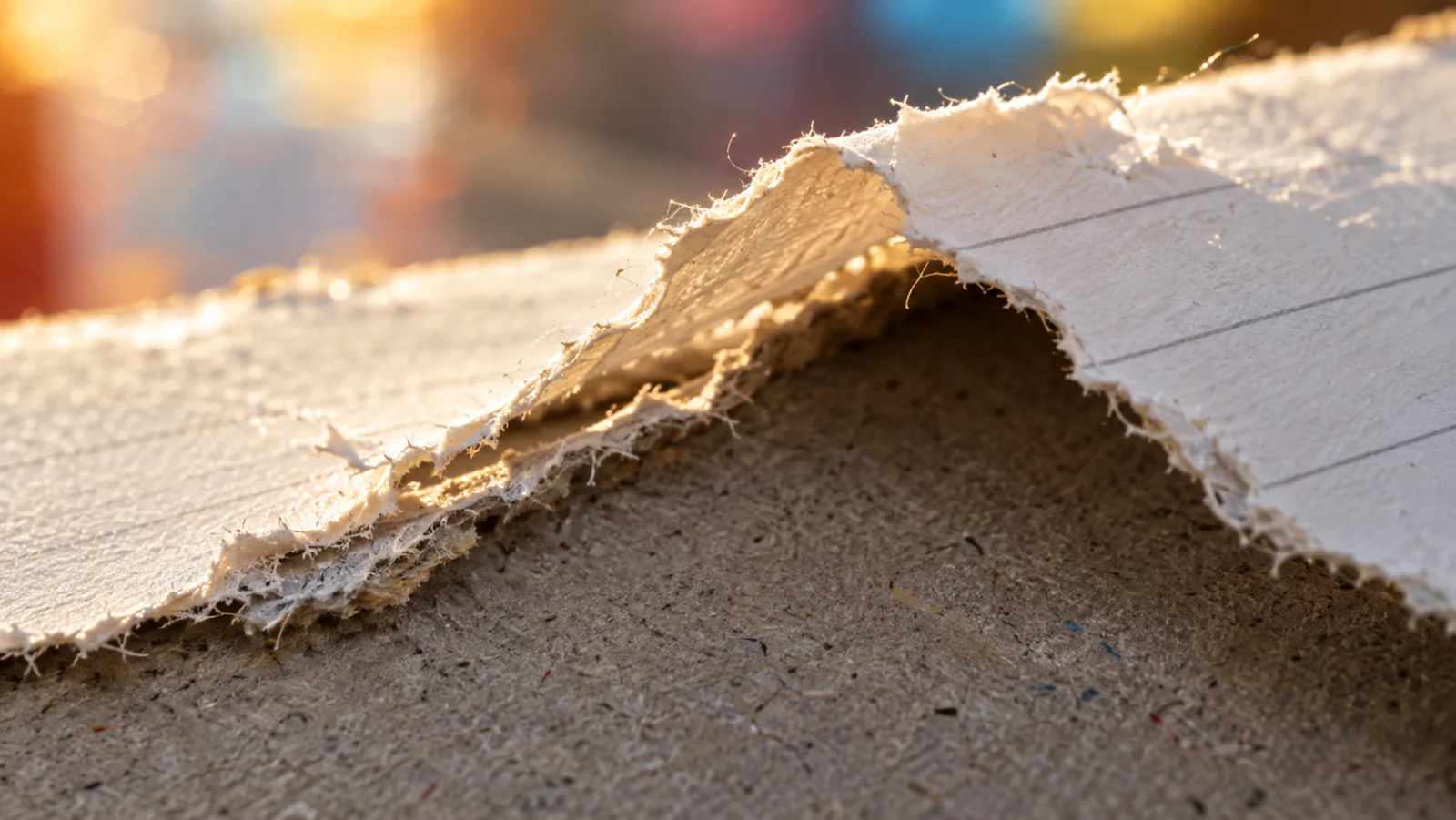
Reclaimed fiber, and the core is gray because of what went into it rather than because of anything done to it afterwards. The top of the drawing is the decision this grade actually turns on: a white liner over the core is what lets a light color print without the gray coming through.
What chipboard is made of
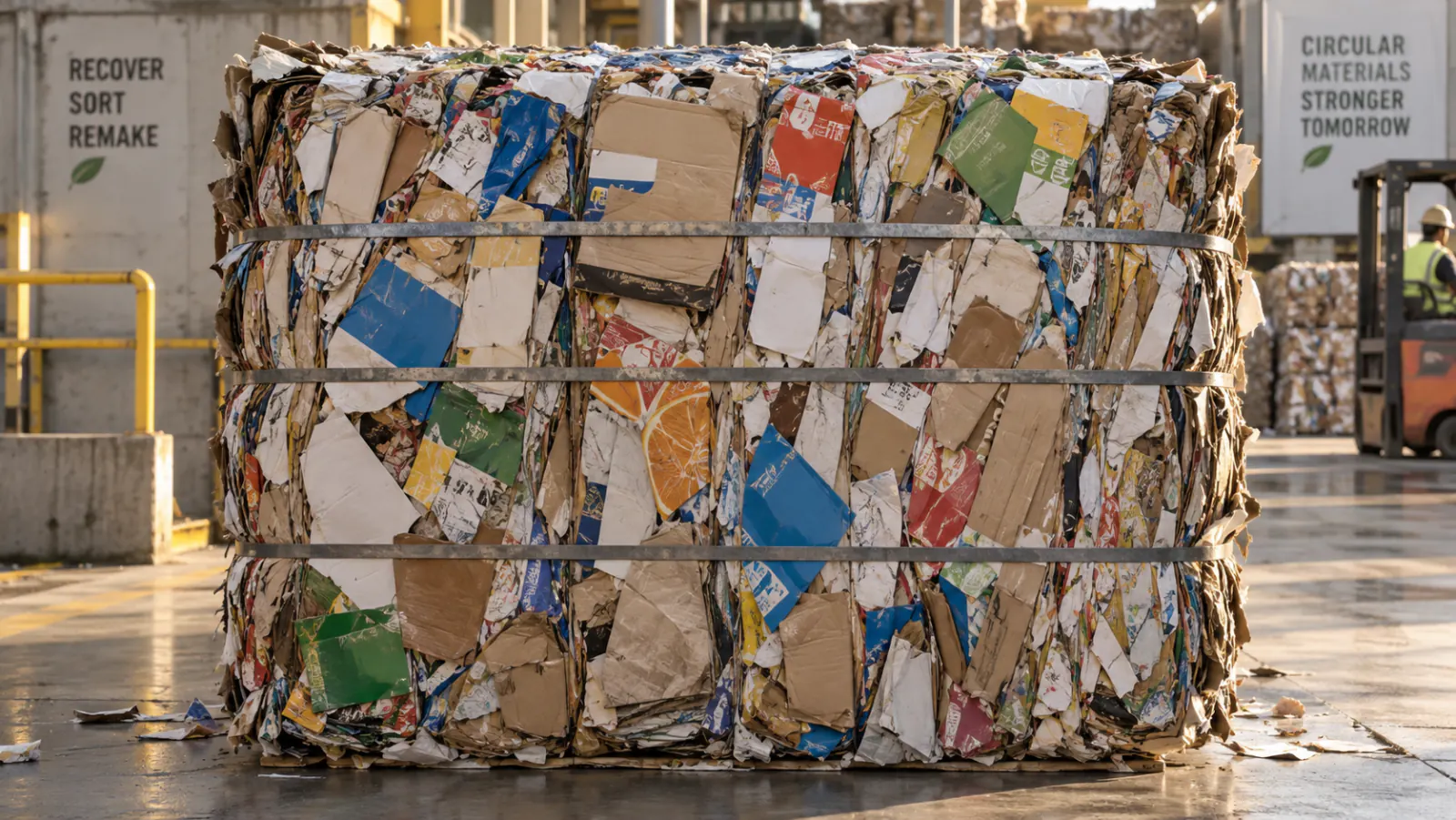
The furnish is recovered paper and nothing else. Old corrugated boxes, printed waste, carton trim and mixed office paper are collected, repulped in water, screened for staples, plastic and adhesive, and formed back into a sheet on a board machine. Nothing is added to make it white and nothing is bleached.
The core is gray because of what went into it. A recovered stream carries ink from everything that was printed on it before, and mixed ink reads gray. A furnish with more corrugated in it runs browner, one with more printed office paper runs grayer, and the shade moves slightly between mill runs for that reason.
The fibers are also short. Every trip through a pulper cuts them, so reclaimed fiber is shorter than the virgin chemical pulp in SBS or kraft and the sheet is less strong at the same caliper. The grade gives up strength and a white surface for recycled content and a lower price.
Chipboard is not particle board
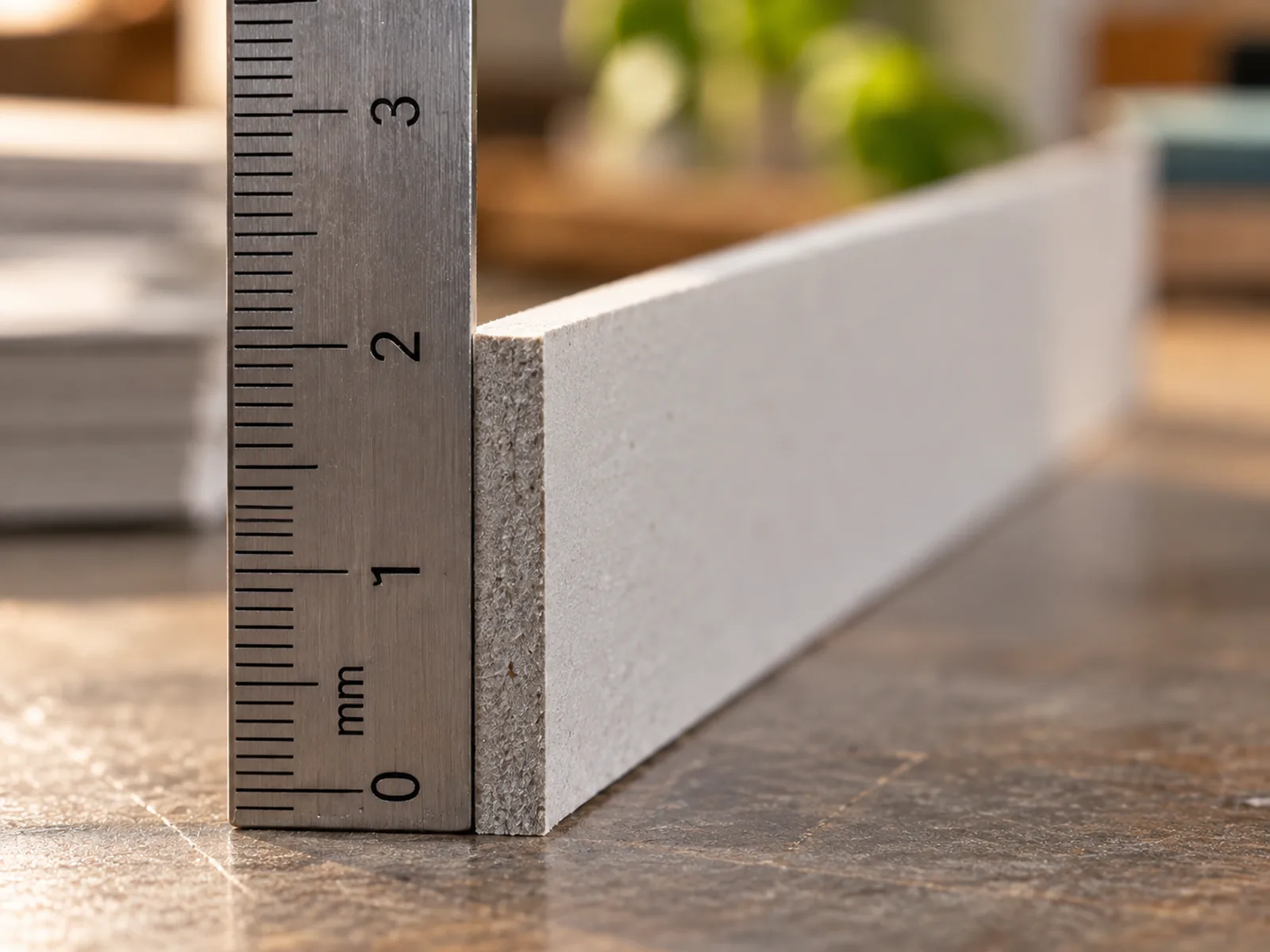
Two different products are sold under this word. In US packaging, chipboard is recycled paperboard: a paper product, measured in points, used for folding cartons, dividers and rigid box wraps. In the UK and Australia, chipboard usually means particle board, an engineered wood panel made of wood chips and resin, measured in millimeters and used for furniture and flooring.
They are unrelated, and this page covers only the paperboard. In the UK the paperboard is usually called grayboard, which avoids the ambiguity.
Chipboard thickness chart
Chipboard is specified in points of caliper. A point is one thousandth of an inch, so 18 point board is 0.018 inches thick, and the number is a measurement of thickness rather than of weight. The calipers below are the standard ones a US buyer specifies from.
| Caliper | In inches | Typical use | What the caliper buys |
|---|---|---|---|
| 12 pt | 0.012 in | Dividers, pad backing, carton liners | Folds without cracking. Will not hold a panel upright on its own |
| 14 pt | 0.014 in | Light cartons, inner sleeves | The lightest caliper that keeps a crease square on a small carton |
| 16 pt | 0.016 in | Small folding cartons | Enough stiffness for a carton under about four inches on its longest side |
| 18 pt | 0.018 in | Standard folding cartons | The common default. Holds a printed panel flat without bowing |
| 20 pt | 0.020 in | Folding cartons carrying weight | Takes a heavier fill before the face panel starts to bow |
| 24 pt | 0.024 in | Large cartons, set-up box components | Stands a tall panel up. The top of the range that still folds cleanly |
| 30 pt | 0.030 in | Heavy cartons, box bases and lids | Creases need scoring rather than folding. Stiff enough to resist a crush |
| 40 to 60 pt | 0.040 to 0.060 in | Rigid box walls and wraps | Does not fold at all. It is cut, mitred and wrapped in printed paper |
| 80 to 120 pt | 0.080 to 0.120 in | Game boards, book boards, easel backs | A panel rather than a sheet. Handled as board, not as paperboard |
A carton in chipboard usually sits between 16 and 24 points. Below that the grade is doing a lining job and above it a rigid box job, and both of those are specified against what the board has to hold rather than against what is printed on it.
Chipboard as specified here
The chart above is the industry range. This is what a recycled board carton is specified against on a quote from this plant.
How a recycled board carton is specified here, field by field.
The board
- Grades stocked
- Recycled board is one of the four grades stocked here, alongside SBS, FBB and kraft-back. A recycled carton is a stock decision rather than an indent.
On the sheet
- Printing
- Offset litho on a six-color Komori line, with the coating unit inline.
- Coating
- Aqueous or UV to the job, decided with the board rather than after it.
- Inks
- Vegetable based, low VOC.
- Incoming checks
- Caliper is measured against the docket at goods-in, before the board reaches the press, in the in-house quality laboratory.
What it will take
- Finishes
- Foil and embossing read well on an uncoated recycled surface. Spot UV does not: the coating soaks into the fiber and comes back as a slightly darker patch rather than a gloss.
- Structures
- Every folding carton structure this plant makes runs in recycled board, subject to the caliper the structure needs.
Caliper is the field that decides fit, so it is settled at structural design before tooling is cut rather than chosen off a chart.
On this grade, the specification turns on the gray core.
Chipboard vs cardboard
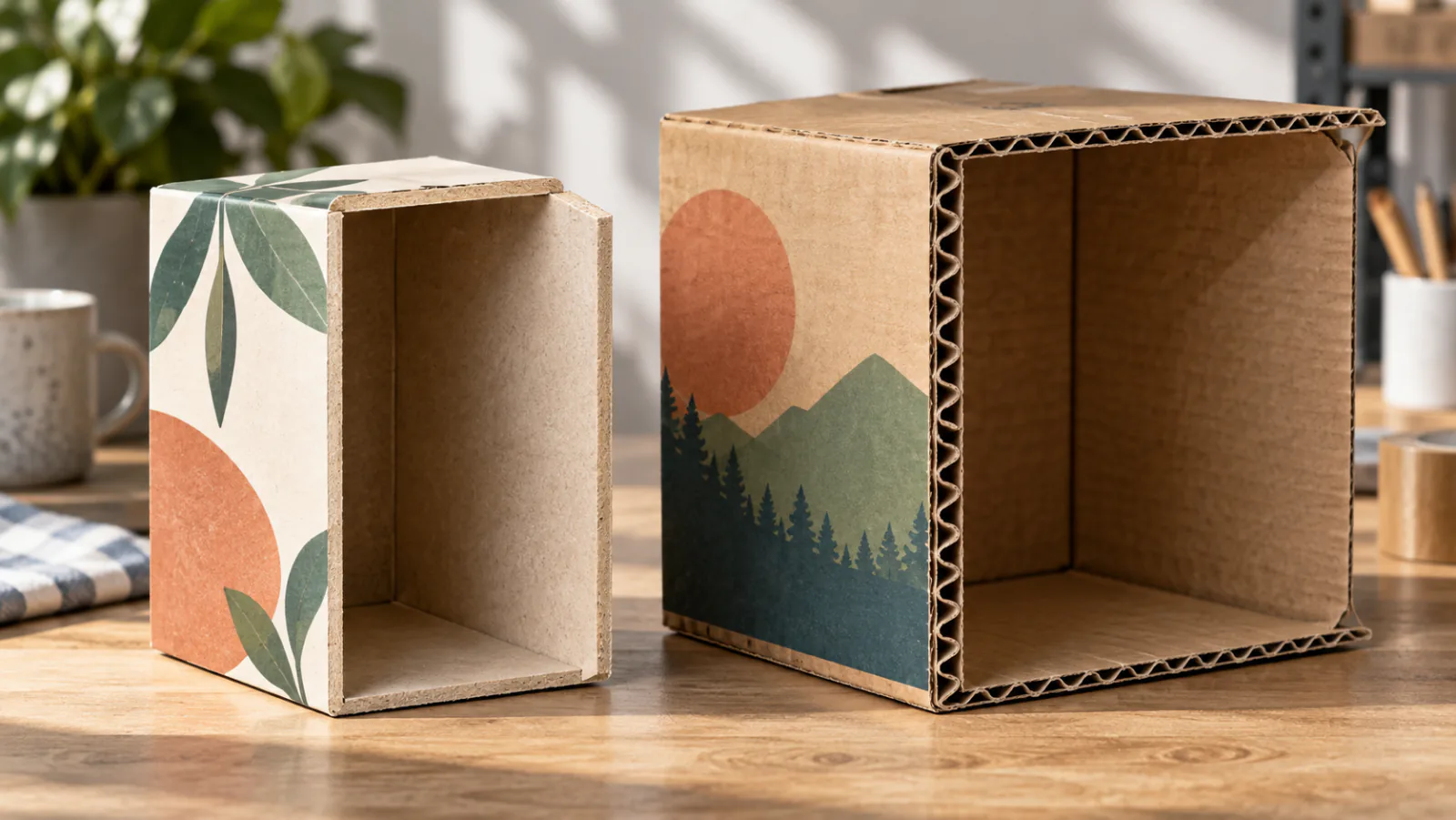
Cardboard is not a grade. It is a colloquial word covering every stiff paper product, and in normal use it usually means corrugated: the fluted brown material a shipping box is made of, built from two flat liners with a wavy layer glued between them.
Chipboard is single ply. There is no flute and there are no liners, just one solid sheet of reclaimed fiber, and it is thinner, smoother and far better to print on. A cereal box is chipboard. The brown box that cereal box was shipped in is corrugated.
Most people asking this are comparing a folding carton with a shipping box, and the two do different jobs. A folding carton is the printed retail pack a product stands in on a shelf. Corrugated is the transit packaging that gets a case of them to the store. This plant makes the first and not the second.
Chipboard vs paperboard
Chipboard is a type of paperboard.
The usual question behind this one is recycled against virgin. Paperboard is the whole family of single ply boards a folding carton can be made from, and chipboard is the member of it made from reclaimed fiber. The others are made from virgin pulp: SBS is bleached virgin fiber all the way through, FBB is virgin with a bulky middle ply, and kraft is virgin and unbleached.
Virgin board is stronger at the same caliper and has a white or brown surface that prints true. Recycled board costs less, carries a recycled content claim, and has a gray core that has to be covered before a light color will print over it.
The three grades: CRB, CCNB and uncoated chipboard
A specification is written at this level. All three are chipboard and all three have the same core. What separates them is what has been put on top of it.
| Grade | What it is | The print face | Where it belongs |
|---|---|---|---|
| CRB, coated recycled board | The reclaimed core with a white liner over it and a clay coating over that | Clay coated and white. Takes process color and a photographic image | Retail cartons where the recycled content is the claim on the pack and the artwork has light areas in it |
| CCNB, clay coated news back | The same coated white face, over a core whose reverse is left uncovered | Clay coated and white on the front. The back stays news gray | Outer cartons where the inside of the pack is never seen, and the gray reverse costs nothing |
| Uncoated chipboard | The core, with no liner and no coating on either face | None. The gray is the surface, and it absorbs ink rather than holding it on top | Dividers, inserts, pad backing, and rigid box walls that will be wrapped in printed paper |
The choice between CCNB and CRB comes down to whether the reverse of the carton is ever seen. Where it is not, a white liner on the back adds cost and nothing else.
How chipboard prints, and where it does not
On a clay coated recycled board, print behaves close to print on virgin board. The coating is the surface the ink sits on, and a coated recycled sheet takes process color, fine type and a photographic image.
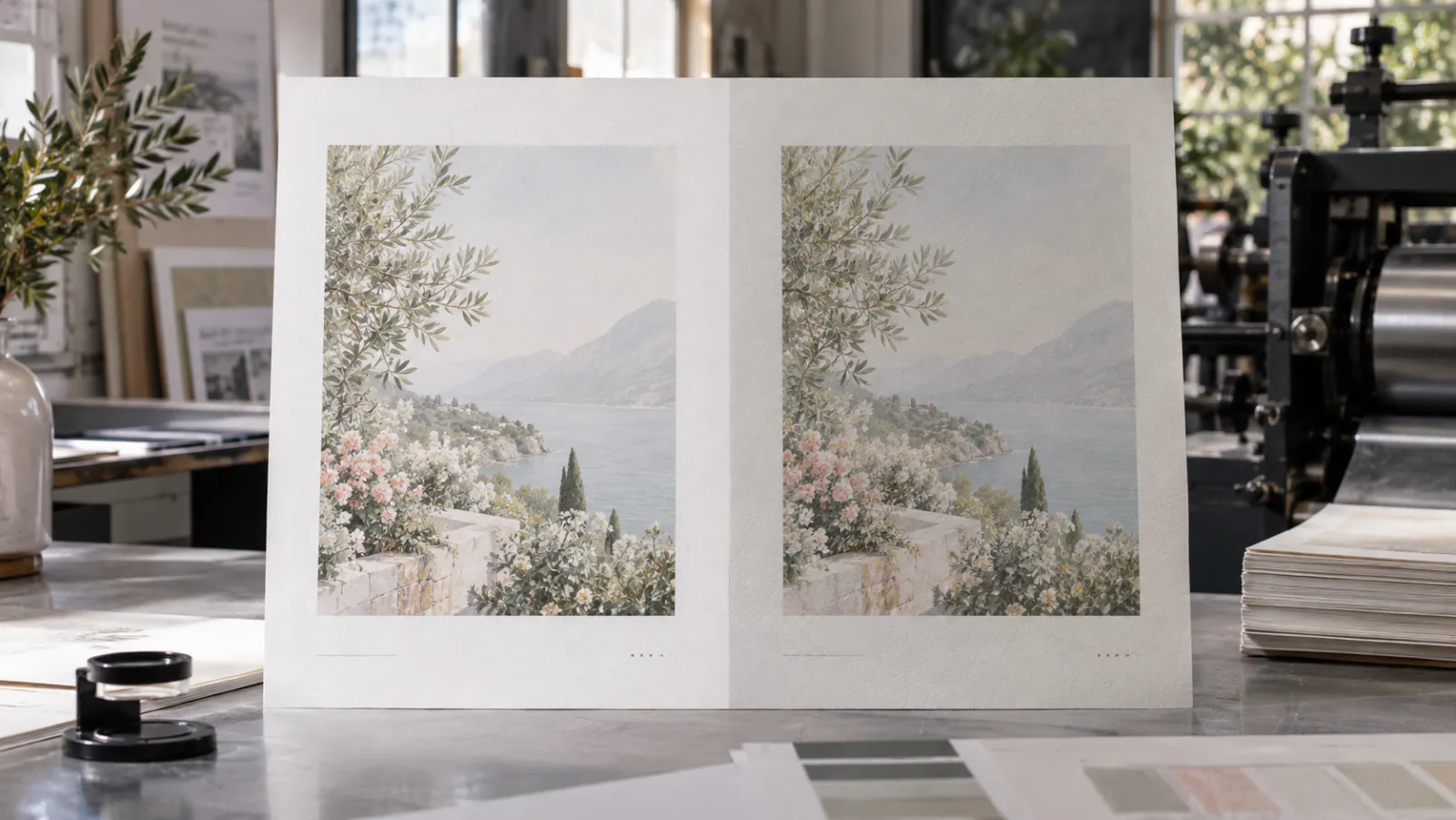
Without the liner it is a different sheet. The gray core reads through anything light: a pale tint comes back cooler and dirtier than the proof, a white area is not white because there is no white under it, and a pastel shifts furthest of all. Strong colors and dark solids are barely affected, because there is little for the gray underneath to change.
Two things are done about it. A white liner is specified over the core, which is what CRB and CCNB already carry, or an opaque white is laid down as a first pass and the color printed over that. Both cost money. The liner costs it in the board and the white underbase costs it on the press.
- Pale tints and pastels
- The furthest off proof. Specify a white lined grade, or accept the shift and proof against the real board rather than against paper.
- White areas in the artwork
- There is no white in the board to leave unprinted. A white panel on unlined chipboard has to be printed, which means an opaque white pass.
- Dark solids and strong color
- Print close to true on any of the three grades. A carton designed dark is the cheapest carton to run in recycled board.
- Fine type and hairlines
- Hold on a coated face. On an uncoated one the ink spreads into the fiber and a hairline closes up.
When to specify chipboard
The grade wins on cost and on recycled content and loses on surface and on strength. Which of those the carton is being judged on decides it.
Specify it when
- Recycled content is the priority.
- A brief that leads on recovered fiber is one no virgin board can meet.
- The carton is an outer rather than the pack.
- A shipper carton, a multipack sleeve or a case wrap is judged on holding together and on print that reads at arm's length.
- The artwork is dark or strongly colored.
- The gray core changes least under a dark solid, so a carton designed dark takes the cheapest grade with no visible penalty.
- Nobody sees the inside.
- CCNB leaves the reverse as it comes off the machine, which costs less and is never seen.
- It is a divider, insert or rigid box wrap.
- At the heavy calipers nothing else is specified for the job, and the surface is either unseen or covered by a printed wrap.
Specify something else when
- The pack is shelf facing and the artwork is pale.
- SBS is white through the caliper and a pale tint prints on it as proofed.
- The interior of the carton is part of the design.
- An unboxing where the inside is seen wants a board that is white on both faces, which is SBS.
- The carton is large and has to stay rigid.
- Short fibers are weaker at the same caliper. FBB reaches a given stiffness at a lower weight than any recycled grade.
- The brown is wanted as a design decision.
- Recycled gray is not kraft brown. Kraft board is unbleached virgin fiber, and the color is even rather than mottled.
- The board is in direct contact with food.
- A recovered stream is not specified for direct contact by default. Where the board touches the product, that is a specification question rather than an assumption.
Recycled content and recyclability
Chipboard is made entirely from recovered paper.
It is also recyclable at the end of the pack, and it goes back into the same stream it came out of. What changes that is what has been put on top of it. An aqueous coating leaves the fiber stream unchanged. A laminated film has to be separated from the fiber before the board can be repulped, and a metallized board is not repulpable in most streams at all. The board and the coating are specified together here for that reason.
The boards stocked here are responsibly sourced and recyclable, and the inks are vegetable based and low VOC. Board is checked against the docket at goods-in in an in-house quality laboratory, and certificates for the plant's ISO and BRCGS standards are available on request.

Read next
Where the recycled grade is not the answer, and what gets decided alongside the board.
 Read nextKraft boardThe other unbleached board, and the one specified when the brown is a design decision rather than a saving. Virgin fiber, and an even color.
 Read nextFolding cartonsEvery structure this board runs in, and how a folding carton compares with corrugated and with a rigid box.
 Read nextFinishesWhat each coating and lamination does to a recycled carton, and which of them keep it in the fiber stream.
Questions about chipboard and recycled board
Chipboard is recycled paperboard: a single ply sheet made from recovered paper that has been repulped, screened and formed back into board. The core is gray or brown, because a recovered stream carries the ink of everything printed on it before and mixed ink reads gray. It is specified in points of caliper, where a point is one thousandth of an inch, and it is used for folding cartons, dividers, pad backing and rigid box wraps. In US packaging the word always means this paper product. In the UK and Australia the same word usually means particle board, which is an engineered wood panel and is unrelated.
At carton calipers, between about 16 and 24 points, chipboard is used for printed folding cartons: cereal and dry food packs, multipack sleeves, outer cartons and shelf-ready packs. Below that, at 12 to 14 points, it is used for carton liners, dividers, inserts and pad backing. Above about 40 points it stops folding and becomes rigid box board, cut and wrapped rather than creased, and at the heaviest calipers it is game boards, book boards and easel backs. The common thread is that the surface either does not need to be white or has a white liner put on it.
No, although cardboard is a loose word rather than a grade. Cardboard in normal use means corrugated: the fluted material a shipping box is made of, with two flat liners and a wavy layer glued between them. Chipboard is single ply, with no flute and no liners, and it is thinner, smoother and much better to print on. A cereal box is chipboard and the brown case it shipped in is corrugated. Folding cartons are paperboard, so a printed retail carton is chipboard or another paperboard grade, never corrugated.
From about 12 points to about 120, where a point is one thousandth of an inch. Folding cartons sit between 16 and 24 points, with 18 the common default. Lining and divider work sits at 12 to 14 points. Rigid box walls and wraps run 40 to 60 points, and game boards and book boards run 80 to 120. The thickness chart on this page sets out each caliper against what it is used for and what the extra caliper buys. Which caliper a particular carton wants is decided against what it has to hold and how it is handled, at structural design, before tooling is cut.
Yes on a clay coated grade, and with a caution on an uncoated one. Coated recycled board and clay coated news back both carry a white liner and a clay coating on the print face, and both take four color process, fine type and a photographic image close to the way virgin board does. On uncoated chipboard the gray core reads through anything light: pale tints come back cooler and dirtier than the proof, and a white area is not white at all because there is no white underneath it. The fix is either a white lined grade or an opaque white first pass, and both cost money. Dark solids and strong colors are barely affected on any of the three.
Yes, and it goes back into the stream it came from. The board is entirely recovered fiber and it repulps. What changes the answer is the finish over it rather than the board itself: an aqueous coating leaves the fiber stream unchanged, a laminated film has to be separated from the fiber before the board can be repulped, and a metallized board is not repulpable in most streams. If recyclability is a stated requirement, it is decided along with the coating and the lamination rather than after them.
Last reviewed
Send the carton and the fill weight
The caliper comes back matched to what the carton has to hold, with the grade named and the effect of the gray core on your artwork stated. Board samples go out on request. Landed cost runs 20 to 30 percent below a comparable US supplier quote.