Games and Mats
Playing card boxes and decks, printed in one plant
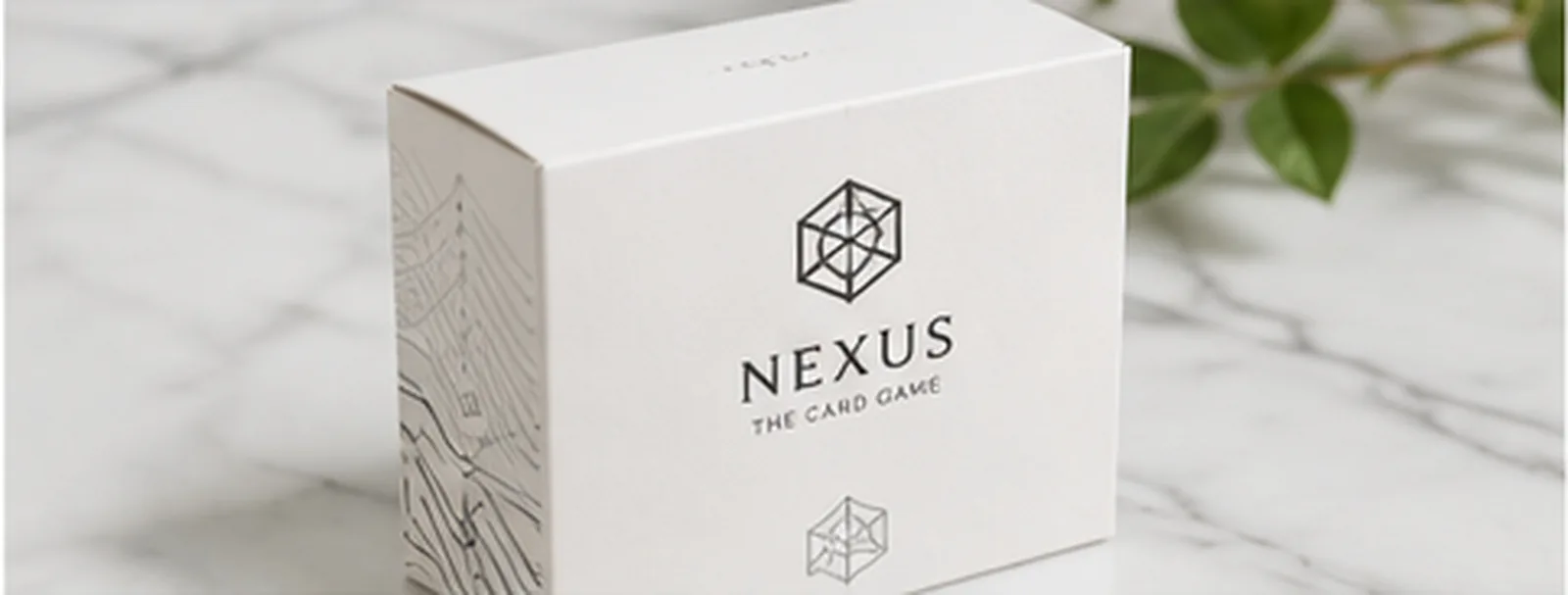
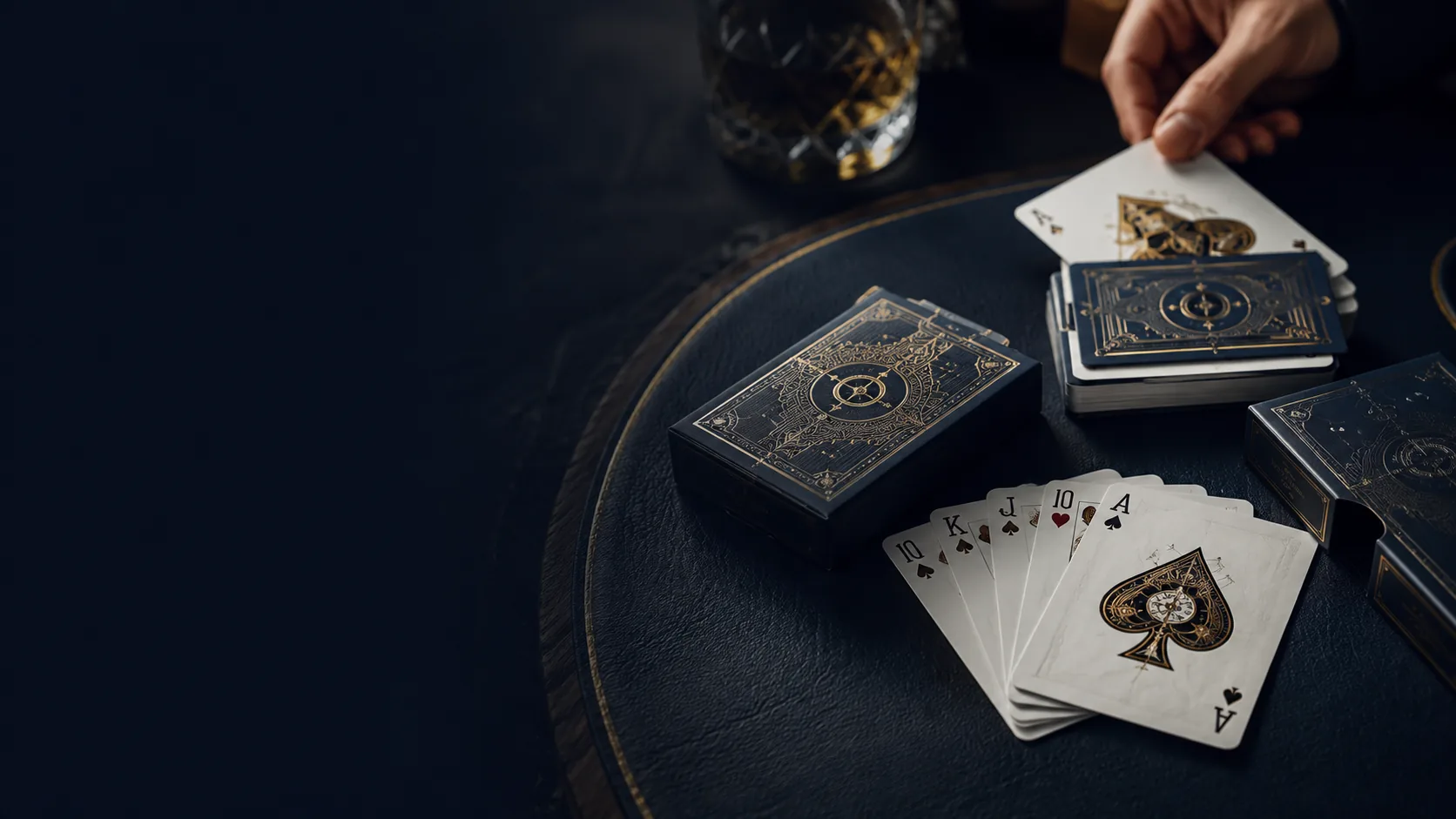
A playing card box is a tuck end folding carton drawn from the card size and the depth of the deck it holds. We make the boxes and the cards that go in them: decks, trading card sets and tarot printed on core board and packed in a tuck box cut on the same die cutter as the cartons this plant has been making for years.
Eastface makes decks and the boxes they live in, quoted as one order and proofed together, with the box fitted to the deck.
Most publishers buy the cards from one supplier and the box from another, then discover at the packing bench that the deck does not seat in the tuck. Here the deck and its card game packaging are quoted together, proofed together and produced in the same building, and the box is fitted to the deck before the run. The board, the print and the finishing are the presses and the coating line already described elsewhere on this site.
- CUT TO YOUR SIZE
- PROOFED ON THE BOARD
- FITTED TO A REAL DECK
- PACKED TO YOUR BREAKDOWN
Playing card boxes: print, structure, finishing
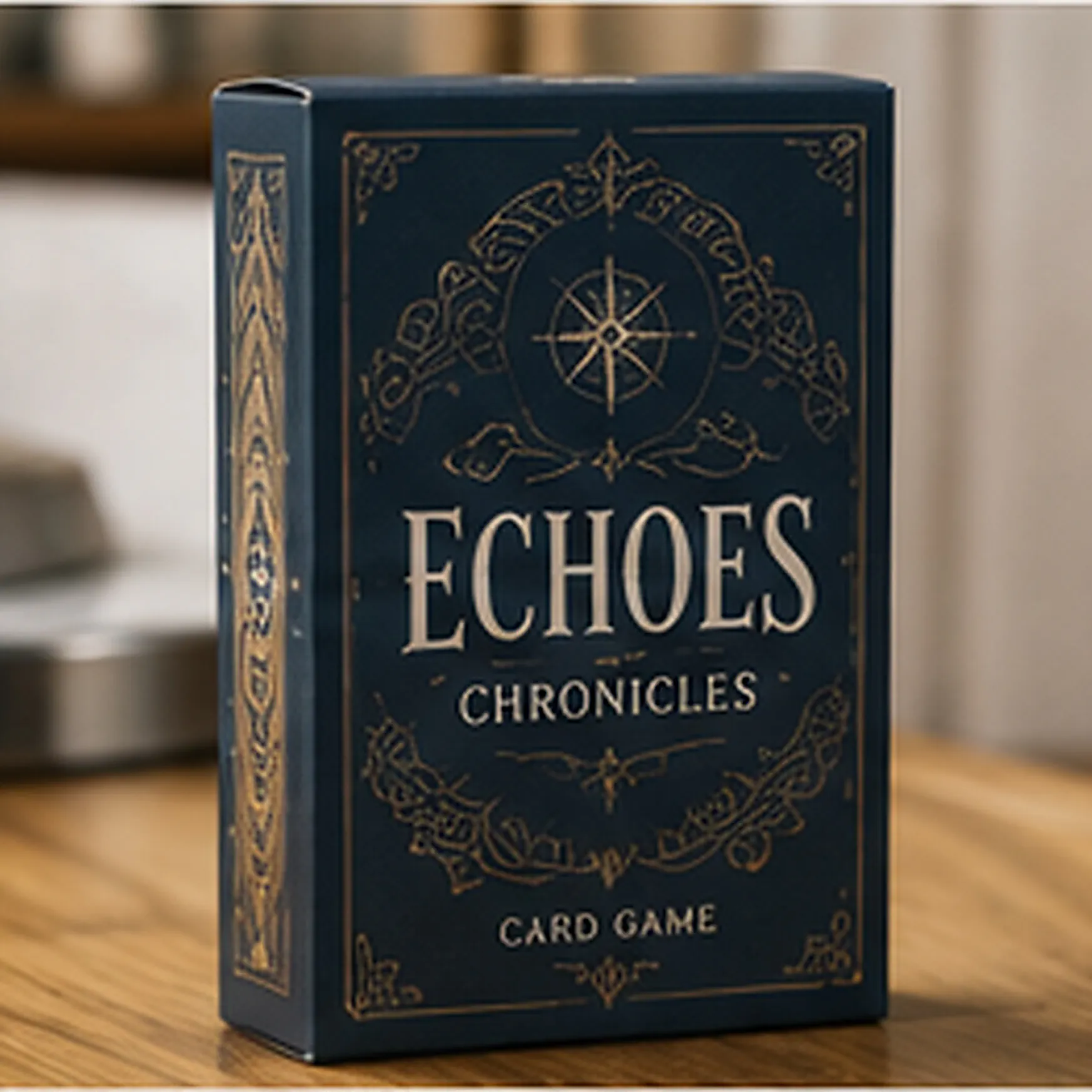
A deck is seen on a shelf and then held in the hand. The box and the cards run as one print job.
Print: Six-color offset with density control holding the run, so the box and the card print the same red.
Structure: Tuck end, tuck end with a tear strip, or two piece rigid. Each changes the blank, so it is settled before the dieline is drawn.
Finishing: Foil, emboss, soft touch lamination, spot UV and drip off, singly or together, plus printing on the inside of the blank.
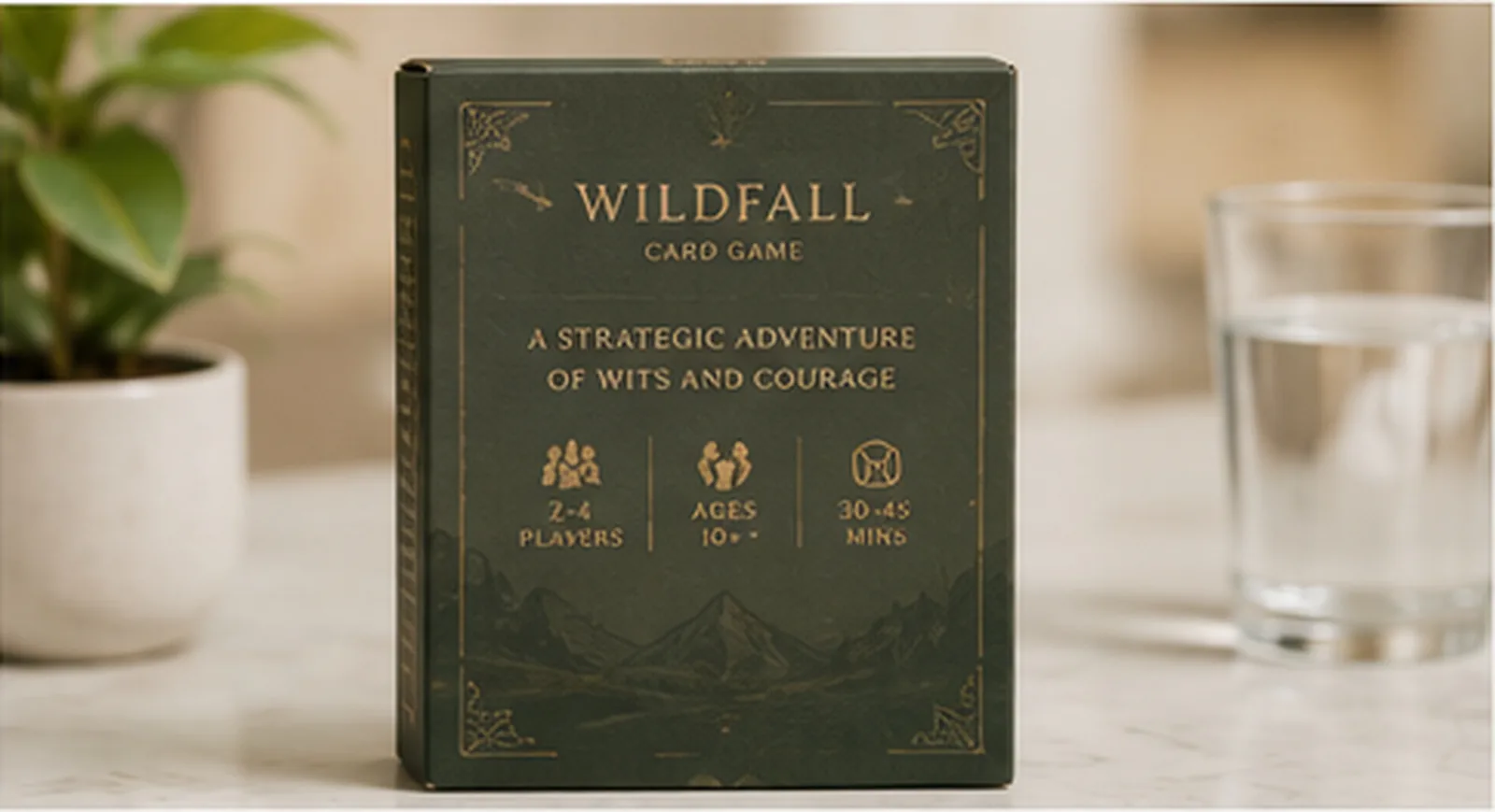
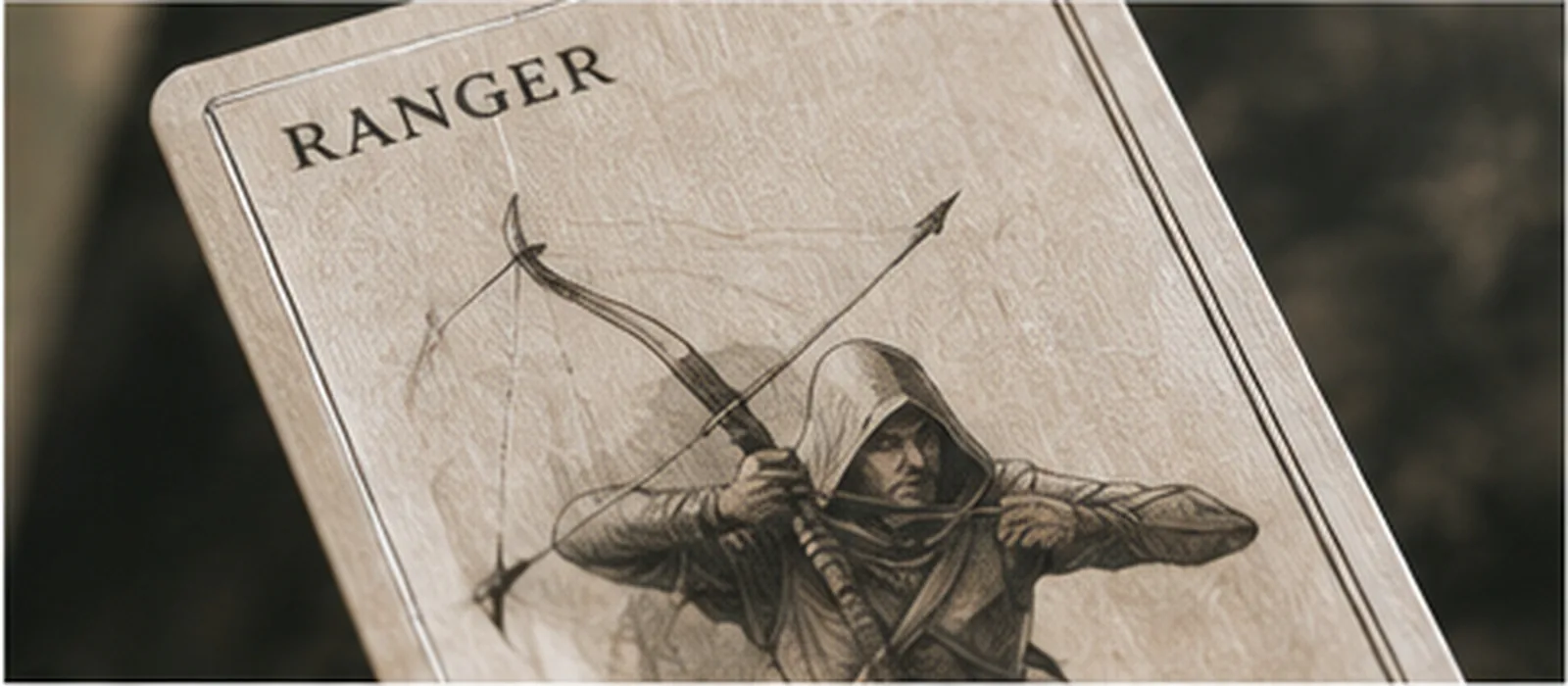
Deck sizes and box fit
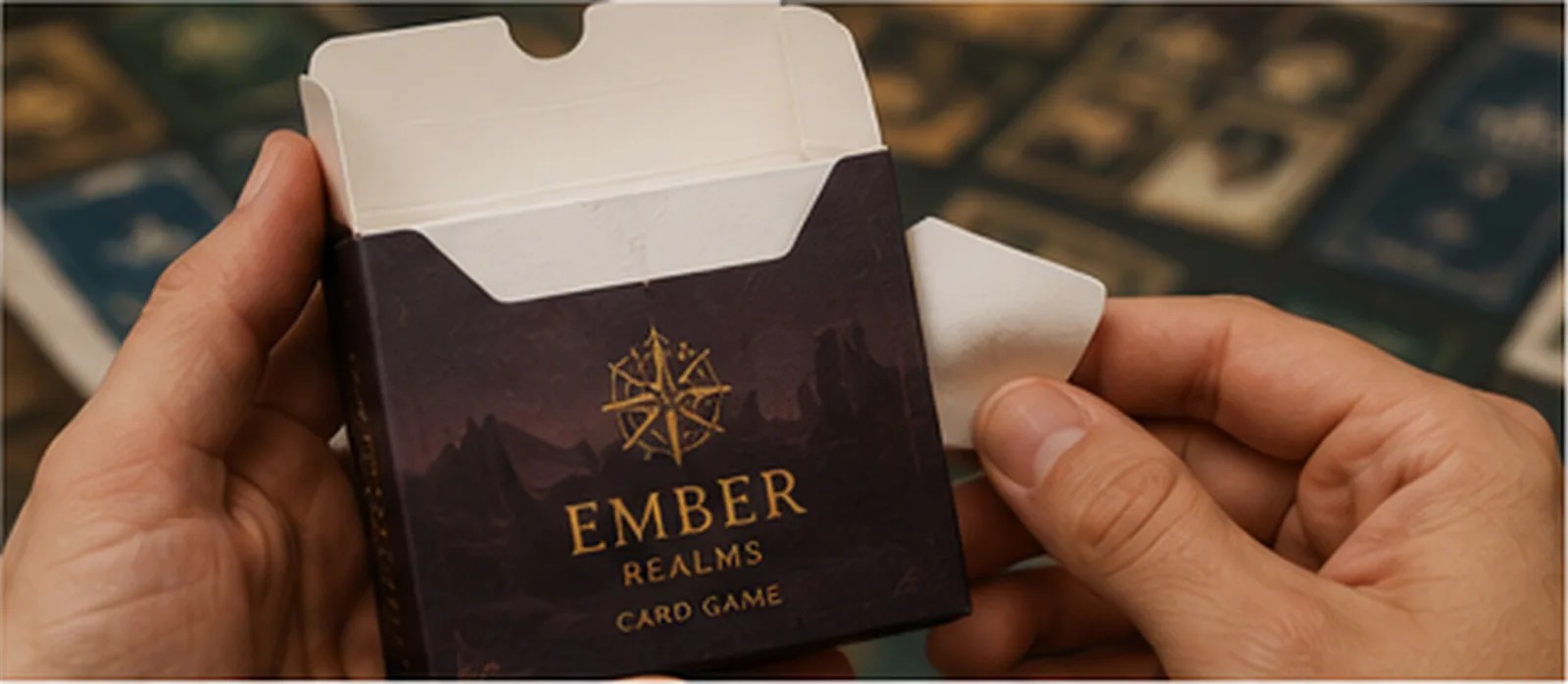
The card has to shuffle, a custom playing card box has to hold the deck without crushing it or letting it rattle, and the insert has to keep tokens off the cards in a courier van.
Custom playing card boxes: Tuck boxes, rigid set-up boxes and collector editions, caliper set to the depth of the deck they hold. A blank playing card box is the same blank without the artwork, cut and glued to the same tolerance.
Card inserts: Trays, separators and organizers that keep tokens off the cards through a courier van.
Cards: 300 to 350 gsm core board, linen embossed, matte or gloss, with a shared back or per card artwork.
- Playing card decks
- Uno style decks
- Trading card sets
- Tarot and oracle
- Flash and prompt
Drawn to scale. Pick a card to hold it out.
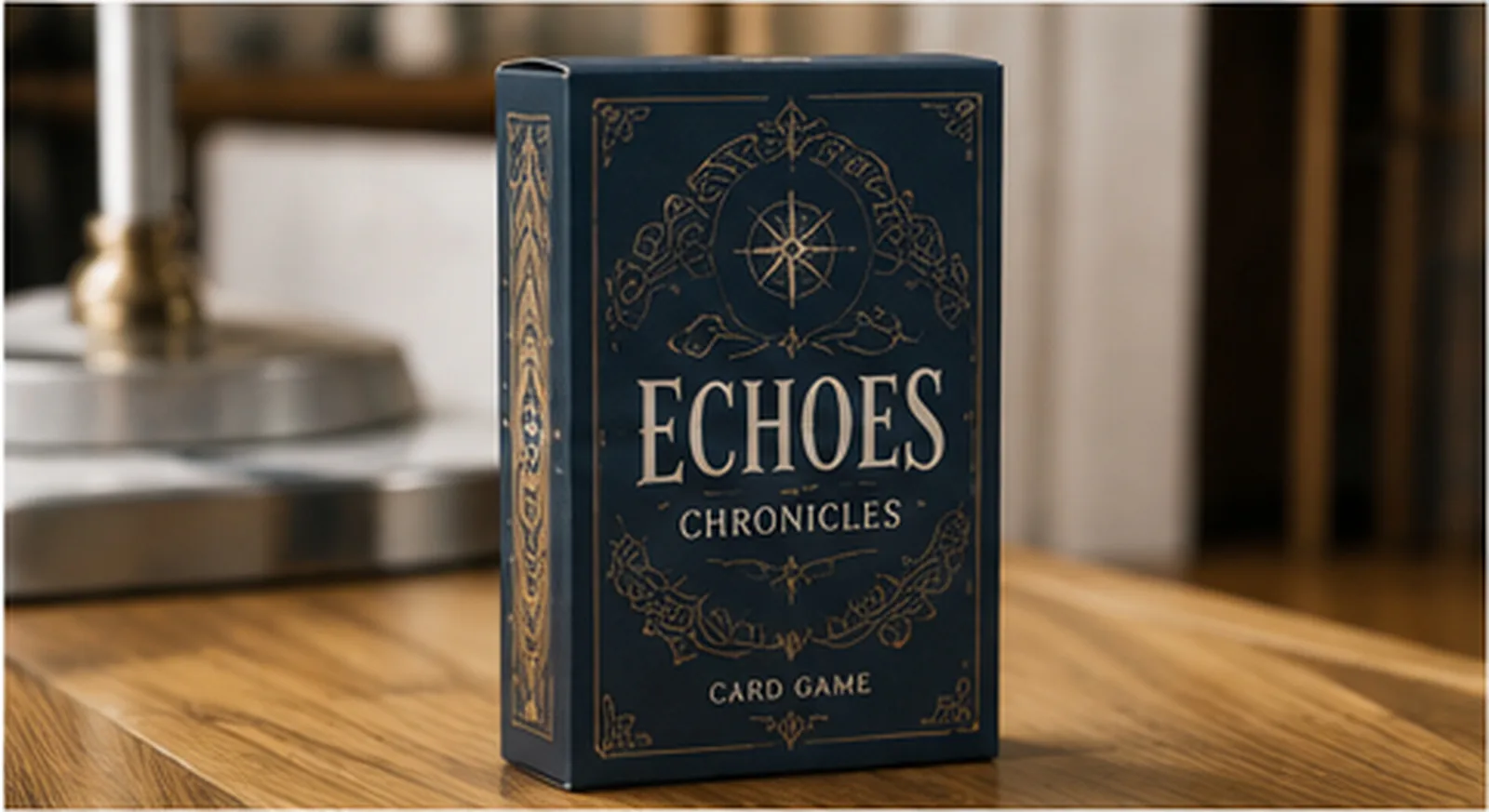
Tuck boxes
A tuck end carton on SBS or FBB, caliper set to the deck depth, with a tear strip where the deck ships sealed.
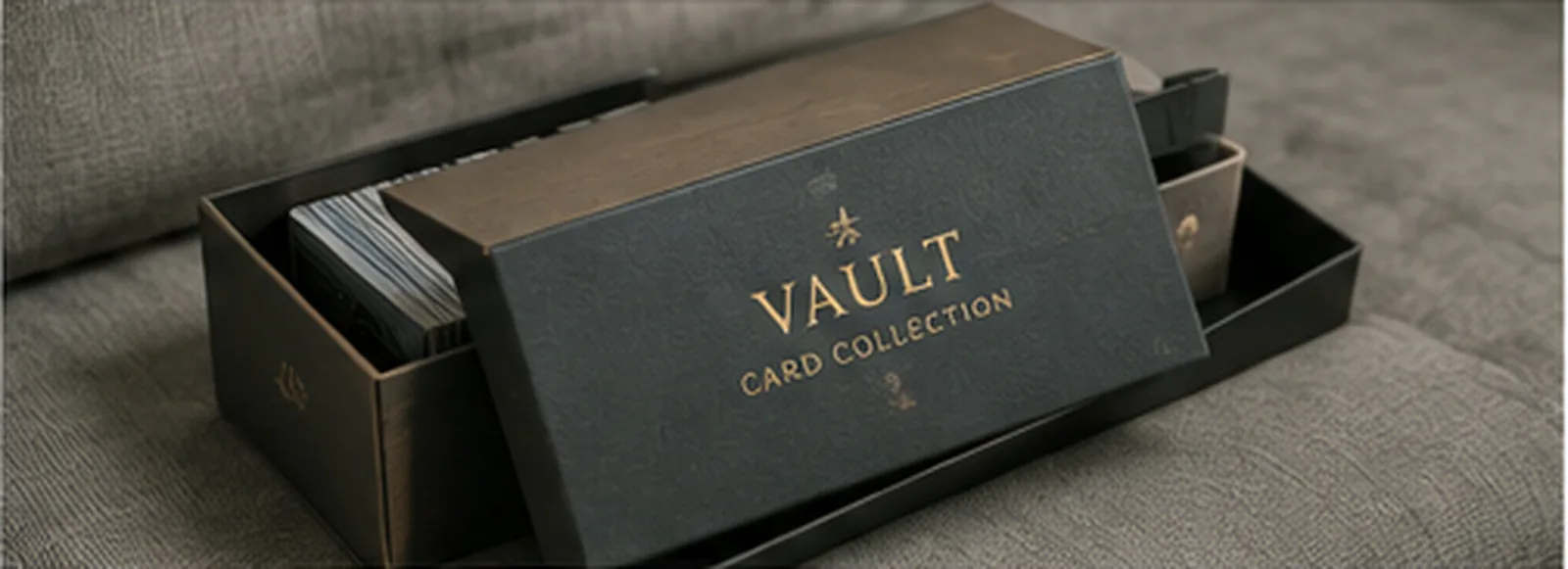
Collector boxes
Two piece rigid with a seated tray, so the deck and the dividers stand where they were put.
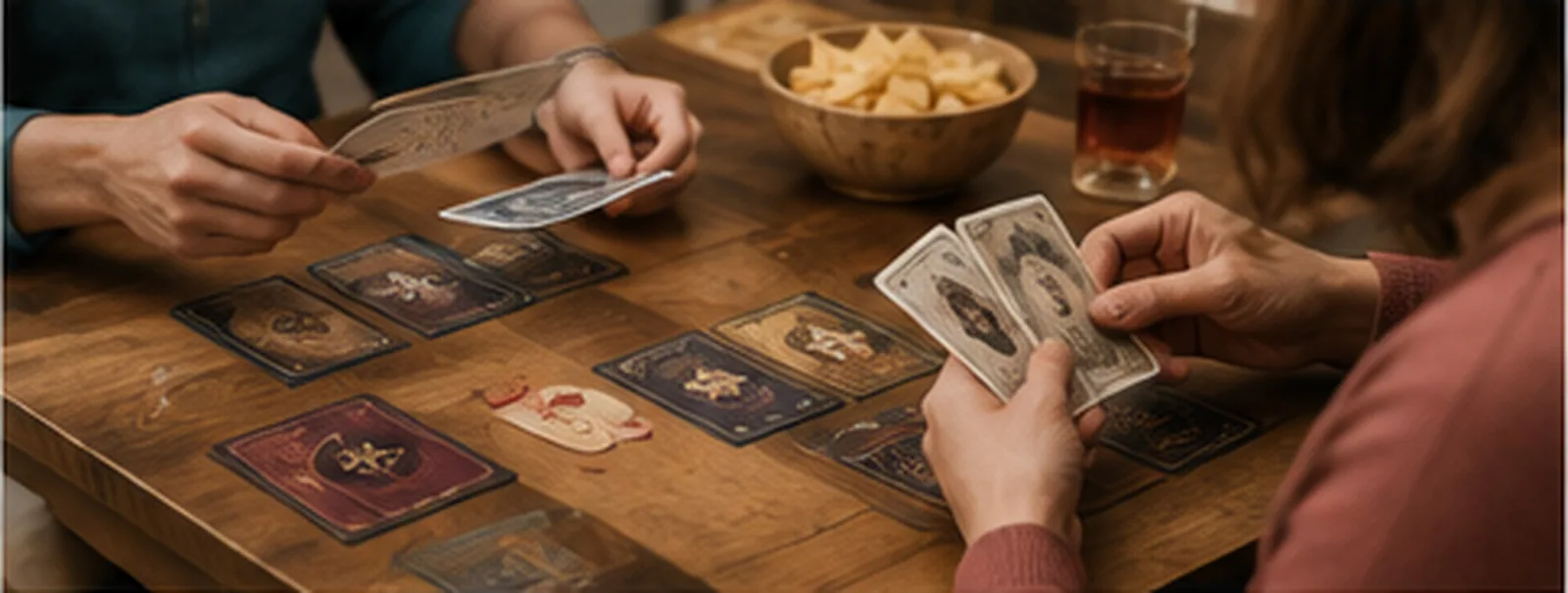
Cards and components
Core board with a blue or black core, linen embossed or smooth, cornered to a specified radius.
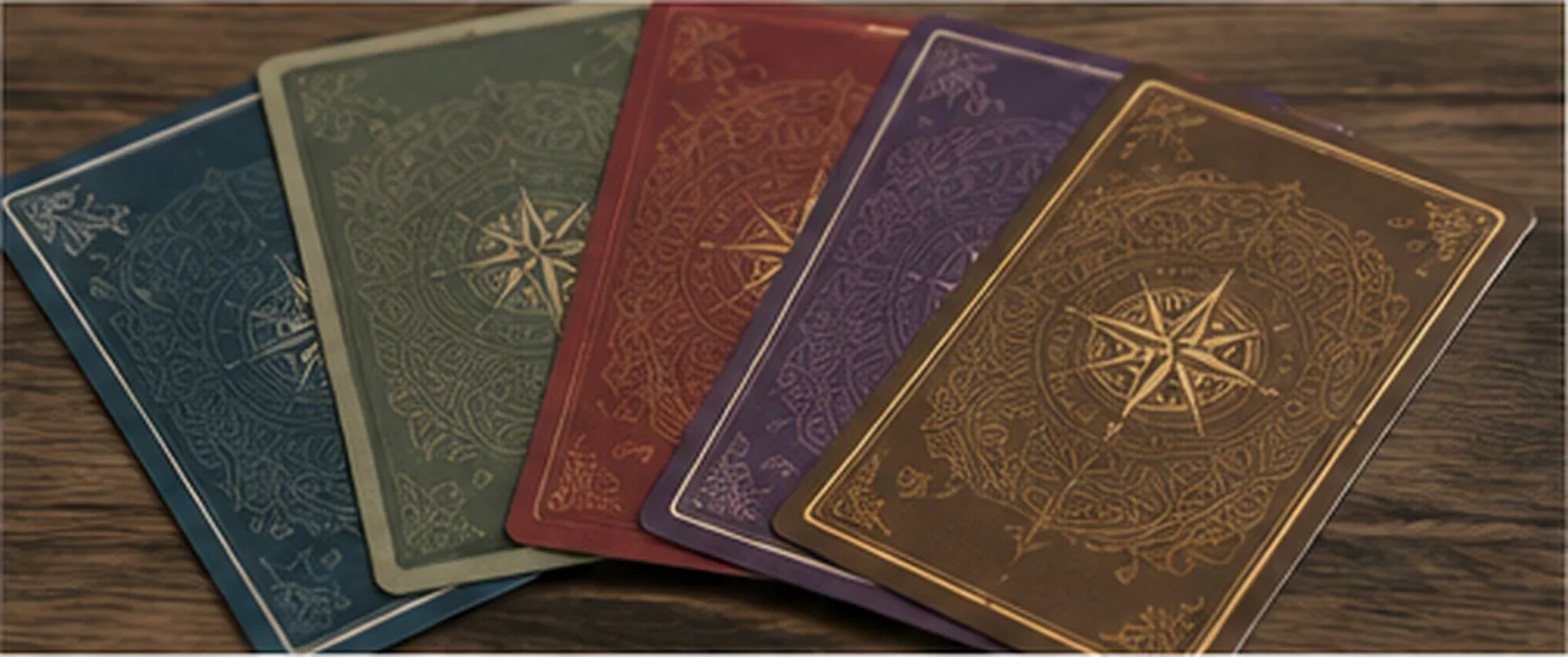
One patterned back, five colorways.
The same artwork run in five inks off one set of plates, so a fifth version is a plate change rather than a new job.
What we print
Six formats of card and deck printing, all on the same board and finishing options, and custom board game boxes come off the same tooling family as the deck boxes. A publisher running more than one of them gets one specification across the range, and several SKUs can be combined across one bulk run.
Playing card decks
Standard 54 card decks on core board, linen embossed or smooth, in a tuck end box with the artwork wrapping the seam.
Trading card games
Set runs with per card artwork, collated to the sequence you supply, with booster and starter packing to your break down. Trading card packaging runs from the same specification as the cards inside it.
Tarot and oracle decks
Oversize 2.75 x 4.75 in (70 x 120 mm) cards with gilded or plain edges, boxed in a rigid two piece where the deck is sold as an object.
Flash and educational decks
Short run decks on heavier board for repeated handling, with rounded corners and a hang tab box for peg display.
Board game boxes and inserts
Custom game boxes: the box, the lid and the seated insert that holds cards, tokens and a rule book without them moving in transit.
Rule books and inserts
Folded or saddle stitched rule books printed on the same sheet as the box artwork, so the color matches across the pack.
The other line in this group is printed vinyl placemats, proofed against the same color standard on a vinyl line rather than in the carton plant.
From artwork to a sealed deck
Cards and their box run the same route through the plant as any carton, with two additions: the cards are collated to sequence before they are wrapped, and the box is checked against a made up deck rather than against a drawing. That route runs through a 90,000 square foot plant in Ahmedabad on a Komori six-color offset line with Bobst die cutting and Bobst folder gluing, certified to ISO 9001, ISO 14001 and ISO 45001 and operating to BRCGS packaging standards and SEDEX, and every order leaves with its completed test report, Certificate of Conformance, invoice and packing list.
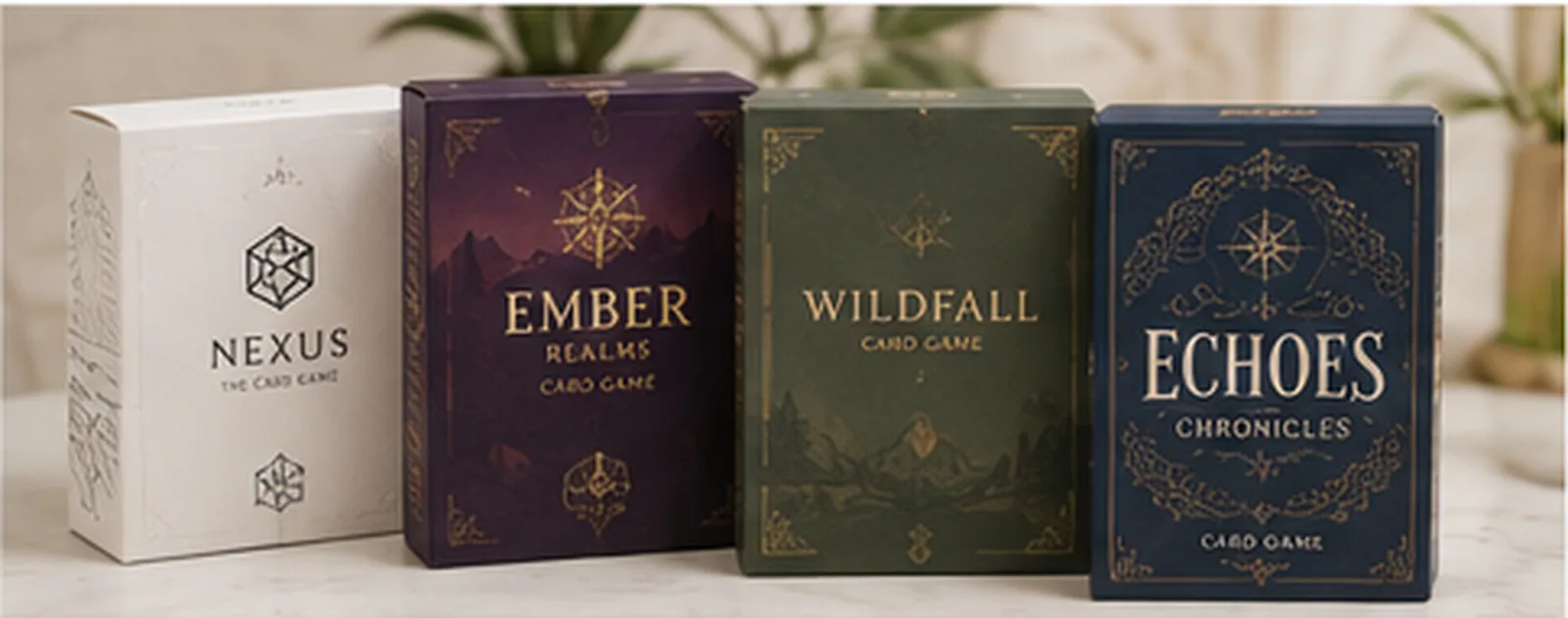
Structural proof of the box
The tuck is cut and folded on the production board and a real deck is seated in it. Fit is settled here, before the artwork is committed to a dieline that cannot move. The blank is drawn to the caliper of the board it will run on, because a tuck drawn to a nominal thickness and cut on a heavier board either crushes the deck or rattles it.
- Cut on
- Production board, not proofing stock
- Checked against
- A made up deck
- Structural design
- Included, no separate charge
- Changes
- Free at proof stage
Color proof on the production board
Both the cards and the box are proofed on the material they will print on, and signed off by you. Color on a linen embossed face does not read as it does on a coated tuck, so there are two proofs. What you approve becomes the production reference, held under controlled viewing conditions.
- Substrate
- The production board, both proofs
- Viewing
- D65 and TL84
- Sign off
- Yours, before the run
- Held as
- The reference for every reorder
Print, six color Komori
Cards and box artwork run on the same offset line, with closed loop density control holding the run. Sharing a press keeps the box and the card the same red. Ink is preset from the prepress data, and every sheet is inspected in line against the same standard.
- Press
- Komori Lithrone GL-637
- Speed
- To 15,000 sheets per hour
- Color control
- PDC-SG closed loop
- Inspection
- PQA-S V5, in line
Coat, laminate or linen emboss
The card face takes its finish here: linen texture, matte or gloss. The box takes lamination and any foil, emboss or spot UV in the same pass through finishing. Curing is on press, so a sheet can go to the die cutter without waiting a shift to dry.
- Curing
- UV and IR, on press
- Card face
- Linen emboss, smooth matte, gloss
- Box film
- Matte, gloss or soft touch
- Effects
- Foil, emboss, spot UV, drip off
Die cut and round the corners
Cards are cut and cornered on a rotary tool, the box blank on the platen. Corner radius is specified per job, because the corners are where a shuffled deck wears first. Registration is held to the printed sheet across the whole run, and the blank comes off the cutter already stripped and separated.
- Die cutter
- Bobst Novacut
- Registration
- AUTOPLATEN
- Changeover
- CENTERLINE
- Output
- Inline stripping and blanking
Collate to sequence and count
Decks are assembled to your card order, counted and verified. A set with an uneven distribution is built to the table you supply, not to an even split.
- Sequence
- Your supplied card order
- Distribution
- Booster and starter, to your table
- Imposition
- To the run you need per card
- Count
- Verified before wrapping
Glue the box, seat the deck, wrap and pack
The blank is glued on the folder gluer, the deck is seated, and the pack is cellophaned, shrink wrapped or left plain before casing. Creases are pre-broken before the fold, so a tuck opens as designed on the first try. Every order ships with its test report, Certificate of Conformance and packing detail by master case.
- Folder gluer
- Bobst Novafold
- Glue
- Controlled bead
- Creases
- Pre-broken before folding
- Wrap
- Cellophane, shrink or plain
The deck and box specification, in full
What a quote is built from. If you already run a deck, the fastest route is to send one: every line of the specification can be measured off it.
Cards
- Stock
- 300 to 350 gsm core board
- Core
- Blue core or black core
- Finish
- Linen emboss, smooth matte, gloss varnish
- Sizes
- Poker 2.5 x 3.5, bridge 2.25 x 3.5, tarot 2.75 x 4.75 in
- Corners
- Rounded to a specified radius, or square cut
- Backs
- One shared back, or per card artwork
The box
- Structure
- Tuck end carton, or two piece rigid
- Board
- SBS or FBB, caliper to the deck depth
- Six-color offset, inside printing available
- Finishing
- Foil, emboss, soft touch, spot UV, drip off
- Tamper
- Tear strip or glued end seal
- Fit
- Checked against a made up deck, not a drawing
Collation and packing
- Collation
- To your supplied card sequence
- Distribution
- Booster and starter break down to your table
- Wrap
- Cellophane, shrink or unwrapped
- Casing
- Master case, packing detail per case
- Inserts
- Trays, separators, rule books on the same sheet
Commercial
- Lead time
- 15 to 20 days new, 8 days repeat
- Delivery
- Delivered to your address, duty and shipping in the price
- Structural design
- Included, no separate charge
- Proofing
- Structural and color, changes free at proof stage
- Documents
- Test report, Certificate of Conformance, invoice, packing list
- Card stock
- 300 to 350 gsm
- Core board with a blue or a black core layer
- Card finish
- Three finishes
- Linen emboss, smooth matte or gloss varnish
- Deck sizes
- Poker, bridge, tarot
- 2.5 x 3.5, 2.25 x 3.5 and 2.75 x 4.75 in
- Deck box
- Tuck or rigid
- Tuck end carton, or a two piece rigid box
- Packing
- Wrapped or plain
- Cellophane, shrink wrapped or unwrapped
- Six-color offset
- Printing on the inside of the blank available
Card game printing questions
Yes, both, in the same building and on the same order. The tuck box is a tuck end folding carton, which this plant has made since 1962, and the deck runs on the same six-color offset line ahead of it. Buying both here settles the fit: the box is checked against a made up deck, not a drawing.
Core board, 300 to 350 gsm, with a blue or black core layer between the two printed faces. The core is what stops a strong light showing the face of the card through the back, and black core is the opaque option publishers specify for competitive play. Send a card you like the feel of and it can be matched.
Linen emboss, smooth matte and gloss varnish. Linen is the woven texture most playing card decks use and it is the one that shuffles best over a long life. Matte reduces glare under a table lamp and photographs well. Gloss is the brightest of the three and the least forgiving of handling, so it suits a collector deck more than a played one.
Poker 2.5 x 3.5 in (63 x 88 mm), bridge 2.25 x 3.5 in (57 x 89 mm) and tarot 2.75 x 4.75 in (70 x 120 mm) are the standing sizes and need no tooling. Anything outside them is cut to a drawing, which costs one cutting tool and one extra proof round.
A playing card box is drawn from the card size and the depth of the deck, so there is no single figure, and for the same reason there is no playing card box template to download. Two of the three dimensions follow the card: a poker deck is 2.5 x 3.5 in (63 x 88 mm) and its tuck box is drawn around that, bridge cards are 2.25 x 3.5 in (57 x 89 mm) and the box narrows with them, and tarot is 2.75 x 4.75 in (70 x 120 mm). The third follows the card count and the stock, so a 54 card deck and a 120 card set at the same card size take different boxes. The blank is also drawn to the caliper of the board it will run on, because a tuck drawn to a nominal thickness and cut on heavier board either crushes the deck or rattles it. Send the card size and the card count and the box comes back dimensioned, then a structural proof is cut and folded with a real deck seated in it before anything is committed.
Foil, emboss, soft touch lamination, spot UV and drip off, singly or together, plus printing on the inside of the blank. Structurally the choice is a tuck end carton, a tuck end with a tear strip for a sealed retail deck, or a two piece rigid box where the deck is sold as an object. Each of those changes the blank, so it is settled before the dieline is drawn.
To the sequence you supply, counted and verified before wrapping. A set with per card artwork is imposed so the sheet carries the run you need rather than an even number of every card, and boosters and starters are packed to your break down. Send the distribution as a table of card numbers against quantities and it is followed exactly.
Bulk production runs. Plates, tooling and make-ready are fixed per run, so the cost per deck falls as the run grows and the specification is priced against the volume you plan. A publisher running several SKUs can combine them across one run and hold the setup once. Send the run and the SKU count and a planner prices against it.
New orders run 15 to 20 days in production, from approved artwork and a signed off proof. Repeat orders run 8 days, because the settings are stored against the part number and a reorder skips setup. Shipping time is additional and depends on destination.
Yes, two proofs. A structural proof of the box is cut and folded so you can seat a real deck in it, and a color proof is produced on the production board so the artwork is signed off on the material it will print on. Structural design is included, and changes at the proof stage cost nothing.
Cellophane wrapped, shrink wrapped or unwrapped, then cased. Cellophane is the retail-ready option and it is the one to choose if the deck goes to a shelf; shrink is the plainer seal for direct fulfillment; unwrapped suits a deck that goes into a larger game box on your side. Every order ships with its completed test report and Certificate of Conformance, the invoice, the packing list and packing detail by master case.
Pricing typically runs 20 to 30 percent below comparable US supplier quotes for the same specification, and the difference comes from manufacturing cost rather than from board grade or finishing. The quote is one landed price: the cartons, tooling, structural design, proofing, the documents that travel with the order, import duty, shipping and delivery to your address, in the US or anywhere else. Nothing is quoted on top of it later.
What to send
A card count, a card size and a photograph of the box you use today. That is enough for a first price. If the deck does not exist yet, the card dimensions alone are enough to start the box.
Send the deck list and the box you have now
A card count, a size and the box you are using today are enough for a first price. If the deck does not exist yet, the dimensions of the cards are enough to start the box.
Get a quote