Skip to content

MACHINERYSix color offset press with UV and IR curing

Komori Lithrone GL-637

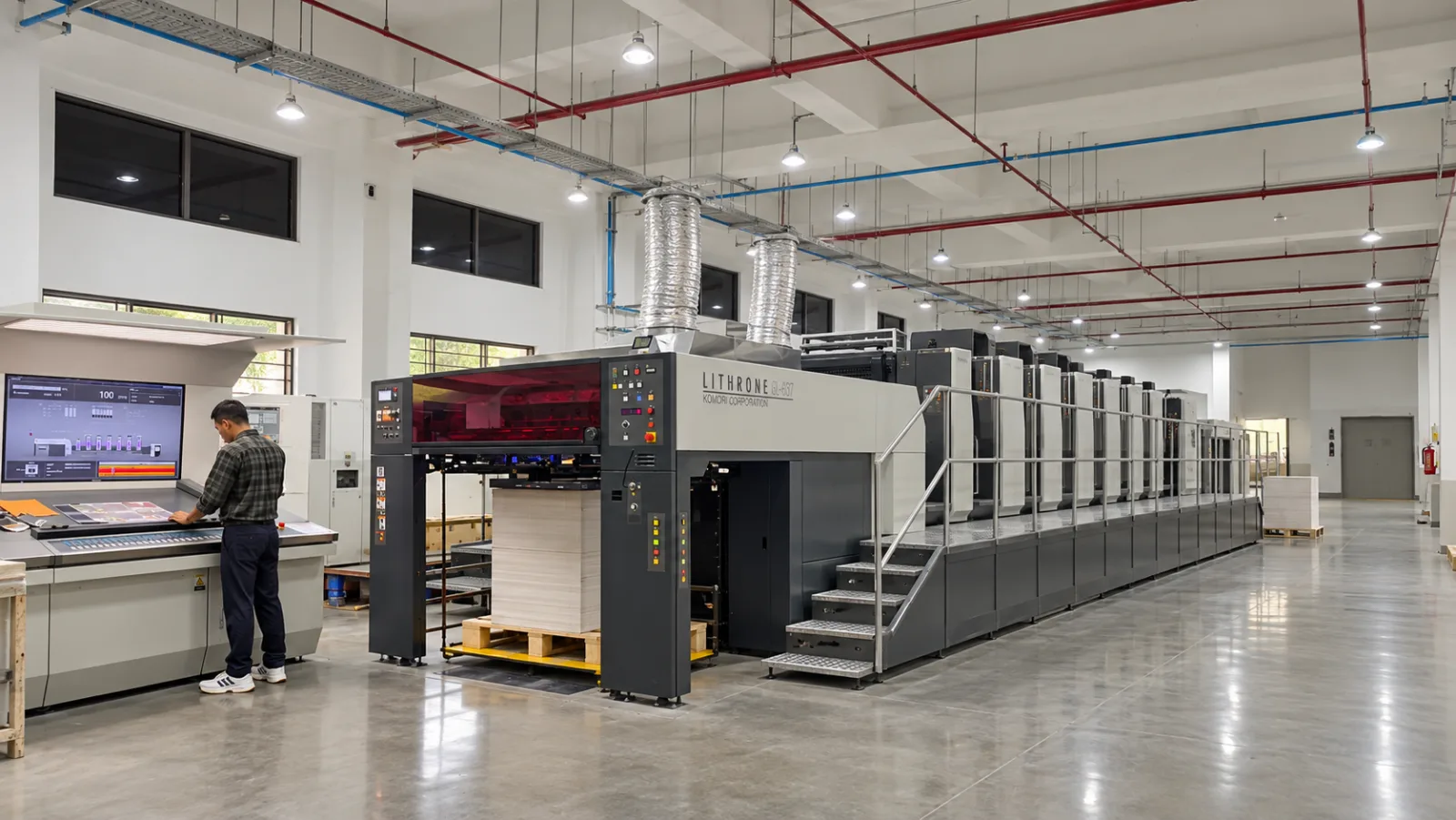
The Komori Lithrone GL-637 is the offset press every Eastface carton is printed on: six units running to 15,000 sheets an hour, with closed-loop spectral density control reading the color bar and correcting ink balance while the run is happening.

Four units carry process color and two stay free for spot inks. Below is the press drawn as the sheet meets it, the specification the plant states, and what each line of that specification decides about your carton.

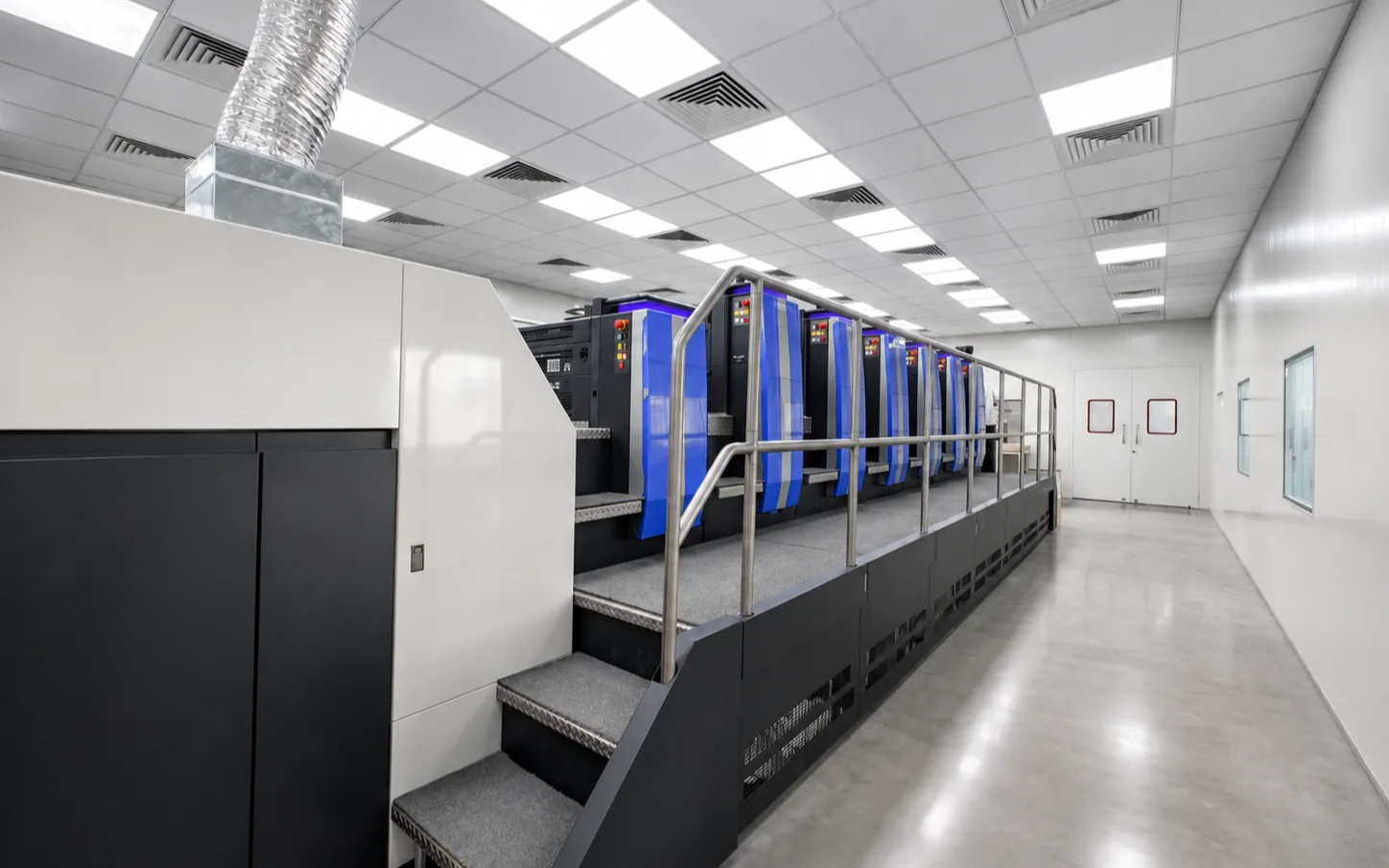
The Komori Lithrone GL-637 in the press hall, its six printing units receding in a row down the operator walkway.

The press hall

Configuration
Six color offset
Speed
To 15,000 sheets per hour
Color control
PDC-SG, closed loop

What comes off the press

Three things this press decides, photographed on our own floor.

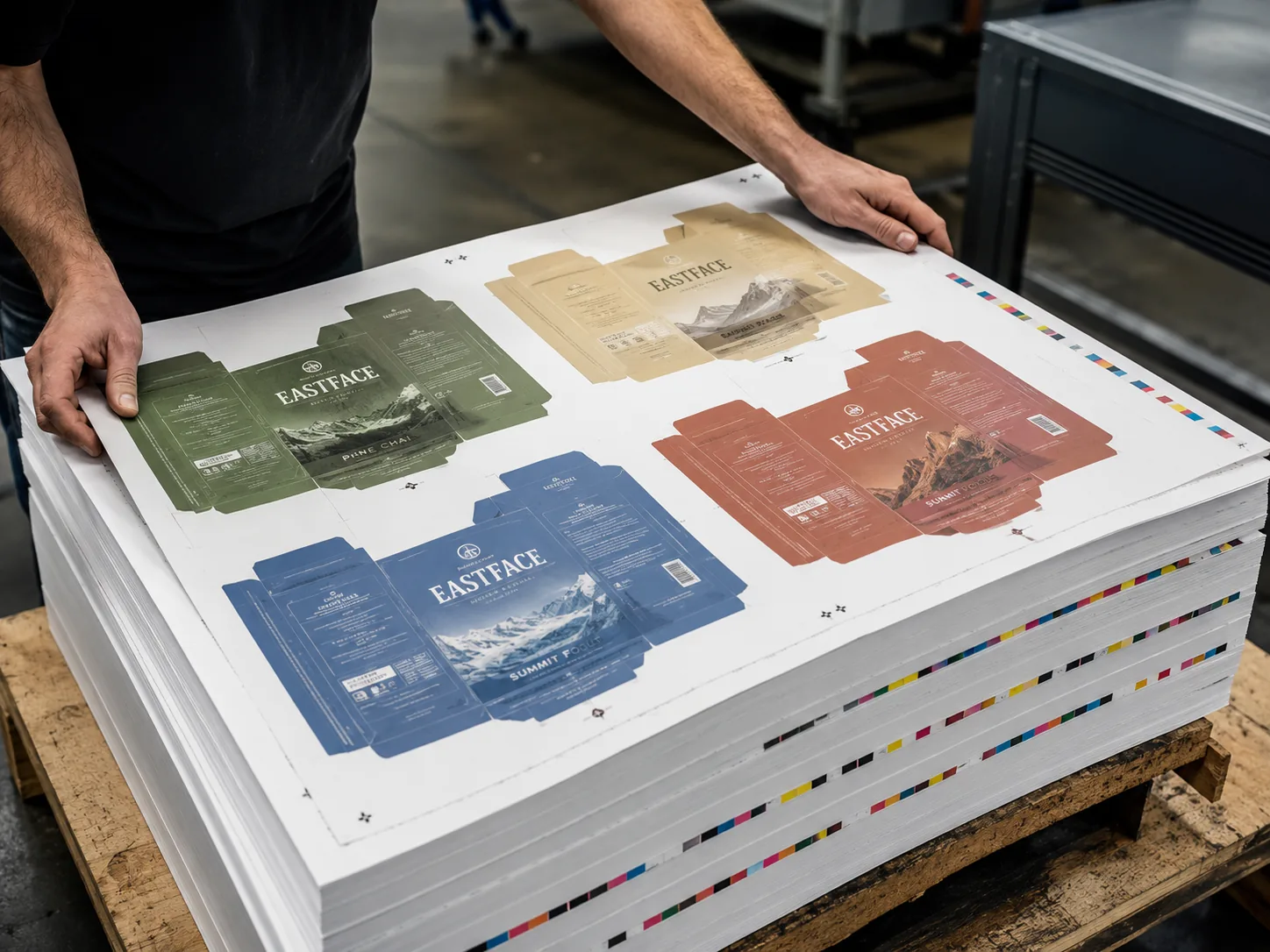
  • A printed press sheet lifted from the pile on the pallet, four carton liveries imposed across it and the color bar running down the edge of the stack.
    Cured at the press, so the pile moves to die cutting the same shift rather than standing in racks for a day. The color bar down the edge is what the density control reads.
  • Two printed sheets from runs a year apart laid overlapping under a D65 light box, the approved shade card standing between them and a gloved hand holding the second sheet down.
    Two runs a year apart, checked against the same retained shade card. Closed-loop density control holds both to it.
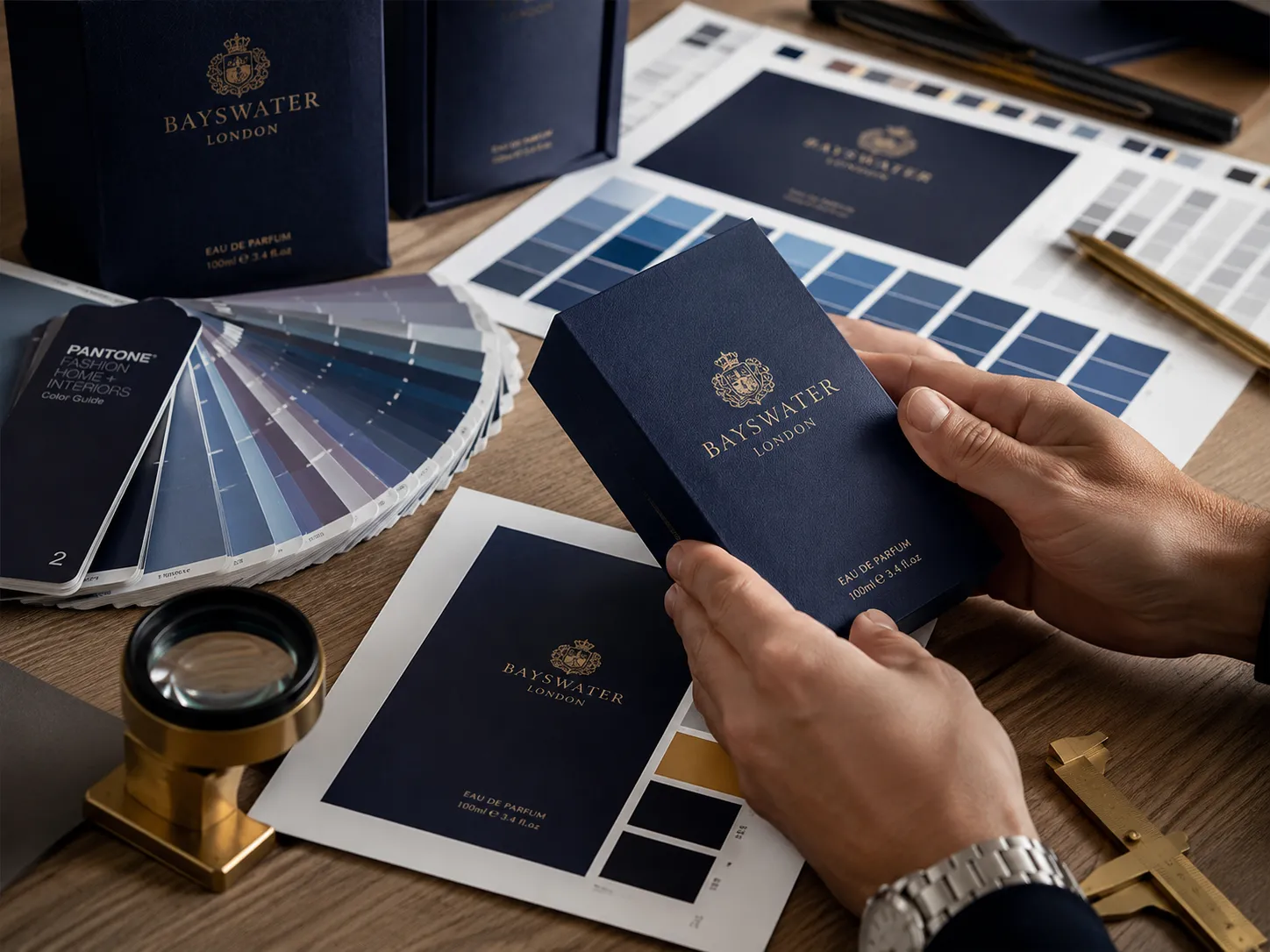
  • A hand holding a loupe over a printed dieline proof on the prepress bench, the Pantone and foil shade strip running along the foot of the sheet and the finished tea carton standing beside it.
    The approved proof. CIP3 and CIP4 presetting data leaves this file with the plates and reaches the press ahead of the first sheet.

The press, from the pile to the delivery

One sheet, six units and one pass. Every station below is on the specification further down this page, drawn where it sits on the machine.

The Komori GL-637 drawn as a line: the feeder pile and feed board, six printing units with their plate, blanket and impression cylinders on one sheet path, four with process ink ducts and two with spot ink ducts, then the UV and IR curing hood, the inline inspection camera and the delivery pile.010203040506

The GL-637 as configured on our floor. No coating unit: there is none on the press.

01Feeder

Board is lifted a sheet at a time off the pile and squared against the front lays. A sheet that enters out of square prints out of register on every unit after it.

The Komori Lithrone GL-637 standing alone in the press hall, a pile of board at the feeder and its units running down a clear floor, with an operator at the console on the left.

The plant runs one press. There is no second line and no third-party printer. Nothing in the carton line is subcontracted.

One press, no second line

The specification, and what each line decides

The same six rows the homepage press room band publishes, with what each line decides for your carton beside it.

  1. Configuration

    Six color offset, UV and IR curing

    Four units carry process color and two stay free for Pantone spot inks, so a brand color prints as the ink itself instead of a four-color build. A five or six color job runs in one pass, with one registration.

  2. Speed

    To 15,000 sheets per hour

    A long run takes hours of press time, not days, so a standard lead time holds when a job moves up the schedule. Plates and make ready are a cost per run, so the price per carton falls as the run grows.

  3. Color control

    PDC-SG spectral print density, closed loop

    The color bar is read on the sheet and ink balance is corrected during the run, so drift is caught in sheets rather than in thousands. It corrects against the shade card you approved, so a reorder matches the first run.

  4. Inline inspection

    PQA-S V5

    Every sheet is checked as it prints, not sampled at the end. A defect is found on our floor, not on your filling line.

  5. Make ready

    KHS-AI with stored job parameters

    A repeat returns to the settings the approved run used instead of being dialed in again by hand. The second run of an SKU does not need a second approval cycle.

  6. Prepress data

    CIP3 and CIP4 ink presetting

    Ink keys are set from your artwork before the first sheet is pulled, not by an operator judging the first sheet. There is less waste at the start of the run, and saleable sheets come sooner.

None of the six is optional equipment or switched on for a particular job. They run on every job.

What the two spare units run

The specification has one row for six units. The fifth and sixth can carry any of these, each on the same sheet in the same pass.

What the fifth and sixth units of the GL-637 run, and what each is for
On the spare unitsHow it runsWhat it is for
A Pantone spot inkMixed to the approved shade card and laid from its own unit, rather than built out of the four process inks.A brand panel color that holds across a family of SKUs printed months apart.
An opaque whiteLaid as an underbase on one spare unit, with the process colors printing over it further down the press.Color that reads true on metallized board or a kraft liner instead of sinking into it.
A spot varnishRun inline from a spare unit, to the same file the plates were made from.A matt panel with a gloss detail sitting on it, in one pass and without a second machine.
An opaque behind a windowA block of opaque ink laid behind the aperture before the panel colors go down.A window carton where what a shopper sees through the aperture is the product, not the inside of the pack.

The plant runs one press with six units, and a five or six color job runs on it in one pass.

Why the press has six units

A four-color press prints cyan, magenta, yellow and black, and every color on the carton is built out of those four. That works for a photograph. For a brand color, a Pantone built out of process inks is an approximation, and it moves with the paper, the coverage and the press.

Six units means the four are still there and two more are free. A brand color runs as the spot ink it was specified as, mixed and matched to the shade card, and it holds across a family of SKUs printed months apart. On a supplement carton that is the panel color a shopper recognizes on the shelf.

A five or six color job on a four-color press is two passes through the machine: the sheet is registered, dried and handled twice, and the second pass can land a fraction off the first. Here it is one pass, with one registration.

The two spare units also run a spot varnish, an opaque white on metallized board or an opaque behind a window, in the same pass. They are on the press whether or not a job uses them.
How color is checked and retained
Approved shade cards filed by part number, pulled and laid out under controlled viewing light on the color bench.

Printed here

This press is on the floor of one plant in Piplaj, on the edge of Ahmedabad, with the die cutter and the folder gluer behind it in the same envelope. A sheet is printed, coated, die cut, folded and glued without leaving the building, and a job keeps one specification and one part number from plate to pallet.

Certificates for every mark above are available on request, and a factory tour is the quickest way to check any of it.

Plant
90,000 sq ft, Ahmedabad
Press
Komori Lithrone GL-637
Die cutting
Bobst Novacut
Folding and gluing
Bobst Novafold
Subcontracted
No part of the carton line
Printing since
1962
  • ISO 9001
  • ISO 14001
  • ISO 45001
  • BRCGS
  • SEDEX
  • FSC compliant

The rest of the line

The press decides how a carton looks. What decides whether it works on your line is behind it, on the same floor.

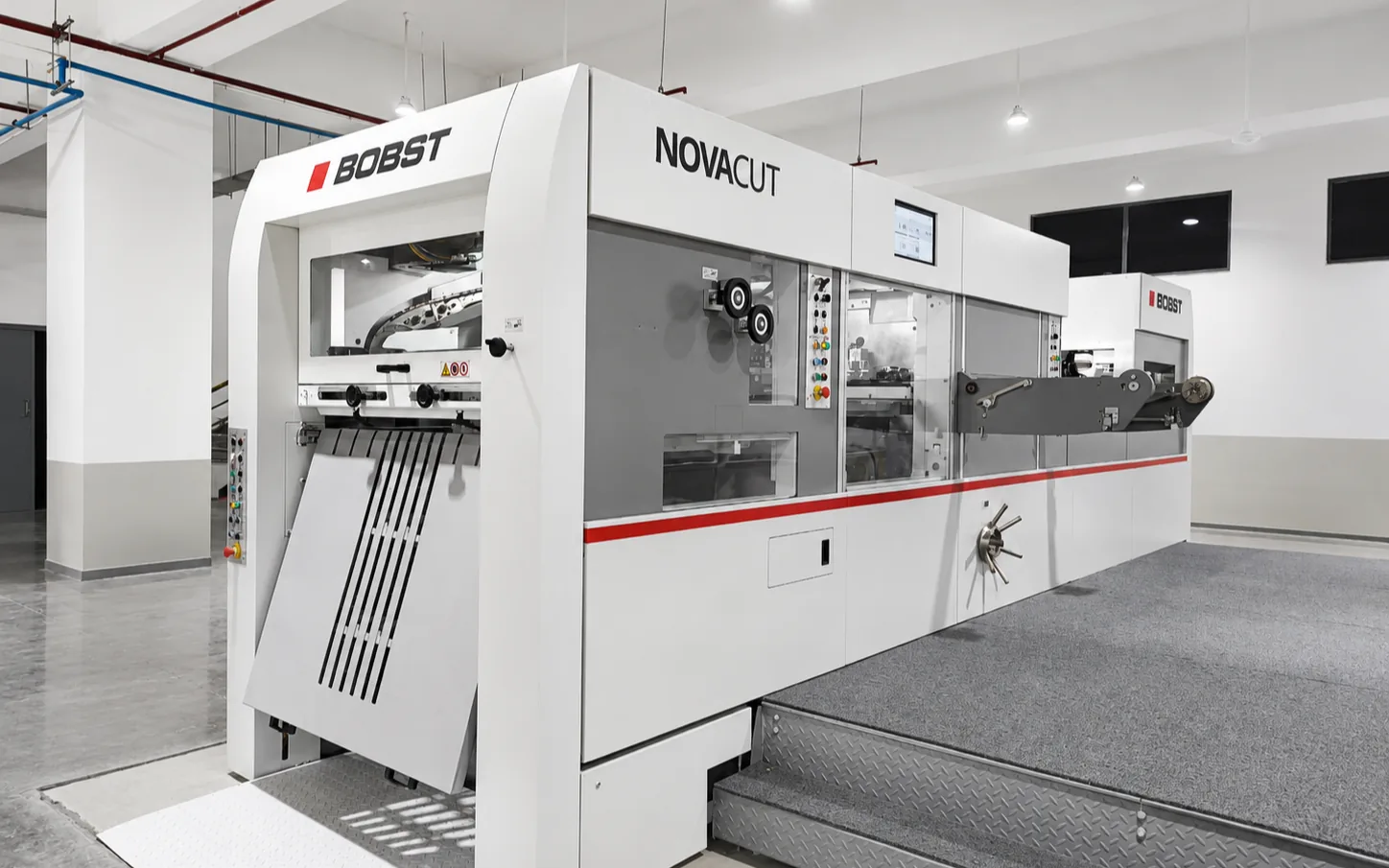
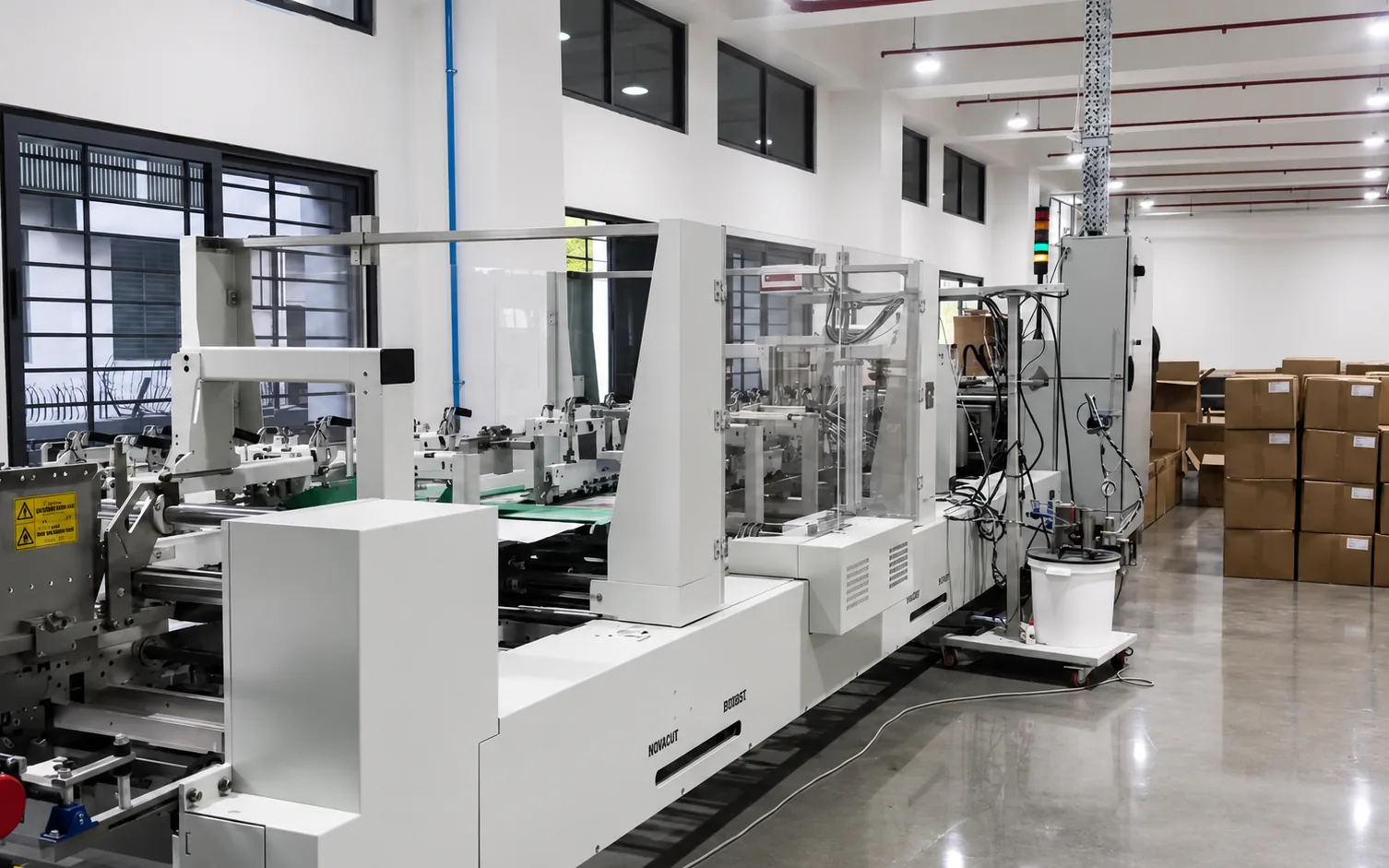
  • The Bobst Novacut platen die cutter on the plant floor, seen from the feeder end with the line running back to the delivery.

    Cutting and creasing

    Bobst Novacut

    The automatic platen die cutter, cutting and creasing to the approved dieline with registration held across the run and stripping and blanking in line. It decides whether the carton erects.

    • AUTOPLATEN registration
    • CENTERLINE changeover
    • Inline stripping

    The full specification

  • The folder gluer line on the plant floor, belt conveyors and the glue station running back to stacked cases at the delivery.

    Folding and gluing

    Bobst Novafold

    The folder gluer, pre-breaking every crease and laying a controlled glue bead on straight line, crash lock, four and six corner and sleeve structures. It decides whether the seam holds.

    • Crash lock and corner trays
    • Crease pre-breaking
    • 5,000 stored jobs

    The full specification

  • The plant floor in Ahmedabad, the press hall and the converting line running back under a clean ceiling.

    The floor

    The plant

    The 90,000 square foot floor the three machines sit on, the route a sheet takes across it in seven stops, and the climate control that keeps the board stable.

    • 90,000 sq ft
    • Ahmedabad
    • Printing since 1962

    Inside the plant

Questions about the press

A Komori Lithrone GL-637. Every folding carton this plant ships is printed on it: six units at up to 15,000 sheets per hour, with UV and IR curing at the press, PDC-SG closed-loop spectral density control, PQA-S V5 inline sheet inspection, KHS-AI make ready from stored job parameters, and CIP3 and CIP4 ink presetting arriving from prepress with the plates. There is no second press and no third-party printer.

Yes, on the fifth and sixth units. Four units carry process color and two stay free for spot inks, so a brand color prints as the mixed ink itself, and a five or six color job runs in one pass. The approved shade card is retained against your part number and is the reference the press corrects against on every run that follows.

By measurement rather than by eye. PDC-SG reads the color bar on the sheet and corrects ink balance in a closed loop during the run, so drift is caught in sheets rather than in thousands. The proof and shade card you approved are retained against your part number, so the reorder is corrected against the same reference the first run was, and color is checked in the plant’s own laboratory under controlled viewing conditions before the lot is released.

Offset, on plates. Plates and make ready are a fixed cost per run, so at the volumes this plant runs the price per carton falls as the run grows. Offset is also where spot inks, heavy solids and the finishing on top of them print best. A version change across a family of SKUs is a plate change against one structural family rather than new tooling.

Yes. The clip at the top of this page is the press on our own floor. A factory tour starts with a thirty minute call, so the visit is planned around what is on press that week. Buyers who cannot travel are usually walked through the line on video against their own job.

Last reviewed

See it running

Every line of the specification above can be seen on the floor. Book thirty minutes and the tour is planned around your own carton. Landed cost runs 20 to 30 percent below a comparable US supplier quote.

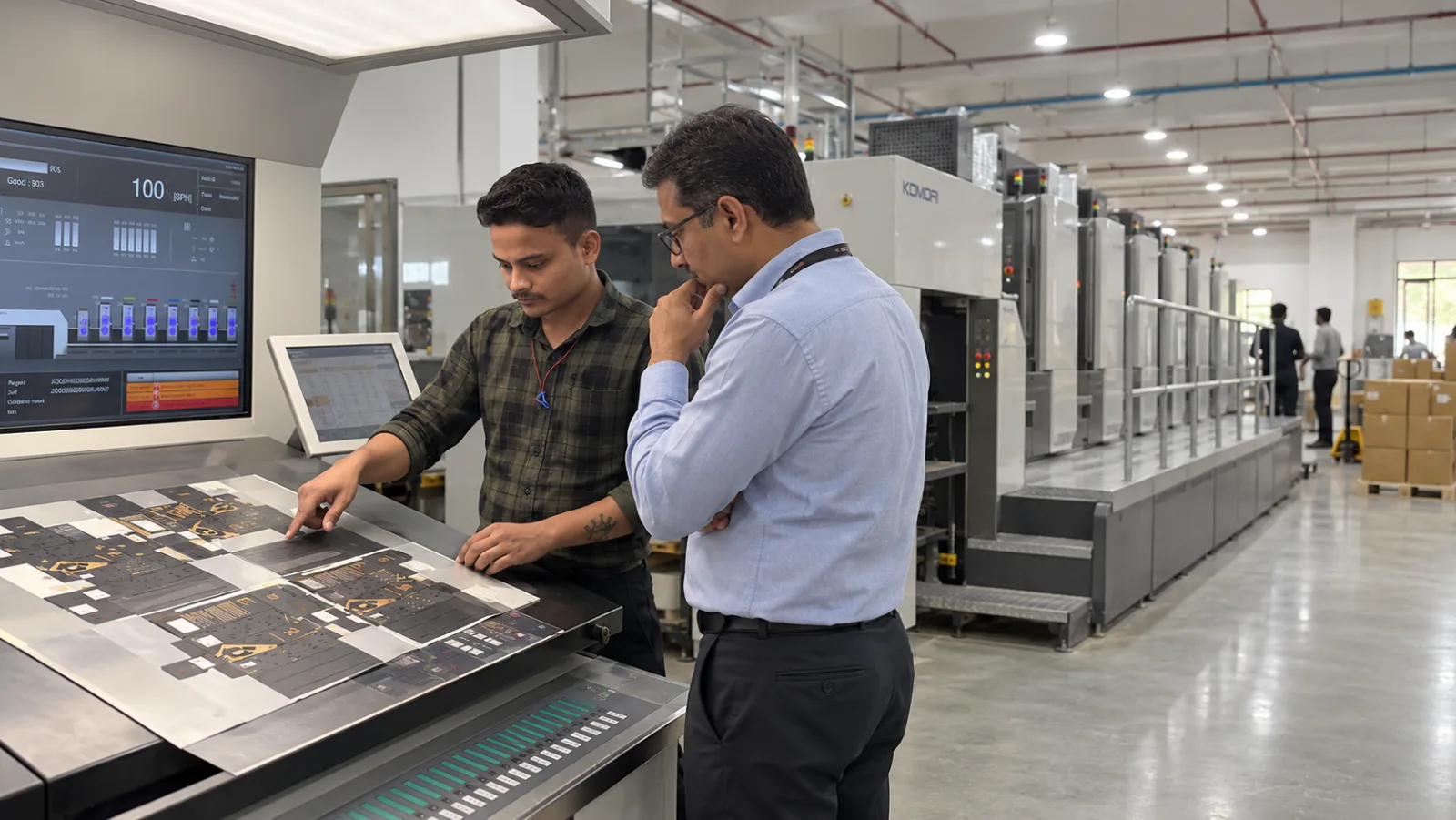
A visitor at the press console beside an operator, a printed carton sheet laid across the light table between them and the printing units of the press running down the hall behind.