SUPPLEMENTS AND NUTRITION
Supplement packaging
Supplement packaging is the printed paperboard carton that goes around a bottle, jar, pouch or stick pack. Bottle cartons, gummy boxes, powder cartons and sachet packs, built to the pack they go around. Carton pricing runs 20 to 30 percent below comparable US supplier quotes for the same specification, delivered to your door as one landed price.

Supplement brands revise panels more often than almost any other category on the shelf. We build cartons for lines that change constantly and still have to arrive identical.
Structural design before you commit, an approved shade card retained against your part number, and a completed test report and Certificate of Conformance with every lot.
- BUILT TO FIT
- PRINTED TO HOLD
- PROVEN PER LOT
- DELIVERED TO YOUR DOCK

Supplement packaging built around a pack you already bought
The bottle, the jar and the closure are specified and ordered long before the carton is. The carton is the part that has to accommodate them, so fitment is settled before the dieline is drawn.
Fitment: 1 to 2mm clearance per face. Tighter and the line jams; looser and the bottle rattles and the carton scuffs.
Board: 18 to 24pt on a filled supplement carton, chosen against the fill weight.
Structure: Straight tuck end to about 150cc, crash lock where the base has to carry a powder canister.
Free of charge: Send a sample or the dimensions and structural design returns an exact spec before any commitment.
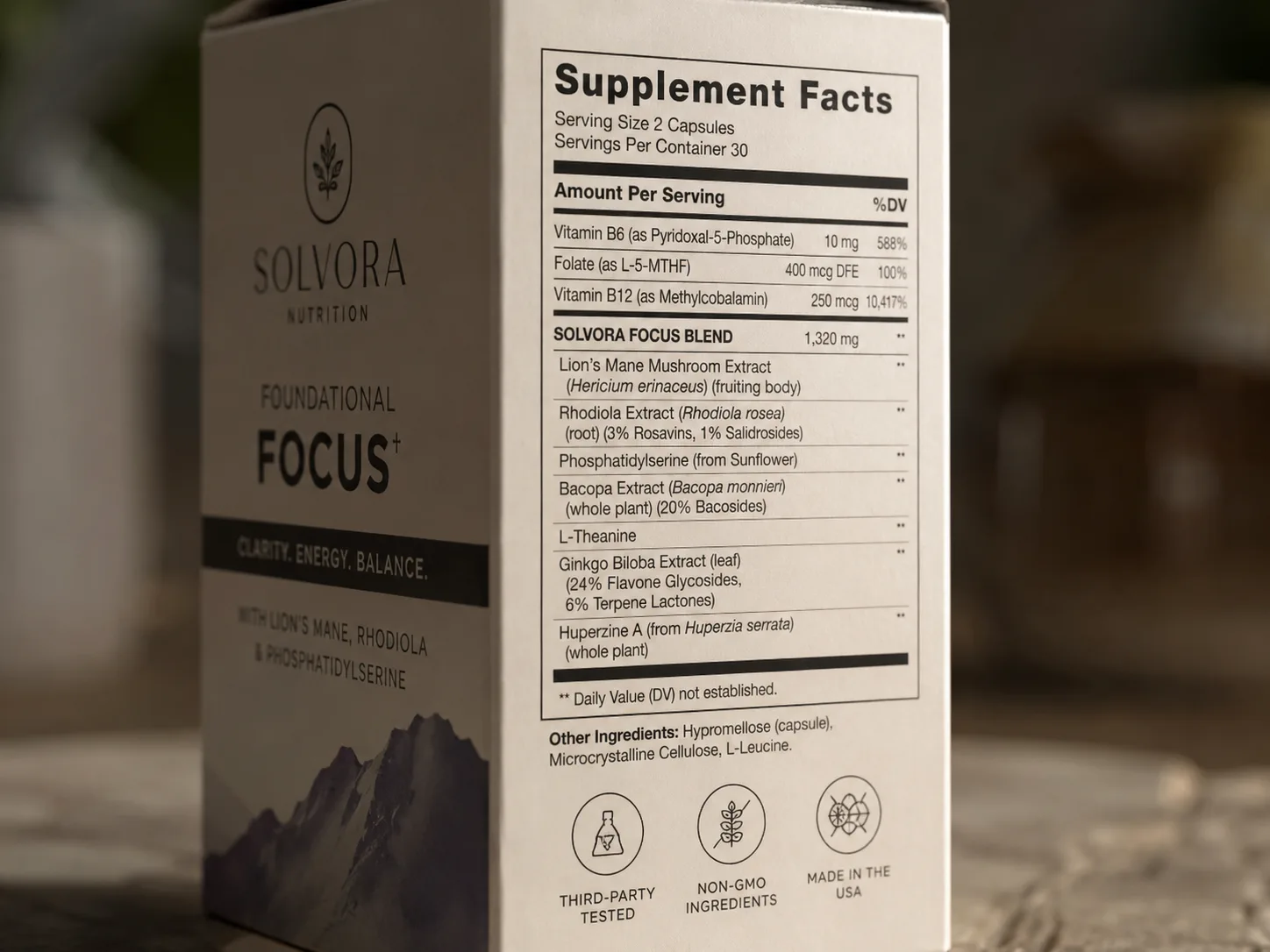
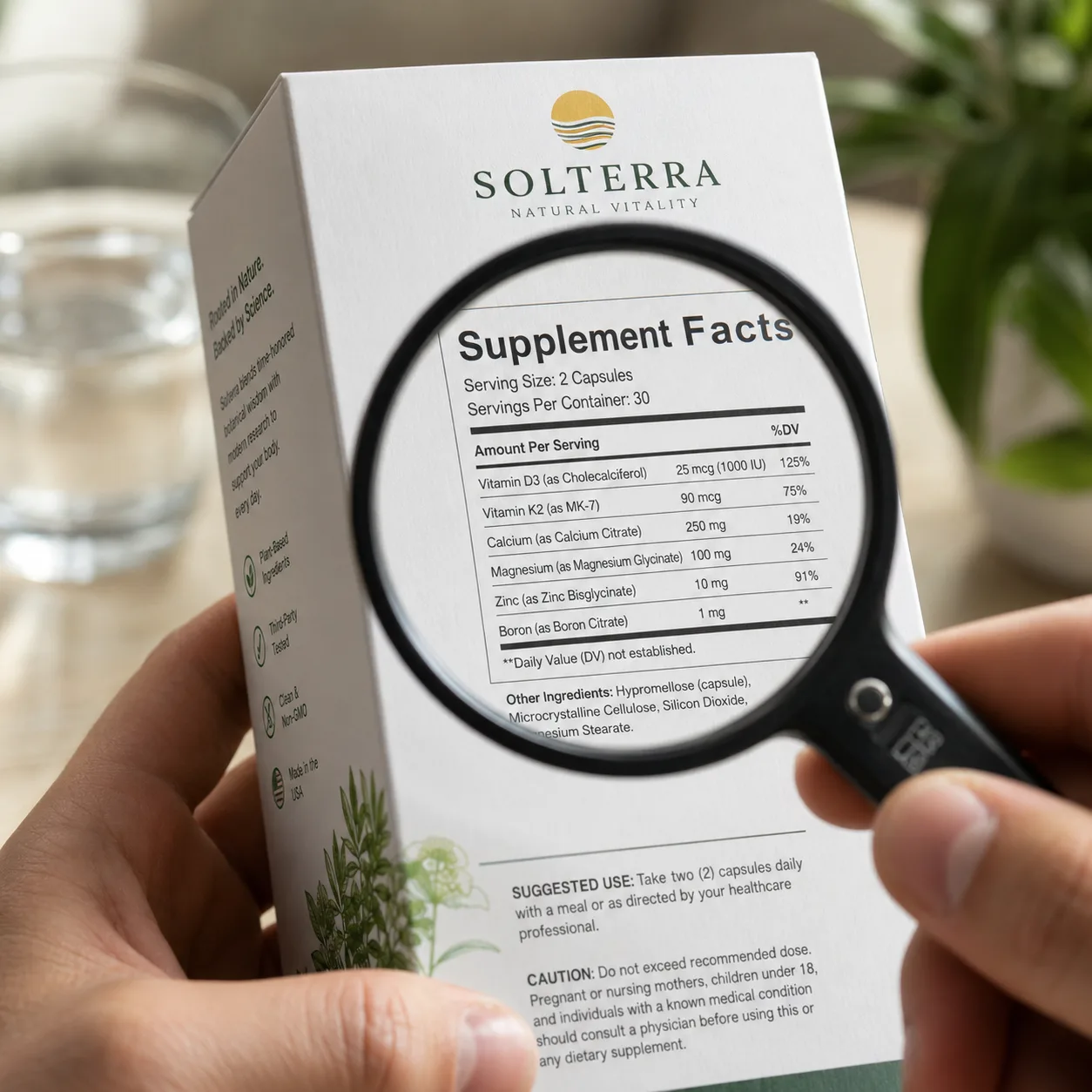
Printing the Supplement Facts panel
The Supplement Facts panel is a prescribed format under 21 CFR 101.36. Type sizes, hairline rules, the alignment of the amount-per-serving column: there is no design latitude in it. Your regulatory team owns the content, and the printer owns the reproduction.
Fine rules: Panels reproduce best in a single solid ink rather than a screen build. Below roughly 0.25pt is a risk on any offset line.
Registration: Held so the rules do not shift against the type, and checked against an approved proof before the run.
Barcode: UPC or GTIN at 80 percent magnification or greater, quiet zones preserved, verified before dispatch.
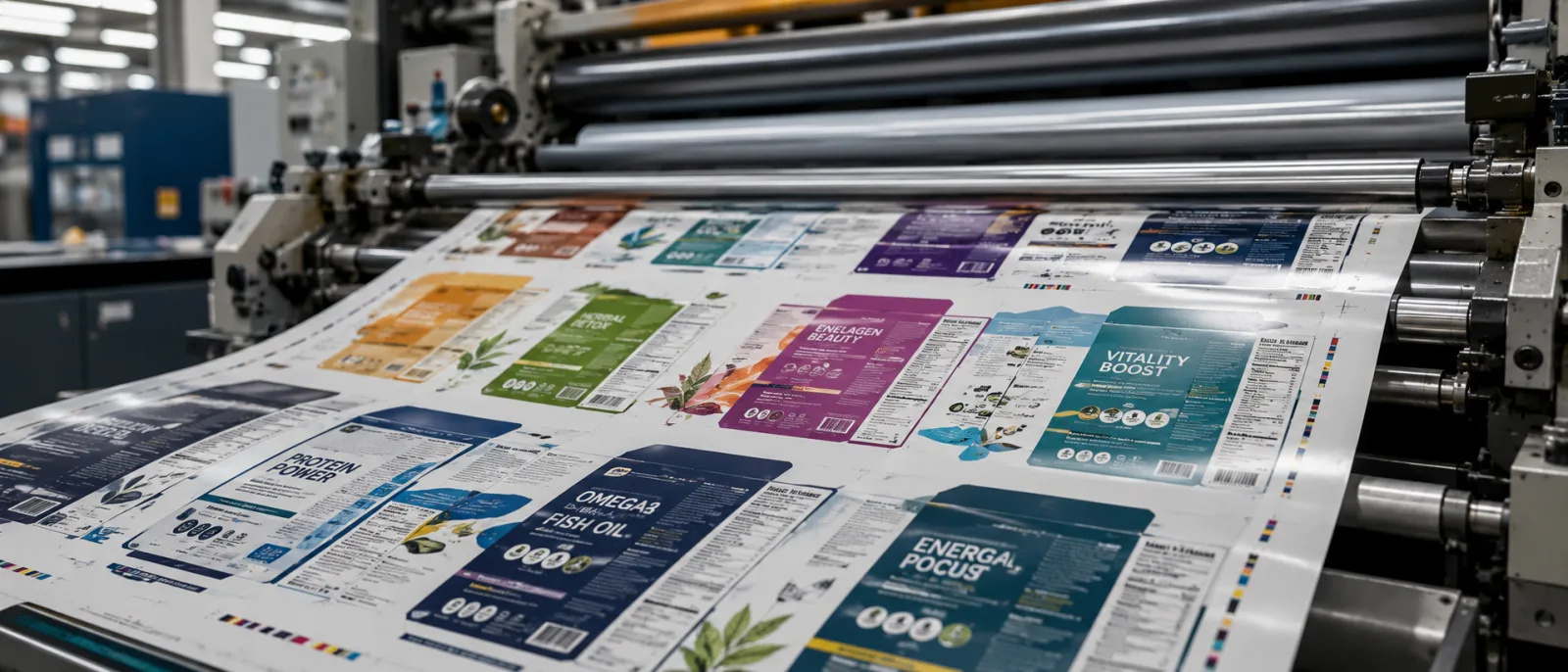
Consistent from the first run to the fortieth.
An approved shade card is retained against your part number, and every reorder is printed to it.
Four supplement carton formats
Custom supplement packaging starts with the primary pack. Match the carton to it first, then the board, then the finish.

Supplement bottle boxes
Cartons for 60cc to 250cc packer bottles, tuck or crash lock base.
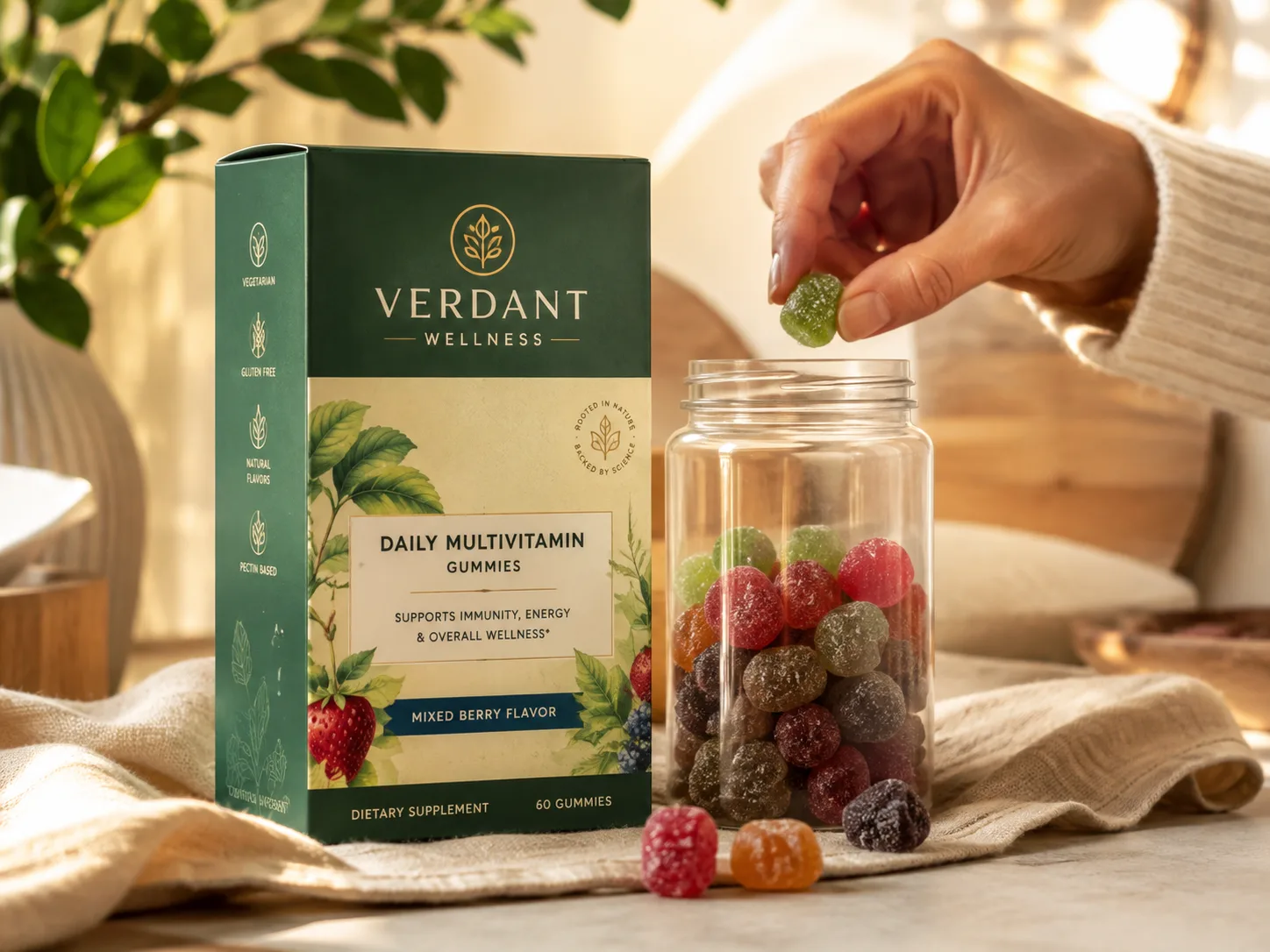
Gummy packaging
Wide-mouth jars, pouches and flow-wrapped sticks, with window options.
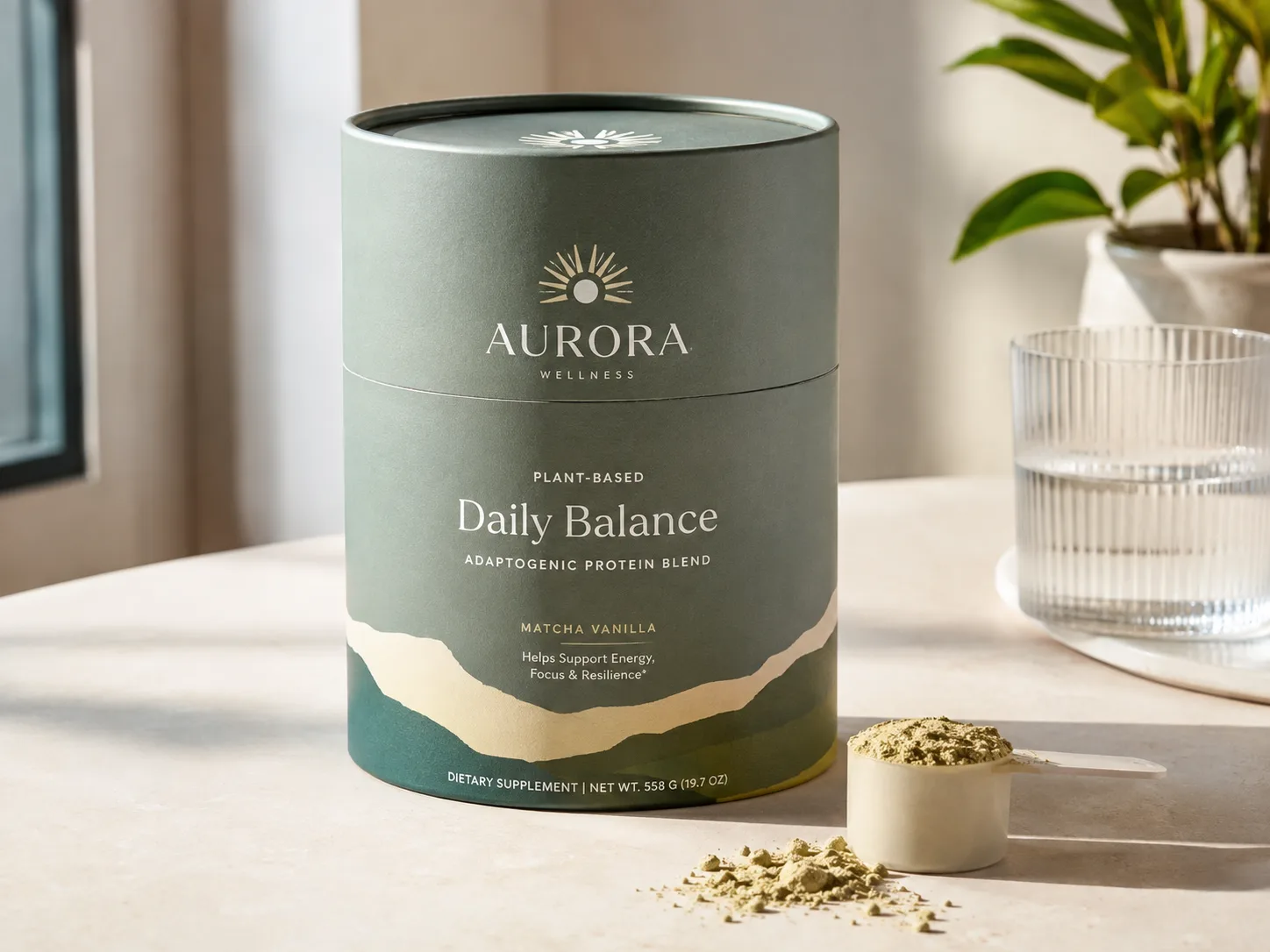
Protein powder packaging
Canisters, tubs and bag-in-box, where bottom strength governs.
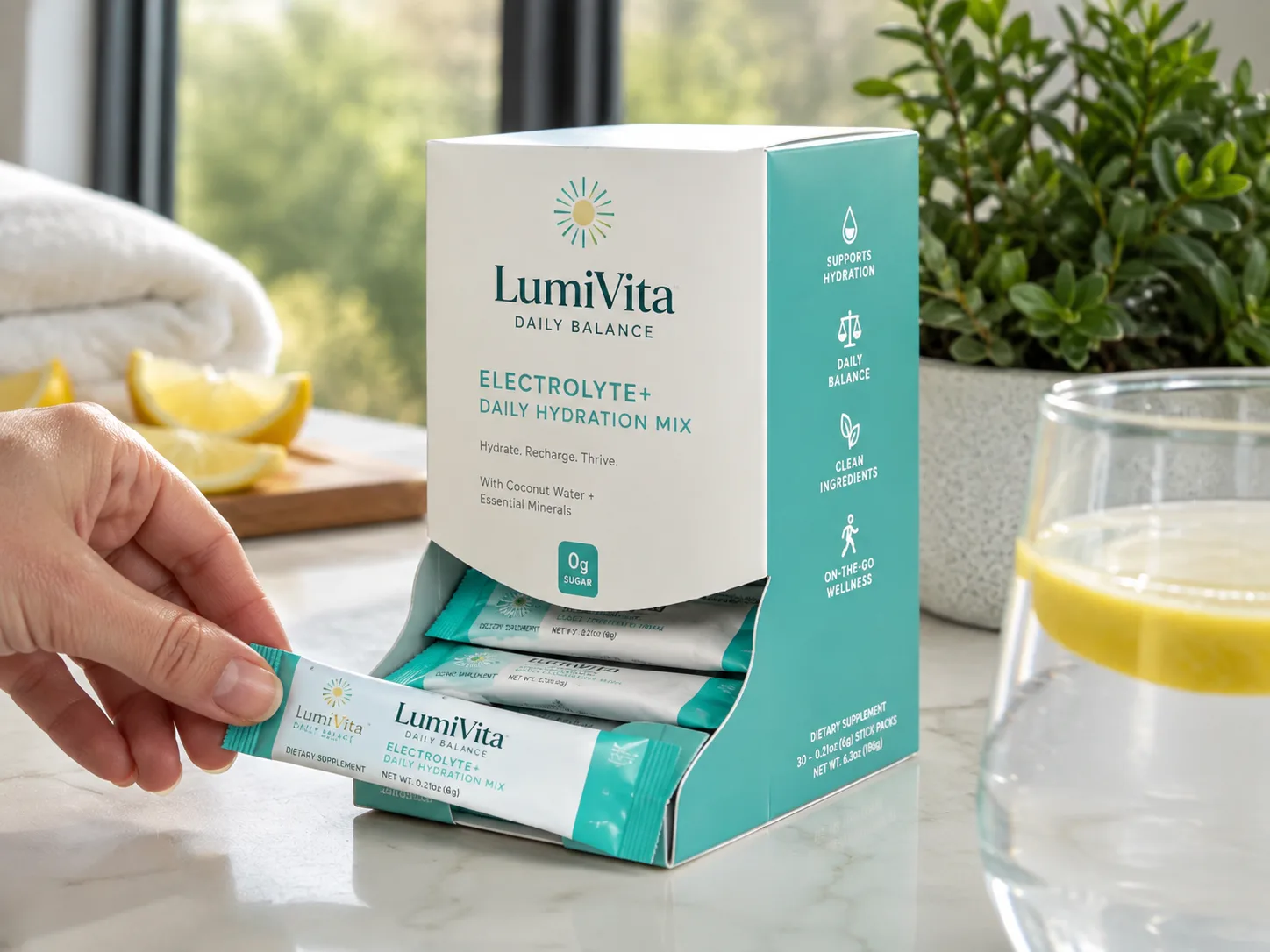
Sachet packaging
Dispenser cartons and counter ready packs for stick packs.
What every run is held to
Print precision
Six-color offset with PDC-SG density control holding shade against the approved card.
Structural integrity
Dimensions verified against the approved dieline, every carton formation tested.
Batch consistency
In-process checks at each stage, defect sorting, and pre-dispatch inspection before release.
Launch readiness
Counted packing, batch labels, palletized with moisture safeguards, delivered to your address.
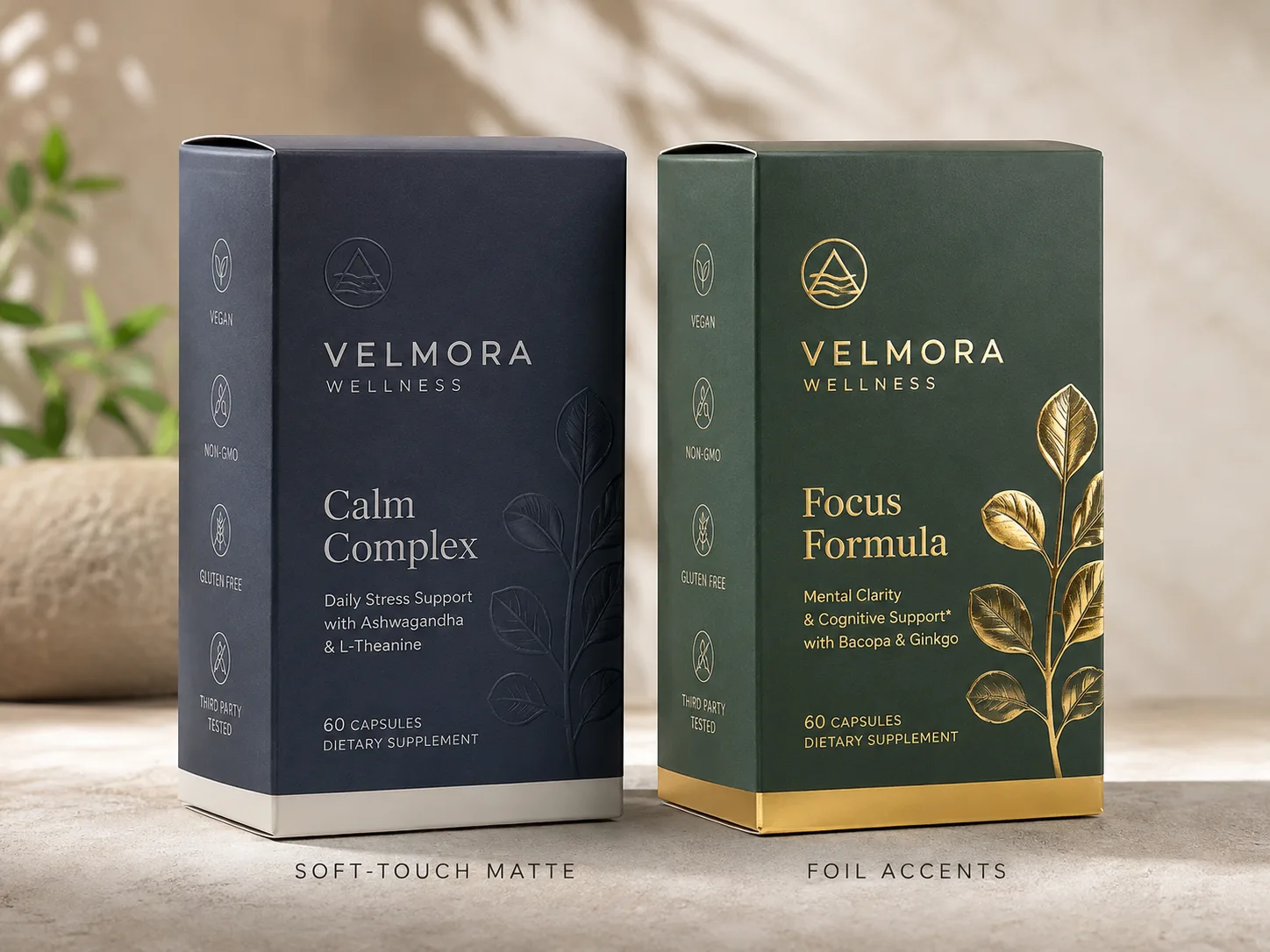
Supplement carton board, caliper and finish
US buyers specify in points of caliper, most of the world quotes gsm, and the two are not interchangeable because the ratio moves with board density. Every quote from this plant states both. All four board grades are stocked here, SBS, FBB, kraft-back and recycled, so a kraft-back carton is a stock decision rather than an indent, and coating is aqueous or UV to the job.
SBS: Bleached virgin fiber, white through the caliper. The default where print quality and a white reverse matter.
FBB: Multi-ply with a bulky middle, so it reaches a given stiffness at lower weight. Often the efficient choice at larger sizes.
Finishes: Hot foil, emboss and deboss, soft touch lamination, spot UV. Heavy overall coatings can close up fine type, so panel-critical artwork is held back from them.
- Board
- SBS, FBB
- Caliper
- 18 to 24pt
- Fitment
- 1 to 2mm per face
- Six-color offset
- Finishing
- Foil, Emboss, Soft touch, Spot UV
- Delivered
- To your address
- One landed price, duty and shipping included
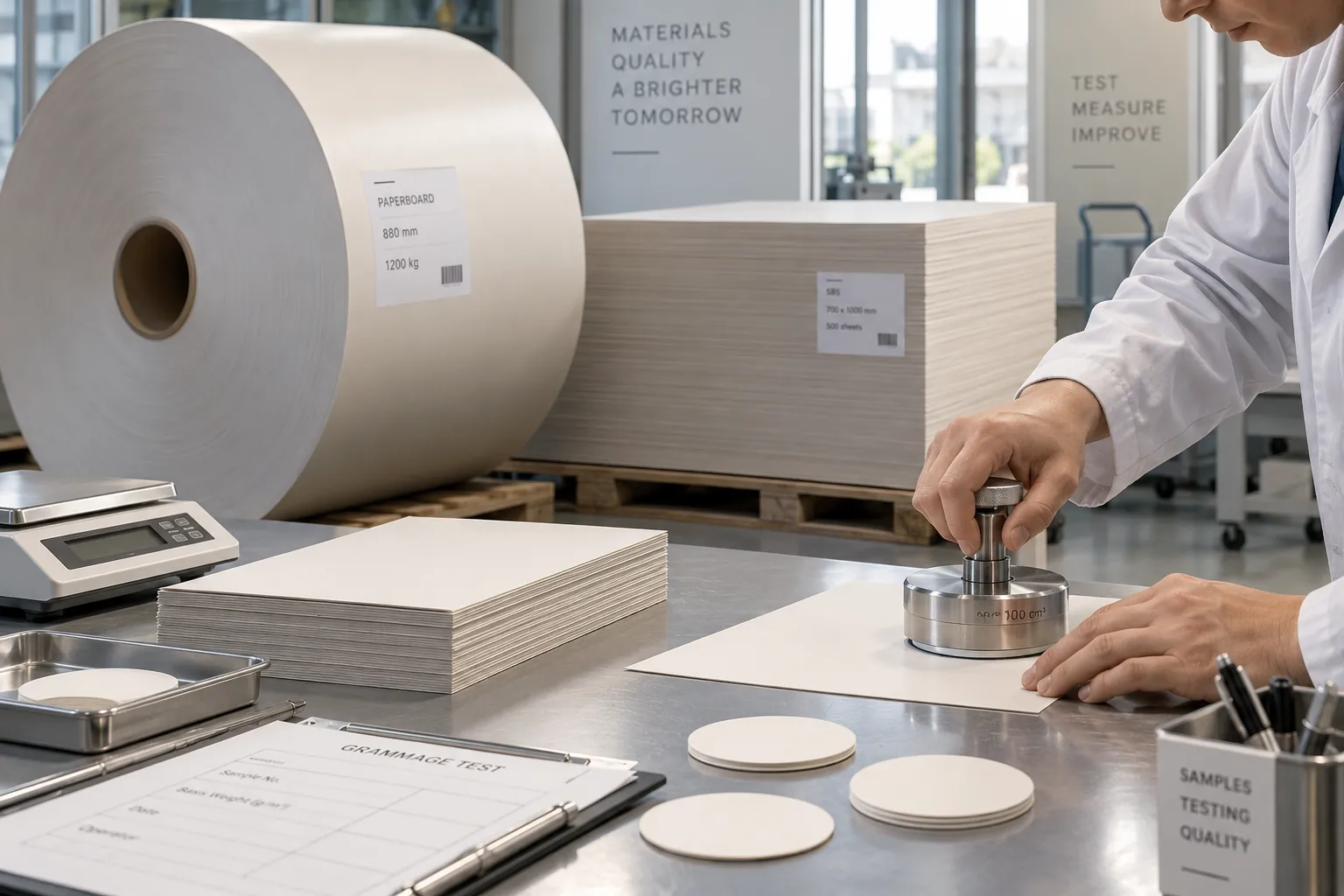
Standards this plant operates to
Offshore supply raises the same three questions from every procurement team: is the quality system documented, is the labor practice auditable, is the fiber responsibly sourced. Certificates are available on request.
Quality: Certified to ISO 9001, with a completed test report and Certificate of Conformance issued per lot.
Environment and safety: Certified to ISO 14001 and ISO 45001, and operates to BRCGS packaging standards for hygiene, contamination control and traceability.
Sourcing and labor: Operates to SEDEX ethical sourcing requirements. Paperboard is responsibly sourced and inks are food-grade and low-VOC. The plant is FSC compliant.
Bottle size, structure and caliper
What a quote is built from, at the grain you specify in. Everything here is priced against the bulk run it goes on, because plates, tooling and make-ready are fixed per run and the cost per carton falls as the run grows. If you already run the carton, the fastest route is to send one: every line of the specification can be measured off it.
Bottle sizes
| Size | Structure | Caliper |
|---|---|---|
| 60cc | Straight tuck end | 18pt |
| 90cc | Straight tuck end | 18pt |
| 120cc | Straight tuck end | 18pt |
| 150cc | Straight tuck end | 20pt |
| 175cc | Crash lock base | 20pt |
| 250cc | Crash lock base | 24pt |
Carton styles
- Straight tuck end
- Both flaps to the rear, front panel unbroken
- Reverse tuck end
- Flaps opposed, best sheet yield, the multi-SKU default
- Crash lock base
- Pre-glued base, erects in one motion, heavier fills
- Seal end (FOSE)
- Glued top and bottom, highest stacking strength
- Window box
- Patched window, often one caliper step up
- Hang tab box
- Euro slot or delta tab, for peg display
Supplement packaging questions
Most run on SBS with a coated print face, in 18 to 24pt depending on fill weight. A 60cc to 120cc bottle carton is typically 18pt; a powder canister with a crash lock base is usually 24pt. Send the filled product weight and the recommendation comes back in points with the gsm equivalent.
Yes. The panel is a prescribed format under 21 CFR 101.36 with fine rules and small type, and six-color offset holds both. Panels reproduce best in a single solid ink rather than a screen build. You approve a proof and a shade card before production, and printed cartons are verified against them.
No. Eastface manufactures folding cartons: the printed paperboard carton around your primary pack. Bottles, jars, pouches, films, and pressure-sensitive labels come from your existing suppliers, and the carton is built to fit them.
Yes. Send a physical sample or a drawing and structural design reproduces the dimensions, style, and lock type, or corrects fitment problems you have had. This happens before you commit to an order and there is no charge for it.
The quote is one landed price: the cartons, tooling, structural design, proofing, the documents that travel with the order, import duty, shipping and delivery to your address, in the US or anywhere else. Nothing is quoted on top of it later.
Tear strips, tuck-and-tab locks, and fully glued end seals that must be destroyed to open. Each changes the blank, so it is decided before the dieline is drawn.
Yes. A window changes the structure and adds a patching operation, and it reduces panel stiffness, which sometimes moves the caliper up a step. Worth specifying early.
The approved shade card is the production reference and is retained. On press, PDC-SG density control with automatic ink-balance correction holds the run, and stored job parameters recall the settings. Each SKU carries an ERP part number that a reorder runs against.
Two things: quoting board in gsm alone, which does not pin down caliper and therefore does not pin down fit or feel; and settling artwork before the structure, which means the panel gets redrawn once the dieline is final. Fixing the structure first avoids both.
Yes. A label revision on an offset line is a plate change rather than a re-tooling, so brands running eight or twenty variants keep unit costs stable through frequent versioning. Vitamin packaging with frequent flavor and count variants benefits the same way.
Last reviewed
Price it against your current supplier
Send a spec for custom supplement boxes and get one landed price for the bulk run you are planning, duty and shipping included.
Start your project