MATERIALS
Kraft boxes and kraft board
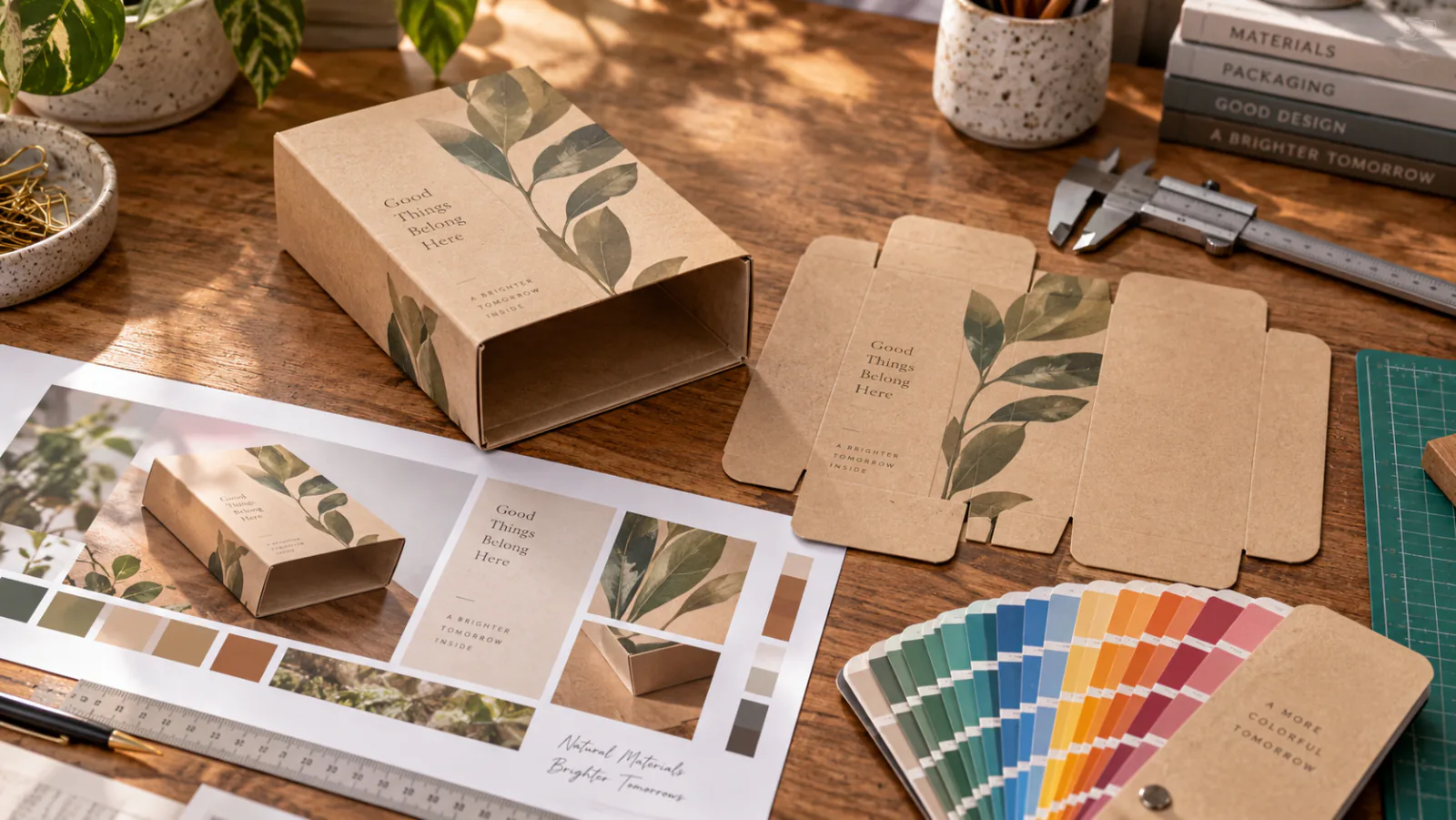
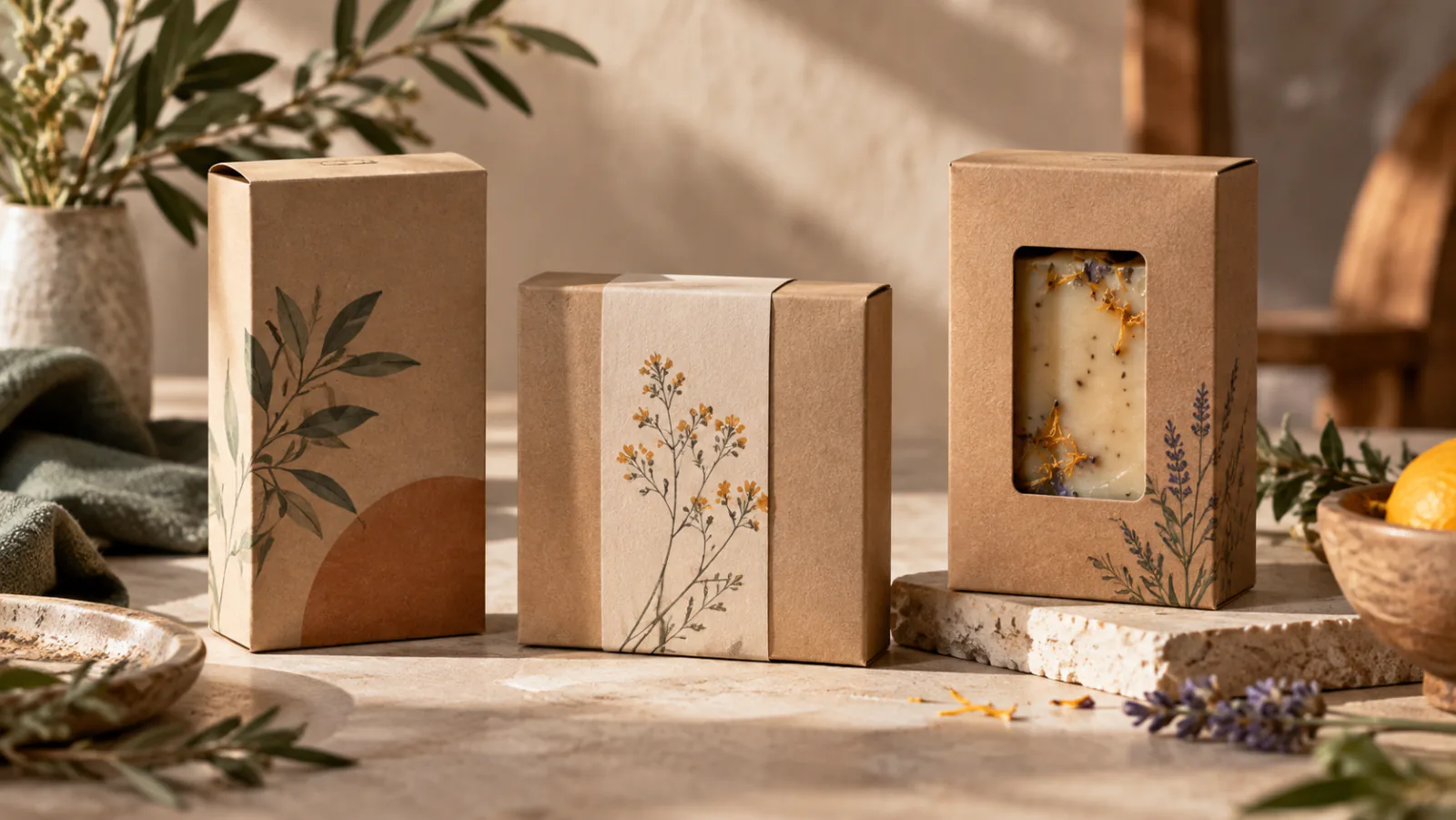
Kraft boxes are folding cartons printed on unbleached kraft board, the brown paperboard made from virgin chemical pulp that has never been bleached. They run in every standard carton structure, from tuck end boxes to sleeves and window cartons, in natural brown or white kraft, at folding carton calipers of roughly 14 to 24 points.
Printed, die cut, folded and glued to your dieline, and quoted as one landed price to your address.
Fiber
Virgin, unbleached
Chemical pulp that was never bleached. The brown is the fiber, not a color applied to it.
Two versions
Natural and white kraft
Natural shows the fiber and warms every color. White kraft carries a bleached top ply.
Strength
The strongest of the four
Bleaching attacks the fiber. An unbleached sheet keeps its full fiber length.
The catch
White cannot be printed
Not without an opaque white underbase. There is no white in the board to leave unprinted.
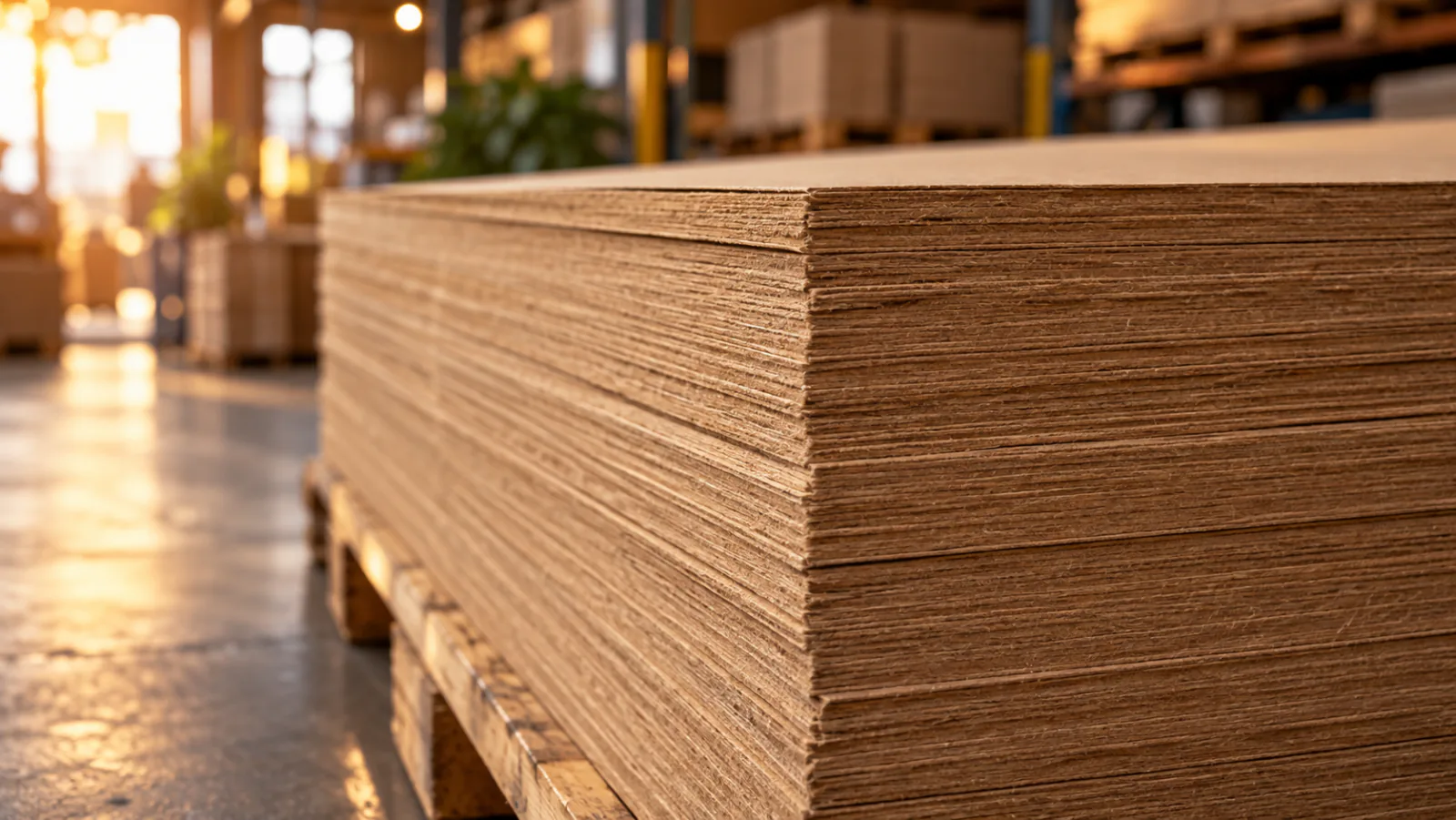
What is inside a sheet of kraft board
Unbleached the whole way down, and the brown is what the fiber is rather than a color applied to it. That is also why it is the strongest of the four at the same caliper: bleaching is a chemical attack on the fiber, and this board has not had one.
Structures available in kraft
Every folding carton structure this plant makes runs in kraft board. These are the ones specified in kraft most often, and each one is settled at structural design against what the carton has to hold.
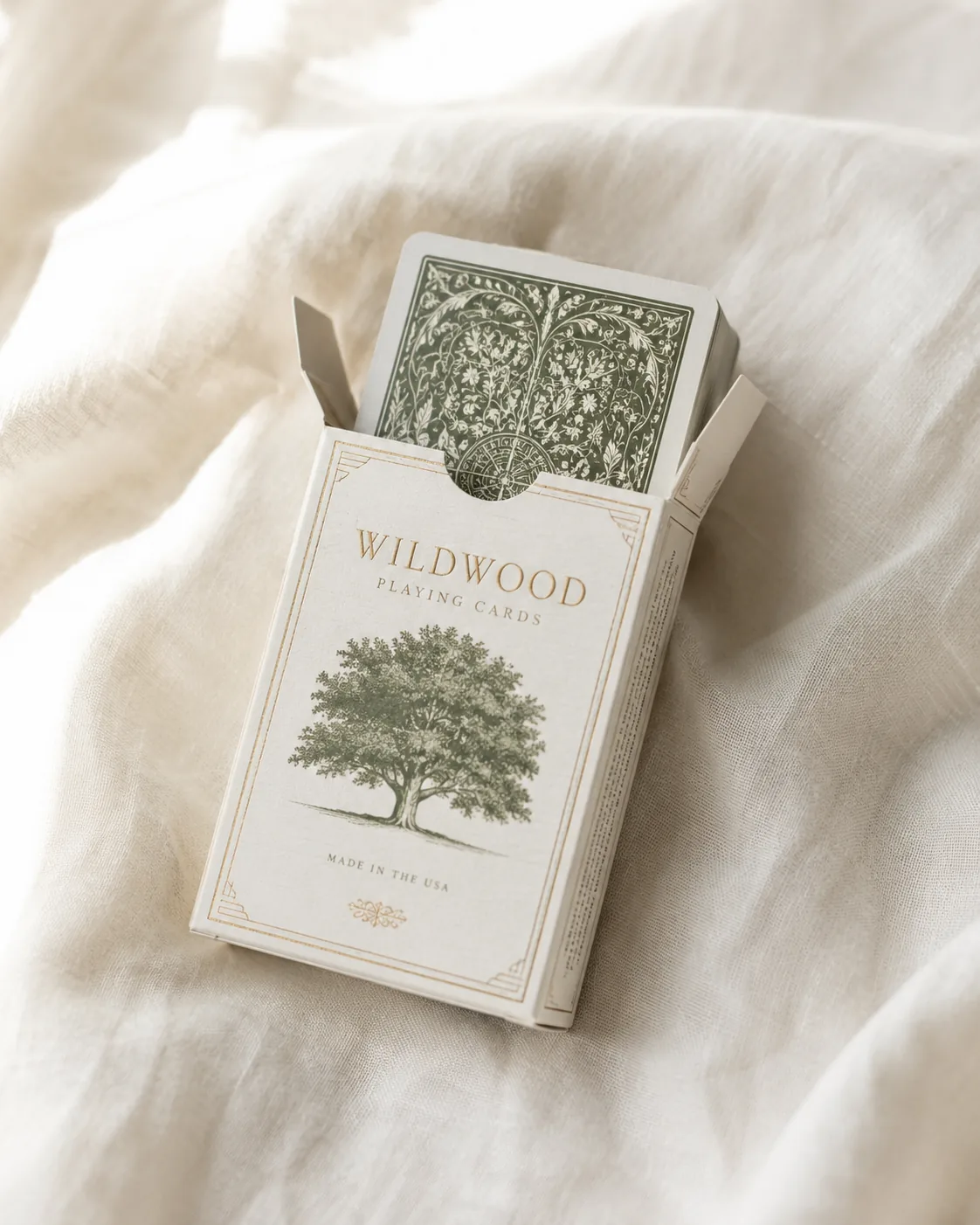 Read nextTuck end boxesThe default kraft carton. Straight or reverse tuck, friction locked, no glue on the closure.
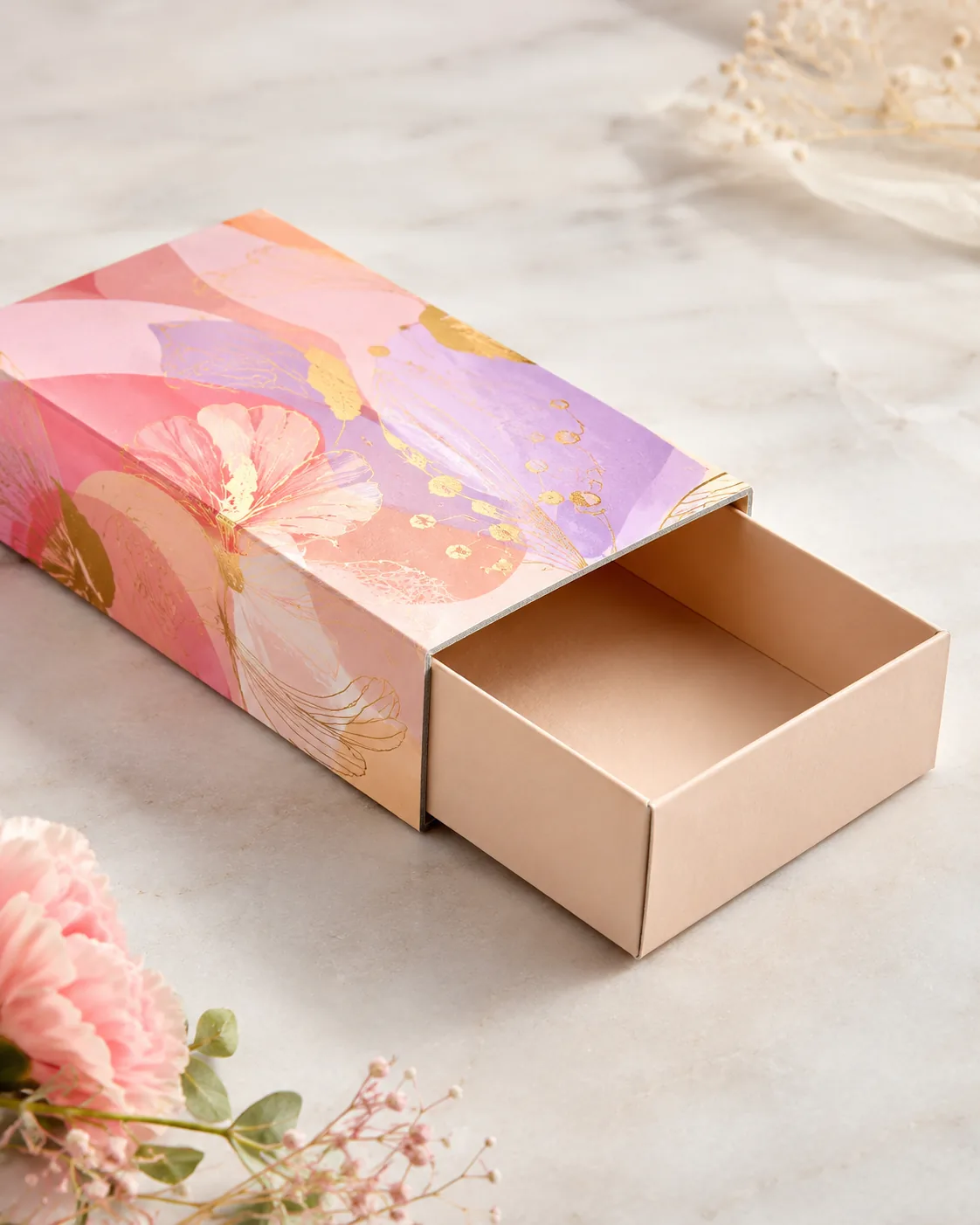 Read nextSleeve boxesA printed band around a tray or a product. The most common kraft format for soap and bar goods.
 Read nextWindow boxesA die cut aperture with a film patch behind it. Brown board around a clear view of the product.
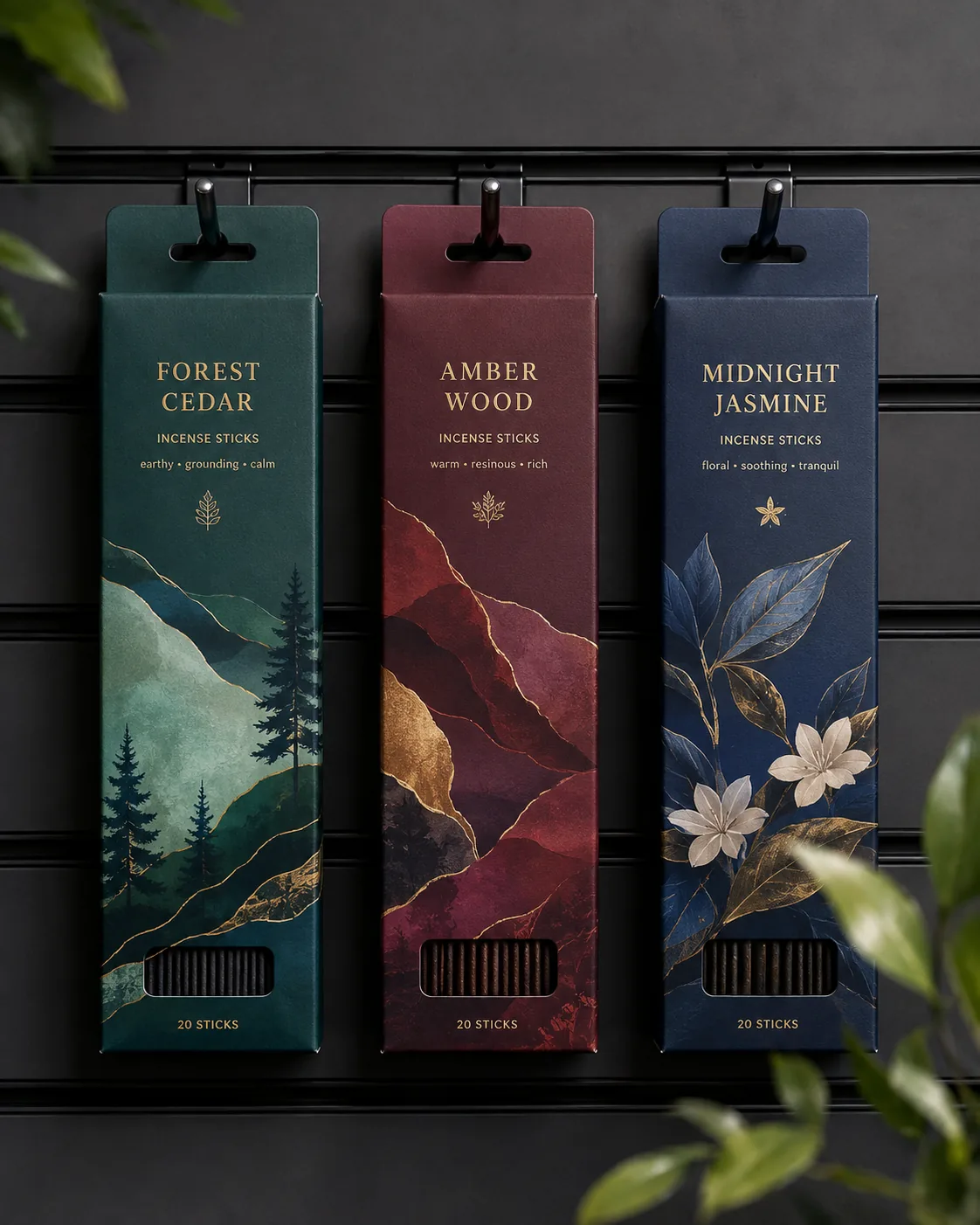 Read nextHang tab boxesEuro slot, delta or rocker tab, for kraft cartons that hang on a peg rather than stand on a shelf.
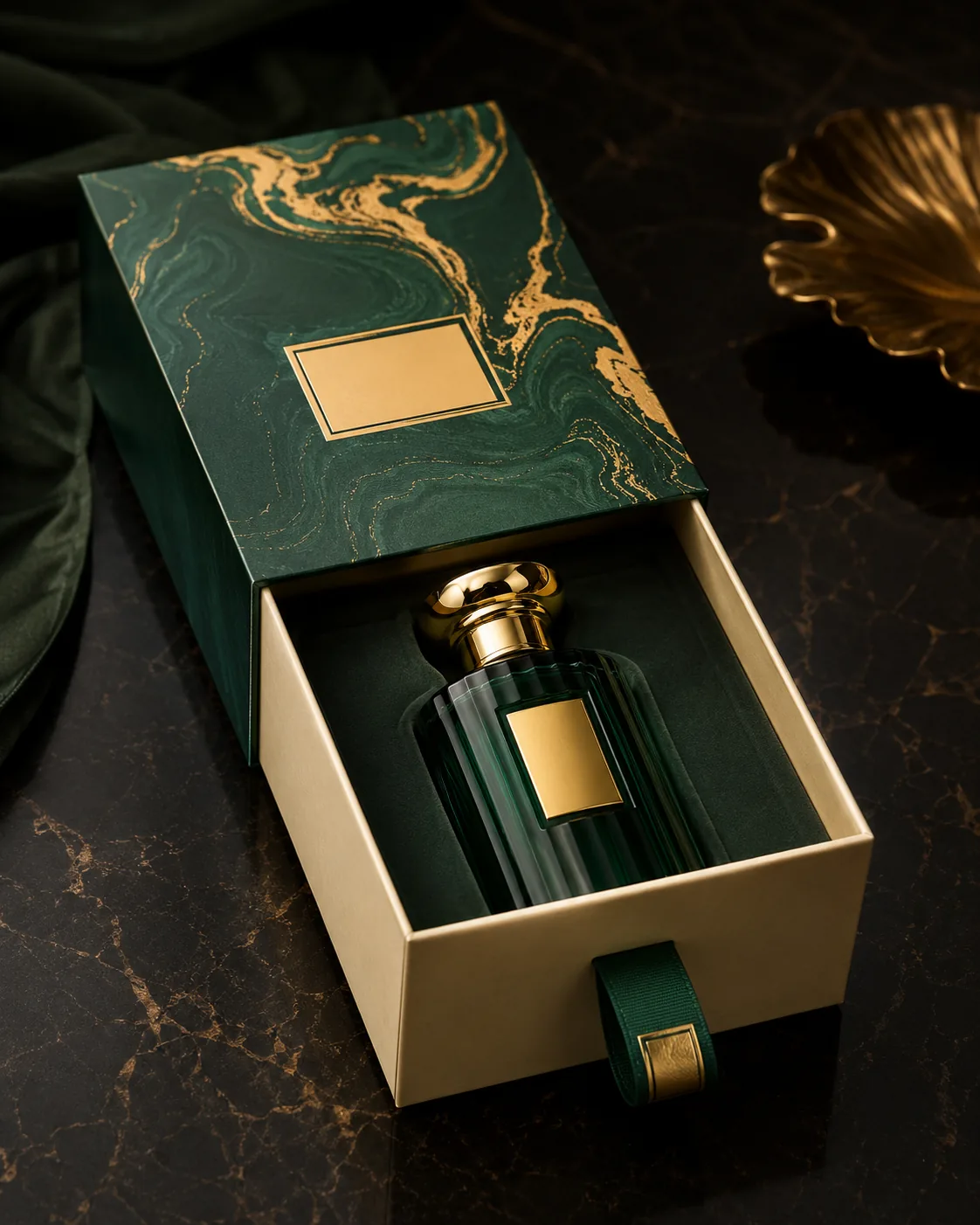 Read nextTray and sleeveA glued tray inside a printed sleeve. Two pieces, and the kraft is usually the sleeve.
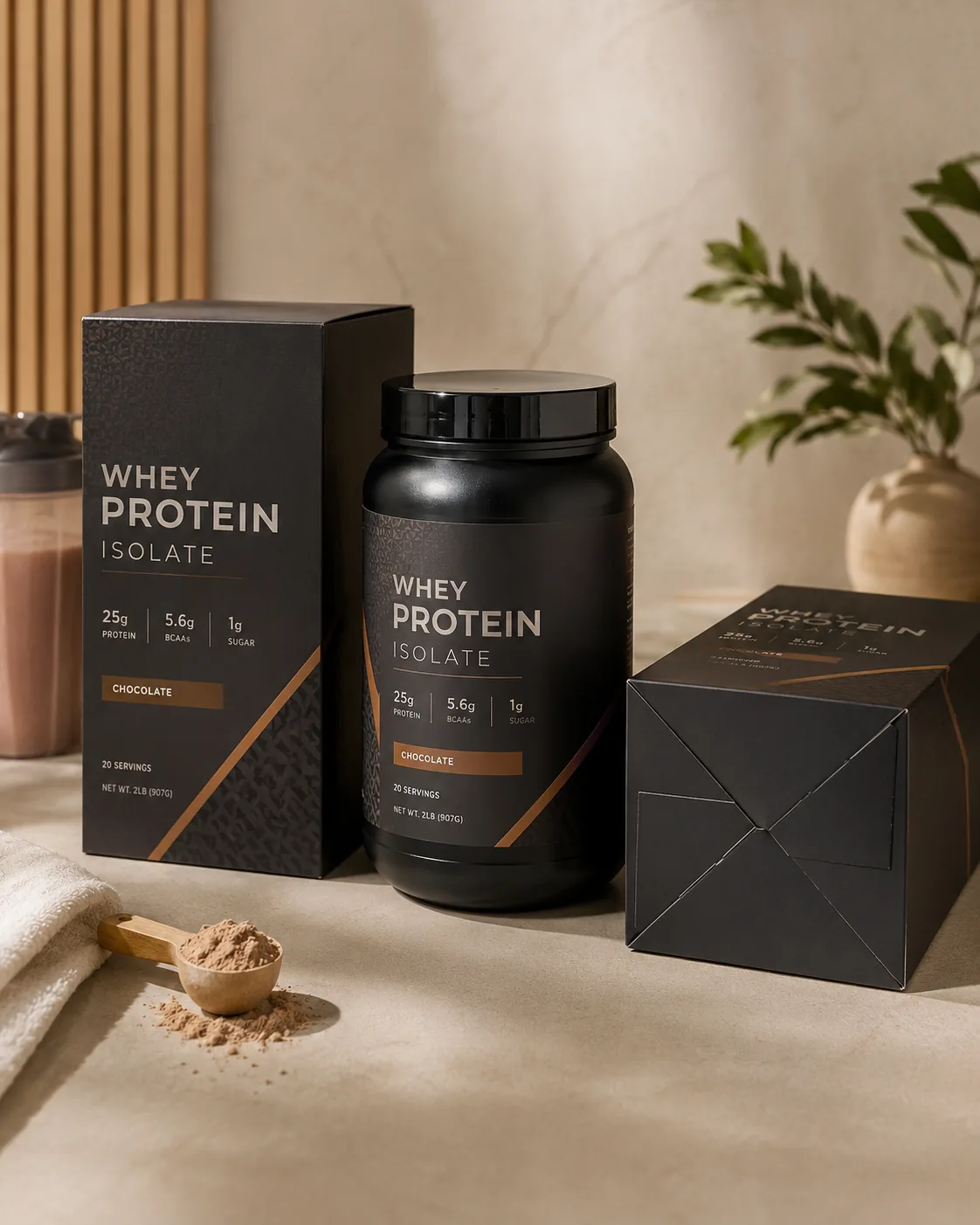 Read nextAuto lock bottomA base that locks as the carton is opened out, for kraft cartons taking real weight.
What is kraft paper and kraft board
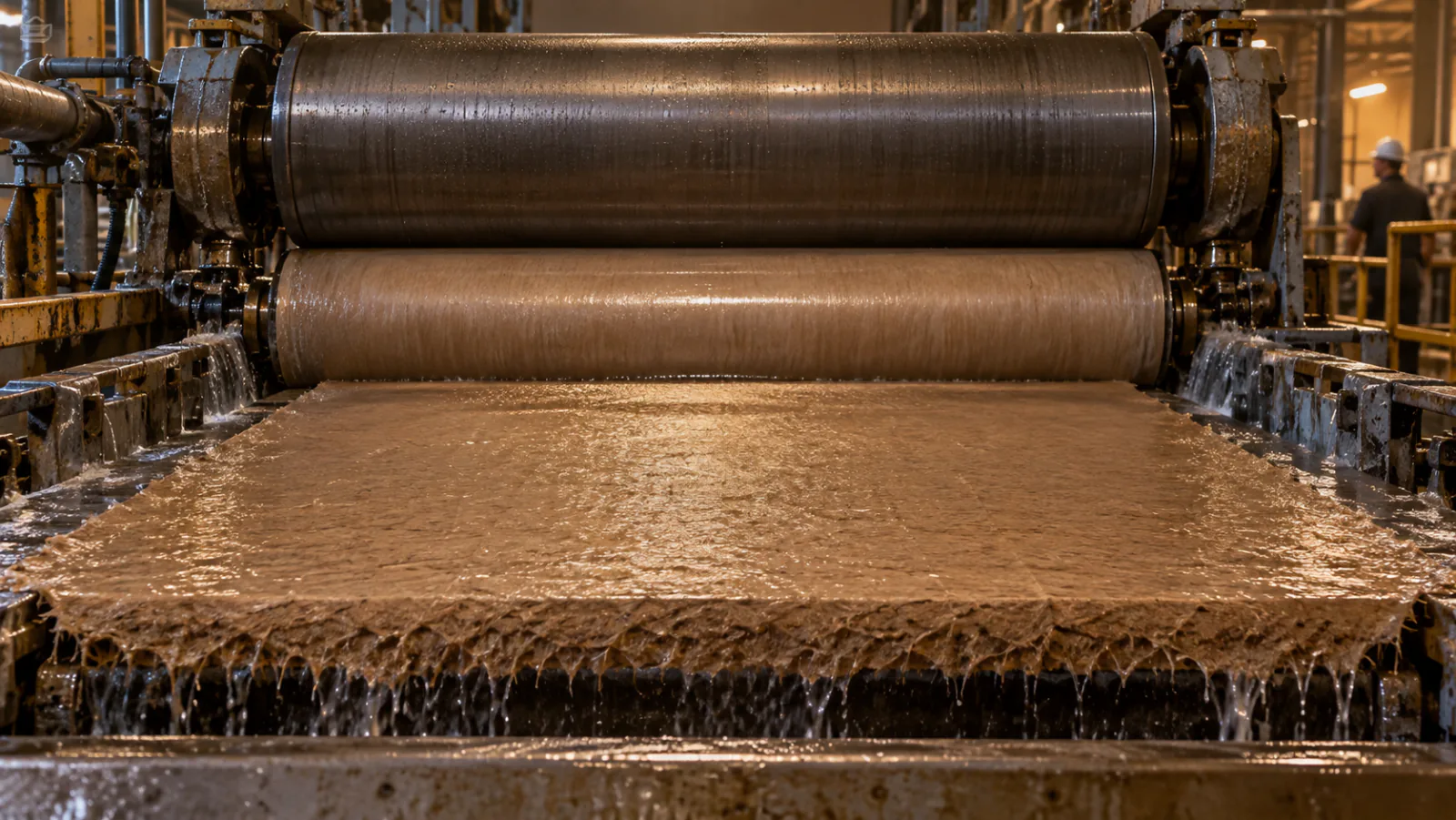
Kraft is a pulping process. Wood chips are cooked in a chemical solution that dissolves the lignin holding the fibers together and leaves the cellulose fibers long and intact. Kraft is German for strength: the fibers come out of the process longer and less damaged than any other pulping route produces.
The pulp comes out brown, because lignin residue and the cooking chemicals stain it. Bleaching it white is a further chemical stage, and it is a further attack on the fiber: a bleached sheet is weaker than the unbleached sheet it started as. Kraft board is the board made from that pulp with the bleaching stage left out.
Kraft board is brown and strong for the same reason: it has not been bleached. The strength and the color come together.
Kraft paper and kraft board are the same fiber at different thicknesses. Paper is what a grocery sack and a wrapping sheet are made of. Board is the same pulp formed thick enough to hold a crease and stand a panel up, which is what a folding carton needs, and it is measured in points of caliper rather than in basis weight.
Natural kraft vs white kraft
Two versions of the same board, and the choice is made on what the printed artwork has to do. White kraft is also sold as SUS.
| Compared on | Natural kraft | White kraft |
|---|---|---|
| What it is | Unbleached kraft through the whole caliper | A bleached top ply over the same unbleached body |
| The print face | Brown. Visible fiber, and a slight mottle across the sheet | White. Close to a coated virgin board to print on |
| The reverse | Brown, the same as the face | Brown. The bleached ply is on one side only |
| What it does to color | Warms everything. A blue prints greener, a red prints browner, a pale tint disappears | Prints close to proof. A pale tint survives |
| Printing white | Needs an opaque white underbase. Nothing else puts white on a brown sheet | Not needed. The board is the white |
| Strength at the same caliper | The stronger of the two. Nothing in the sheet was bleached | Slightly lower. The bleached ply is the weaker fiber |
| Where it belongs | Where the brown is the design decision and the artwork is line work, type and one or two colors | Where the pack has to look unbleached but the artwork needs a photograph or a precise brand color |
| Cost position | The lower of the two. One fewer process stage | Higher. The bleached ply is an added stage and an added furnish |
A brief that wants a brown pack with a photographic image on it needs white kraft. The two are quoted separately because they are different boards.
How kraft prints
Every color laid on natural kraft is laid over brown, and printing inks are transparent. What comes off the press is the ink and the board together, so the board is part of every color on the carton.
The shift is predictable. Warm colors hold: a red, an orange or a warm yellow prints close to what was proofed. Cool colors move toward the board: a blue prints greener, a gray prints warmer, and a pale tint of anything loses most of itself into the brown. The proof has to be made on the ordered board rather than on paper, or the shift first shows up on the production run.
White is the one color that cannot be printed at all without help, because there is no white in the board to leave unprinted and white ink on its own is not opaque enough to cover brown. Where the artwork has white type, a white panel or a white logo, an opaque white is laid down first and the color printed over it. That is an extra plate and an extra ink, and it is the most common unexpected line on a kraft quote.
Foil and embossing read well on kraft, and neither shifts color. Foil is metal laid on the surface, so it is the same gold on brown board as on white. Embossing takes no ink at all and the unbleached fiber holds a crisp shoulder.
- Line work, type and one or two colors
- What natural kraft is best at. No underbase and no shift worth correcting.
- Photographic images
- Specify white kraft, or accept a warm cast across the whole image.
- Anything white in the artwork
- Needs an opaque white pass. Budget for it at quote rather than discovering it at proof.
- Foil and emboss
- Both read strongly on kraft, and neither is affected by the board color.
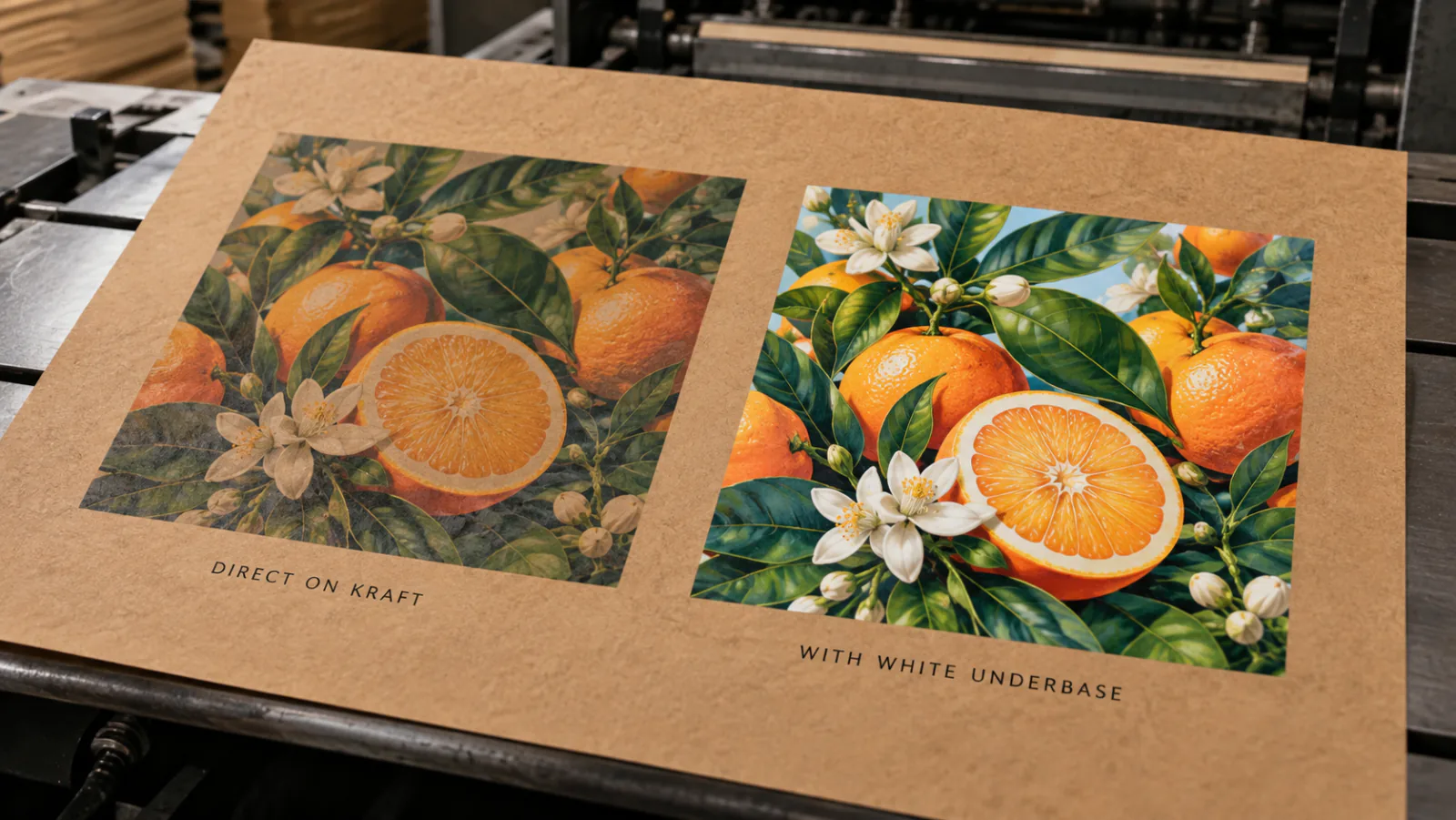
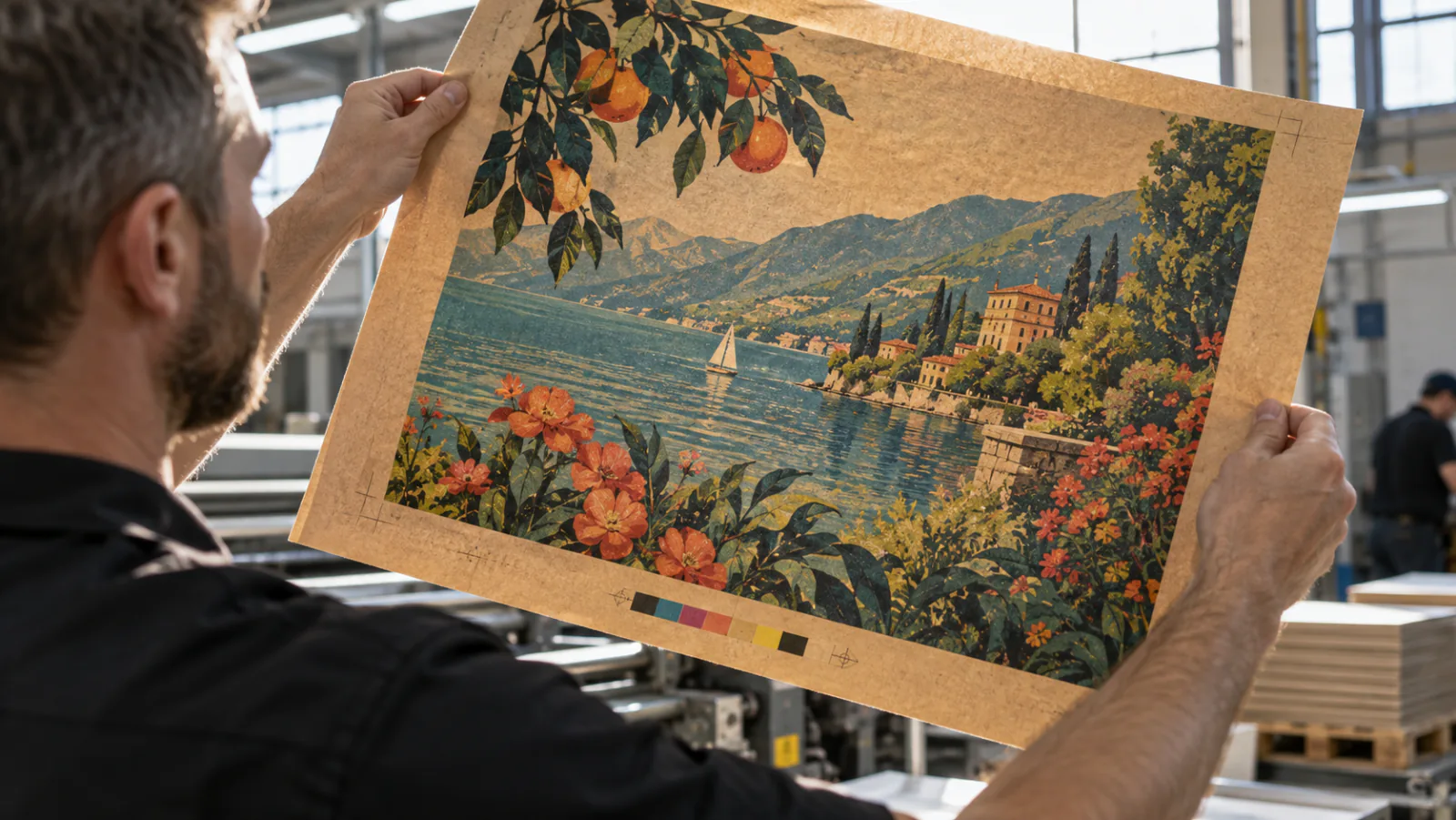
Every color printed on natural kraft is printed over brown, and printing inks are transparent.
Kraft as specified here
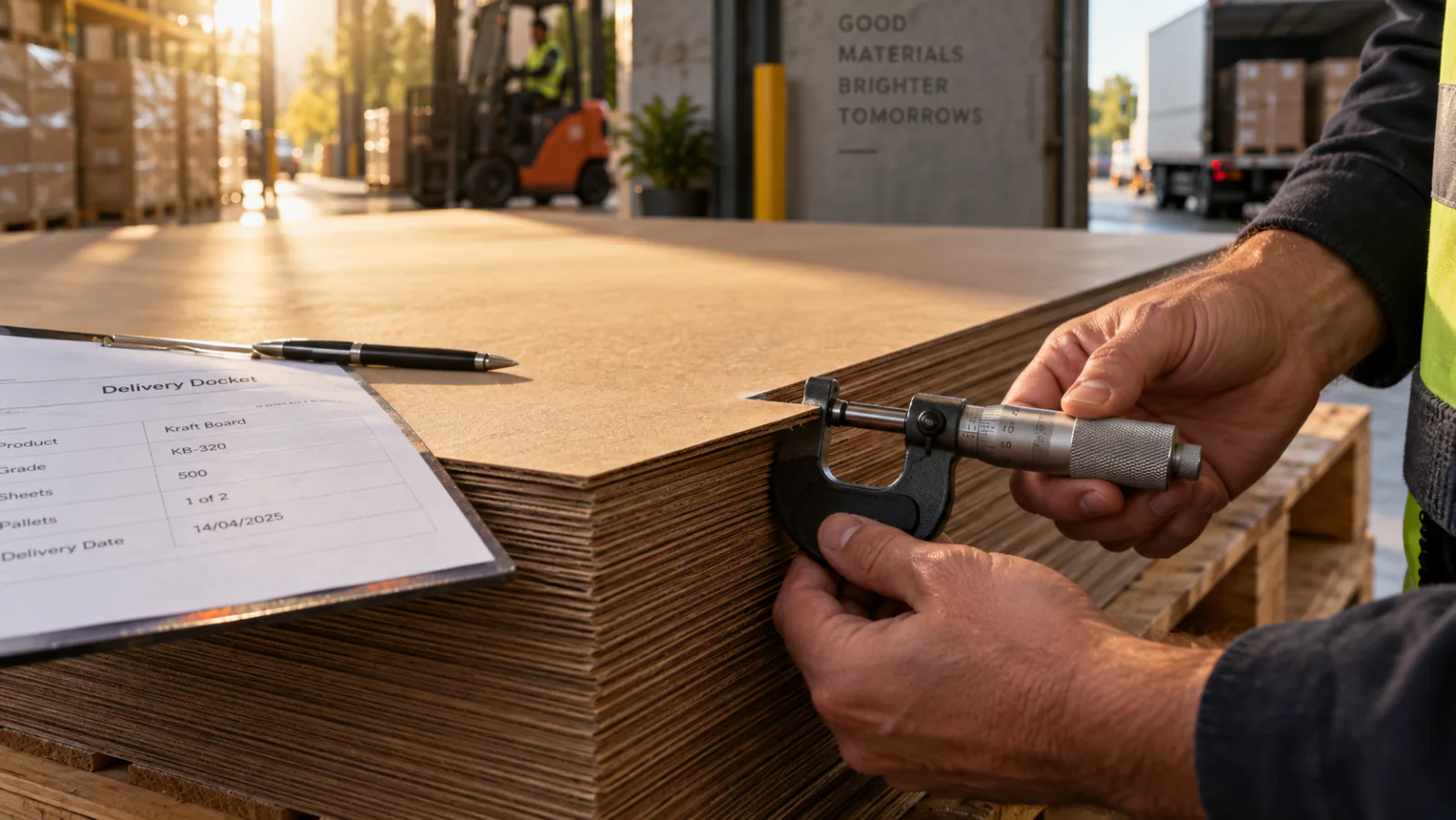
Kraft board arrives by the pallet and is measured against the docket at goods-in before it reaches the press. This is what a kraft carton is specified against on a quote.
How a kraft carton is specified here, field by field.
On the sheet
- Printing
- Offset litho on a six-color Komori line, which allows an opaque white underbase and four colors in one pass.
- Coating
- Aqueous or UV to the job. An aqueous coating leaves the kraft surface close to uncoated.
- Inks
- Vegetable based, low VOC.
- Color standard
- Matched under D65 and TL84 viewing conditions, and proofed on the ordered board rather than on paper.
What it will take
- Reads well
- Hot foil stamping and embossing. Neither is affected by the board color.
- Does not read
- Spot UV. The coating soaks into unbleached fiber and comes back as a darker patch rather than a gloss.
- Structures
- Every folding carton structure here runs in kraft, subject to the caliper the structure needs.
The construction and the caliper are settled at structural design against what the carton has to hold, before tooling is cut.
Kraft board and food packaging
Kraft is virgin fiber, which is the starting point food packaging specifications are usually written from, and unbleached kraft is widely used for dry and packaged food. Whether a particular carton is suitable for a particular food is decided by the specification rather than by the grade, because it depends on the food, on whether contact is direct or through an inner wrapper, and on the coating and inks going over the board.
What is fixed here is the checking. Incoming board is tested against what was ordered in an in-house quality laboratory before it reaches the press, with grammage and bursting strength measured against the minimum for the grade, and the inks are vegetable based and low VOC. The plant is certified to ISO 9001, ISO 14001 and ISO 45001, operates to BRCGS packaging standards and SEDEX, and is FSC compliant. Certificates are available on request.
Send the product and how it sits in the carton, and the board, the coating and the documents that travel with the order come back as one specification.
Categories that specify kraft
Kraft is specified most often where the pack is meant to read as unbleached and the artwork is type and line work rather than photography.
 Read nextSupplements and nutritionBottle cartons, gummy boxes and powder cartons, with the panel requirements and the per-lot documents that category carries.
 Read nextEvery category servedSoap and personal care, coffee and tea, candles, confectionery, beauty and home goods all specify kraft cartons, and each one is set out on the industries index.
What kraft costs
Natural kraft is the lower cost of the two kraft boards and it is usually cheaper than a coated virgin board at the same caliper, because it has been through one fewer process stage.
A kraft quote moves most on whether the artwork needs an opaque white underbase, which adds a plate and an ink, and on whether the specification is natural or white kraft. Cartons here are made on bulk production runs and the cost per carton falls as the run grows, because plates, tooling and make-ready are fixed per run rather than per carton.
Questions about kraft boxes and kraft board
Kraft paper is paper made by the kraft pulping process, in which wood chips are cooked in a chemical solution that dissolves the lignin binding the fibers and leaves the cellulose fibers long and intact. Kraft is the German word for strength, and the process is named for the result: the fibers come out longer and less damaged than other pulping routes produce, so the paper is stronger. It comes out brown because lignin residue and the cooking chemicals stain it, and bleaching it white is a further stage that weakens the fiber again. Kraft board is the same pulp formed thick enough to hold a crease and stand a panel up, which is what a folding carton is made from.
Natural kraft is unbleached through the whole caliper, so both faces are brown, the fiber is visible, and every printed color sits over brown. White kraft carries a bleached top ply over the same unbleached body, so the print face is white and the reverse stays brown. The practical difference is what the artwork can do: natural kraft warms every color and loses pale tints into the board, while white kraft prints close to proof. Natural is the stronger of the two at the same caliper, because the bleached ply is the weaker fiber, and it costs less because it has been through one fewer stage.
Yes, with one qualification. Four color process prints on kraft board, but printing inks are transparent, so every color lands over brown and comes off the press warmer than it was proofed. Warm colors hold well and cool colors move toward the board, with pale tints moving furthest. White cannot be printed without help: there is no white in the board to leave unprinted, so any white in the artwork needs an opaque white underbase laid down first, which is an extra plate and an extra ink. Where the artwork is a photograph or carries a precise brand color, white kraft is usually the right specification instead.
Yes, and unbleached fiber is the most robust of the four grades in a recycling stream. Kraft fibers are long and have never been through a bleaching stage, so they survive more repulping cycles before they are too short to form a sheet. Nothing in the board has to be separated out. The thing to watch on a kraft carton is the finish rather than the board: kraft is the grade most often specified with foil, and foil is a contaminant in proportion to the area it covers, which is minor on a wordmark and significant across a panel.
At the same caliper, yes, because it has not been bleached. The kraft process leaves cellulose fibers long and intact, and bleaching is a further chemical stage that shortens and weakens them. An unbleached kraft sheet therefore keeps its full fiber length, which is why it outperforms bleached virgin board and recycled board of the same thickness. That does not make it the stiffest board for a large carton: stiffness is governed by how far apart the outer plies of a sheet sit, which is what folding box board is built to exploit, so a large panel that has to resist bowing is usually an FBB question rather than a kraft one.
Last reviewed
Send the dieline or a carton you like
The structure is measured, the kraft construction and caliper matched, and the quote comes back as one landed price to your address. Say whether there is any white in the artwork and the underbase is priced into the quote.