MATERIALS
Folding box board (FBB)
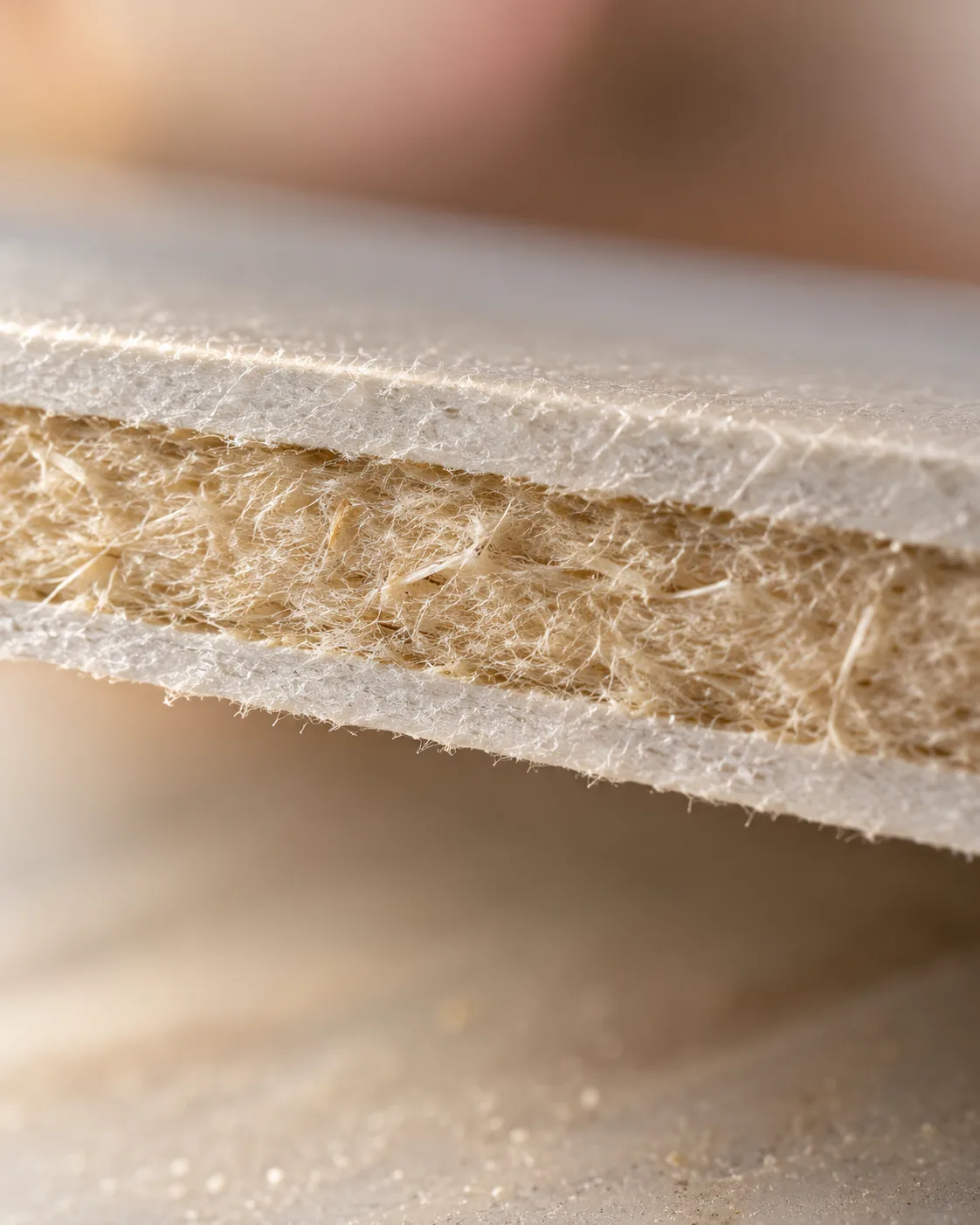
Folding box board is a multi-ply virgin board, usually three plies: bleached chemical pulp outers over a bulky mechanical pulp middle. The middle ply holds the outers apart, and stiffness is governed by how far apart they sit, so FBB reaches a given stiffness at a lower weight than solid bleached board does.
Also written FBB, and sold in two coated grades that differ only in the color of the reverse side.
Plies
Three, two furnishes
Bleached chemical pulp outside, mechanical pulp in the middle.
Bought for
Stiffness per unit weight
A given stiffness at a lower weight than solid bleached board.
Two grades
GC1 and GC2
The difference is the reverse side. White on GC1, cream on GC2.
Coating
One side or two
Coated one side covers almost every folding carton.
What is inside a sheet of FBB
Three plies and they are three different furnishes. The middle one is the reason the grade exists: mechanical pulp is bulkier per unit weight than chemical pulp, so it holds the two outer plies further apart, and stiffness is governed by how far apart they are.
Why FBB is bulky
Stiffness in a sheet of board is governed by how far apart its two outer plies sit. Push the outers further apart and the sheet resists bending harder, and it does so out of proportion to the extra material added.
Mechanical pulp is the cheapest way to buy that distance. It is wood ground to fiber rather than cooked, so the fibers are short, stiff and irregular, and they pack loosely. The ply is full of air, it is bulky per unit weight, and it holds the two bleached outer plies apart at a lower weight than solid fiber would.
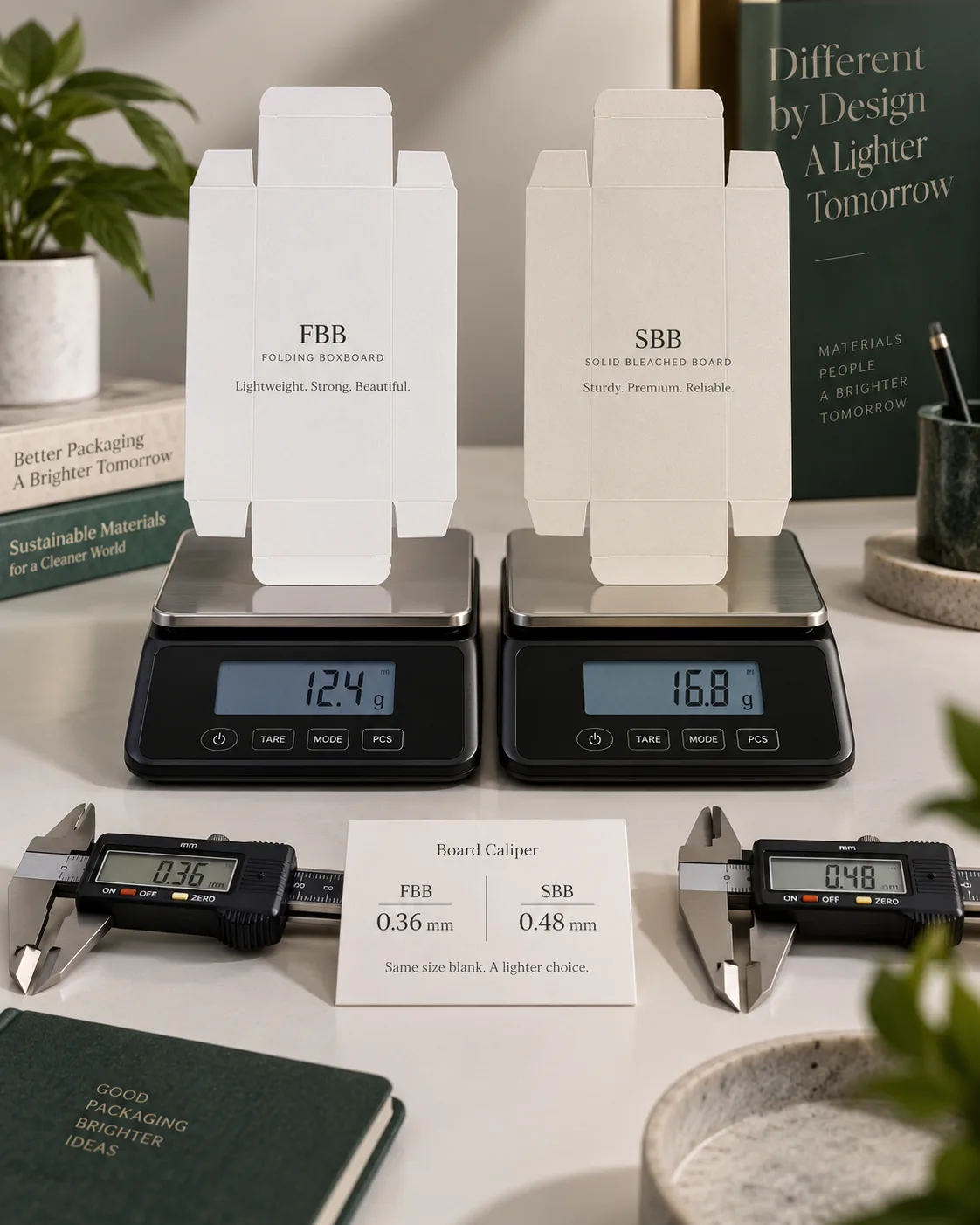
A carton in FBB and a carton in solid bleached board can be the same stiffness, and the FBB one weighs less. Freight is charged by weight, so the same carton costs less to ship, and the difference grows with the size of the carton.
Mechanical pulp is not bleached, so the middle ply is cream, and it is visible on any cut edge of a finished carton.
GC1 and GC2: the two grades
Both are coated folding box board with the same three-ply construction. They differ only in the color of the reverse side.
| Compared on | GC1 | GC2 |
|---|---|---|
| The reverse side | White. The back ply is fully bleached | Cream. The back ply is left unbleached |
| The print face | Clay coated and white. Identical on both grades | Clay coated and white. Identical on both grades |
| Where the difference shows | Inside the carton, and on every cut edge | Inside the carton, and on every cut edge |
| Specify it when | The interior of the carton is seen, or a white reverse is on the specification | The interior is never seen, which is most folding cartons |
| Cost position | The higher of the two. The back ply is bleached | The lower of the two |
| Also called | GC1, coated bleached back | GC2, coated cream back |
GC2 is the default for a folding carton, and GC1 is specified when somebody will look inside it. Paying for a white reverse on a carton whose interior is never seen is the most common avoidable cost on this grade.
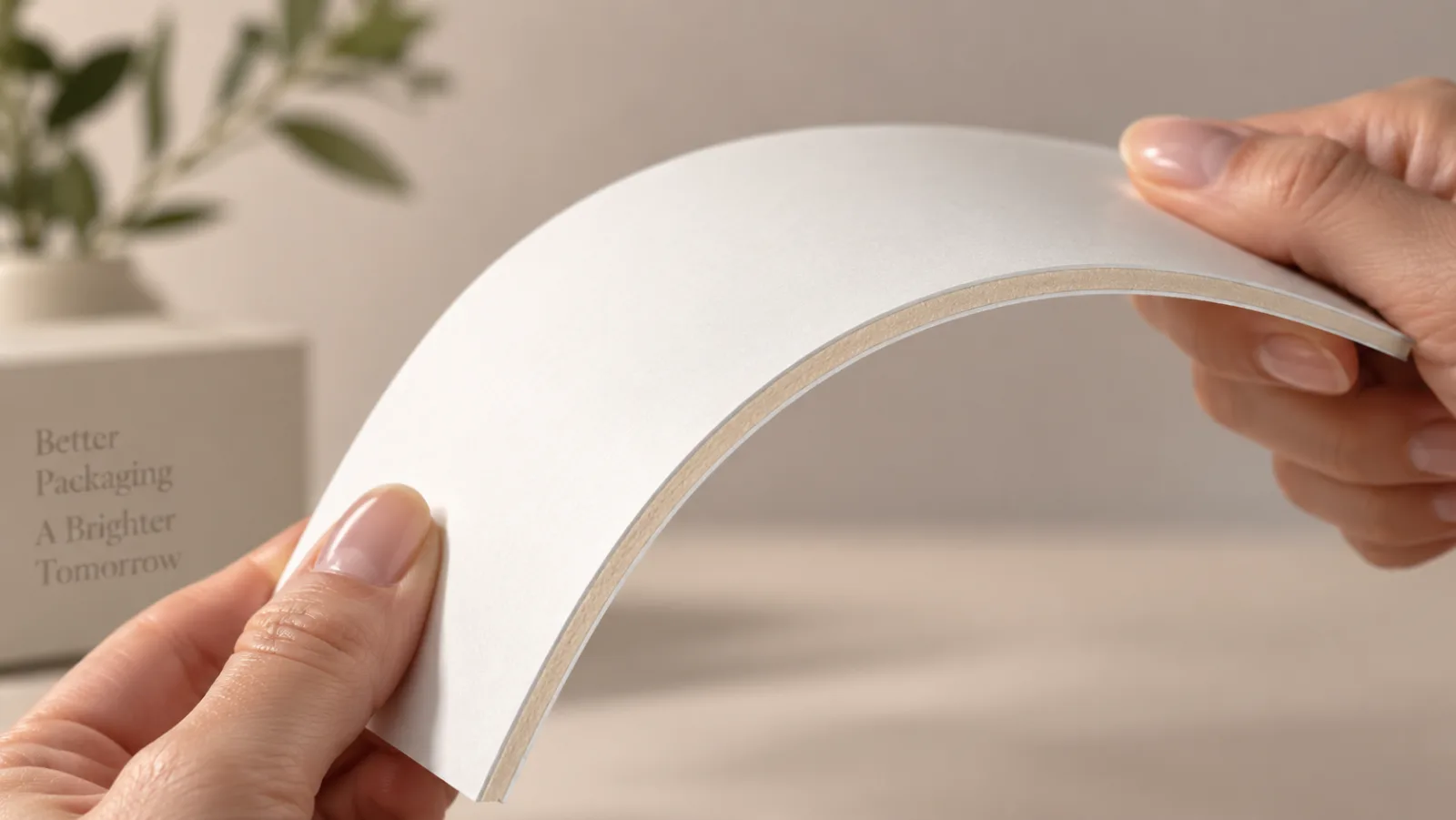
Stiffness is set by how far apart the outer plies sit.
Caliper range and what each range is for
FBB is specified in points of caliper, where a point is one thousandth of an inch. The ranges below are the folding carton ranges for the grade.
| Caliper | In inches | What it suits |
|---|---|---|
| 12 to 14 pt | 0.012 to 0.014 in | Small light cartons, sleeves and inner wraps |
| 16 to 18 pt | 0.016 to 0.018 in | Standard retail cartons up to about five inches on the longest side |
| 20 to 24 pt | 0.020 to 0.024 in | Larger cartons, and anything with a panel that has to stay flat |
| 26 to 30 pt | 0.026 to 0.030 in | Large cartons taking weight, and bases that resist a crush |
Which caliper a particular carton wants is settled at structural design, against what it holds and how it is handled.
How FBB prints
The print face is a clay coated bleached ply, so print behaves the way it does on any coated virgin board: process color, fine type and photographic images all hold, and a brand color matches to a Pantone reference.
Two things differ from solid bleached board. The sheet is bulkier at the same caliper, so it takes a slightly deeper crease to fold cleanly, and creasing is set against the board rather than carried over from a previous job. And the cream middle ply shows on every cut edge of the finished carton, which is visible on a die cut window aperture and on the top edge of an open tuck flap.
Foil, embossing and lamination all behave as they do on coated virgin board. Embossing holds a slightly softer shoulder than it does on solid bleached board, because the bulky middle ply compresses further under the die.

FBB or SBS
FBB buys stiffness per dollar, because the mechanical middle ply reaches a given stiffness at a lower weight. SBS buys print fidelity and a white reverse, because it is bleached fiber the whole way through. A large carton that has to stand up is usually FBB; a small carton carrying a photographic image on a shelf is usually SBS.
FBB as specified here
How an FBB carton is specified here, field by field.
The board
- Stocked
- FBB is one of the four grades stocked here, alongside SBS, kraft-back and recycled board. Folding boxboard arrives by the pallet and stands in the board store until a job calls for it.
On the sheet
- Printing
- Offset litho on a six-color Komori line, with the coating unit inline.
- Coating
- Aqueous or UV to the job.
- Inks
- Vegetable based, low VOC.
- Incoming checks
- Grammage and caliper are measured against the docket at goods-in, before the board reaches the press.
Questions about folding box board
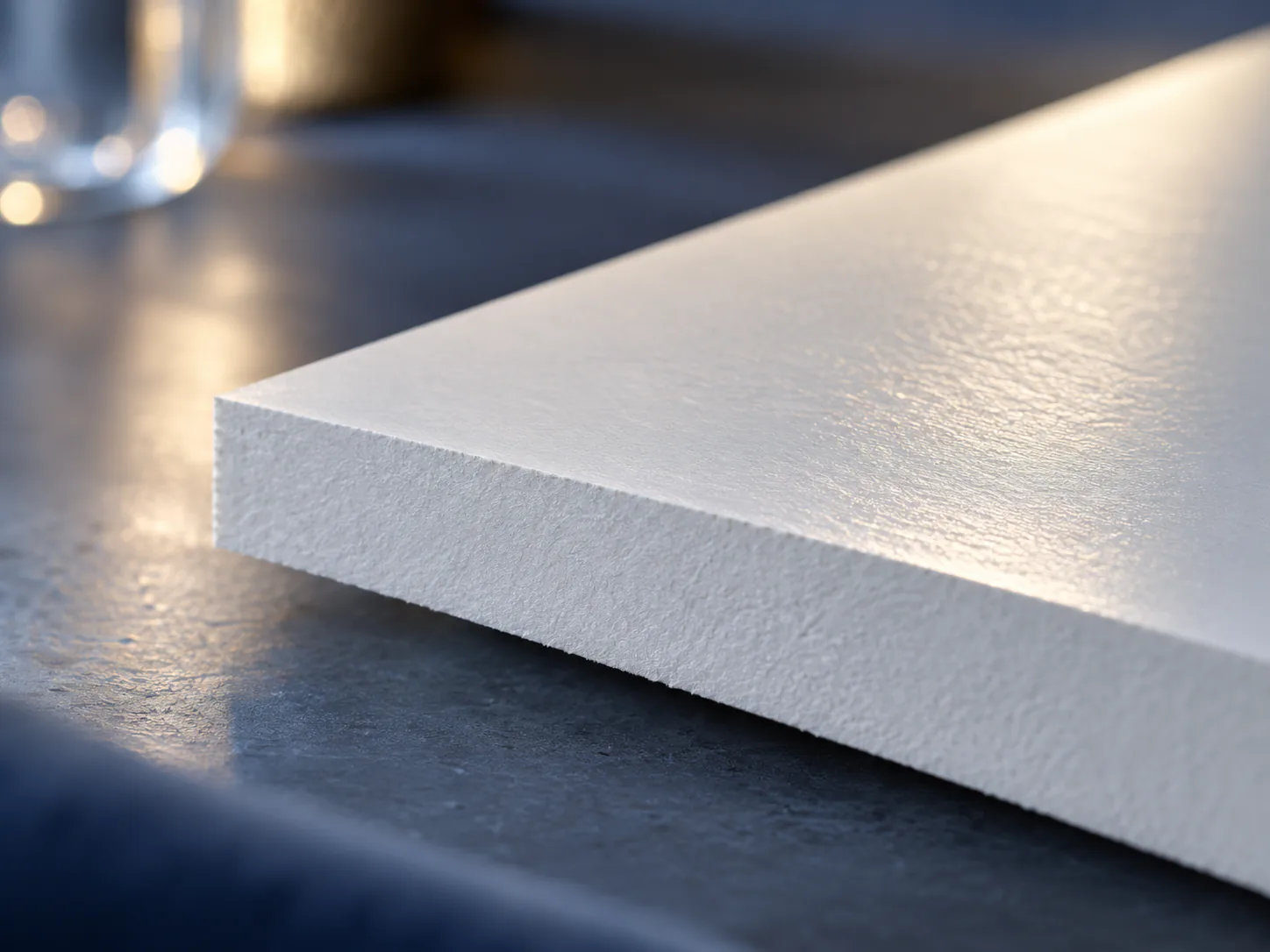
Folding box board, usually written FBB, is a multi-ply virgin paperboard made from two different furnishes. The outer plies are bleached chemical pulp and the middle ply is mechanical pulp, which is wood ground to fiber rather than cooked. The middle ply is bulky because its short, stiff fibers pack badly and leave the ply full of air, and that bulk holds the two outer plies further apart. Stiffness is governed by how far apart those outers sit, so FBB reaches a given stiffness at a lower weight than a board made of solid bleached fiber. The print face is clay coated, and the grade is sold coated on one side or on both.
Folding cartons, and particularly the larger ones. It is the grade specified where a carton has to hold its shape and resist bowing without the weight that the same stiffness would cost in solid bleached board: food and cereal cartons, household goods, larger cosmetics and personal care packs, confectionery cartons and pharmaceutical outers. At folding carton calipers it runs from about 12 points for small light cartons up to about 30 points for large cartons taking weight. Because freight is charged by weight, the saving grows with the size of the carton, which is why FBB is more often specified as cartons get larger.
No. They are both virgin coated boards and they are built differently. SBS is bleached chemical pulp through its whole thickness, so it is white on both faces and through the caliper. FBB is three plies of two furnishes, with a bulky unbleached mechanical middle between bleached outers, so the middle is cream and shows on any cut edge. In practice, FBB delivers more stiffness per unit weight and costs less to ship at the same stiffness, and SBS delivers a cleaner print surface and a white reverse. A large carton that has to stand up is usually FBB, and a carton carrying a photographic image where the interior is seen is usually SBS.
Yes, and the multi-ply construction does not complicate it. The mechanical middle ply and the bleached outer plies are all paper fiber, so the sheet repulps as one and nothing has to be separated out of the board first. What does change the answer is the finish specified over the board, and the finishes index sets out what each one does to the fiber stream.
Last reviewed
Send the carton size and what it holds
The grade and the caliper come back against the stiffness the carton needs, with the freight consequence stated. Board samples go out on request. Landed cost runs 20 to 30 percent below a comparable US supplier quote.