MATERIALS
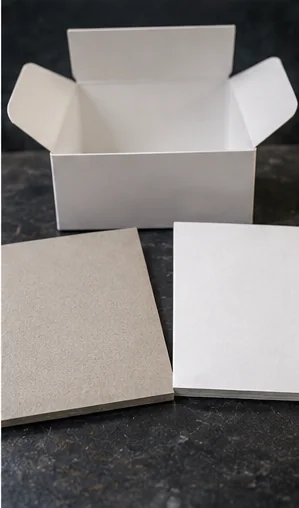
Duplex board: gray back and white back
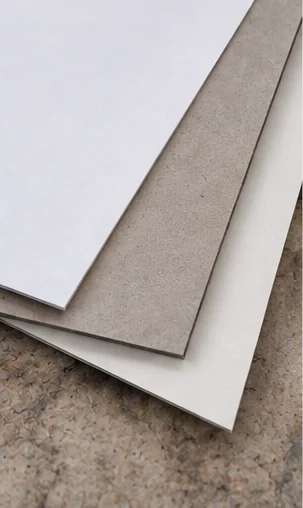
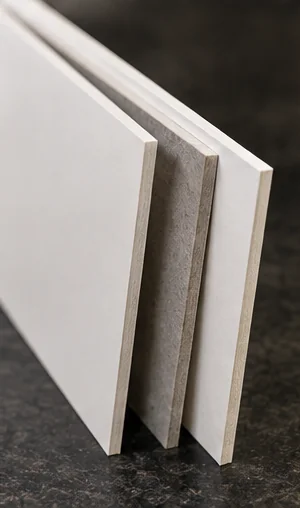
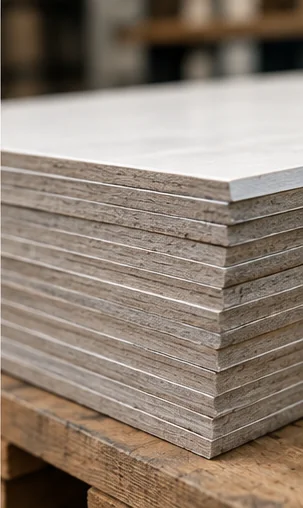
Duplex board is coated recycled paperboard with a white lined print face and a reverse that is either gray or white. Gray back, graded GD2 or GD3, leaves the reclaimed core uncovered on the reverse. White back, graded GT2 or GT3, carries a second white liner over it, and that single ply is the whole difference between them.
Sold as duplex board across Asia, India and the Middle East, and as white lined chipboard in Europe. A US quotation calls the same stock coated recycled board.
Fiber
Reclaimed, with a white liner
A recovered core under a bleached top ply, coated for print.
Gray back
GD2, GD3
The core left bare on the reverse. The cheaper of the two.
White back
GT2, GT3
A second liner over the core. Specified when the inside is seen.
Also called
White lined chipboard
And coated recycled board on a US quotation. One product.
What is inside a sheet of duplex board
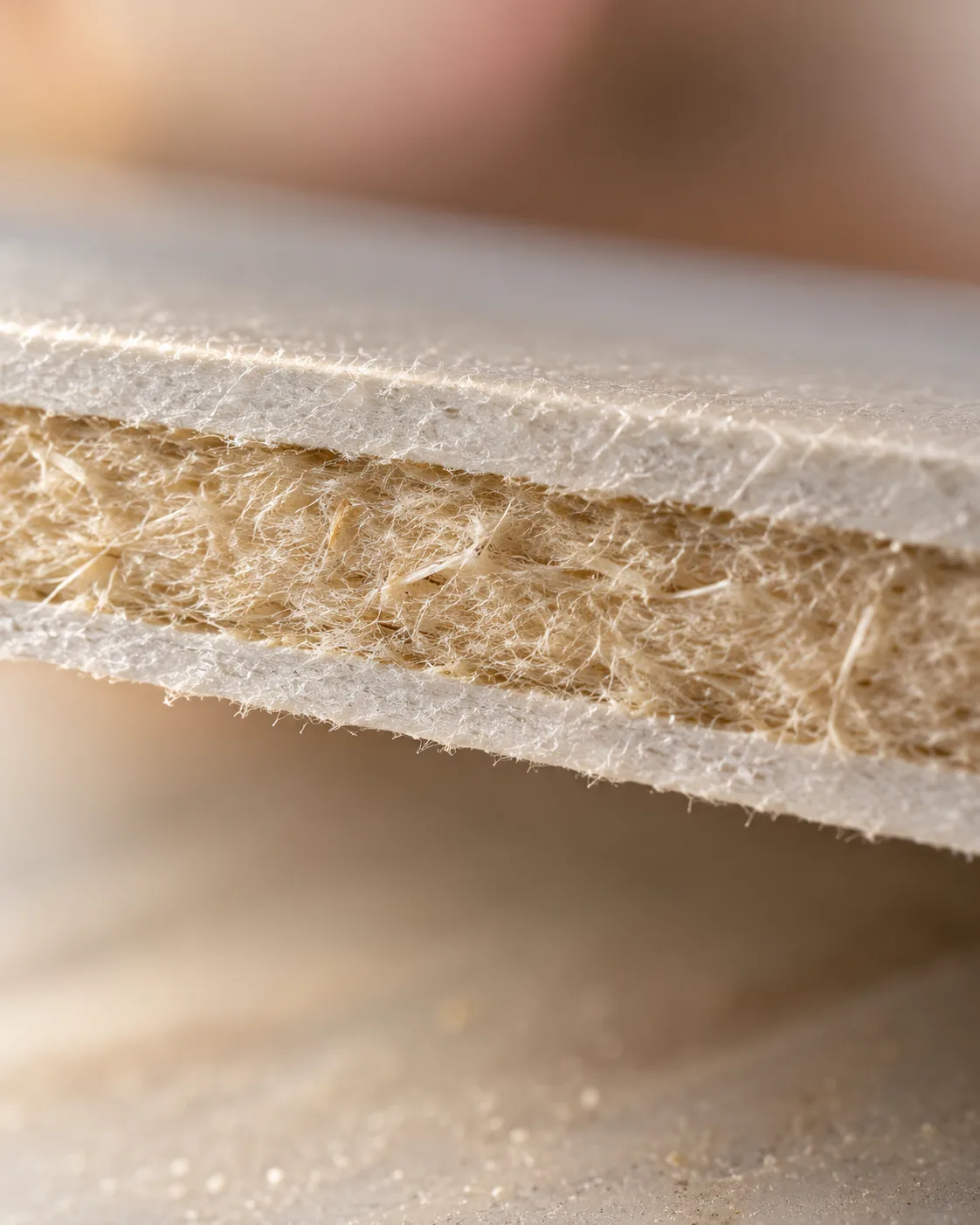
Reclaimed fiber with a white liner laid over it and a coating over that, which is what lets a recycled board print clean. The reverse is the whole decision on this grade: left as the core it is gray back, and lined a second time it is white back.
Gray back and white back compared
Both boards have the same print face and the same recovered core. The reverse is the only thing that changes, and everything in this table is a consequence of it.
| Compared on | Gray back, GD2 and GD3 | White back, GT2 and GT3 |
|---|---|---|
| The print face | White lined and clay coated. Takes four color process | White lined and clay coated. Identical to gray back |
| The reverse | The recovered core, uncovered. Gray, and slightly rough | A second bleached liner over the core. White, and smooth |
| Inside the made carton | Gray. Visible whenever the pack is opened or the flaps stand up | White. Reads as a virgin board from the inside |
| Printing the reverse | Possible, and every color laid on it shifts toward the gray | Prints close to the face, so an inside panel can carry real artwork |
| Show-through on the face | None. The top liner is what stops it, and both grades have one | None, and for the same reason |
| Cost position | The lower of the two | Higher, by the second liner |
| Specify it when | The carton is an outer, or the inside is never looked at | The pack is opened in front of the customer, or the reverse is printed |
Neither back changes what the printed face can do. A reader choosing between them is choosing what the inside of the carton looks like, and paying for a white reverse on a pack nobody opens is the commonest avoidable cost on this grade.
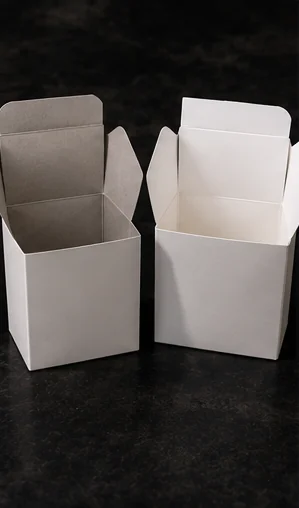
The print face is the same on both. What you are choosing is the inside of the carton.
GD2, GD3, GT2 and what the letters mean
Duplex board is graded by a letter pair and a number. The letters say what the board is and the number says how good the furnish is, with a lower number meaning a cleaner, brighter and more expensive board.
| Code | What it is | The reverse | Where it turns up |
|---|---|---|---|
| GD1 | Coated recycled board, the cleanest of the GD furnishes | Gray | Premium recycled cartons where the face has to hold a photographic image |
| GD2 | Coated recycled board, the standard furnish | Gray | The default duplex board. Most gray back cartons are this |
| GD3 | Coated recycled board, a coarser furnish | Gray | Outers, transit cartons and anything where the print is type rather than image |
| GT1 and GT2 | The same board with a second white liner on the reverse | White | White back duplex, sometimes sold as triplex board |
| UD2 | The uncoated version. No clay coating on the print face | Gray | Backing board, dividers and inners. Not a printed retail carton |
G is a coated board, D is a duplex construction with a gray reverse and T is the same construction with a white one. The same letters run across the other grades on this site: GC1 and GC2 are folding box board, which is why an FBB quotation carries a C where these carry a D.
Duplex board weights, in gsm and in points
Duplex is a bulky board, which is why this table is not the art card one with different numbers in it. A loosely formed recovered core takes up more room per gramme than a coated woodfree sheet does, so the same weight of duplex measures four points thicker, and a reader converting between the two grades with one ratio will be wrong on one of them.
| Grammage | Caliper | What it suits |
|---|---|---|
| 230 to 250 gsm | About 12 to 13 pt | Light cartons, sleeves, dividers and card backing |
| 250 to 300 gsm | About 13 to 16 pt | Small and medium retail cartons, soap and confectionery packs |
| 300 to 350 gsm | About 16 to 18 pt | The common range. Most duplex retail cartons are somewhere in it |
| 350 to 400 gsm | About 18 to 21 pt | Cartons carrying weight, shoe boxes, larger outers |
| 400 to 450 gsm | About 21 to 24 pt | Heavy outers, crash lock bases and trays that resist a crush |
Every caliper here is approximate. Grammage is weight and caliper is thickness, and the two are related by bulk. Duplex board is bulky for its weight because the recovered core is loosely formed, so it measures noticeably thicker per gramme than a coated woodfree sheet does: 300 gsm of duplex is around 16 points where 300 gsm of art card is around 12. Which caliper a carton wants is settled at structural design against the filled product weight, and the recommendation comes back in both units.
Duplex board, white lined chipboard, coated recycled board
Three names, one product, and which one is used depends on where the quotation was written.
Duplex board is the name used across Asia, India and the Middle East, and it is the one most overseas quotations carry. White lined chipboard, usually shortened to WLC, is the European name and the one the grade codes belong to. Coated recycled board, CRB, is what a US mill calls it, and clay coated news back, CCNB, is the US name for the coarser end of the same family.
All of them describe a sheet with a recovered fiber core, a bleached liner over the print face and a clay coating over that. A buyer holding quotations from three continents for what looks like three different boards is usually holding three quotations for the same one.
What that name does not settle is the back, which is why the grade code matters more than the word in front of it. GD2 and CRB gray back are the same specification. GD2 and a white back are not.
- Duplex board
- Asia, India and the Middle East. The name most overseas quotations use.
- White lined chipboard, WLC
- Europe, and the name the GD and GT grade codes are written against.
- Coated recycled board, CRB
- The US name. The recycled board page covers the fiber under it.
- Clay coated news back, CCNB
- The US name for the coarser end of the same family, nearer GD3.
Which back to specify
The question is who sees the inside of the carton, and how much of it they see.
White back earns its cost when
- The pack is opened in front of the customer
- Cosmetics, gifting and anything unboxed as part of the experience. The gray reads as an inner carton.
- The inside is printed
- An inside panel carrying artwork, a message or a code needs a surface that prints close to the face.
- The carton stands open on display
- A counter unit or a tray with its flaps up is showing its reverse the entire time it is on a shelf.
- The pack is light colored and shallow
- A shallow tray in a pale artwork shows its own inside wall in every photograph of it.
Gray back is the right buy when
- The carton is an outer
- A shipper, a multipack or a case that is opened once and thrown away.
- The product fills the carton
- A bottle carton or a tube carton shows almost none of its own interior once it is packed.
- The artwork is dark
- A deep colorway on the face makes the inside of an opened carton unremarkable either way.
- The recycled content is the point
- An uncovered core reads as recovered fiber, which on the right pack is the claim rather than a compromise.
Duplex board as specified here
How a duplex board carton is specified here, field by field.
On the sheet
- Printing
- Offset litho on a six-color Komori line, with the coating unit inline.
- Coating
- Aqueous or UV to the job.
- Inks
- Vegetable based, low VOC.
- Color standard
- Matched under D65 and TL84 viewing conditions against your existing standard.
- Incoming checks
- Caliper is measured at goods-in against the grammage the docket states, which is the one place on an order where the two units are reconciled against a real sheet.
Duplex board against the other five
Duplex is the grade that buys a clean printed face on recovered fiber, which is most of what a virgin board buys and a good deal less of what one costs. What it does not buy is stiffness: a recovered core is loosely formed, so a duplex carton reaches a given stiffness by being thicker rather than stronger, and at the same caliper it is the least rigid board on this site apart from bare chipboard.
Read next
 Read nextChipboard and recycled boardWhere the fiber comes from, what recycled content means on a pack, and what an uncoated gray core does to a light color.
 Read nextFolding box boardThe virgin grade a duplex carton is usually priced against, and the one to specify where the carton has to stand up light.
Questions about duplex board
Duplex board is a coated paperboard built from recovered paper fiber with a bleached white liner laid over the print face and a clay coating over that. The liner and the coating are what let a recycled board print cleanly: without them the gray core would read through anything light. The name is used across Asia, India and the Middle East. In Europe the same board is called white lined chipboard, or WLC, and in the US it is coated recycled board, or CRB. It is sold in two forms, gray back and white back, which differ only in whether the reverse face carries a second white liner.
The reverse face, and nothing else. Both have the same white lined, clay coated print face and the same recovered core, so both print the same on the outside of a carton. Gray back leaves the core uncovered on the reverse, so the inside of the made carton is gray and slightly rough. White back carries a second bleached liner over the core, so the inside is white and smooth enough to print an inside panel on. White back costs more, by the price of that extra ply. The choice is about who sees the inside of the pack: a carton opened in front of a customer, or one that stands open on display, usually justifies white back, and an outer or a carton the product fills does not.
They are the European grade codes for the board. The G means coated, the D means a duplex construction with a gray reverse, and the T means the same construction with a white reverse. The number grades the furnish, with a lower number meaning a cleaner and brighter board that costs more. So GD1 is the cleanest gray back, GD2 is the standard gray back and the one most cartons are made from, and GD3 is a coarser furnish used for outers and for work printed in type rather than image. GT1 and GT2 are the white back equivalents, sometimes sold as triplex board. UD2 is the uncoated version, used for backing, dividers and inners rather than for printed retail cartons.
Yes. Duplex board, white lined chipboard and coated recycled board are three names for one product: a recovered fiber core with a bleached liner on the print face and a clay coating over it. Duplex is the Asian and Middle Eastern name, white lined chipboard or WLC is the European one and the one the GD and GT grade codes belong to, and coated recycled board or CRB is the US name. Clay coated news back, CCNB, is the US name for the coarser end of the same family, roughly where GD3 sits. A buyer comparing quotations from three continents for what look like three boards is often comparing three prices for the same specification.
Most duplex retail cartons sit between 300 and 350 gsm, which is roughly 16 to 18 points of caliper. Light cartons, sleeves and dividers run 230 to 250 gsm; small and medium retail cartons 250 to 300; cartons carrying weight, shoe boxes and larger outers 350 to 400; and heavy outers, crash lock bases and crush-resistant trays 400 to 450. Duplex is a bulky board because the recovered core is loosely formed, so it measures thicker per gramme than a coated woodfree sheet: 300 gsm of duplex is around 16 points where 300 gsm of art card is around 12. Which grammage a particular carton wants is decided against its filled weight at structural design rather than taken off a chart.
Last reviewed
Send the carton and say who opens it
The grammage comes back matched to what the carton has to hold, in gsm and in points, with the back called against how much of the inside is actually seen. Board samples go out on request, in both backs, so the gray can be judged against the white rather than described. Landed cost runs 20 to 30 percent below a comparable US supplier quote.