Four corner tray
The inner half, on its own. What a tray is and where its wall height runs out.
See the structure: Four corner trayFOLDING CARTONS
A tray and sleeve pack is two folding cartons made as a pair: a glued tray holding the product, and a fitted outer sleeve the tray is drawn out of like a drawer. Both ship flat and are assembled at the fill.
It is the closest a folding carton comes to a rigid box. The drawer movement is much of what the pack is bought for.

The tray forms first and the sleeve wraps around it. They are cut on the same die cutter from the same board on the same day, and each is drawn to fit the other.
How a tray and sleeve is made, in five steps.
Drawn to illustrate the structure. Your dieline is developed to your product, free, before you commit. The blank drawn here is the tray. The outer is a sleeve, cut deeper, and it is drawn from the finished tray rather than from the tray's dimensions.
Ask for a structural designTwo pieces and two constructions. The tray is a glued corner tray, stiff enough to be pulled by its own end. The outer is a fitted sleeve, deeper than a band, covering the tray to within a few millimeters of its end so the pack reads as a solid block until it is opened.
What has to be right is the gap between them. It is a set tolerance: tight enough that the tray does not fall out of an upended pack, loose enough that it draws with one hand and keeps drawing after the pack has spent three weeks in a container.
Four reasons a buyer pays for two pieces of board where one would hold the product.
Most packaging is opened once and thrown away. This one is opened in front of somebody, and often more than once. A drawer pack has a movement in it: slow, controlled and reversible.
The friction between the two pieces sets how the pack feels. Too loose and the tray drops out of an upended pack and it feels cheap. Too tight and it has to be shaken free and it feels badly made. There is a narrow band in between where the tray draws smoothly under its own weight and stops.
That band is a specification: a running clearance the two blanks are drawn to, prototyped against, and then measured on samples taken across the run. Board caliper, humidity and the weight of the contents all move it.
The format is used most in fragrance, prestige skincare and gifting, where the opening matters more than cost per pack. Whether the inside of the sleeve is printed, whether the tray edge is flush or set back, whether there is a ribbon pull or a thumb notch: all three are the reveal, and all three are settled at structural design.

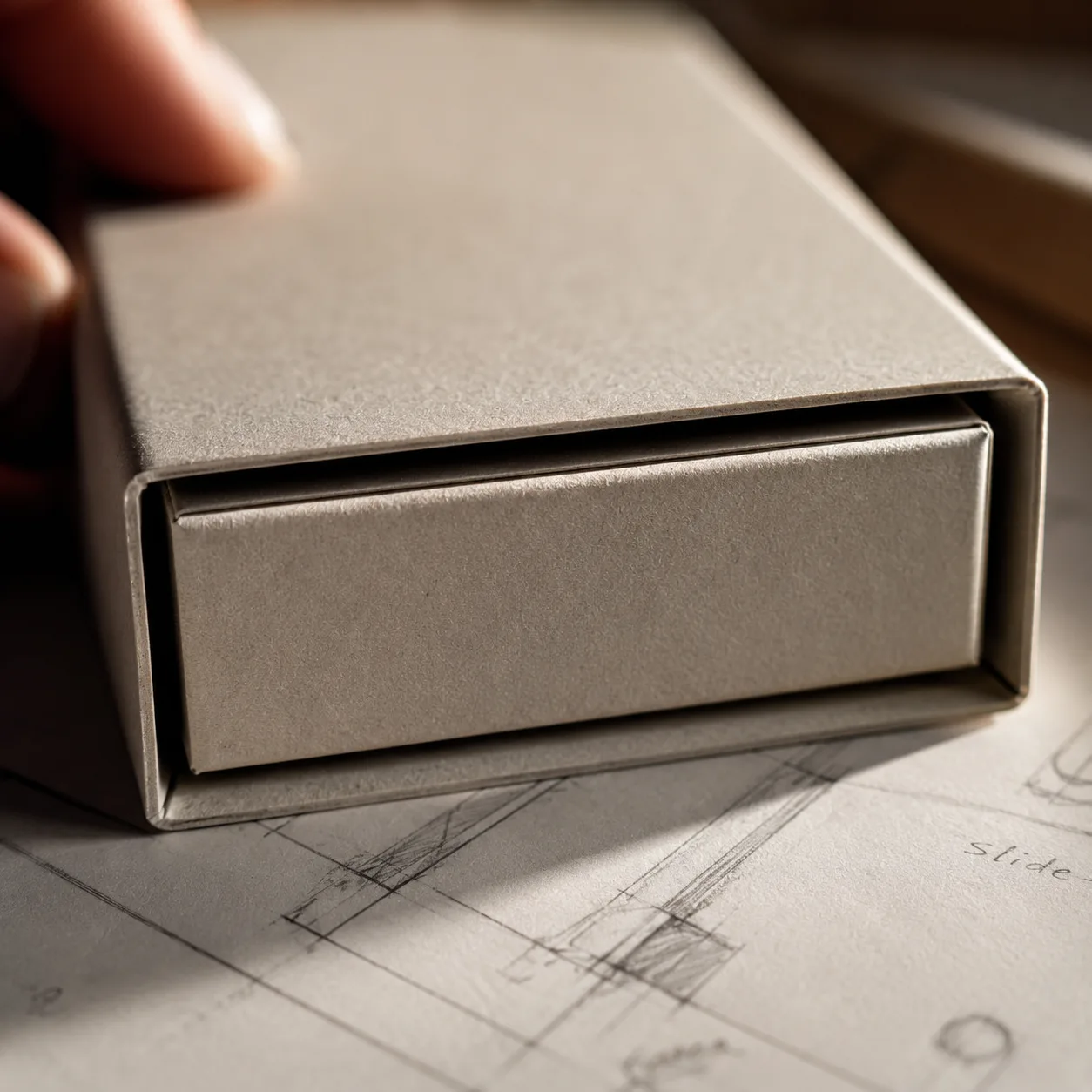
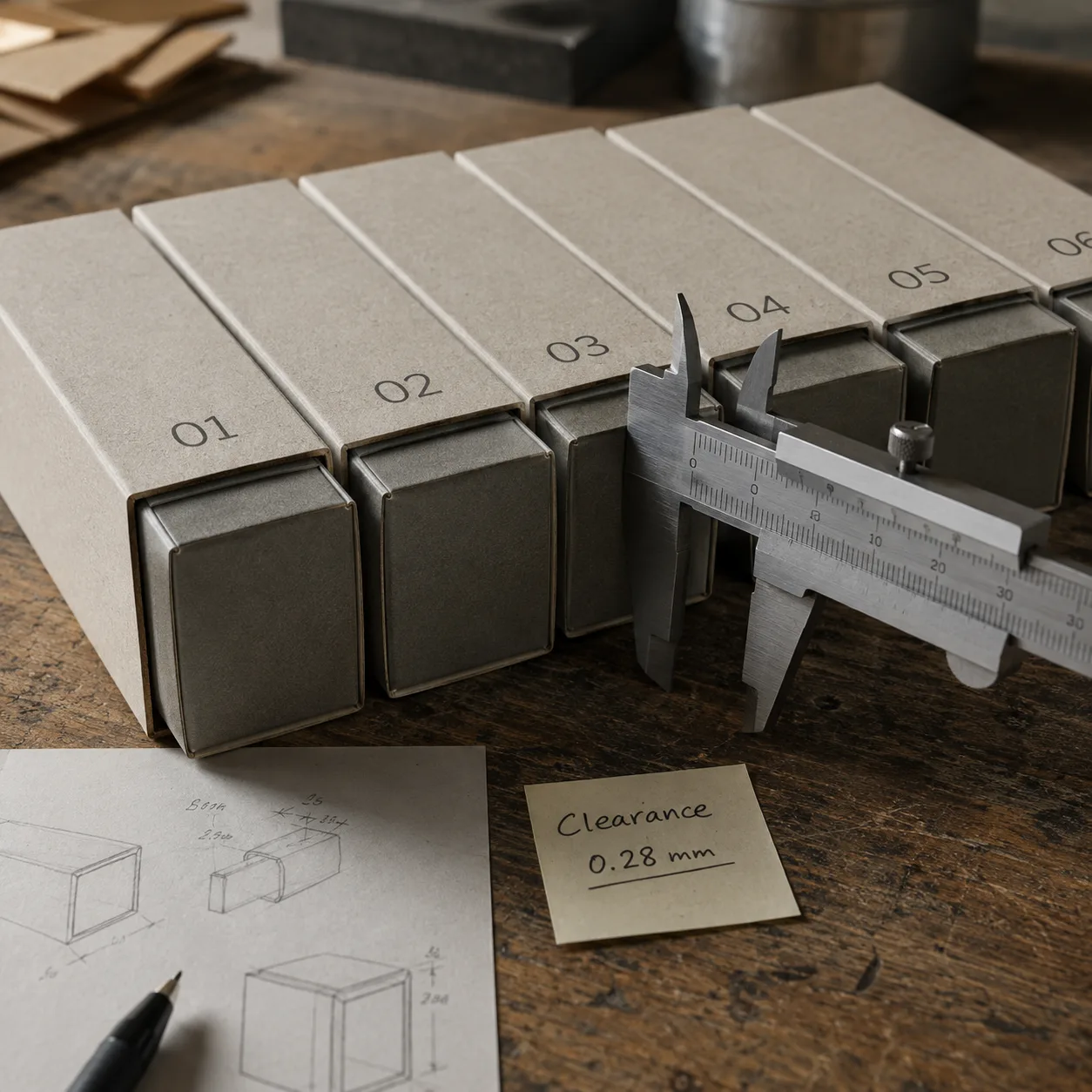
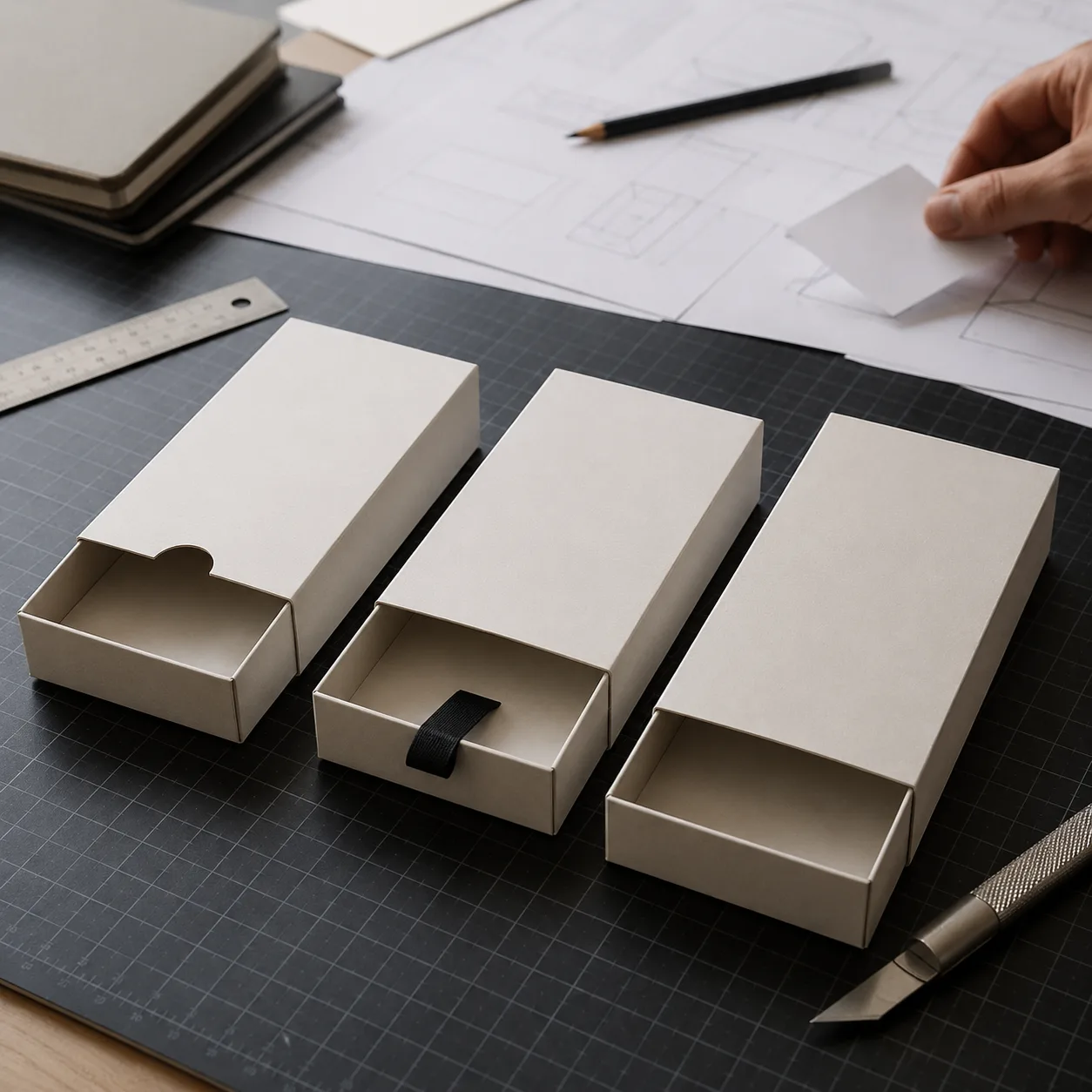
Four stops. The third is not needed on any other structure here: two pieces made separately are checked against each other before either is packed.
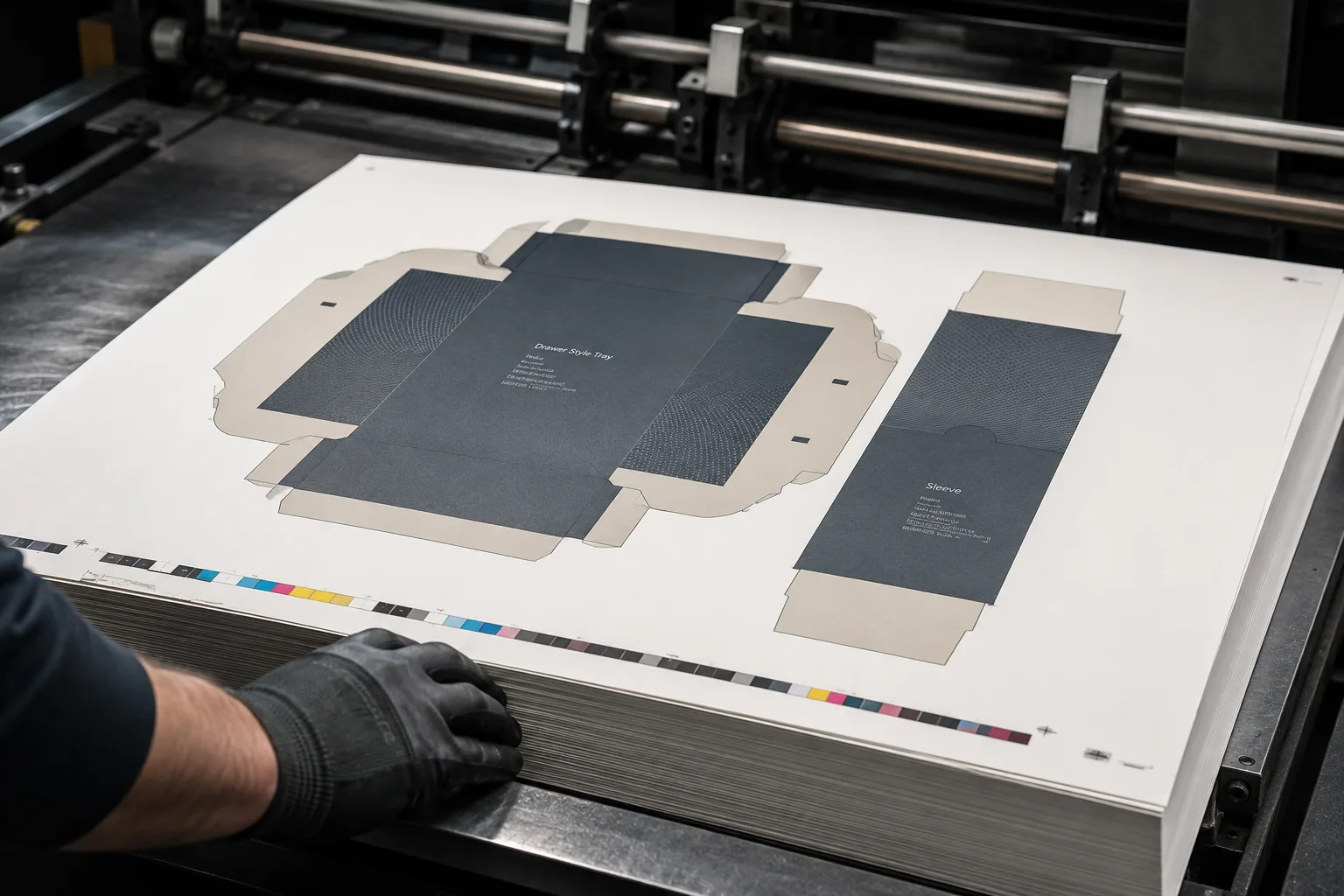
Tray and sleeve are ganged on the same press form wherever the board and the run allow it. Printing the pair in one pass keeps the two pieces the same color.
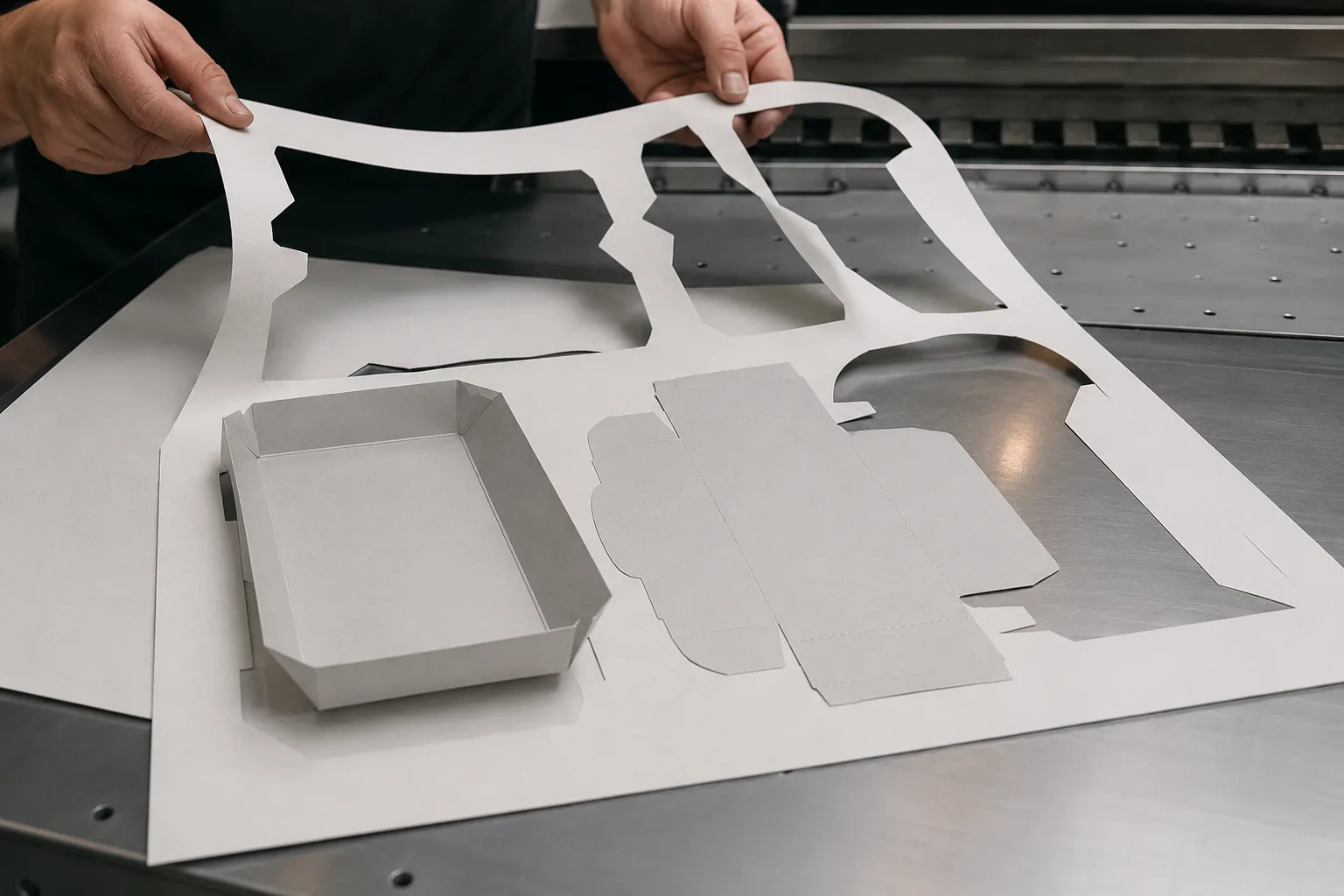
Both blanks are die cut on the Novacut, the tray with its four corner ears and the sleeve with its seam and any notch. Crease accuracy on the tray sets its finished outside dimension, and the sleeve is drawn to that dimension.
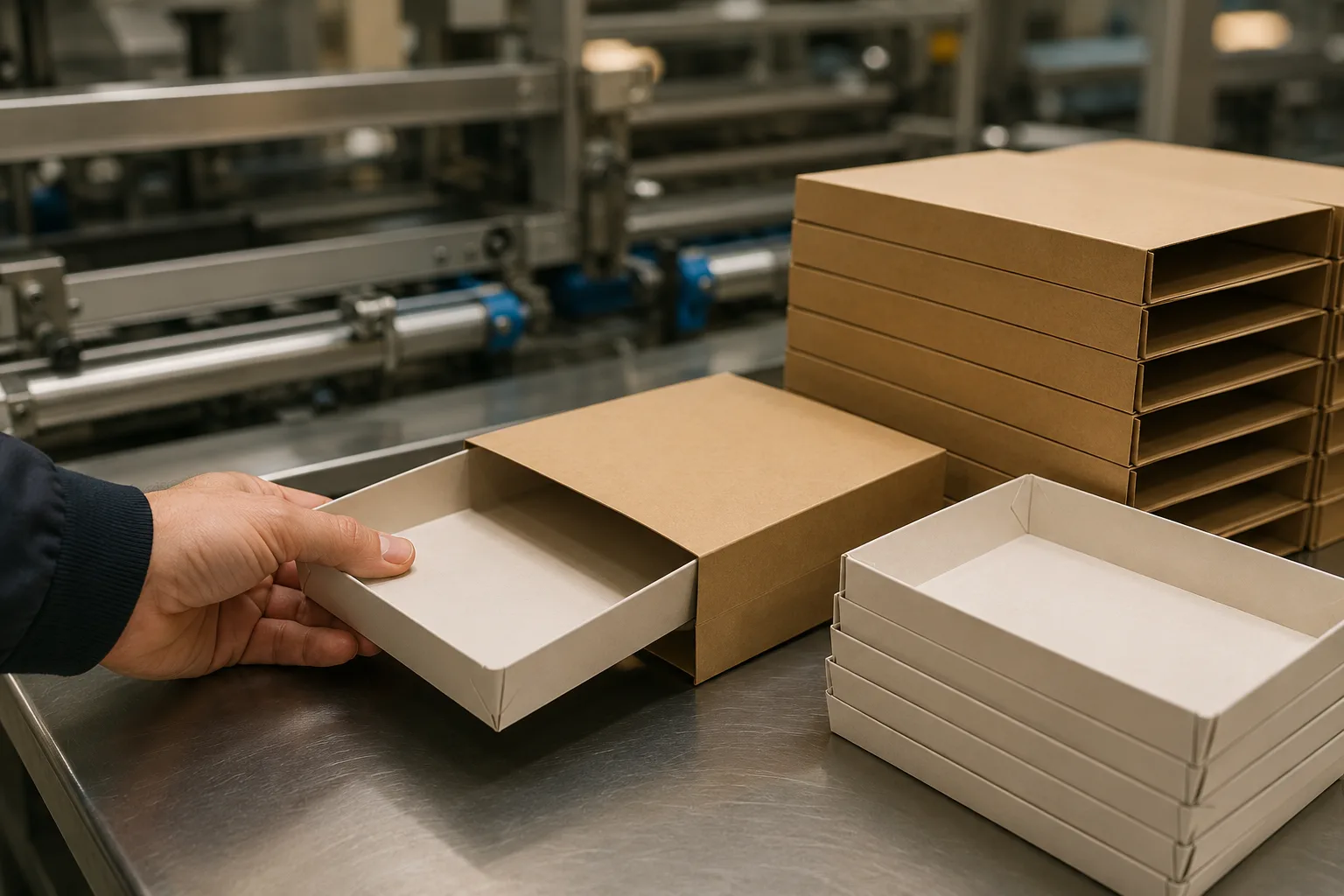
The tray is cornered and the sleeve seamed on the folder gluer, then samples of both are taken off the line together. The tray is drawn in and out of the sleeve by hand, as the buyer will.
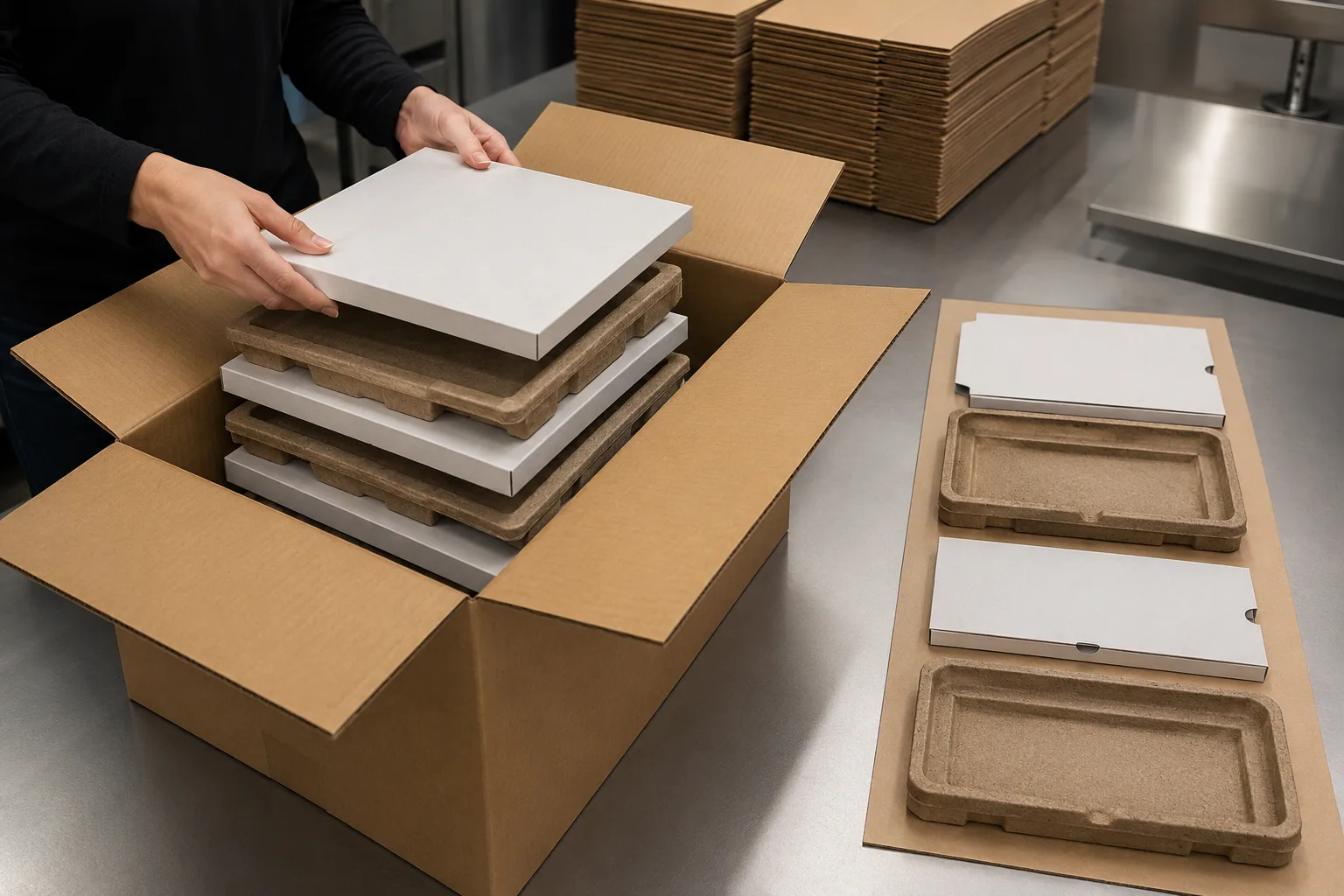
The running clearance is measured on samples across the run, not only at the start of it. The two pieces are packed into the same shipper, so nobody has to match them on your floor.

The second piece of board is there so the pack opens slowly.
This is the format brands compare with rigid. The largest difference is freight.
| Tray and sleeve | Rigid set-up box | |
|---|---|---|
| How it is made | Two printed folding blanks, cut, creased and glued | Chipboard formed and wrapped in a separately printed sheet |
| How it ships to you | Both pieces flat, in one case, erected at the fill | Assembled. The case is mostly the air inside the boxes |
| Freight per unit | A fraction of rigid, and the gap widens with distance | High, and it does not improve with volume |
| Offset directly on the board, edge to edge, finishes on the same sheet | Offset on the wrap, with a turn-in visible at every edge | |
| Wall | One board thickness | Thick, and noticeable in the hand |
| Tooling | Two cutting dies | A die, a former and a wrapping setup |
| The opening | A tray that draws out like a drawer | A lid that lifts. Also good, and a different gesture |
Where a brand wants the wall thickness, rigid is the better choice and we will say so. Where they want the presence, this structure ships it flat.
A drawer pack almost always has a fitment in the tray.
The pack is opened slowly and looked into, so the inside of the tray is on show. A board platform that holds the bottle upright, a divider that keeps two pieces from touching, a shaped pad that lifts a small item to the rim: all three are cut on the same die cutter from the same board as the tray.
Where the brief asks for foam or flock, we will quote it. A board fitment is the same material as the carton and recycles with it, and a foam one does not.

Earbuds, wearables, chargers and cables are often packed in the same two pieces of board as fragrance.
A device pack is opened on a desk, and then it is kept. The spare tips, the short cable and the warranty card live in it for as long as the product does, so the pack is drawn open and pushed shut long after the sale. A tuck flap is worked at one crease every time and goes soft there. A tray drawn out of a sleeve does not wear a crease.
The specification is in the tray. The device sits in a fitted board well with the cable coiled in a channel beside it, both cut on the same die cutter from the same sheet as the tray, so the fitment recycles with the carton.

Making both pieces in one plant keeps color and fit consistent. Tray and sleeve are ganged on the same press form wherever the run allows, glued on the same Novafold, matched by hand off the line and measured across the run rather than at the start of it. Both halves leave in the same shipper.
Cartons here are made on bulk production runs, and the cost per carton falls as the run grows, because plates, tooling and make-ready are fixed per run rather than per carton. A quote is priced against the volume you are planning. Landed pricing typically runs 20 to 30 percent below comparable US supplier quotes for the same specification. The quote is one landed price: the cartons, tooling, structural design, proofing, the documents that travel with the order, import duty, shipping and delivery to your address, in the US or anywhere else. Nothing is quoted on top of it later.
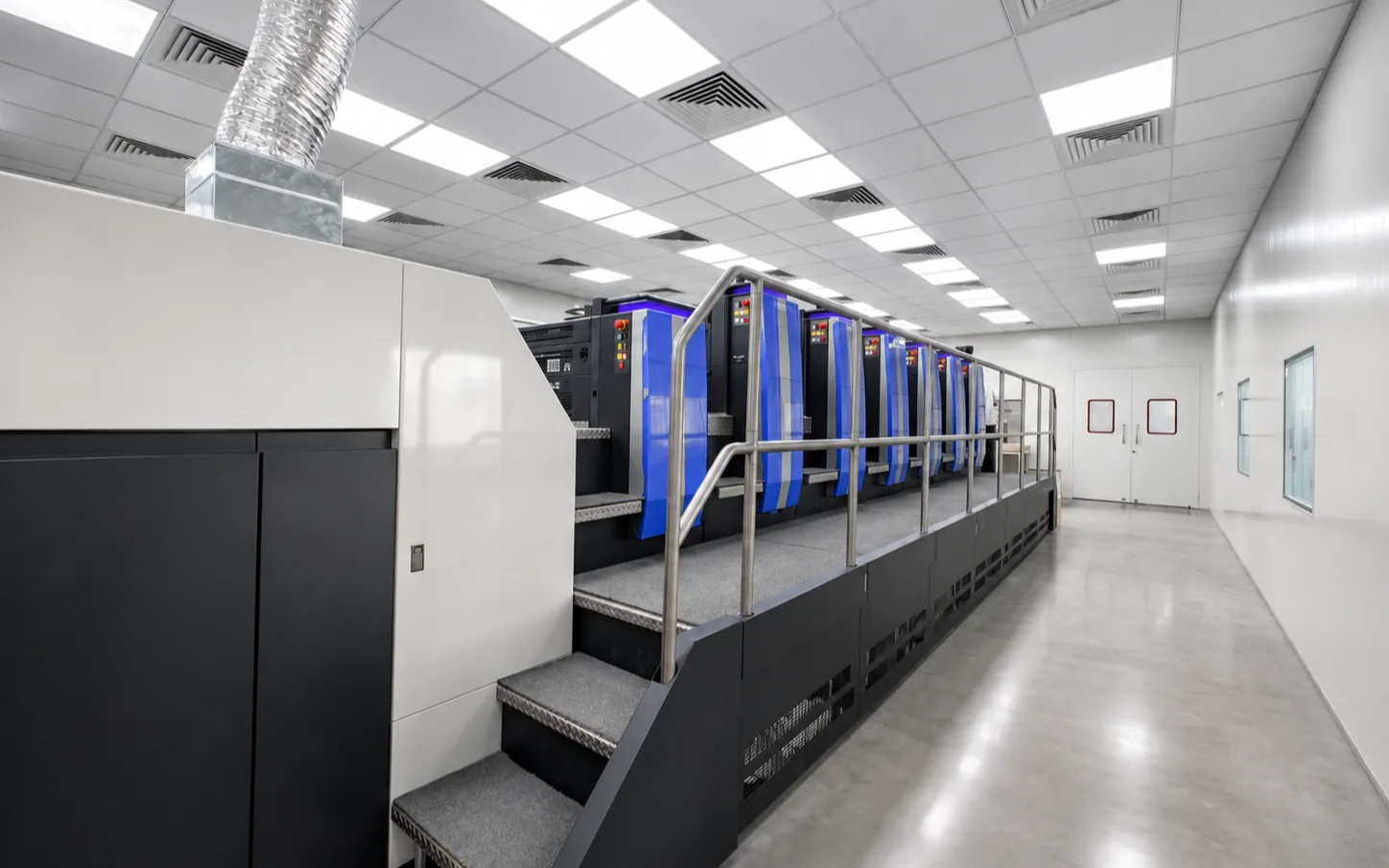
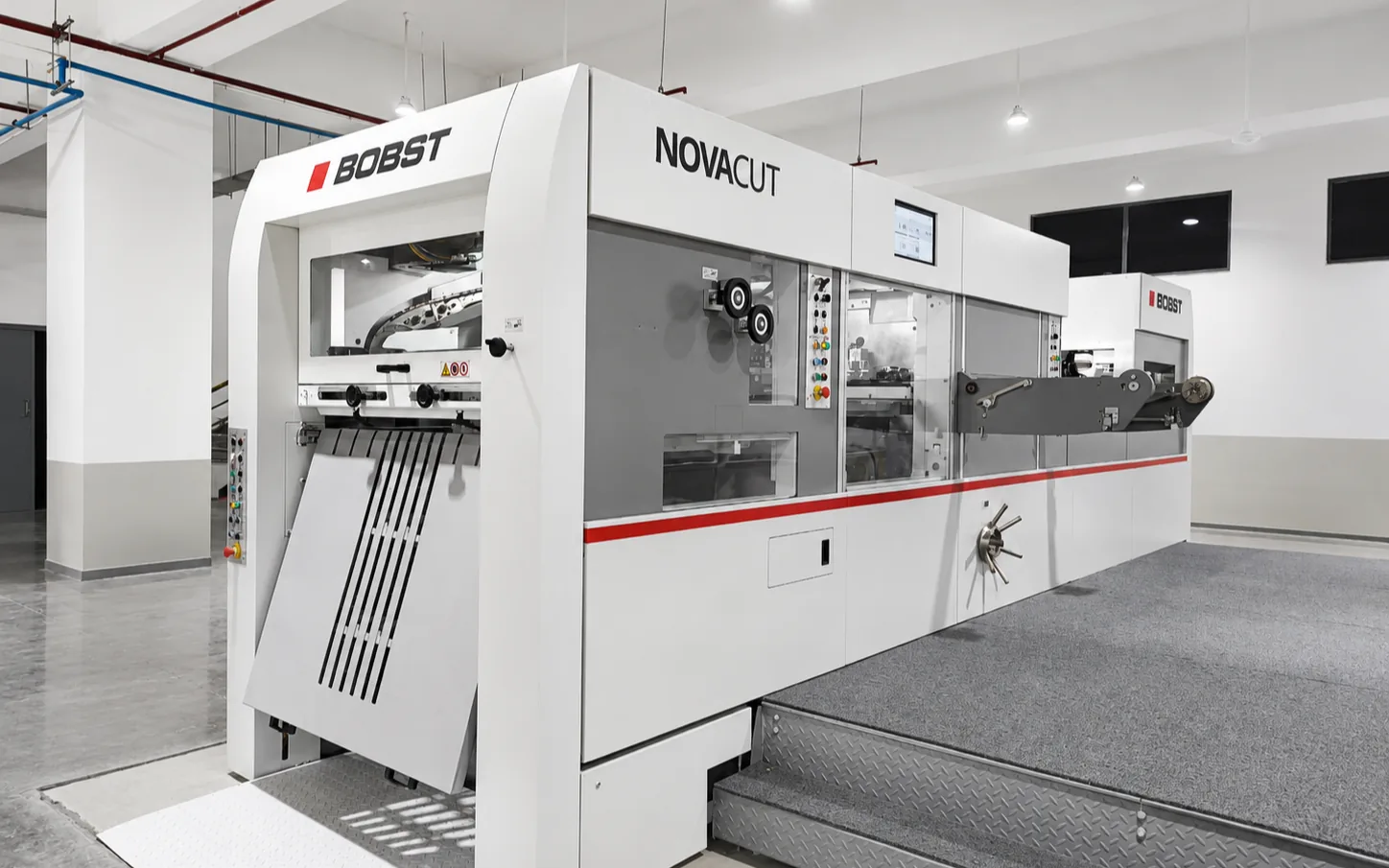
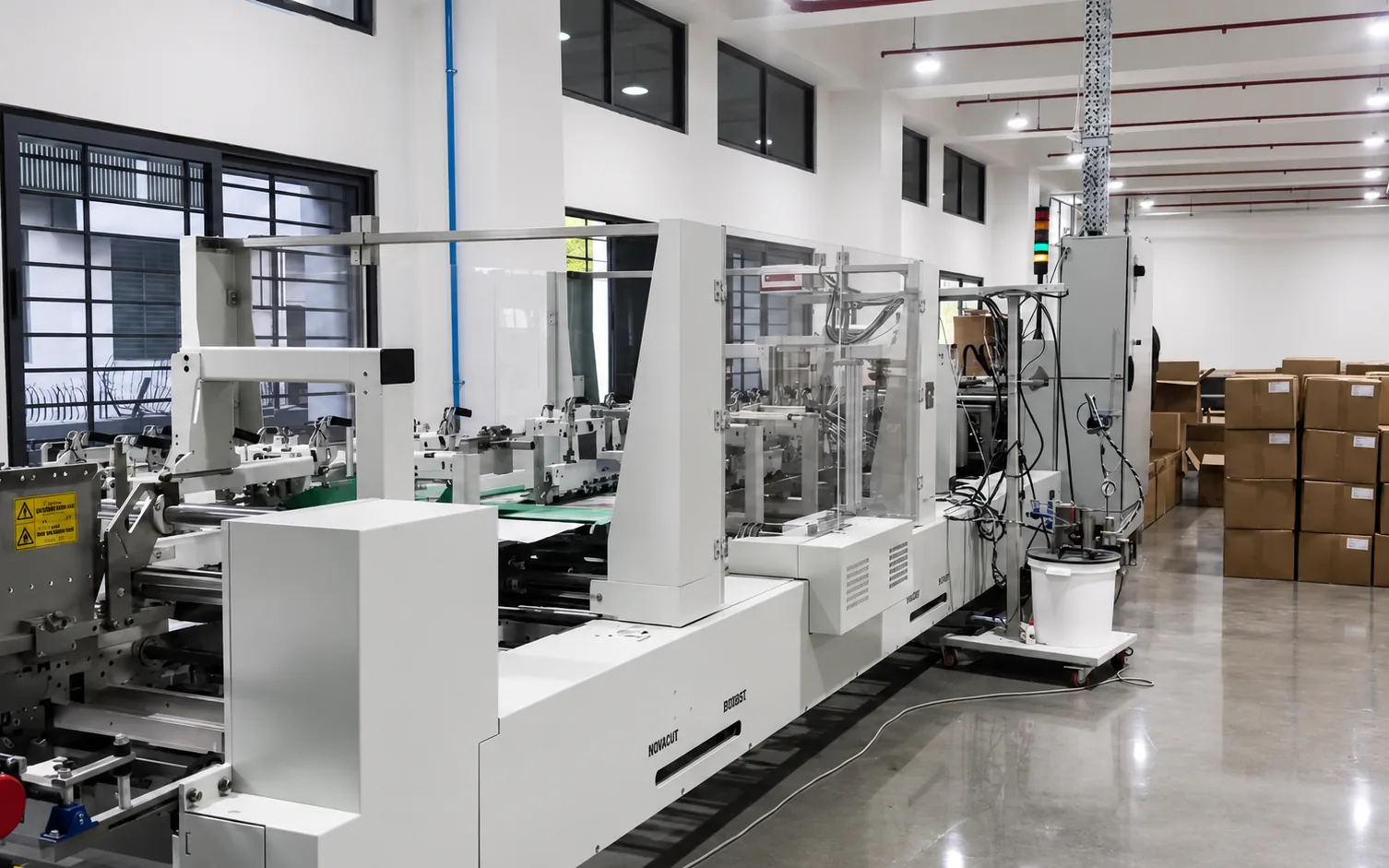
Each half of this pack is a structure in its own right, and both have their own page.
The inner half, on its own. What a tray is and where its wall height runs out.
See the structure: Four corner trayThe outer half, cut as a band rather than a fitted shell. Less board, and the ends stay open.
See the structure: Sleeve boxesThe other way to make a pack that opens slowly, with the lid attached rather than drawn off.
See the structure: Hinge lid boxesThe clearance between a tray and its sleeve is measured on samples taken across the run, alongside the six physical tests every production lot goes through. The quality lab page is where that work is set out.
Inside the quality lab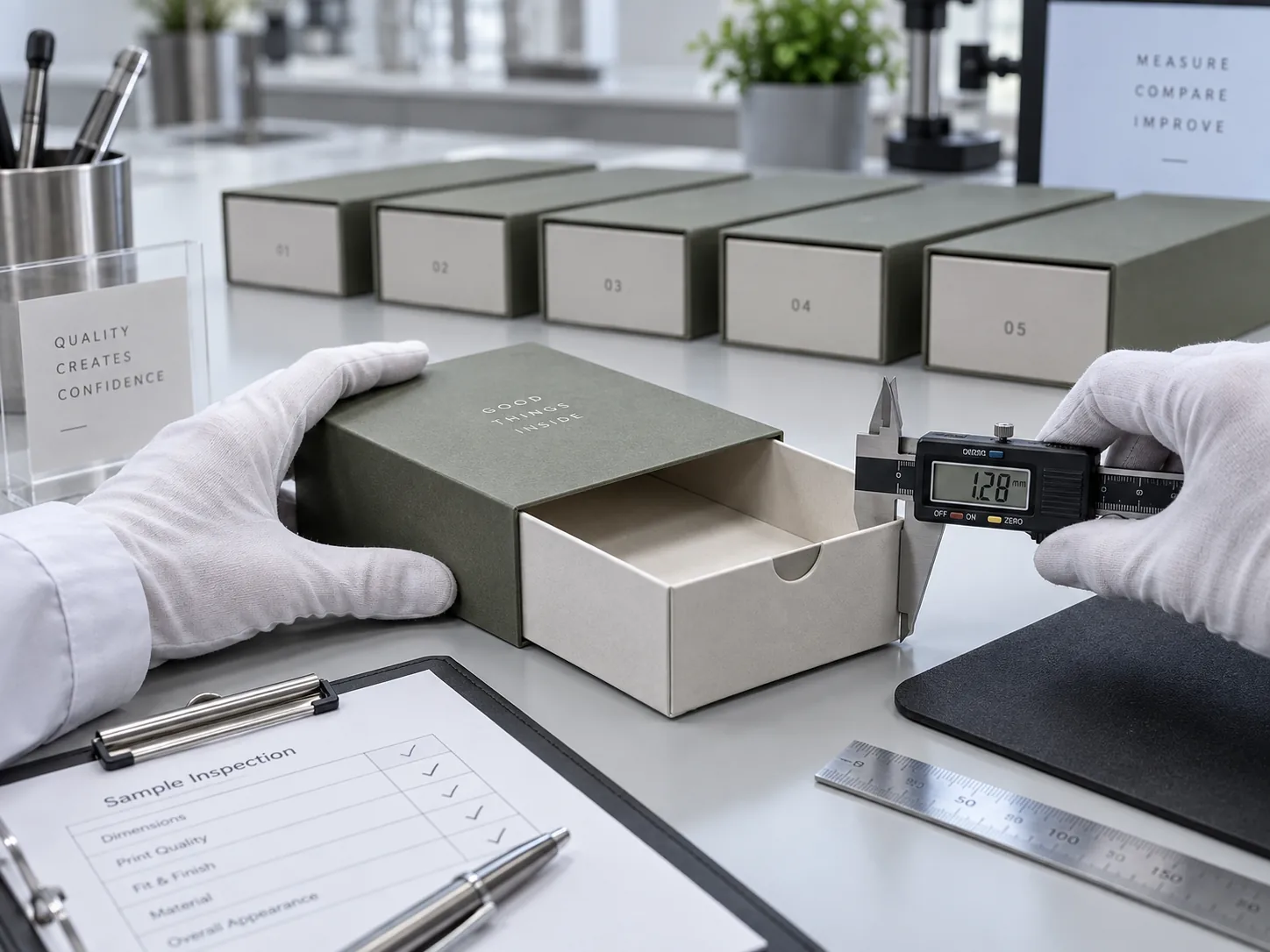
A tray and sleeve pack is two folding cartons made as a pair: a glued corner tray that holds the product, and a fitted outer sleeve the tray is drawn out of like a drawer. Both pieces ship flat and are put together at the fill. It is also sold as a drawer box, a slide box or a sleeve and tray.
It is a different pack. A rigid box has a thick wall you notice in the hand, and a folding tray has one board thickness. A tray and sleeve gives a similar presence and the same slow opening at a fraction of the freight, because both halves ship flat and a case of rigid boxes is mostly air. Where a brand wants the wall, rigid is the right answer.
Tight enough that the tray does not fall out of an upended pack, loose enough that it draws with one hand and still draws after three weeks in a container. That is a running clearance. It is specified, prototyped and then measured on samples across the production run. Board caliper, humidity and the weight of the contents all move it.
Yes, and on this structure most packs have one, because the pack is opened slowly and looked into. Board platforms, dividers and shaped pads are cut on the same die cutter from the same board as the tray. Foam and flock are quoted where they are asked for. A board fitment recycles with the carton and a foam one does not.
Yes, and it is used more on this structure than on any other in the range. The inside of the sleeve and the inside of the tray are both revealed by the drawer movement, in front of the buyer, on a pack that will be opened more than once. Both faces print on the same sheet in the same pass.
Yes. Trays and sleeves for one pack are packed into the same shipping case in alternating layers and are never split across cases, so nobody has to match them on your floor. Both halves are flat, so the freight is a fraction of an assembled pack of the same size.
Yes. Send both halves, because the running clearance between tray and sleeve cannot be measured from either piece alone. The structure is measured, board and caliper matched, and color matched to your existing standard under D65 and TL84 viewing conditions. Most switching programs are matched from a sample rather than rebuilt from a specification.
Last reviewed
How the tray comes out of the sleeve cannot be judged from a drawing. Send the product, and a prototype of both pieces comes back to load and draw before any tooling is committed. A packaging planner replies within one business day.